The Week The Week
flag of US
US
flag of UK
UK
https://cdn.mos.cms.futurecdn.net/flexiimages/jacafc5zvs1692883516.jpg

SUBSCRIBE & SAVE

Less than $3 per week

Sign in
  • View Profile
  • Sign out
  • The Explainer
  • The Week Recommends
  • Newsletters
  • Cartoons
  • From the Magazine
  • The Week Junior
  • Student Offers
  • More
    • Politics
    • World News
    • Business
    • Health
    • Science
    • Food & Drink
    • Travel
    • Culture
    • History
    • Personal Finance
    • Puzzles
    • Photos
    • The Blend
    • All Categories
  • Newsletter sign up Newsletter
  • The Week Evening Review
    Germany’s rearmament, fractional work, and Uber’s expansion

     
    TODAY’S BIG QUESTION

    Why is Germany ramping up its defense spending?

    As the EU faces the encroaching threat of outside countries, one nation is taking matters into its own hands. Germany is heavily investing in its military budget, spending more money on defense last year than in the prior 36 years, according to recent reports. Officials have stated their intentions to make the country’s military the strongest in Europe over the next decade and a half, all while President Donald Trump is ratcheting up German-U.S. tensions.

    What did the commentators say?
    Germany put significant resources into its military in 2025, with its defense expenditure “growing by 24% year-on-year to $114 billion,” said a report from the Stockholm International Peace Research Institute. The German government was the largest military spender among the 29 European members of NATO.

    This is “part of a long-term vision helmed by both former Chancellor Olaf Scholz and German Defense Minister Boris Pistorius,” said Military.com. Pistorius is overseeing a defense development plan whose aim is to turn the German army into the “strongest conventional army in Europe” by 2039. 

    Germany is next “planning to increase defense spending by a fifth in 2027 compared with this year,” said the Financial Times, putting it ahead of NATO’s military budget goal by at least six years. The country’s rearmament is a “marked turnaround from just a few years ago when the country was widely regarded as a defense-spending laggard and security-free rider by its critics,” said Stars and Stripes. 

    What next?
    This remilitarization is happening alongside the looming question of how Trump’s foreign policy will affect Germany. After German Chancellor Friedrich Merz said the U.S. has been “humiliated” by its war with Iran, Trump announced he was withdrawing approximately 5,000 American troops from Germany. The decision came at a time of “deep divisions between Washington and its European allies, with transatlantic tensions already heightened by tariff threats,” said NBC News.

    German defense analysts have “expressed little concern in the days following the announcement” about losing U.S. troops, said The New York Times. But some experts are concerned that the withdrawal may create an “economic hit that could be felt in communities that depend on American military institutions.”


    QUOTE OF THE DAY

    ‘What happened this week is nothing less than a massive and devastating blow, not only to our democracy but particularly to people of color in the South.’

    Sen. Raphael Warnock (D-Ga.), on CBS’s “Face the Nation,” about the Supreme Court’s decision to gut the Voting Rights Act, arguing it will further inflame the redistricting conflict across the country. Actions since the decision are “21st-century Jim Crow tactics in new clothes,” he added.


    the explainer

    Fractional work offers stability for workers

    Employees are looking for ways to maximize their income while maintaining their peace of mind. Enter fractional working. The trendy, new employment model empowers executives and independent contractors to take control of their schedules.

    What’s fractional working?
    While freelancers are typically hired for specific projects or hourly tasks, fractional workers are “more embedded into a business, often helping to lead the overall strategy at a company,” said CNBC. Fractional employees, unlike permanent employees, “contribute on a part-time basis for multiple businesses or clients.”

    Interest in fractional work has grown, and “both sides of the labor market are fueling the increase,” said the Harvard Business Review. For companies, demand is driven by “increased pressure to do more with fewer resources amid AI uncertainty and market volatility.” For workers, the appeal of “diversifying income streams, gaining autonomy and improving work-life balance is increasing the fractional labor supply.”

    The “explosion of fractional leadership” represents more than a “temporary trend,” said Forbes. Companies are facing “mounting pressure to control costs while accessing specialized expertise.” At the same time, executives are “rethinking the value proposition of traditional employment” after watching “waves of layoffs sweep through even the most stable industries.”

    Is this the future of labor?
    The rise of fractional leadership is being “driven by both companies and executives,” said Forbes. Organizations gain “flexibility, faster access to specialized expertise, and the ability to scale leadership as needs change.” Executives gain “diversified income, greater control over their work, and a more durable form of stability with a portfolio.”

    For the shift toward accepting fractional work to hold, the “systems around it need to catch up,” said Forbes. Benefits and protections need to become more portable, said Paula Gorman, a fractional operations leader and the founder of the networking group The Consultants Room, to the outlet.

    If more people are “building careers across multiple clients and income streams,” the systems that provide stability “cannot stay tied so tightly to one traditional employer,” said Gorman. Industries need to “stop talking about fractional or consulting work like it’s a temporary workaround.” For many people and many companies, it’s “already a legitimate and strategic part of how work gets done.”


    Statistic of the day

    $25 billion: The official cost of the Iran war to date, according to the Pentagon. But Defense Dept. sources suggest it’s almost twice this estimate. After accounting for replacements for destroyed military assets and repairs to damaged bases in the Middle East, the actual total is between $40 billion and $50 billion, according to three sources cited by CNN.


    in the spotlight

    Uber wants to be more than a rideshare app

    Most people only think of Uber for ordering rides and food, but the company wants to change this perception by expanding into a full-service travel app. It has announced that it’s partnering with Expedia to offer a wide variety of vacation-related services.

    ‘One app for everything’
    Users can now book hotels directly in the Uber app without going through a third-party reservation site. By connecting with Expedia’s hotel database, Uber offers “access to a wide selection of hotels, which will ultimately grow to more than 700,000 properties in destinations around the globe,” said the company in a press release. There’s also cross-pollination with Expedia, as Uber rides will be “integrated directly in the Expedia app” starting in June 2026.

    Notably, the partnership will allow Uber to offer hotel bookings for “properties in countries where it doesn’t currently offer rideshare services, if the properties are listed through Expedia,” said The Wall Street Journal. Plans to add rental property bookings through the Expedia-owned Vrbo are also in the works. The company will additionally provide specified Uber Eats “room services” that can “deliver food and any forgotten items, such as a toothbrush or phone charger, directly to the hotel,” said NBC News. 

    The goal is for Uber to “become the one app for everything,” said Dara Khosrowshahi, the CEO of Uber, to The New York Times. The partnership is helping hotels “get access to travelers, get more demand, get more exposure,” said Ariane Gorin, the CEO of Expedia, to the Times.

    ‘There’s a catch’
    Many are wondering if Uber’s new venture will make hotel rooms cheaper than competitors’ booking sites, which does indeed seem to be the case. At a Hilton hotel near Tampa International Airport, a booking through Uber with an added refund window costs $140.19, while the “same room would have cost $144” through Hilton’s website, said The Washington Post. 

    But “there’s a catch” for people looking to stock up on hotel rewards points, said the Post. When people “book with a third-party online travel agency” like Uber, they are “likely forgoing the brand-specific points.”


    Good day ⚽

    … for women’s sports. The Afghan women’s soccer team will return to competition after FIFA granted an exception to a regulation that required them to be recognized by their member association, the Afghanistan Football Federation. Afghanistan has not played a competitive international game since 2018, and the Taliban’s return to power in 2021 led to a ban on women’s sports. 


    Bad day 🐟

    … for fishy supplements. The omega-3 fatty acid EPA (eicosapentaenoic acid) typically found in fish oil supplements could interfere with the brain’s blood vessel repair processes by reprogramming their metabolic activity, according to a study published in Cell Reports. However, in follow-up experiments, DHA (docosahexaenoic acid), known for building and maintaining brain cells, didn’t impede repair.


    Picture of the day

    Soda pup

    The film dog Hui Buh, a Parson Russell terrier, shows his skills during a press event in Dortmund, Germany, ahead of the Dogs & Fun 2026 trade fair. These hunting dogs were bred with legs long enough to keep up with horses and bodies small enough to crawl into holes and flush out foxes.  
    Ina Fassbender / AFP / Getty Images


    Puzzles

    Daily sudoku

    Challenge yourself with The Week’s daily sudoku, part of our puzzles section, which also includes guess the number

    Play here


    The Week recommends

    Embrace the past at these historic US hotels

    If the walls of these landmark hotels could talk, they would regale guests with tales of lavish parties, milestone celebrations, newsworthy occasions and fascinating visitors. It would take quite some time to hear the stories too, as the properties are all more than 100 years old.

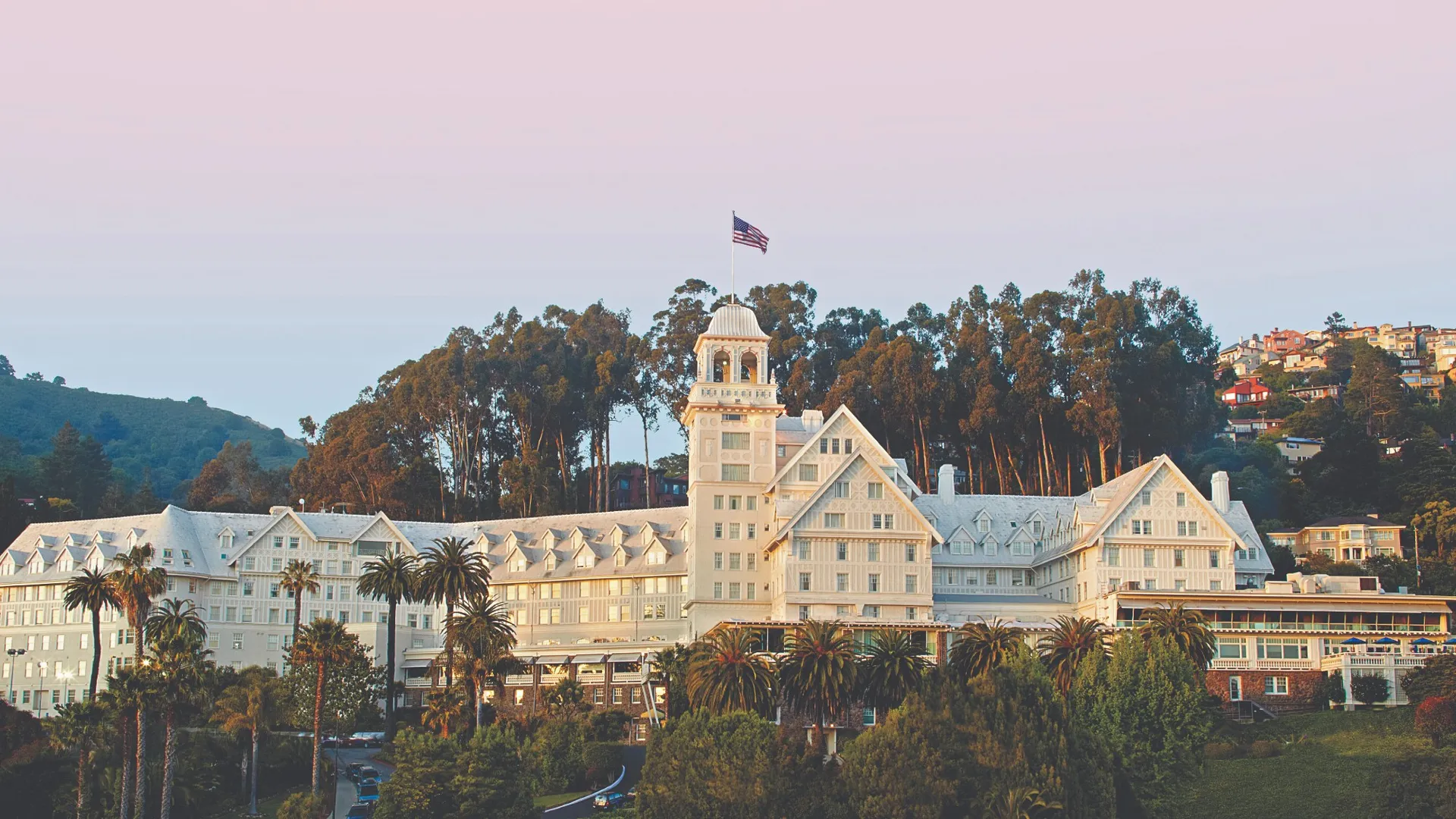
    Claremont Resort & Club, Berkeley, California
    This Bay Area retreat (pictured above) has been a beloved spot for rest and relaxation since it opened in 1915. The guest rooms were recently renovated in calming shades of soft blue and gray, and the “plush bedding and fluffy down comforters make the beds feel like clouds,” said Condé Nast Traveler.

    Congress Hall, Cape May, New Jersey
    Billing itself as the country’s first waterfront resort, this hotel has proudly survived “fires, hurricanes and war.” It started as a boarding house for summer visitors and during the Benjamin Harrison presidency was considered the Summer White House. The rooms are “comfortable” and have an “air of seaside whimsy,” and the hotel offers plenty to do year-round, said Travel and Leisure. 

    The Inn at Stonecliffe, Mackinac Island, Michigan
    Once a private summer estate, the inn is now a “quaint” resort that feels like a “nearly perfectly preserved time capsule,” said Travel and Leisure. The Edwardian-style Tudor mansion dates back to 1904, and a renovation added modern updates like air conditioning while preserving original details that “give the property its charm,” including hardwood floors, fireplaces and “beautiful” stained-glass windows. 

    Read more


    Poll watch

    Many American women begin breast cancer screening later than the recommended age of 40 because 44% still incorrectly think mammograms should start at 50, according to an Ohio State University Wexner Medical Center survey of 1,043 women. The U.S. Preventive Services Task Force changed the guideline age to 40 in 2009.


    INSTANT OPINION

    Today’s best commentary

    ‘Tens of millions of Americans will never own a home — consequences will be severe’
    John Mac Ghlionn at The Hill
    Real estate has been “crushed for a second consecutive year, this time by a war in Iran that has sent mortgage rates soaring,” says John Mac Ghlionn. The market has “become a staring contest where nobody blinks, nobody moves, and the country suffers.” Homeownership has “long been the primary vehicle through which middle-class Americans build wealth.” Take it away, and you “remove the single largest source of generational stability for tens of millions of households.”

    ‘The dark side of Gaza’s new fancy cafes and restaurants’
    Eman Abu Zayed at Al Jazeera
    Social media is “full of posts showing off photos and videos of fancy-looking cafes and restaurants in Gaza,” but these “new establishments do not prove that normality is coming back to Gaza,” says Eman Abu Zayed. They are a “testament to its continuing genocidal abnormality.” The war “made some people in Gaza rich, especially those who engaged in illicit activities,” and “this wealth is now coming out in various forms, including luxury cafes and restaurants.”

    ‘Trump’s ridiculous ballroom is no place for journalists’
    Ana Marie Cox at The Nation
    Trump has been “pushing for future White House Correspondents’ Association dinners to be held on his turf, at the still-mythical ballroom that the president tore down part of the White House to build,” says Ana Marie Cox. But this is a “solution to a problem that does not exist.” The “metaphor of watchful hospitality should be on everyone’s mind every time Trump or his cronies bleat about moving the correspondents’ dinner to his metastasizing monstrosity.”


    WORD OF THE DAY

    petro-masculinity

    A term coined by political scientist Cara Daggett to describe a fusion between “fossil fuel use, climate change denial, and defense of authoritarian white patriarchal masculinity,” said The Guardian. Fossil fuel extraction and consumption are coded “masculine,” while environmentalism and green technology are coded soft, weak and “feminine,” she said in her paper.


    Evening Review was written and edited by Theara Coleman, Nadia Croes, Catherine Garcia, Scott Hocker, Anya Jaremko-Greenwold, Justin Klawans and Joel Mathis.

    Image credits, from top: Juliane Sonntag / Photothek / Getty Images; Getty Images; Carol Yepes; Gabby Jones / Bloomberg / Getty Images; Claremont Resort and Club
     

    Recent editions

    • Sunday Shortlist

      A young director's ‘exquisite’ debut

    • Saturday Wrap

      Waging lawfare for Trump

    • Evening Review

      JD Vance goes to Iowa

    VIEW ALL
    TheWeek
    • About Us
    • Contact Future's experts
    • Terms and Conditions
    • Privacy Policy
    • Cookie Policy
    • Advertise With Us
    • FAQ
    Add as a preferred source on Google Add as a preferred source on Google

    The Week is part of Future US Inc, an international media group and leading digital publisher. Visit our corporate site.

    © Future US, Inc. Full 7th Floor, 130 West 42nd Street, New York, NY 10036.