The Week The Week
flag of US
US
flag of UK
UK
https://cdn.mos.cms.futurecdn.net/flexiimages/jacafc5zvs1692883516.jpg

SUBSCRIBE & SAVE

Less than $3 per week

Sign in
  • View Profile
  • Sign out
  • The Explainer
  • The Week Recommends
  • Newsletters
  • Cartoons
  • From the Magazine
  • The Week Junior
  • Student Offers
  • More
    • Politics
    • World News
    • Business
    • Health
    • Science
    • Food & Drink
    • Travel
    • Culture
    • History
    • Personal Finance
    • Puzzles
    • Photos
    • The Blend
    • All Categories
  • Newsletter sign up Newsletter
  • The Week’s Saturday Wrap
    Pursuing Comey again, Mississippi’s academic achievement, and the impact of SCOTUS’ Voting Rights Act decision

     
    controversy of the week

    Blanche: Targeting Comey to please Trump

    When President Trump fired Attorney General Pam Bondi last month, it was a chance “for the Justice Department to end its serial courtroom embarrassments,” said The Washington Post in an editorial. But “that seems to not be in the cards.” Todd Blanche, Bondi’s former deputy and her interim replacement, announced last week that the Justice Department has yet again indicted James Comey, the former FBI director whom Trump blames for the Russiagate scandal. Comey’s first indictment, on “bogus” perjury charges, was rightly tossed last November, said Andrew C. McCarthy in National Review, and the new indictment “is even more absurd.” It alleges that a photo Comey shared on Instagram last May of seashells arranged on a beach to spell out “86 47”— 86 being slang for “getting rid of something” and Trump being the 47th president—constituted a serious “threat to take the life of, and to inflict bodily harm upon, the President of the United States.” Comey says he’s “still innocent,” and it’s “inconceivable” he’ll be convicted. But that isn’t the point. Trump wants him to suffer the “anxiety, expense, and stigma of the judicial process.” And in acting AG Blanche, who “hopes to have the ‘acting’ designation removed from his title,” he’s found someone willing to “shred” not only the DOJ’s credibility but also Americans’ right to free expression.

    “There’s a crime here, but it isn’t Comey’s,” said Chris Truax in USA Today. This case is a “naked abuse of prosecutorial power in which the facts and law are irrelevant.” As it’s commonly used, “86” has no murderous connotations whatsoever. And even if Comey’s shells had spelled out “kill,” the Supreme Court established in 1969’s Watts v. U.S. that violent “political hyperbole” is protected speech. Blanche knows this case is fatally flawed, said Edith Olmsted in The New Republic. He struggled last week to explain why he hasn’t indicted Jack Posobiec, a MAGA influencer who in 2022 posted “86 46” about then-president Joe Biden, or gone after the many Americans who sell and buy “86 47” merchandise on Amazon. Clearly, “86” is only a crime when posted by “someone who Trump has decided is his enemy.”

    Even by the standards of the second Trump administration, Blanche is proving to be “unusually dangerous,” said Quinta Jurecic in The Atlantic. Under his leadership, the DOJ has indicted the left-leaning Southern Poverty Law Center for the noncrime of using paid informants to infiltrate extremist groups, and submitted “a bizarre court filing” that channels Trump’s voice to demand construction of his beloved ballroom be allowed to resume. (Those opposed, says the motion, “are very bad for our Country” and “suffer from Trump Derangement Syndrome.”) This departure from the DOJ’s “professional, careful, and scrupulously un-emotive” prose signals Blanche’s deeper rejection of fairness and neutrality, and how far he’s “willing to go to please the president.”

    It will never be enough, said Glenn Thrush in The New York Times. Trump knows Blanche wants to be Bondi’s permanent replacement, but also that a stopgap AG who feels he’s “fighting” for the job will have “ever greater incentive to execute his increasingly extreme demands.” Persecuting Trump’s enemies, especially if it makes Americans “think twice” before criticizing him, is a reliable “path to the boss’s heart,” said Nick Catoggio in The Dispatch. But the boss is a “results-oriented guy.” When the Comey case collapses, as it will, Blanche will likely find himself tossed aside, just another “underwhelming henchman” who destroyed his own reputation while failing to make Trump’s “dreams of retribution come true.”


    VIEWPOINT

    The new faces of the ultra-rich

    “The ultrawealthy seem less and less concerned with hiding their excesses. They’re richer than ever, and figures like Lauren Sánchez Bezos and President Trump give them permission to flaunt their neo–Gilded Age spoils. A ‘rich face’ is stretched taut, often incapable of varied expressions and plumped with filler or implants or a person’s own grafted fat. The unspoken appeal of cosmetic work is that it’s not just about looking ‘better’ or ‘fixing’ something. It’s about indulging in a particular kind of experiential self-care that signifies belonging to an elite, all-powerful clique that gets to operate under a different set of societal norms and rules.”


    Amy Odell in The New York Times


    briefing

    The Mississippi miracle

    The Magnolia State has leapfrogged ahead in youth literacy. Can it be a national model?

    How has Mississippi improved?
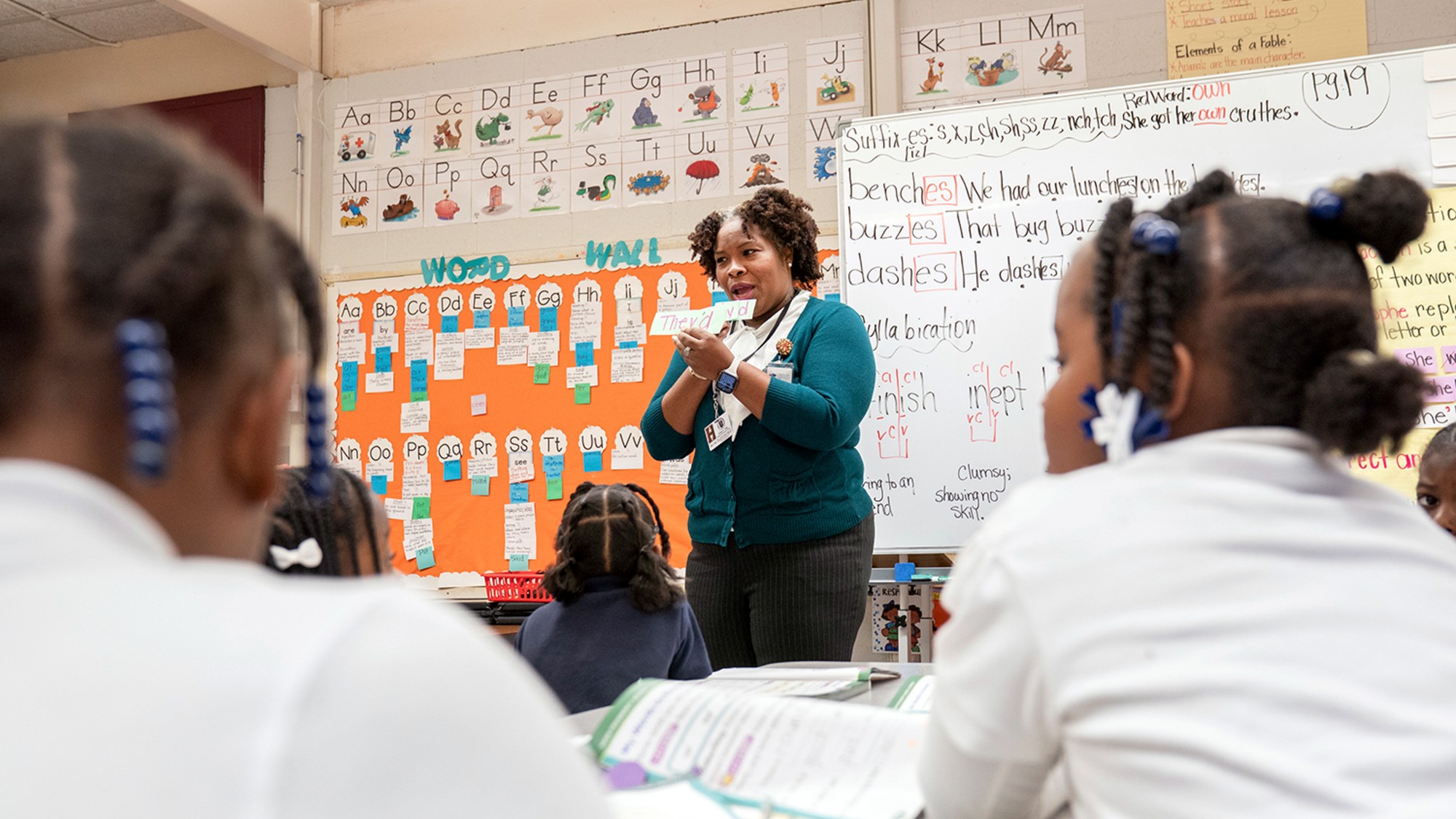
    For years, Southern states with struggling education systems could console themselves: No matter how poorly they were doing, they weren’t as bad as Mississippi. Just 12 years ago, Mississippi ranked 48th in K-12 education, based on metrics like attendance, reading proficiency, and on-time graduation. Now the state is no longer a punch line. It’s up to 16th in K-12 rankings and has achieved particular success in fourth-grade reading comprehension, jumping all the way to the top 10 in the National Assessment of Education Progress (NAEP). When adjusting for poverty and other demographic factors, Mississippi actually tops the nation in that category. Crucially, improvements are seen among students at all reading levels, “rather than just among higher achieving or lower achieving students,” says Dan McGrath, a retired federal education official who oversaw the tests. “It’s as if Mississippi had moved a mountain.” And it did this despite spending just $12,000 per student, much less than the national average.

    What did it change?
    Mississippi passed the Literacy-Based Promotion Act in 2013, paving the way for implementing the “science of reading” in K-3 classrooms. This multifaceted approach—which involves teaching phonics, word recognition, vocabulary, and text comprehension—gets much of the credit for the state’s turnaround, but it’s just one tenet of the law. Accountability, from both students and schools, is another. Mississippi grades its schools A to F and sends coaches to train teachers in low-performing ones. Students get to see and track their own testing data. “I like it,” one pupil, Johnny, told The New York Times. “If I make a bad grade, but I’m going up, it’s like a staircase.” At the end of third grade, those who don’t pass a literacy exam after multiple attempts are automatically held back. That “third-grade gate” has drawn praise as a tough but beneficial rule that’s paying off: a record 77.3% of third graders passed the initial administration last year. Yet it also has its share of critics. 

    What do they say?
    They say Mississippi has stacked its deck. Of course all the fourth graders can read, they say—the kids who couldn’t were kept back in third grade. In 2023, fully 7% of Mississippi third graders, over 2,000 kids, were held back. One study in the statistics journal Significance said Mississippi’s approach amounts to “gaming the system.” Others point out that Mississippi scores didn’t even improve much, it’s just that other states got worse. Still, some research indicates that something real is happening. A Florida State University study found compulsory grade repetition alone can’t explain higher test scores. Mississippi’s literacy gains have also remained consistent across every decile on the NAEP exam. A 90th-percentile score, for instance, leaped from 249 in 2005 to 262 in 2024, and a 10th-percentile score from 157 to 170. Andrew Ho, a testing expert at Harvard, told ChalkBeat that he doesn’t “see any smoking guns or red flags” around Mississippi’s success. That’s why other states are starting to copy it.

    What are other states doing?
    Across the South, states from Louisiana to Virginia have adopted at least some of Mississippi’s strategies, including teacher-training methods, curriculum reform, and high standards. Florida, Indiana, North Carolina, and Oklahoma have even copied the third-grade gate approach. Now Louisiana leads the country in recovery from pandemic-related losses in reading, while Alabama takes the crown for math recovery. These states particularly shine when NAEP scores are adjusted for demographics. After considering factors like poverty and race, the Urban Institute think tank determined, Mississippi tops the nation in fourth-grade reading, fourth-grade math, and eighth-grade math, and it’s fourth in eighth-grade reading. Still, not everyone is satisfied with Mississippi’s middle-school progress.

    What happened in middle school?
    If you don’t adjust for demographics, Mississippi eighth graders rank a dismal 41st in reading. Things are getting better—between 2013 and 2022, its eighth graders cut their gap with the national average in half—but the pace has been slower than in lower grades. That’s hardly a surprise, since the 2013 law focused specifically on improving early-education literacy. The state hasn’t invested the same time, money, and resources into middle-school reading, the time when literacy instruction shifts from “learning to read” to “reading to learn.” Critics say Mississippi needs to ensure that older children can read—and that students’ math skills get the same attention as their reading skills.

    Is the state planning to do that?
    Mississippi is now looking to pass a bill that would expand the 2013 literacy reforms into higher grades. The teachers tend to appreciate the help from literacy coaches, Mississippi education official Tenette Smith says. “We hear from teachers and administrators who say, ‘I didn’t know what I didn’t know.’” The state also seeks to adopt similar reforms for primary-school mathematics, mandating math coaches in all schools, prioritizing grades 2-6, and placing a cutoff gate for fifth grade so that only students who are ready will move on to sixth-grade algebra classes. Pilot programs are already underway to improve reading comprehension in upper grades. While it’s too soon to tell whether those efforts will pay off longterm, the early test results are promising. The Mississippi miracle is “proof positive that, yes, children in poverty can learn and can succeed,” said Carey Wright, Mississippi’s former superintendent of education. “As educators, our job is to do whatever it takes.”




    Only in America

    A Colorado teenager has been granted a religious exemption to her high school’s hall-pass system because she’s a satanist. The Elizabeth school district asks students to enroll in a digital system that tracks the frequency and duration of bathroom breaks. But lawyers for The Satanic Temple argued successfully that its client could not enroll in the system without violating the Temple’s third tenet: “One’s body is inviolable, subject to one’s own will alone.”


    talking points

    SCOTUS: Ending the South’s majority-Black districts

    The Supreme Court has authorized Republican-run states “to disenfranchise Black voters,” said Adam Serwer in The Atlantic. A 6-3 majority, split along ideological lines, ruled last week in Louisiana v. Callais that a Louisiana redistricting map that created two majority-Black districts out of six, in a state whose population is one-third Black, was an “unconstitutional racial gerrymander.” The decision effectively gutted Section 2 of the 1965 Voting Rights Act, “which prohibits racial discrimination in voting.” Justice Samuel Alito’s majority opinion was steeped in “reactionary color blindness”—pretending to be neutral about race in order to preserve an unjust racial hierarchy. Alito argued that states are only in violation of the VRA if they draw districts to intentionally disadvantage minority voters. If states seek partisan advantage in redistricting, Alito said, that’s constitutional under a 2019 Supreme Court ruling—as if disadvantaging Democrats doesn’t also disadvantage Blacks. In other words, according to Chief Justice John Roberts and his allies, “preventing Louisiana from disenfranchising Black voters is racist.” As a result of this “mind-boggling piece of judicial overreach,” said The New York Times in an editorial, red states like Louisiana, Alabama, and Mississippi can “slice minority voters into small and powerless slivers,” so long as they claim race isn’t the reason. Once again, the court obviously “acted more like partisan legislators than like impartial judges”: Its six conservative justices, all nominated by Republicans, “have most likely made it easier for the party that chose them to hold power in Congress.

    “The Voting Rights Act was a landmark of American liberty that helped to break Jim Crow,” said The Wall Street Journal, but it’s not 1965 anymore. As Alito noted, “Black voters now participate in elections at similar rates as the rest of the electorate.” This ruling will finally help end Democrats’ “partisan abuse of race to carve up congressional districts.” In the name of preventing the “dilution” of Black votes, Louisiana was compelled to draw up a preposterous majority-minority district that snakes 250 miles across the state. In their dissents, said Jason Willick in The Washington Post, the three liberal justices conflated the right to vote with the “right to have the satisfaction of voting for the winner.” Sometimes—say, for Republicans in San Francisco or Democrats in Wyoming—our preferred candidates lose, and we have to “accept the outcome of the legislative process anyway.” In a representative democracy, being “outnumbered” is not the same as being “disenfranchised.”

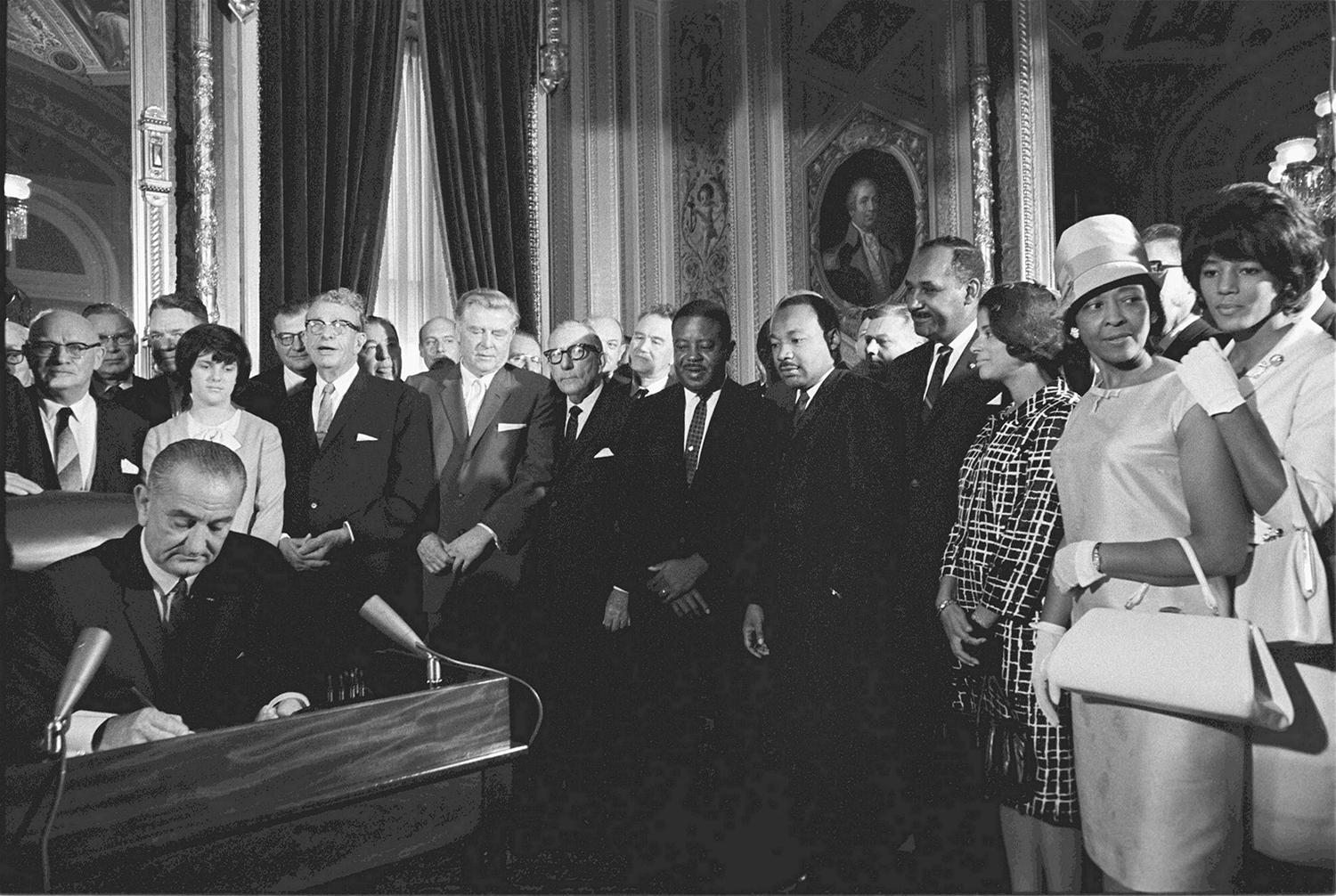
    The reality is that Callais “will be devastating for communities of color,” said Ari Berman in Mother Jones. During the Jim Crow era, Black Americans had essentially no representation in Congress, even in Southern states with large Black populations. But with the forceful support of the Rev. Martin Luther King Jr. and the civil rights movement, the VRA put an end to decades of “white supremacy and one-party rule” across the South. As Justice Elena Kagan put it in an anguished dissent, the law “was born of the literal blood of Union soldiers and civil rights marchers.” She pointed out that the VRA has proved so essential in “bringing this Nation closer to fulfilling the ideals of democracy and racial equality” that Congress has reauthorized it five times—including in 2006, when the Senate voted 98-0. By rendering the law toothless, the court will likely “trigger the largest drop in Black representation since the end of Reconstruction.” And legal recourse will be all but impossible, said Erwin Chemerinsky in the Los Angeles Times. In theory, states can still be sued if they draw districts to discriminate by race. But as Kagan put it, without “smoking-gun evidence of a race-based motive”—a prospect she deemed “almost fanciful”— the law is now moot. 

    The court’s ruling will trigger an all-out redistricting war, said Ian Millhiser in Vox. “Callais is such an effusive love letter to the concept of partisan gerrymandering” that states will have no fear of rigging districts to favor the party in power. Louisiana, with the Supreme Court’s blessing, has already delayed its primaries so it can redraw its map, while Tennessee’s GOP governor called a special session to discuss doing the same. Republican-controlled Alabama may follow suit. Democrats will respond in kind, said Andrew Egger in The Bulwark. Many in the party are “pledging to continue the fight-fire-with-fire approach they’ve carried out successfully over the last year” in California and Virginia. By 2028, both red and blue states may eliminate most or all congressional seats held by the minority party. How is this absurd “gerrymandering tit-for-tat” good for democracy? Will anyone in Congress dare “to find some anti-gerrymandering measures on which there’s an appetite for bipartisan agreement”? If Americans are sick of this partisan race to the bottom, they should demand it. 


    people

    Why cars call to Seinfeld

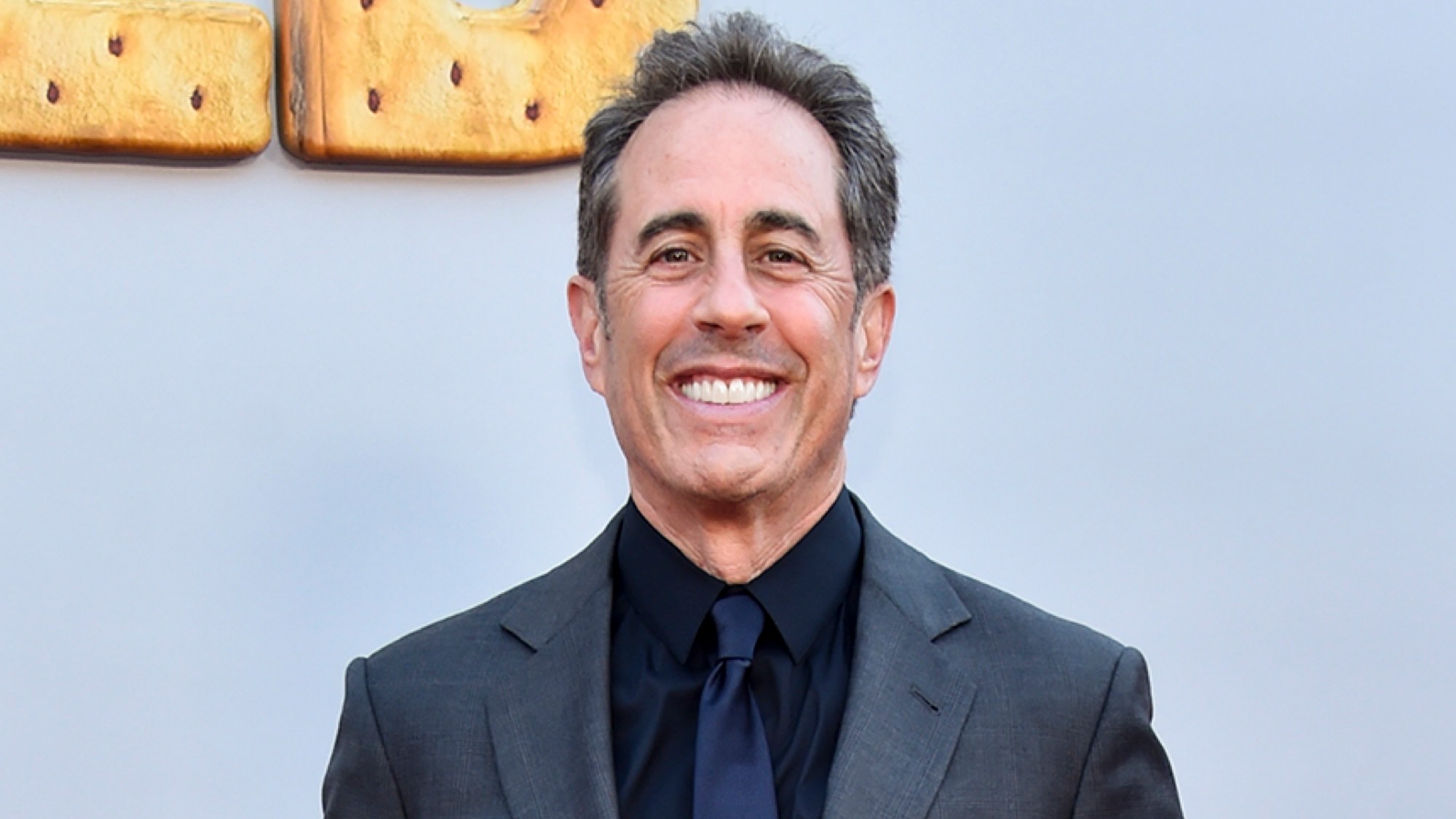
    Jerry Seinfeld has only a few pleasures in life, said Jamie Kitman in Air Mail. “You know, I like watching baseball, I like driving cars, and I like comedy, that’s about it,” says the comedian, 72. “I think most of the rest of life has been a huge disappointment.” His love of cars—he has a multimillion-dollar collection but doesn’t know exactly how many autos he owns—started as a kid on New York’s Long Island. “I was always very offended by the large size and lack of quality of American cars. My parents only had used American cars. Ramblers, Chevrolets.” But there was a British sports car dealer in his hometown. “The whole place was on dirt. They didn’t even have a showroom. But the first time I saw an MGB and an MG Midget there, I completely collapsed. The MGB is one of the most elegantly designed cars.” At the beach club his family belonged to, one lifeguard drove a Triumph Spitfire and another an MG Midget. They “were the coolest people you could ever dream of at 10 or 11 years old, and they parked side by side. I swear to God, I’ve never gotten over the sight of these muscular guys. I don’t know if they were teenagers or in their early 20s, but that was it. I was completely branded at that point. I have a ’68 Midget in primrose yellow today, all original everything.”


    Saturday Wrap was written and edited by Theunis Bates, Bill Falk, Bruno Maddox, and Tim O’Donnell.

    Image credits, from top: Rory Doyle/The New York Times/Redux, Getty (2)
     

    Recent editions

    • Evening Review

      JD Vance goes to Iowa

    • Morning Report

      Tennessee splinters its Black vote

    • Evening Review

      Rising U.S.-Canada tensions

    VIEW ALL
    TheWeek
    • About Us
    • Contact Future's experts
    • Terms and Conditions
    • Privacy Policy
    • Cookie Policy
    • Advertise With Us
    • FAQ
    Add as a preferred source on Google Add as a preferred source on Google

    The Week is part of Future US Inc, an international media group and leading digital publisher. Visit our corporate site.

    © Future US, Inc. Full 7th Floor, 130 West 42nd Street, New York, NY 10036.