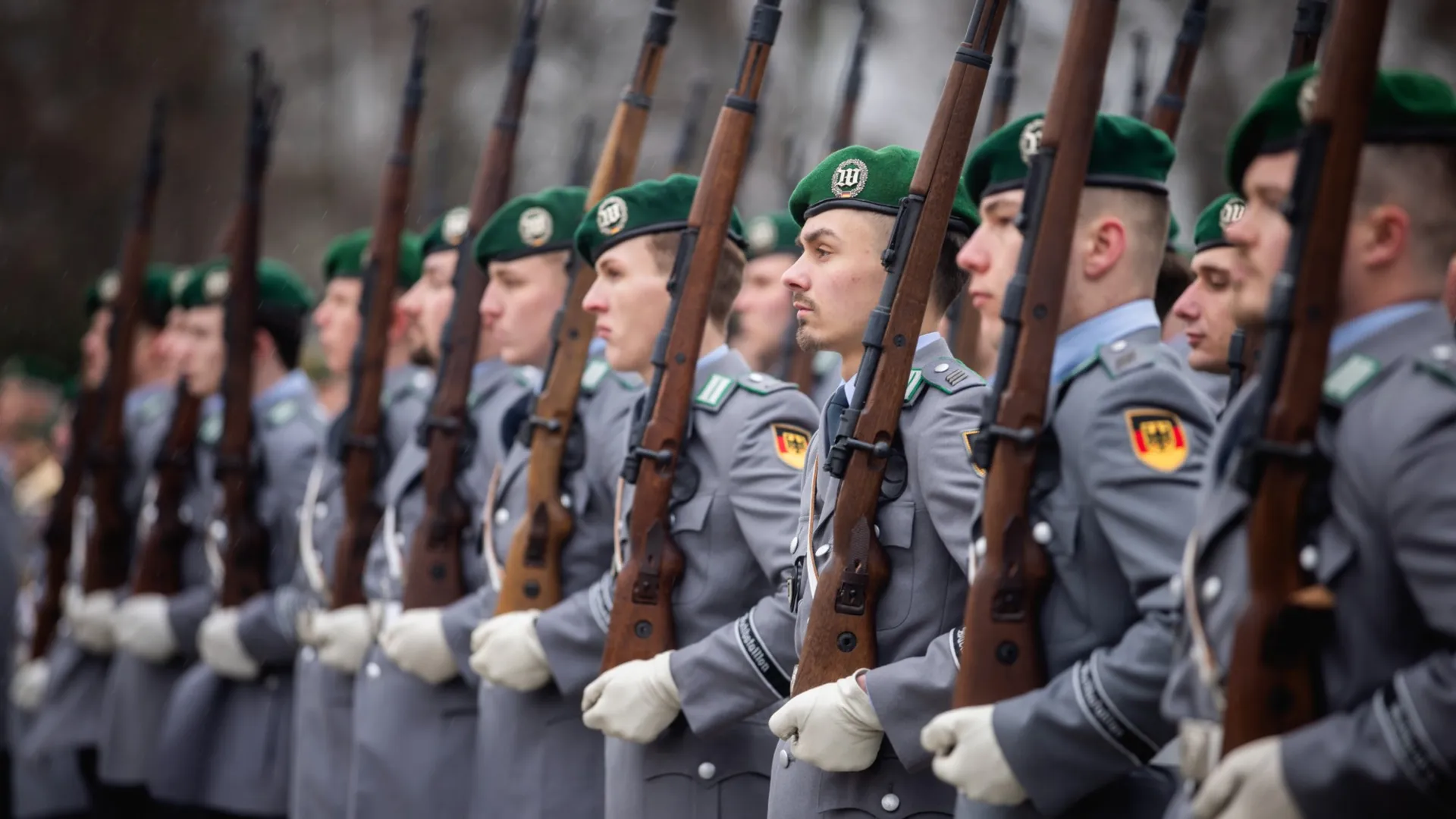
As the EU faces the encroaching threat of outside countries, one nation is taking matters into its own hands. Germany is heavily investing in its military budget, spending more money on defense in 2025 than in the prior 36 years, according to recent reports. Officials have stated their intentions to make the country’s military the strongest in Europe over the next decade and a half, all while President Donald Trump is ratcheting up German-U.S. tensions.
Germany put significant resources into its military last year, with its defense expenditure “growing by 24% year-on-year to $114 billion,” said a report from the Stockholm International Peace Research Institute. The German government was the largest military spender among the 29 European members of NATO, and its military budget “exceeded the 2.0% threshold for the first time since 1990, reaching 2.3% of GDP in 2025.”
The country has “dramatically boosted its military spending as part of a long-term vision helmed by both former Chancellor Olaf Scholz and German Defense Minister Boris Pistorius,” said Military.com. Pistorius is overseeing a defense development plan whose aim is to turn the German Army into the “strongest conventional army in Europe” by 2039.
The Week
Escape your echo chamber. Get the facts behind the news, plus analysis from multiple perspectives.
SUBSCRIBE & SAVE
Sign up for The Week's Free Newsletters
Join more than 350,000 subscribers and keep yourself informed with a selection of The Week’s most interesting, enlightening and entertaining stories - plus daily puzzles.
Join more than 350,000 subscribers and keep yourself informed with a selection of The Week’s most interesting, enlightening and entertaining stories - plus daily puzzles.
Latest Videos FromThe Week US
As part of this plan, Germany aims to continue upping its military spending in the near future. The country is “planning to increase defense spending by a fifth in 2027 compared with this year,” said the Financial Times, putting it ahead of NATO’s military budget goal by at least six years. To accomplish this, Germany “unlocked its constitutional debt brake last year to allow virtually unlimited borrowing for defense.” The military plan “dwarfs that of fiscally constrained France and the U.K., Europe’s two big nuclear-armed powers.”
The rearmament of Germany is a “marked turnaround from just a few years ago when the country was widely regarded as a defense spending laggard and security free rider by its critics,” said Stars and Stripes. Germany has also been increasing its wartime industrial capabilities, with “manufacturers opening new factories and converting old ones to churn out ammunition.” The country has signed $130 billion worth of weapons contracts since 2022, according to the German newspaper Der Spiegel, per Military.com.
What next?
This remilitarization is happening alongside the looming question of how Trump’s foreign policy will affect Germany. After German Chancellor Friedrich Merz said the U.S. has been “humiliated” by its war with Iran, Trump announced he was withdrawing approximately 5,000 American troops from Germany. The decision came “at a time of deep divisions between Washington and its European allies, with trans-Atlantic tensions already heightened by tariff threats,” said NBC News.
German defense analysts have “expressed little concern in the days following the announcement over losing a small chunk of the about 35,000 American troops currently stationed in the country,” said The New York Times. But some experts appeared concerned that the withdrawal may create an “economic hit that could be felt in communities that depend on American military institutions.” From “simple stripes to stars, I know all the ranks,” said Derya Uluc, who runs a dry cleaners near the U.S. Ramstein Air Base in southeast Germany, to the Times. “I have to be honest, business in Ramstein only works because of the Americans.”