The Week The Week
flag of US
US
flag of UK
UK
https://cdn.mos.cms.futurecdn.net/flexiimages/jacafc5zvs1692883516.jpg

SUBSCRIBE & SAVE

Less than $3 per week

Sign in
  • View Profile
  • Sign out
  • The Explainer
  • The Week Recommends
  • Newsletters
  • Cartoons
  • From the Magazine
  • The Week Junior
  • Student Offers
  • More
    • Politics
    • World News
    • Business
    • Health
    • Science
    • Food & Drink
    • Travel
    • Culture
    • History
    • Personal Finance
    • Puzzles
    • Photos
    • The Blend
    • All Categories
  • Newsletter sign up Newsletter
  • The Week Evening Review
    Green antisemitism, a controversial art fair, and pharmacy shortages

     
    TODAY’S BIG QUESTION

    Does the Green Party have an antisemitism problem?

    Green Party membership has ­tripled since Zack Polanski took over as leader last September, and the party is forecast to “make gains in Labour’s London strongholds” in today’s local elections, said The Times. But “there is a darker side”. As Polanski works to cultivate a new, populist base, he seems unwilling or unable to recognise the antisemitism “staring him in the face” from within his party.

    What did the commentators say?
    Greens are “often lionised as nicer and kinder than other parties”, said The Telegraph. But how do voters square the party’s “‘anti-racist’ credentials” with “the revolting online behaviour of many” of its candidates?

    Two standing in Lambeth, Sabine Mairey and Saiqa Ali, were arrested last week on suspicion of stirring up racial hatred online. Mairey allegedly shared a post suggesting an attack on a synagogue “isn’t antisemitism” but “revenge” for Israel “murdering people”. Other candidates have defended the 7 October massacres, questioned whether “Zionism is a mental illness” and “implied that antisemitism is justified”, said The Telegraph.

    No one is suggesting that Polanski, himself Jewish, is “some frothing-at-the-mouth antisemite”, said Tom Slater in The Spectator. But the accusation that the party “has become a magnet for antisemites”, and “a key voice” in downplaying the growing threat” to Britain’s Jews, is “hardly unfounded”.

    Journalists have accused Polanski of using his Jewish identity as “a political shield”, said Owen Jones in The Guardian. How does their treatment of him square with his party’s “repeated, explicit condemnations of antisemitism?” Yes, there have been “allegations of vile antisemitism” by party candidates, and “a small number of examples” from within a party that has nearly quadrupled in size since September – but “to extrapolate from these” and “smear an entire party” is “cynical”.

    What next?
    Polanski’s vocal support for Palestine has triggered an antisemitism smear campaign “almost identical to the one that eventually saw Jeremy Corbyn and his leftist, pro-Palestine supporters ousted from the Labour Party”, said Tony Greenstein, from the Palestine Solidarity Campaign, on Al Jazeera. How the Green leader responds “will determine not only the future of his party, but potentially the direction of British politics”.


    THE EXPLAINER

    The tensions overshadowing the Venice Biennale

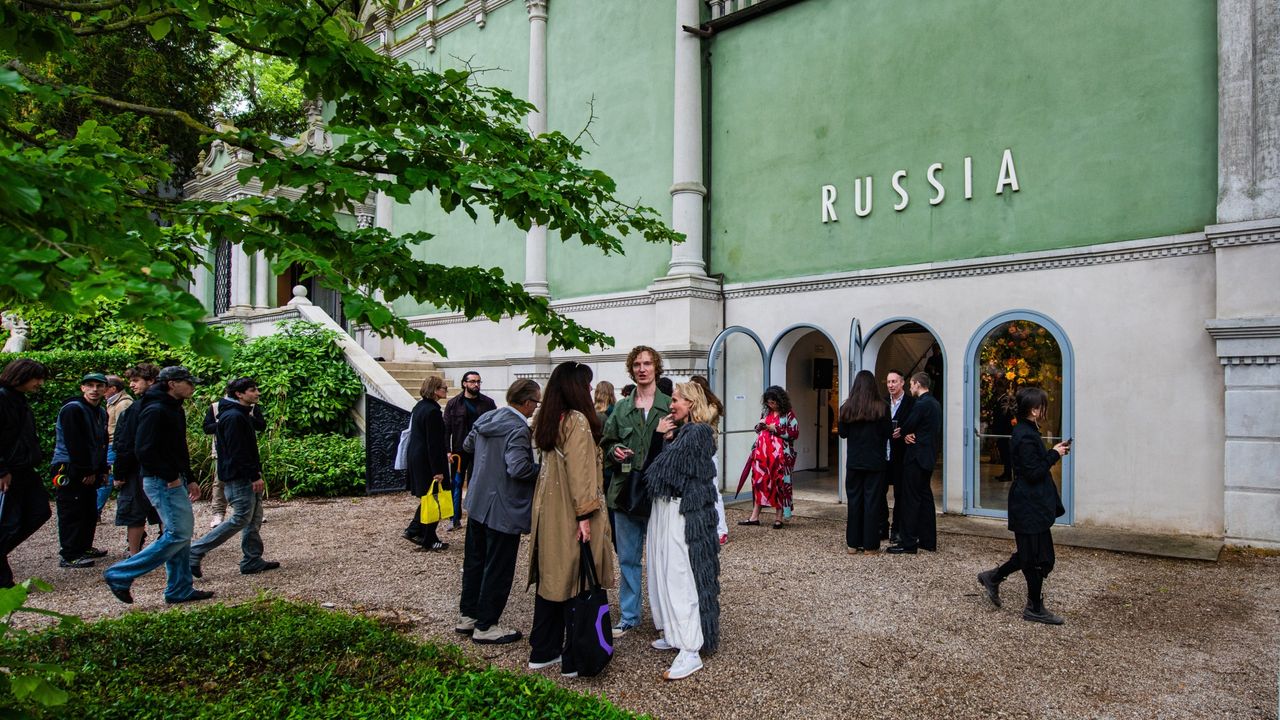
    One of the world’s biggest and most prestigious art events is facing a storm of controversy, resignations and boycotts over the ongoing wars in Europe and the Middle East. The 61st edition of the Venice Biennale, held every two years, began on Tuesday “under grey clouds and rain showers”, reflecting an atmosphere dominated by “political tension, parties and protest”, said Lanre Bakare in The Guardian.

    Who’s angry and why?
    Last week, the entire five-person Biennale jury resigned over the decision to allow Russia to participate. Russia did not take part in the past two editions because of the outcry over its war in Ukraine, but was allowed to reopen its pavilion this year in what The New York Times called a “soft-power opportunity” for the Kremlin.

    Defending the decision, the Biennale described itself as an “open institution” that “rejects any form of exclusion or censorship of art”. But Italy’s Culture Minister Alessandro Giuli boycotted the opening in protest, and the European Commission has threatened to terminate or suspend its €2 million (£1.73 million) grant for the exhibition.

    In letters seen by the Financial Times, the commission warned that Russia’s participation would violate a ban on “providing services” to the Kremlin, as the pavilion is owned by Vladimir Putin’s government. Faced with the threat of further protests and boycotts ahead of the public opening this Saturday, organisers bowed to pressure and agreed to close the Russian pavilion to the public.

    What about Israel?
    After shuttering its Biennale pavilion in 2024 amid growing condemnation of its Gaza occupation, Israel is back this year. But the jury’s decision not to award artists from countries whose leaders are facing charges of crimes against humanity by the International Criminal Court includes Israel’s Benjamin Netanyahu, as well as Putin.

    “Their decision discriminated against me on a racial basis,” said the Romanian-born Israeli sculptor Belu-Simion Fainaru, who is representing Israel. “I’m an artist and have equal rights, and I can’t be judged by belonging to a country or a race. I should just be judged on the quality and message of my art.”


    QUOTE OF THE DAY

    “It was impossible for her to live, let alone with anybody. You couldn’t go on with that intensity of life, and those drugs, and manage to survive.”

    Arthur Miller on his marriage to Marilyn Monroe, in newly released recordings of conversations between the playwright and his biographer Christopher Bigsby. Monroe was “a very smart woman” and “delightful to be with”, Miller said, but “death was always on her shoulder – always”.


    Poll watch

    Seven in ten Hungarian voters who backed newly elected Prime Minister Péter Magyar want his government to protect LGBTQ+ rights, according to research for the European Council on Foreign Relations. Only 23% of voters who supported Viktor Orbán are in favour of such rights, the poll of 1,001 adults found.


    IN THE SPOTLIGHT

    Why pharmacies are struggling to fill shelves

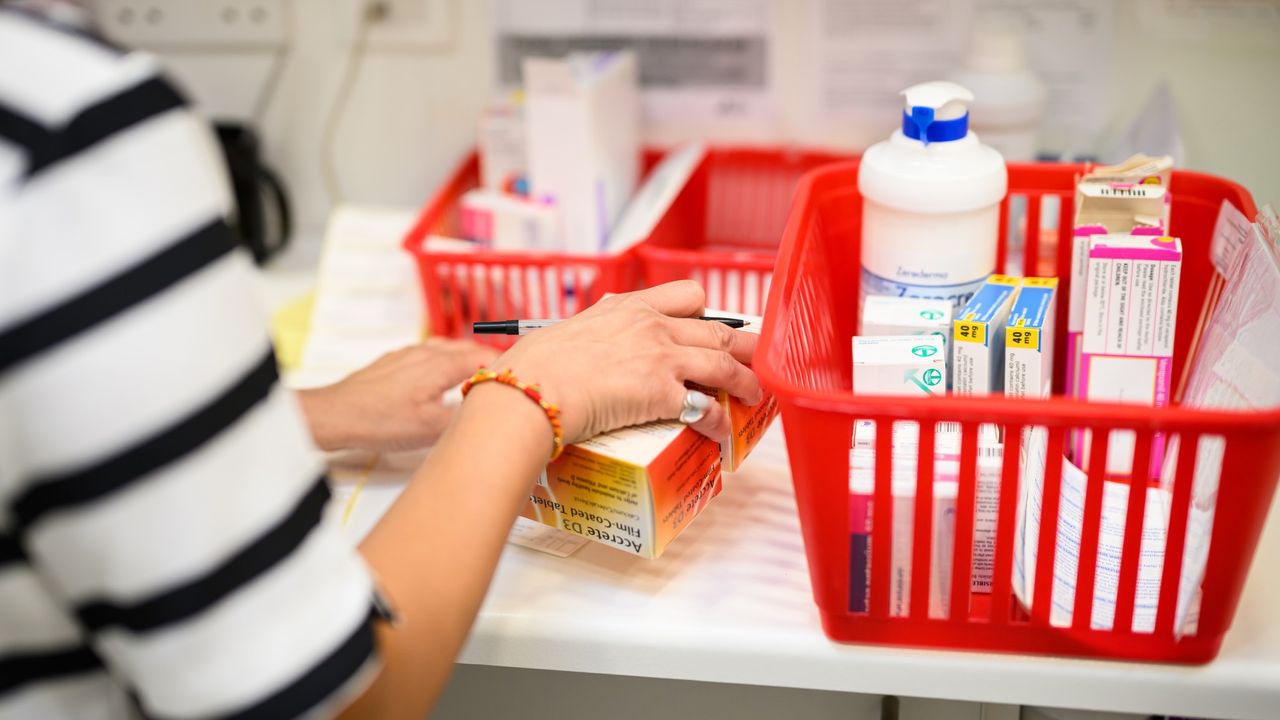
    NHS patients are enduring “rounds of phone calls and anxiety” to secure their prescriptions amid a worsening shortage of key pharmaceuticals, said the BBC. Access to prescription medication in England is “at its most fragile point in years”, with people with heart conditions, increased stroke risk, eye infections, bipolar disorder and ADHD among those struggling to obtain medications on which they depend.

    ‘Significant pressure’
    Medicines UK, which represents drugmakers responsible for 85% of all NHS prescriptions, warned last month that shortages of certain active pharmaceutical ingredients could place “significant pressure” on the health service this summer.

    Affected drugs include those containing aspirin and paracetamol, as they are manufactured using by-products from the petrochemical industry, which has been hit by the Strait of Hormuz blockades. Some pharmaceutical logistics routes also rely on sea and air transport hubs in the Gulf. These routes are particularly fragile because many medicines require special handling, such as continuous cold storage.

    UK pharmacies are already reportedly charging 20% to 30% more for over-the-counter medicines.

    ‘Heavily dependent’
    The NHS reimburses pharmacies a fixed amount for each medicine they dispense, and pharmacies are expected to procure the drugs at or below that price. If costs rise, a medicine can be added to the government’s price concessions list, and pharmacies are then reimbursed at the updated rate. However, when market prices rise rapidly, pharmacies may be forced to supply medicines at a loss, making it more difficult to maintain stock levels and increasing the risk of delays or unexpected shortages for patients.

    The war in the Middle East has “aggravated the situation”, said Pharmacy Business, but it is “not the sole reason for the shortage”. Around 60% of shortages are caused by manufacturing bottlenecks, alongside insufficient reserves of medicines and their raw materials. The UK is currently “heavily dependent” on foreign manufacturing.

    The government says it is working to boost Britain’s domestic medicine manufacturing industry. A spokesperson told The Telegraph that this includes “offering financial incentives for the manufacturing of more medicines”.


    Good day 🪄

    … for HBO’s Harry Potter TV adaptation, which has been renewed for a second series, months before the first is due to premiere. The second instalment of the series based on J.K. Rowling’s saga will begin filming in autumn, ahead of the Christmas release of the US network’s version of “Harry Potter and the Philosopher’s Stone”.


    Bad day 🏦

    … for Lloyds, which is the most complained-about UK high-street bank, according to latest Financial Conduct Authority data. The watchdog received 90,837 complaints from Lloyds Bank customers in the last six months of 2025, plus a further 79,508 about Bank of Scotland, which is owned by the same company. “When something doesn’t work as it should, we listen and learn,” a Lloyds spokesperson said.


    PICTURE OF THE DAY

    Religious summit

    Samaritan priests raise Torah scrolls as worshippers join in a dawn Passover ceremony on top of Israel’s Mount Gerizim. Fewer than 1,000 people follow Samaritanism, a Jewish-adjacent sect with roots in the biblical region of Samaria, located in the modern-day West Bank.

    John Wessels / AFP / Getty Images


    Puzzles

    Chain Word

    Try The Week’s new daily word challenge in our puzzles and quizzes section

    Play here


    THE WEEK RECOMMENDS

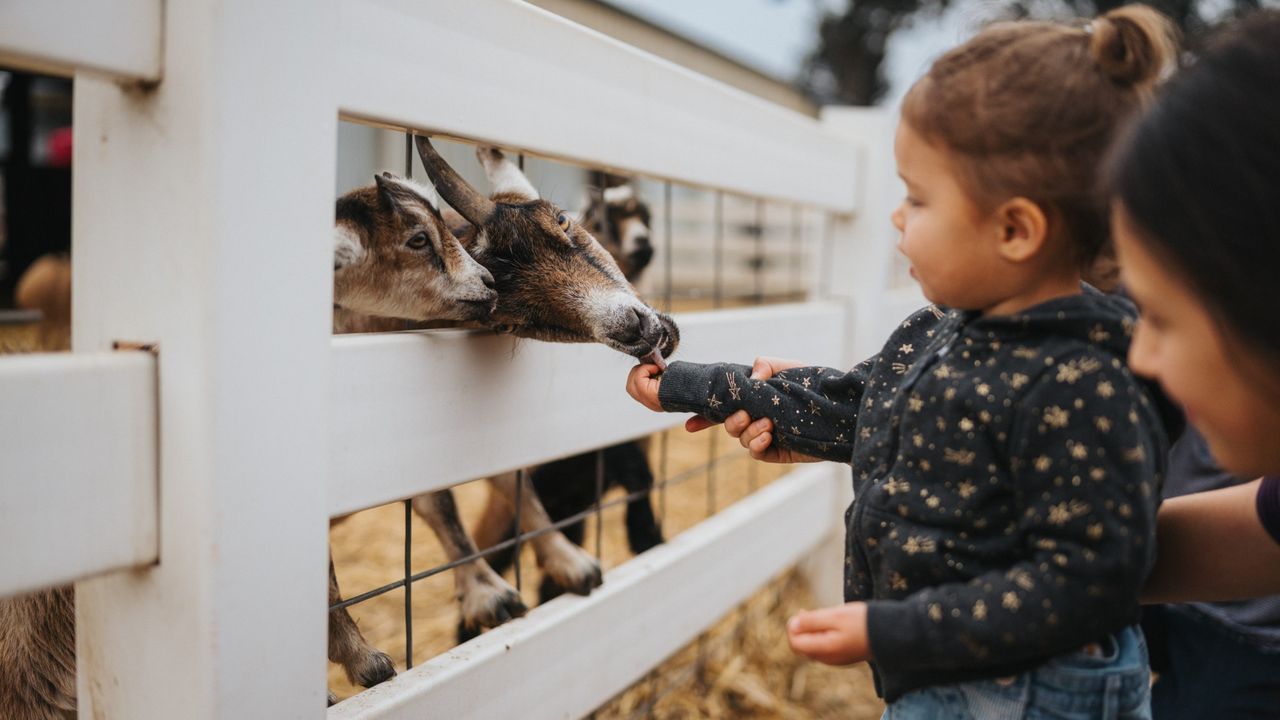
    Best city farms in the UK

    You don’t need to leave the city in order to immerse yourself in the great outdoors. Whether you’re looking for animals, nature-orientated activities, or just a bit of peace and quiet, these urban farms offer it all.

    Ouseburn Farm, Newcastle
    Ouseburn Farm is an “explosion of natural colour” in the “monochrome of the city’s tarmac and concrete”, said Patrick Barkham in The Guardian. A fully working farm, it supplies vegetables to the “hip” restaurant next door, and also provides work experience for adults with learning difficulties.

    Hackney City Farm, London
    Hackney City Farm has become a “fashionable stop-off”, thanks in part to its wholesome on-site Italian café, said Rhian Daly in Time Out. The farm is not only “thriving with happy animals”, but also acts as a “vital community hub”, offering a vegetable box collection scheme and educational courses.

    Poole Farm, Plymouth
    Despite its proximity to busy main roads, this “unique” farm is “almost like stepping back in time”, said Katie Oborn on Plymouth Live. “Crystal clear” streams run through the farm, against the “peaceful” backdrop of lowing cows. Be sure to visit the Beaver Lookout, an “aptly named spot with a view of the river and its resident beavers”.

    Meanwood Valley Urban Farm, Leeds
    Meanwood began life in 1980 operating from “two old caravans and today manages a site of 26 acres”, said Sarah McPherson on Discover Wildlife. The wooded areas provide the ideal “minibeast-friendly” habitats for children to explore and are regularly visited by school groups.


    Statistic of the day

    6.5 million: The number of Britons who have falsely claimed refunds through bank chargeback scams, according to estimates based on a survey of 2,000 people. “Friendly fraud” – when customers dispute a legitimate transaction in order to claim back the funds – is thought to have cost businesses £3.5 billion in the past year. 


    instant opinion

    Today’s best commentary

    Carry on vaping, Angela Rayner: voters might just like you for it
    Zoe Williams in The Guardian
    Angela Rayner wants to be PM and has quit vaping, and “these two facts” are “almost certainly connected”, writes Zoe Williams. But it might be a good thing for an “ambitious politician to enter the fray wearing a minor human failing very visibly on her sleeve”. To do so would “modernise respectability” in politics, and “signal a new kind of promise: a prime minister who earned the power to represent us not by their exceptionalism, but by their ordinariness”.

    The brunch craze has gone too far
    Stephen Bayley in The Telegraph
    Breakfast’s “evolution into brunch and even the perverse ‘all-day breakfast’” is a “cadet version of performance art”, writes Stephen Bayley. Smashed avocado is now “a period piece as dated as kippers and a mug of tea”, but “buttermilk waffles and nduja yogurt rush in to fill the vacuum”. The breakfast spectacles of today are reminiscent of the Edwardian era of “luxury and excess”, when a “whole table would be devoted to porridge and its utensils”.

    Prince Harry’s looking desperate – and William’s not about to feel sorry for him
    Chris Riches in the Daily Express
    Prince Harry and Meghan are expected to “jet back to the UK” this summer, writes Chris Riches, but if they “think they can just rock up” at William and Catherine’s Windsor residence, “they can dream again”. William is reportedly “still furious” about how he and his wife were treated by his brother in his “snorefest” memoir. Harry “humiliated Catherine for money and like any protective husband, William cannot forgive and forget”.


    word of the day

    Philology

    The study of languages, from the Ancient Greek “philología” (love of word). A French professor is under investigation for awarding himself an invented Gold Medal of Philology. Florent Montaclair’s hoax was exposed by suspicious Romanian journalists after he named a Romanian philologist as the next recipient. Montaclair admits creating the Nobel-style prize but denies any illegality.


    Evening Review was written and edited by Rebecca Messina, Jamie Timson, Harriet Marsden, Elliott Goat, Will Barker, Chas Newkey-Burden, Irenie Forshaw, David Edwards, Steph Jones and Kari Wilkin, with illustrations from Stephen P. Kelly.

    Image credits, from top: illustration by Stephen P. Kelly / Getty Images; Simone Padovani / Getty Images; Leon Neal / Getty Images; John Wessels / AFP / Getty Images; Fly View Productions / Getty Images

    Morning Report and Evening Review were named Newsletter of the Year at the Publisher Newsletter Awards 2025
     

    Recent editions

    • Evening Review

      Could hantavirus be a threat?

    • Morning Report

      Trump’s Indiana revenge election

    • Evening Review

      Trump’s plan for your retirement

    VIEW ALL
    TheWeek
    • About Us
    • Contact Future's experts
    • Terms and Conditions
    • Privacy Policy
    • Cookie Policy
    • Advertise With Us
    • FAQ
    Add as a preferred source on Google Add as a preferred source on Google

    The Week is part of Future US Inc, an international media group and leading digital publisher. Visit our corporate site.

    © Future US, Inc. Full 7th Floor, 130 West 42nd Street, New York, NY 10036.