The Week The Week
flag of US
US
flag of UK
UK
https://cdn.mos.cms.futurecdn.net/flexiimages/jacafc5zvs1692883516.jpg

SUBSCRIBE & SAVE

Less than $3 per week

Sign in
  • View Profile
  • Sign out
  • The Explainer
  • The Week Recommends
  • Newsletters
  • Cartoons
  • From the Magazine
  • The Week Junior
  • Student Offers
  • More
    • Politics
    • World News
    • Business
    • Health
    • Science
    • Food & Drink
    • Travel
    • Culture
    • History
    • Personal Finance
    • Puzzles
    • Photos
    • The Blend
    • All Categories
  • Newsletter sign up Newsletter
  • The Week Evening Review
    Farage’s fightback, Iran’s power vacuum, and the football booze ban

     
    IN THE SPOTLIGHT

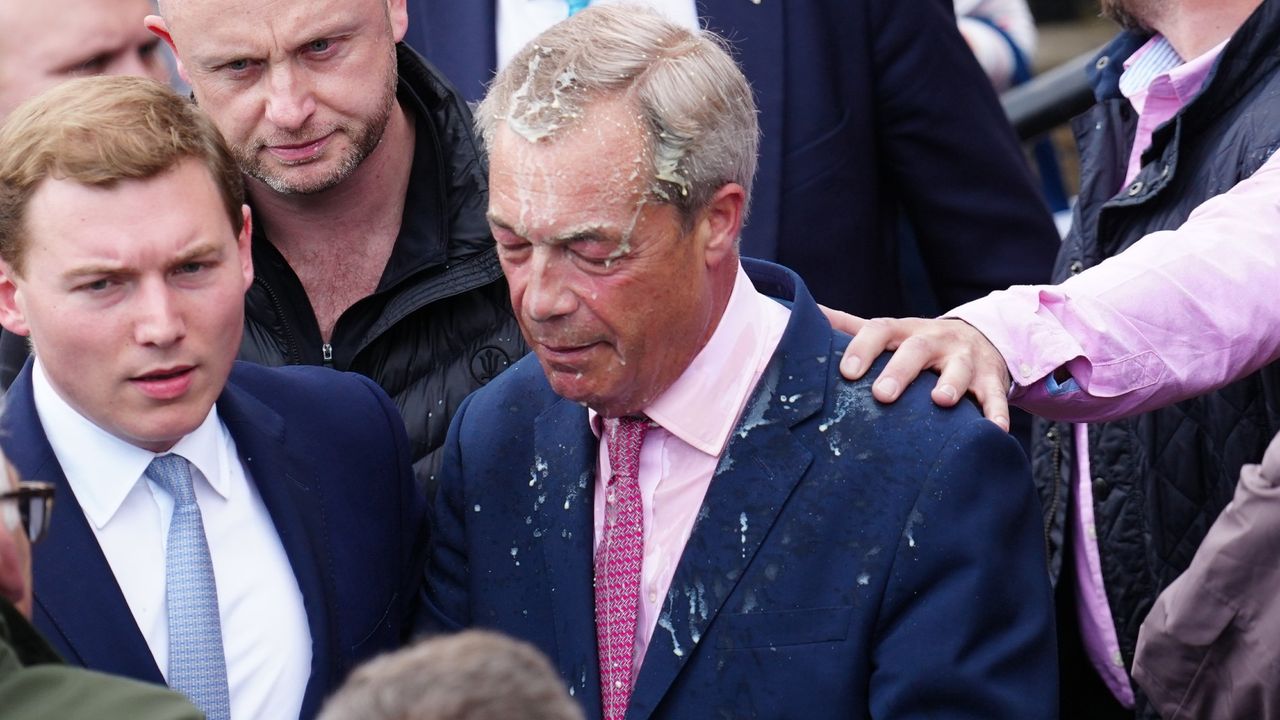
    The crypto criminal in Nigel Farage’s inner circle

    Nigel Farage has said he will resign as an MP to fight a by-election in his Clacton constituency that he says will be a “chance to stick two fingers up to the establishment”.

    His decision comes amid a row over his finances, including a Sunday Times report that he did not declare benefits, including staff and security, received from his long-time adviser George Cottrell. Farage denies that the benefits required registration under the rules governing MPs.

    Known as “Posh George”, Cottrell is the 32-year-old “babyfaced British aristocrat and former US federal inmate” who has been “Farage’s closest adviser for more than a decade”, said The Sunday Times.

    Mayfair fixer
    George Swinfen Cottrell was born into the heart of the British establishment. His father went to school with Prince Andrew, while his mother is heiress to a “family soap empire” and a former girlfriend of King Charles.

    After being expelled from school due to a reported gambling addiction, Cottrell became a “fixer-cum-financier to the ultra-rich in Mayfair”, said The Times. According to a 2017 Telegraph profile, he worked in offshore banking before being made Ukip’s head of fundraising in 2015 at the age of 22.

    The following year, he was caught in an undercover FBI sting operation agreeing to launder drug money. Facing 20 years in jail, he agreed a plea deal in which he admitted guilt to a wire fraud charge and served eight months in a US prison.

    ‘Like a son’
    Cottrell is “not some fringe figure”, said The Independent’s political editor David Maddox, but “one of the tightest members of the Reform leader’s inner circle”. Farage has previously described Cottrell as being “like a son”, with him calling Nigel “daddy”.

    While living in Montenegro, Cottrell also became a key player in Tether, an online cryptocurrency bookmaker and casino part-owned by Christopher Harborne, the billionaire who gave Farage a £5 million gift in early 2024.

    He “holds no official position” in Reform, yet he has become one of Farage’s “closest political confidants”, said Politics UK. “Reform UK insiders maintain that there is one rule” in the party, said UnHerd’s Rob Lownie: “don’t ask what Posh George does”.


    TODAY’S BIG QUESTION

    Who is in charge of Iran?

    As Iran’s religious, political and military elite turned out to pay their respects to the country’s former supreme leader, Ayatollah Ali Khamenei, one figure was conspicuously absent.

    Ayatollah Mojtaba Khamenei, who succeeded his father as the de facto head of the Islamic Republic, has not been seen in public since being targeted by joint US-Israeli air strikes on the first day of the war. Believed to be seriously injured in the strike that killed his father, his absence has “raised questions about who is really running the country, and allowed extraordinary open divisions to fester”, said Farnaz Fassihi in The New York Times.

    What did the commentators say?
    If the week-long funeral for Ali Khamenei represents a “calculated projection of strength by a regime determined to demonstrate continuity and resilience despite an extraordinary crisis”, it has done little to quell questions “over the country’s political succession”, said France 24.

    In the void left by the killing of a supreme leader “who exerted absolute power over all important decisions” and the greatly diminished influence of his successor, the conservative faction has “split”, said Fassihi. Generals in the Islamic Revolutionary Guard Corps have “consolidated power, effectively running the country”.

    For the 36 years of the previous ayatollah’s reign, “whenever the US confronted Iran, American policymakers knew it was Khamenei who would make the final decision”, said Joshua Keating for Vox. But now “they’re no longer so sure”.

    “There’s no one commander in chief,” said Sanam Vakil, director of the Middle East programme at Chatham House. “It is a system that is commanding collectively for the time being.”

    What next?
    Khamenei’s funeral is a “grand reminder that the old guard has given way to the new,” said BBC diplomatic correspondent Paul Adams. “And with the new faces comes a new approach with its own implications.”

    The new leadership is not made up of ageing ideologues “but of generally post-revolutionary leaders ruthlessly focused on preserving the state and willing to act more decisively than their predecessors”, said international affairs professor Vali Nasr. “They have a very clear agenda. They managed the war and now they’re going to manage the peace as well.”


    QUOTE OF THE DAY

    “This is a magnificent vindication of the Daily Mail’s journalism.”

    A spokesperson for Associated Newspapers Limited welcomes the High Court’s dismissal of Prince Harry’s case against the publisher. In his ruling, Mr Justice Nicklin found that the plaintiffs had failed to prove allegations that journalists used unlawful methods to gather information.


    Poll watch

    Almost half (48%) of Britons lost three or more hours of sleep per night during last month’s heatwave, according to a YouGov survey of 2,135 people commissioned by Greenpeace. Nearly two-thirds (65%) of respondents struggled to sleep, while 23% said they or someone in their household had become unwell as a result of the heat.


    THE EXPLAINER

    Booze it like Burnham: time to lift stadium alcohol bans?

    A “political row” about football’s “drinking culture” is now “in full swing”, said Politico, after Andy Burnham said a ban on football fans drinking alcohol in the stands is “wrong”. The prime minister in waiting is considering lifting the ban, but the current PM is standing by it.

    What are the current laws?
    The Sporting Events (Control of Alcohol etc.) Act 1985 was passed in response to concerns about booze-fuelled football hooliganism. It bans the consumption of alcohol at football games in stands or anywhere within sight of the pitch at stadiums in England and Wales.

    In Scotland, the rules are even stricter: alcohol cannot be sold or consumed anywhere in the stadium, with limited exceptions in hospitality areas.

    What’s the problem?
    Critics say that the English law means that fans end up drinking more quickly during half-time because they have only around 15 minutes before returning to the stands. This encourages increasing consumption rather than moderating it, it has been argued.

    There’s also the question of whether it is fair to single out football, when data suggests that football crowds are far less violent than in the 1980s. Spectators can drink alcohol in their seats at rugby union, rugby league, cricket, horse racing, tennis, darts and other events.

    In many other countries in Europe, including Germany and the Netherlands, football fans can drink in their seats, although rules are often tightened for derby matches and other fixtures that are deemed high risk.

    Will Burnham change the rules?
    The likely new prime minister hinted over the weekend that he might overturn the ban, saying there was “something wrong” with a ban on football fans drinking in view of the pitch, while rugby fans are allowed to do so.

    The legislation has already been reviewed by parliamentary committees, football authorities and supporter groups. A fan-led review of football governance in 2021 called for the law to be re-examined.

    However, Keir Starmer has “pushed back” at the suggestion that a reform is due, said Politico. “Police chiefs have warned against the relaxing rules of drinking in the stands, and we think that’s sensible to follow,” said a spokesperson for Starmer.


    Good day 📖

    … for Patrice Lawrence, author of YA bestsellers including “Orangeboy”, who has been named the next Children’s Laureate. Accepting the laureate’s medal from outgoing postholder Frank Cottrell-Boyce at a ceremony at the Barbican in London, Lawrence said she hoped her tenure would “champion the power of books to make us feel like we belong”.


    Bad day 🏖️

    … for Greek beachgoers, as the Hellenic Red Cross warns of increasing numbers of a dangerous pufferfish species in the country’s waters. The silver-cheeked toadfish has sharp, powerful jaws strong enough to sever a human finger. Authorities on the island of Evia, a known hotspot, have installed a floating barrier to protect swimmers.


    PICTURE OF THE DAY

    Hit the deck

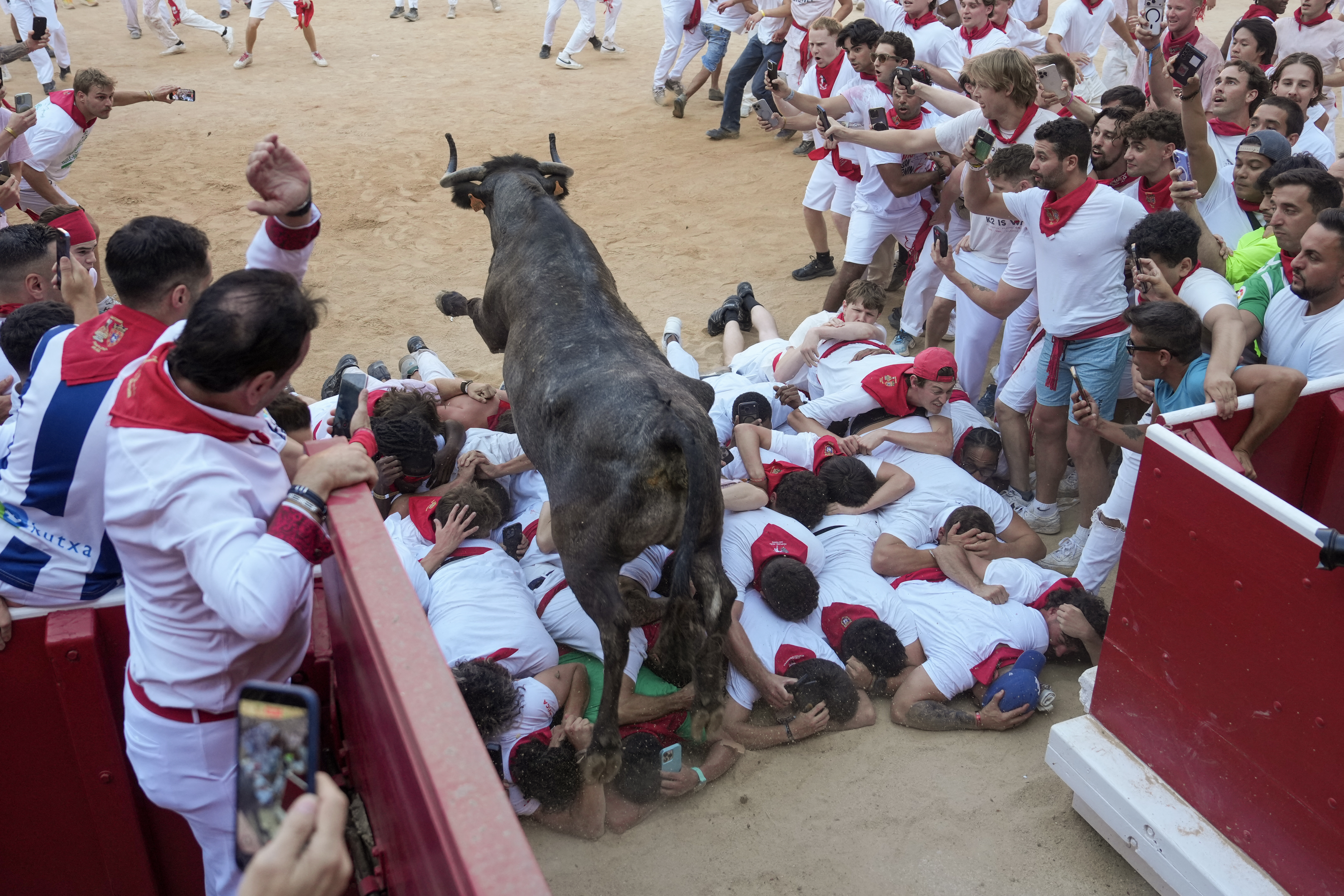
    A heifer leaps over spectators huddled in the entrance to the bullring in Pamplona during the annual San Fermin festival. The “running of the bulls” sees young animals charge from their corral to the bullring through the crowded streets of the old Spanish city.

    Cesar Manso / AFP / Getty Images


    Puzzles

    Chain Word

    Try The Week’s new daily word challenge in our puzzles and quizzes section

    Play here


    THE WEEK RECOMMENDS

    Discovering England’s mysterious chalk figures

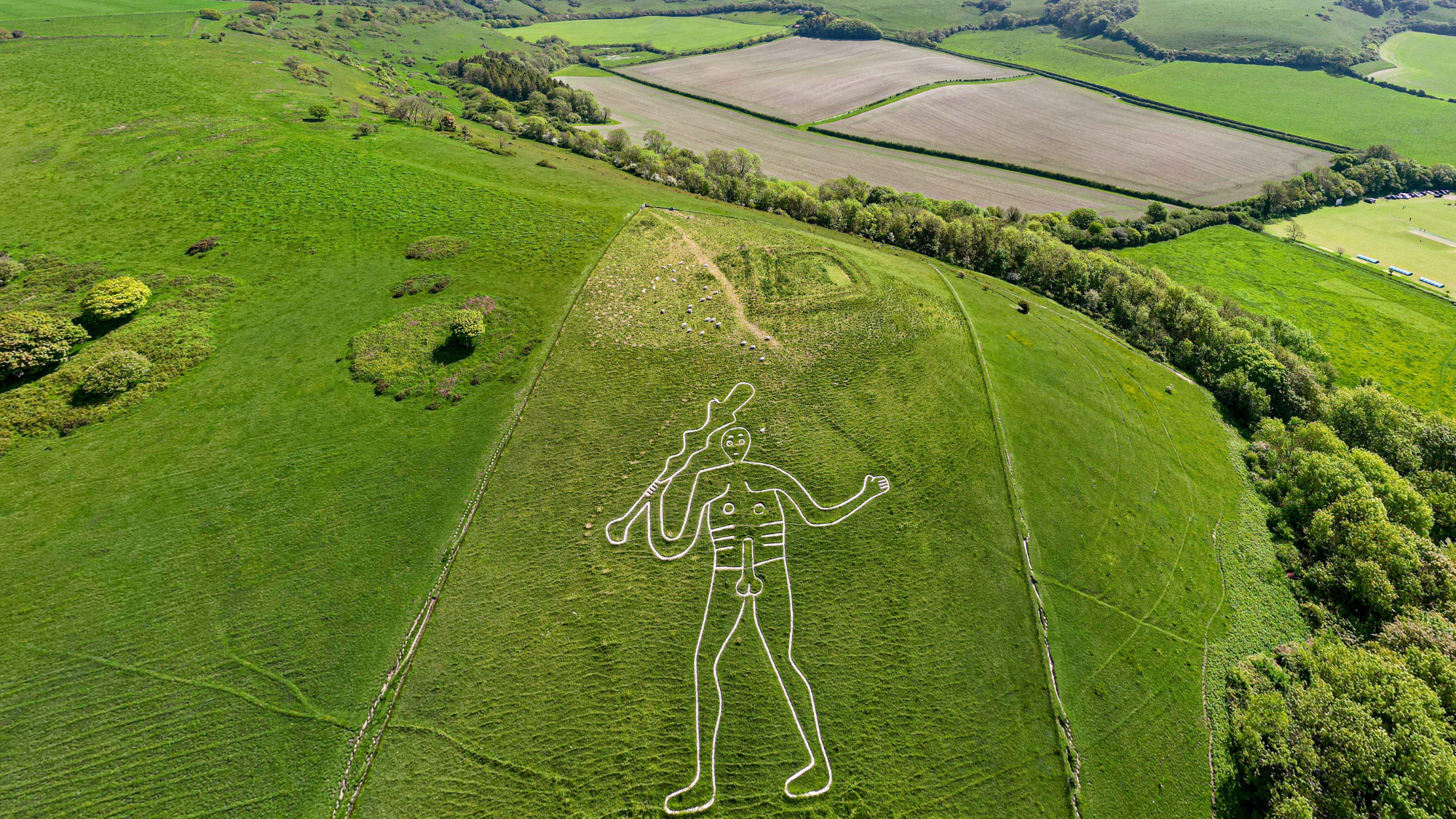
    “For centuries, the Cerne Abbas Giant has been hard to miss,” said the BBC. The 55-foot chalk outline of a “naked, club-wielding man” cut into a hillside in the Dorset countryside is “one of the UK’s most instantly recognisable historic landmarks”. Scientific analysis suggests the giant was “probably first cut in the late Saxon period, between 700 and 1100 AD”.

    Britain is “seared with chalk figures” like this one, said Matthew Green in The Telegraph. From “fantastical beasts” to “beguiling symbols”, the roots of many of these “unsettling and beautiful” shapes “cut into the bedrock of chalky hills” remain a mystery.

    Among the most “striking” is the Uffington White Horse in Oxfordshire. Best seen from the car park above Dragon Hill, it’s “more of a spectral echo of a horse than a horse”: the chalky outline doesn’t have hooves, its mouth looks like a beak, and it has a “ghastly, ghostly eye”. Just over the border in Wiltshire is the Alton Barnes White Horse, which is carved into Milk Hill, and another gleaming white horse is cut into Cherhill Down near Oldbury Castle.

    In East Sussex, on a “steep scarp of the South Downs”, you’ll find the Long Man of Wilmington trekking over the hill, said Jon Woolcott in The Guardian. Possibly Anglo-Saxon in origin, the “mysterious” carving has “fascinated” artists and writers for hundreds of years. Like the 40 or so other chalk figures that mark the British landscape, “their appearance enlivens walks and invites conjecture” to this day.


    Statistic of the day

    193,000: The number of unauthorised absences recorded by English schools on Monday following England’s early-hours World Cup victory over Mexico, according to an estimate by The Guardian based on attendance data from 12,000 state schools. The rate was almost double that of the previous Monday.


    instant opinion

    Today’s best commentary

    People keep asking me why I’m choosing to have a caesarean – here are my reasons
    Sharon Gaffka in The Guardian
    I’ve chosen to have a caesarean and it’s “worth talking honestly” about “why”, says Sharon Gaffka. Black and Asian women experience “worse outcomes” in pregnancy and as a British Asian woman reading these statistics while pregnant, they “suddenly” became “personal”. Reviews of maternity services have delivered “damning” verdicts, so “I started asking myself if I would really be listened to during birth”. I’m not “too posh to push” but everything I’ve “heard”, “read” and “experienced” suggested a caesarean would give me “the greatest sense of calm”.

    Prince Harry’s just realised he’ll never win over Palace – it’s a bitter pill to swallow
    Rebecca Russell in the Daily Express
    Prince Harry has “just learnt once again that the House of Windsor will always win”, says Rebecca Russell. The Palace “does not engage in drama” or “respond when fringe members of the Firm are throwing their toys out of the pram” and it doesn’t “need to have the last word”. The “real tragedy” is that Harry doesn’t understand that “the institution has marched on without him” and “does not collapse under the weight of his attacks”.

    Nigel Farage’s dodgy dealings are finally pushing him to the brink
    David Aaronovitch on The Independent
    What “stands out” with the Harborne affair is Nigel Farage’s “belief” he “could get away with it” and his “anger that anyone might think that he shouldn’t”, says David Aaronovitch. But he “can’t” because the by-election in Clacton will “damage a Reform party that seems to have passed its peak”. It “suggests an attitude towards public service” that is “unattractively mercenary” – he thought “toleration” of Donald Trump’s “shamelessness” might “travel to these shores”. It also suggests he is a “strangely half-hearted would-be prime minister”.


    word of the day

    Scones

    A vital component of an English afternoon tea – except at Wimbledon, where one restaurant has replaced them with pan-fried Welsh cakes. Following a backlash from tennis-goers – including one irate customer who said: “What’s all this Welsh rubbish?” – the Renshaw eatery is now offering scones on request.


    Evening Review was written and edited by Rebecca Messina, Jamie Timson, Elliott Goat, Chas Newkey-Burden, Irenie Forshaw, Adrienne Wyper, Steph Jones and David Edwards, with illustrations from Stephen P. Kelly.

    Image credits, from top: Carl Court / Getty Images; illustration by Stephen P. Kelly / Shutterstock / Getty Images; Richard Martin-Roberts / CameraSport / Getty Images; Cesar Manso / AFP / Getty Images; Amazing Aerial / Alamy

    Morning Report and Evening Review were named Newsletter of the Year at the Publisher Newsletter Awards 2025
     

    Recent editions

    • Evening Review

      The GOP’s Trumpapalooza

    • Morning Report

      Khamenei’s successor a no-show at funeral

    • Sunday Shortlist

      An invitation from Olivia Wilde

    VIEW ALL
    TheWeek
    • About Us
    • Contact Future's experts
    • Terms and Conditions
    • Privacy Policy
    • Cookie Policy
    • Advertise With Us
    • FAQ
    Add as a preferred source on Google Add as a preferred source on Google

    The Week is part of Future US Inc, an international media group and leading digital publisher. Visit our corporate site.

    © Future US, Inc. Full 7th Floor, 130 West 42nd Street, New York, NY 10036.