The Week The Week
flag of US
US
flag of UK
UK
https://cdn.mos.cms.futurecdn.net/flexiimages/jacafc5zvs1692883516.jpg

SUBSCRIBE & SAVE

Less than $3 per week

Sign in
  • View Profile
  • Sign out
  • The Explainer
  • The Week Recommends
  • Newsletters
  • Cartoons
  • From the Magazine
  • The Week Junior
  • Student Offers
  • More
    • Politics
    • World News
    • Business
    • Health
    • Science
    • Food & Drink
    • Travel
    • Culture
    • History
    • Personal Finance
    • Puzzles
    • Photos
    • The Blend
    • All Categories
  • Newsletter sign up Newsletter
  • The Week Evening Review
    Argentina puts the Falklands centre stage, ‘Bonhomie’ at Nato, and ‘replay doohickey’

     
    THE EXPLAINER

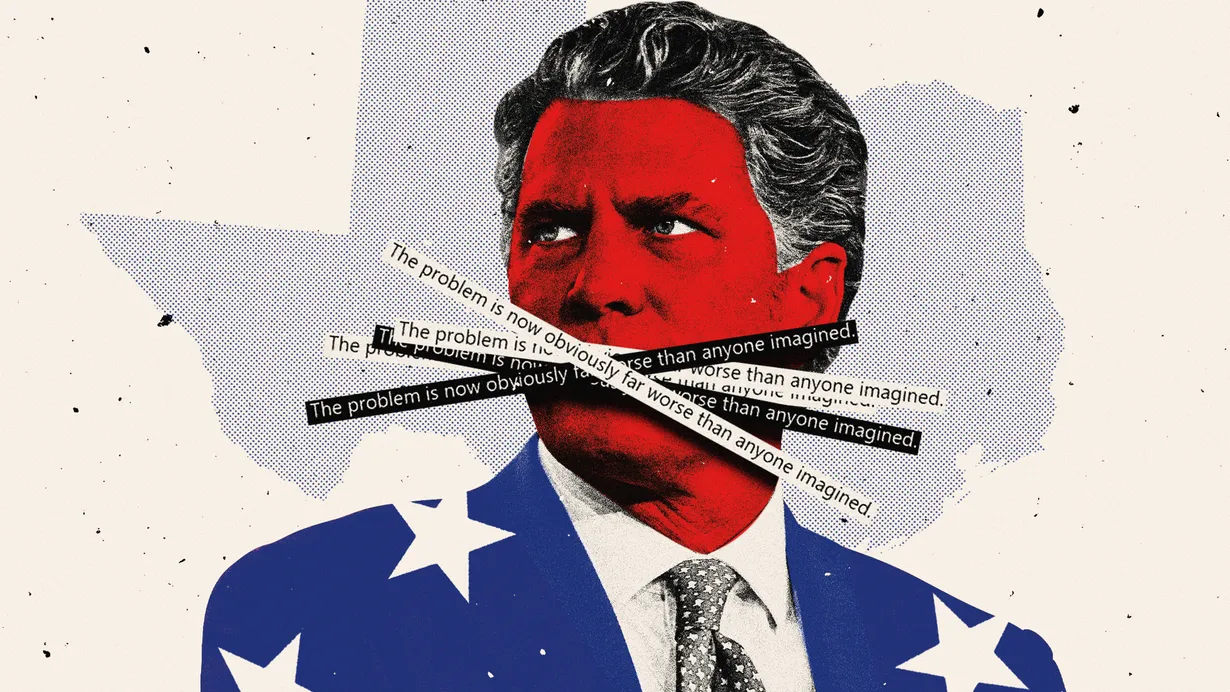
    The politics of the Falklands

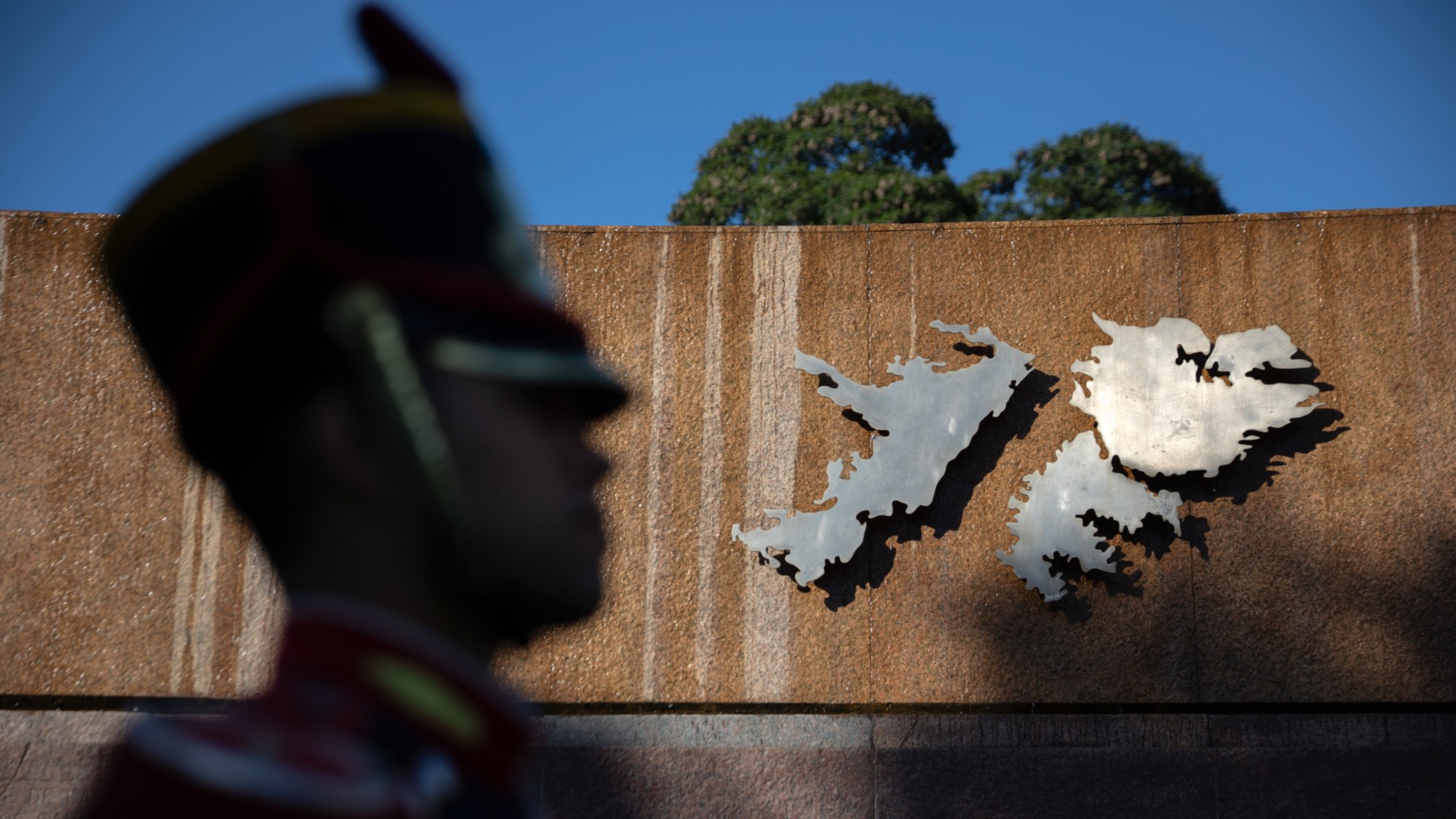
    When England take on Argentina in tomorrow’s World Cup semi-final, it’ll be the first time the men’s teams have met since 2005. Atlanta police have confirmed that extra officers will be deployed to the match, in recognition of the two countries’ historical tensions over their rival claims to the Falklands Islands.

    The British overseas territory, known to Argentina as Las Malvinas, is a sparsely inhabited archipelago about 300 miles from the South American coast. English sailors made the first recorded landing there in 1690, naming the islands after the expedition’s sponsor, Viscount Falkland. Argentina laid claim to the islands in the early 19th century, but a row over seal-hunting led the Royal Navy to recapture the Falklands in 1833, founding a British colony there in 1840.

    What caused the Falklands War?
    In the early 1980s, Argentina’s right-wing dictatorship was being shaken by civil unrest and an economic crisis. The claim to Las Malvinas was one issue on which most Argentines agreed, and the military junta believed British PM Margaret Thatcher would be unlikely to engage in a distant war. On 2 April 1982, Argentina invaded the Falklands.

    What was the outcome?
    Thatcher sent a taskforce of 127 ships and 30,000 men, who retook the islands in a victorious 74-day campaign. A total of 258 British and 649 Argentine lives were lost; 11,000 Argentines were captured. The Falkland Islands has been a self-governing British Overseas Territory ever since and, in a 2013 referendum, 99.8% of the islanders voted to remain British. 

    Why is it still a source of tension?
    Argentina’s constitution makes sovereignty over the Falklands a “permanent and irrevocable objective” – something that 81% of Argentine voters support, according to a 2021 poll. Argentina’s current president, Javier Milei, told the BBC in 2024 that he accepted that the Falkland Islands were “in the hands of the UK”. But the self-described libertarian has still “vowed to get the islands back through diplomatic channels”.


    TODAY’S BIG QUESTION

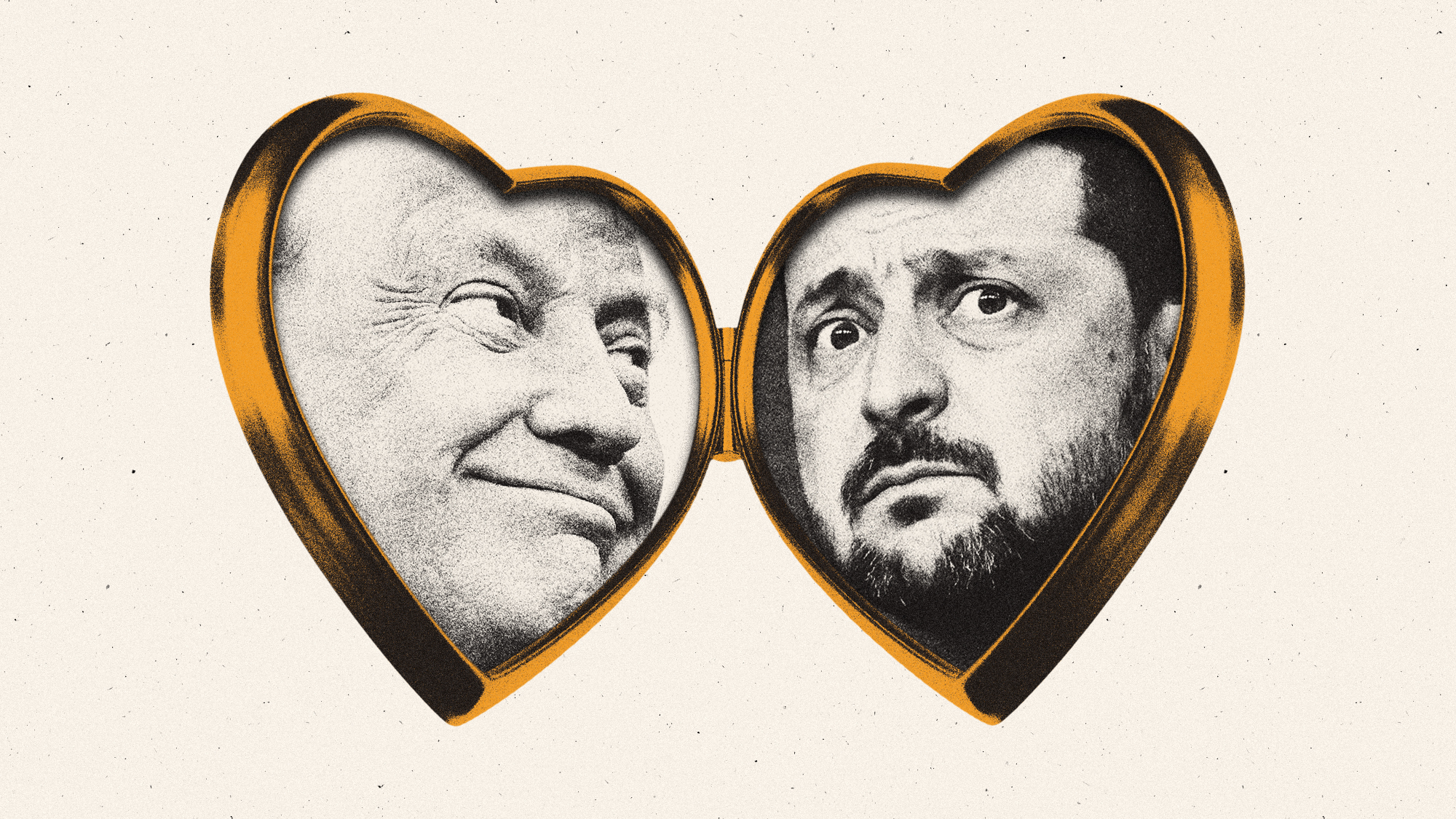
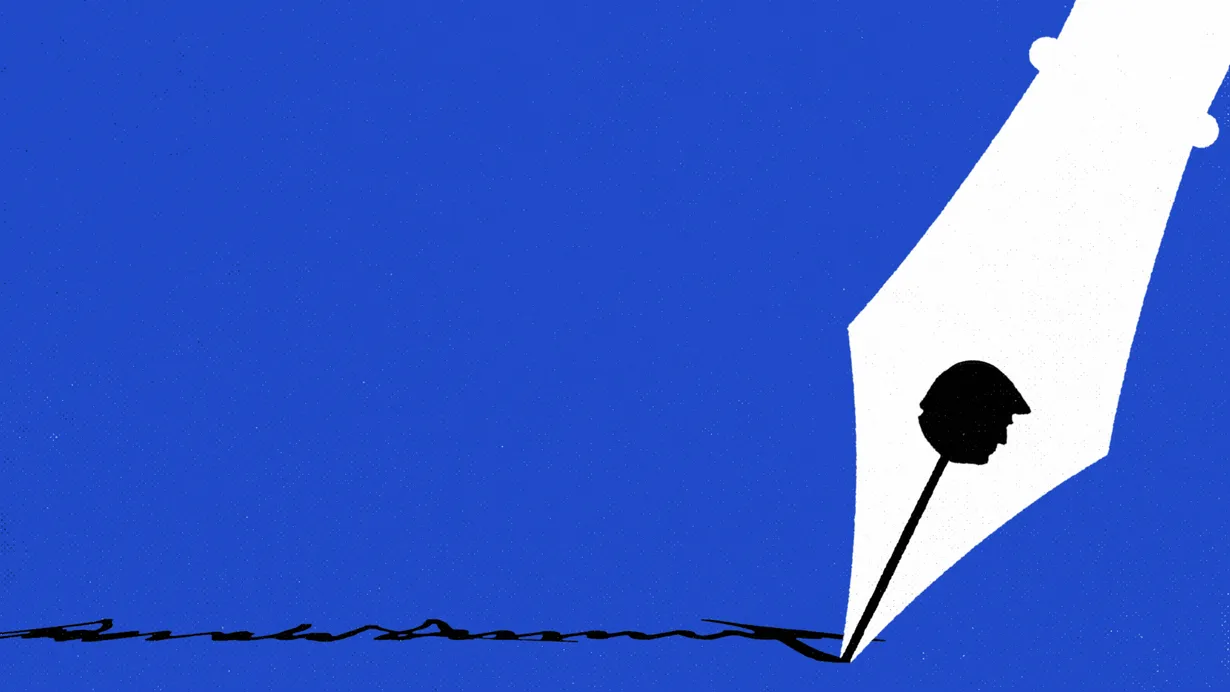
    Have Trump and Zelenskyy kissed and made up?

    “What a difference a year makes,” said Michael Froman, president of the Council on Foreign Relations. Donald Trump and Volodymyr Zelenskyy have gone from a public bust-up in the Oval Office in February 2025 to a “lovefest” at the Nato summit in Ankara last week. Ukraine has managed to change its direction in the war and, “very importantly, the narrative”.  Zelenskyy is now perceived as winning against Russia, and “Trump likes a winner”.

    What did the commentators say?
    Trump “heaped praise” on Zelenskyy and Ukraine during the Nato summit, said The Washington Post. He spoke in “unusually positive terms” about Kyiv’s strikes deep into Russian territory, and offered “dramatic new assistance” for Ukraine’s wartime efforts. It was a “dramatic departure from his tone during his first year in office”. Zelenskyy, meanwhile, showed “swagger and a hint of his pre-presidential vocation as a popular Ukrainian comedian”. 

    The new-found “bonhomie” signalled a “significant thaw in relations”, said The Hill. Trump gave the green light for the US to buy Ukrainian drones, and for Kyiv to “co-produce Patriot interceptors, a move that could significantly improve its air defences in the years ahead”.

    Zelenskyy “looked like he almost couldn’t believe his luck”, said CNN, especially as the “flare-up in the war in Iran appeared to have put Trump into a foul mood” ahead of the meeting. But in a break from past acrimonious encounters, Trump praised Zelenskyy’s “willingness to reach a deal”, said NPR. “We’ve developed a good relationship – it’s even hard to believe – from the Oval Office until now,” said Trump at the summit. “This will be the beginning, maybe, just the beginning.”

    What next?
    The US president has “zigged and zagged” so often “when it comes to Ukraine” that his offer of a Patriot licence was “cheered” with a “heavy dose of caution” in Kyiv, said The New York Times. The language Trump used was “rather vague”, said CNN, and he “admitted that he had not yet discussed the issue” with the arms manufacturers who make the missile batteries domestically.

    Trump also appeared open to visiting Ukraine but said he would rather the “war be over” first.


    QUOTE OF THE DAY

    “That, I’m afraid, is playing politics with the safety of politicians.”

    Robert Jenrick accuses ministers of not giving Nigel Farage “the security he needed” because they disagreed with his views. The Reform Treasury spokesman claimed on BBC’s Radio 4 “Today” programme that the government is only addressing the issue now because of Ann Widdecombe’s death.


    Poll watch

    Only three in five (62%) British voters can recognise Andy Burnham from a photograph, while 38% cannot. One participant in the survey of 1,500 adults by JL Partners for The Independent thought the future prime minister was quiz show host Richard Osman, while another thought he was Hollywood star Mel Gibson.


    TALKING POINT

    Is VAR spoiling the World Cup?

    Video assistant referee technology was introduced to correct clear and obvious refereeing errors but it has since “morphed into something far greater”, said Kevin Baxter in the Los Angeles Times. 

    At this year’s Fifa World Cup, there were more than 100 VAR interventions in matches up to the round of 16. Most were technically correct but the infractions were both “imperceptible” and “consequential” – raising the criticism that “allowing a game to be decided by electronic evidence” only detectable by “Nasa-level technology” is “violating the spirit of the game”.

    ‘Joy-denial device’
    The tournament’s most influential figure has not been a star player, or even Donald Trump, but the VAR official, said Roey Hadar on MS Now. Technology in football is a “great idea on paper” but “the perfect has become the enemy of the good”.

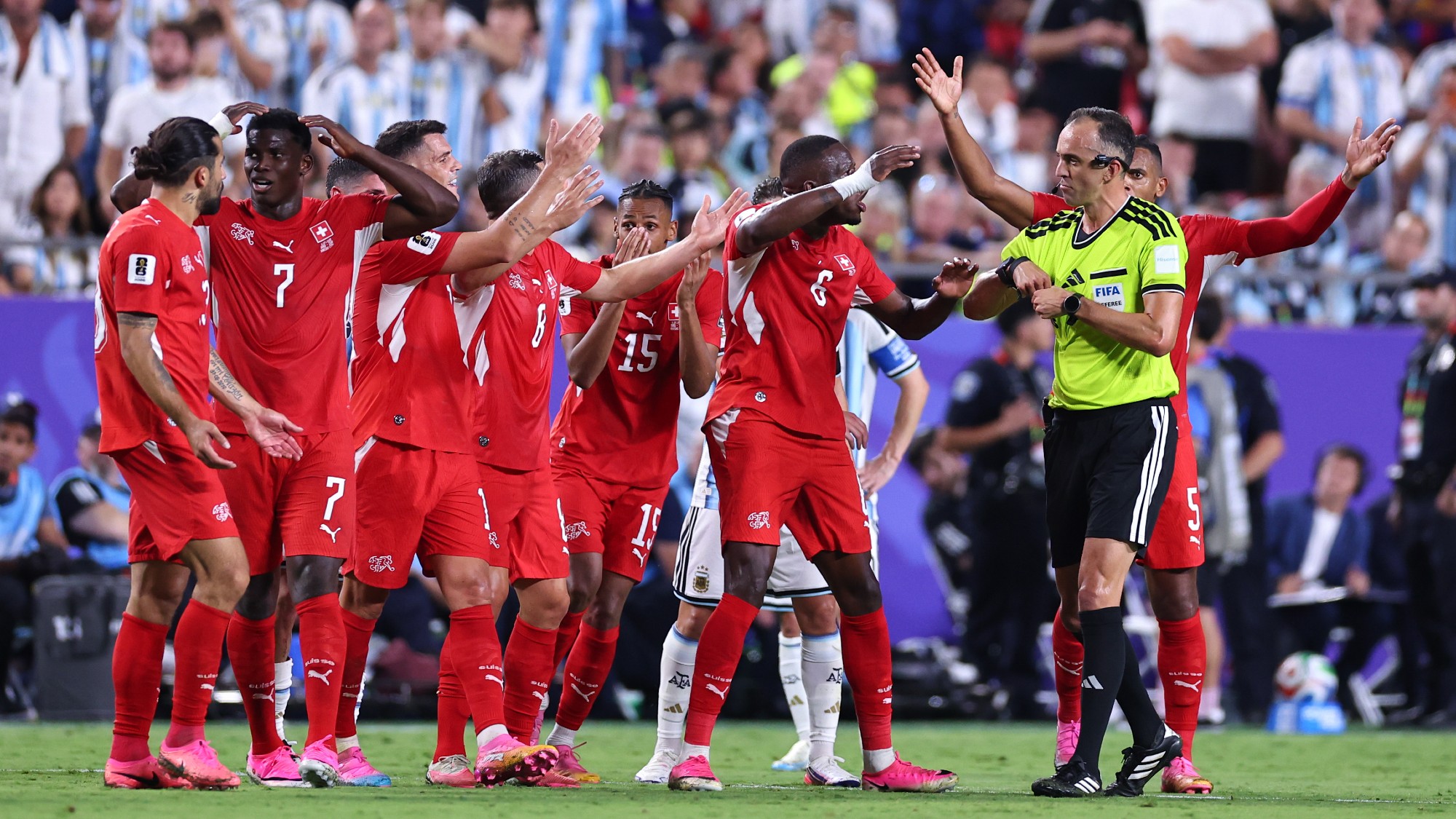
    Take Croatia’s last-gasp equaliser against Portugal, disallowed as offside after a microchip in the ball detected a slight touch by a Croatia player in the build-up to the goal. Or the sending off of Switzerland’s Breel Embolo (pictured above) after a “mistaken identity” VAR check. Or Egypt’s goal against Argentina, disallowed for a perceived earlier foul, leading sobbing scorer Mostafa Ziko to declare the match had been “rigged”.

    VAR “doesn’t feel like a backstop” it’s meant to be, said Jason Gay in The Wall Street Journal. This “baffling, deeply unpopular replay doohickey” has become a “joy-denial device”, designed by “evil robots” to “suck the soul out of a beautiful game based on constant flow”.

    ‘Toenail offsides’
    Fifa must now draw a “line in the sand, ending once and for all the unfair and disfiguring use of slow-motion and freeze-frames”, said Adam Crafton on The Athletic. I would introduce a rule that VAR reviews must “conclude in a set short amount of time”, said Hadar on MS Now. “If the error is visible in that time,” it’s clear and obvious; “if not, then it’s too inconclusive to change. Just keep the game moving.”

    Former Fifa referee Christina Unkel told the LA Times that a majority of officials would prefer referees to have discretion to ignore VAR. Most decision-making on the pitch is “very subjective” and there is agreement that some kinds of VAR decision shouldn’t be part of the game. They are, ultimately, “toenail offsides, hair follicle arguments”.


    Good day 🦝

    … for unusual souvenirs, after Norway striker Erling Haaland returned home to Oslo with a taxidermied raccoon. Bought from Wild Bill’s Western Store in Dallas, the “Whisky Raccoon” is mounted on a board with its paws around a empty bottle of whisky. “It followed me home,” wrote the footballer in a post on social media.


    Bad day 👖

    … for wide trousers, after thousands of shoppers shared videos on social media of themselves tripping over voluminous fabric. One particularly wide-flowing pair from high street chain Zara has been dubbed “Deadly Zara Trousers”, although legal experts pointed out that this is an “obvious risk”, rather than a defect.


    PICTURE OF THE DAY

    Free roaming

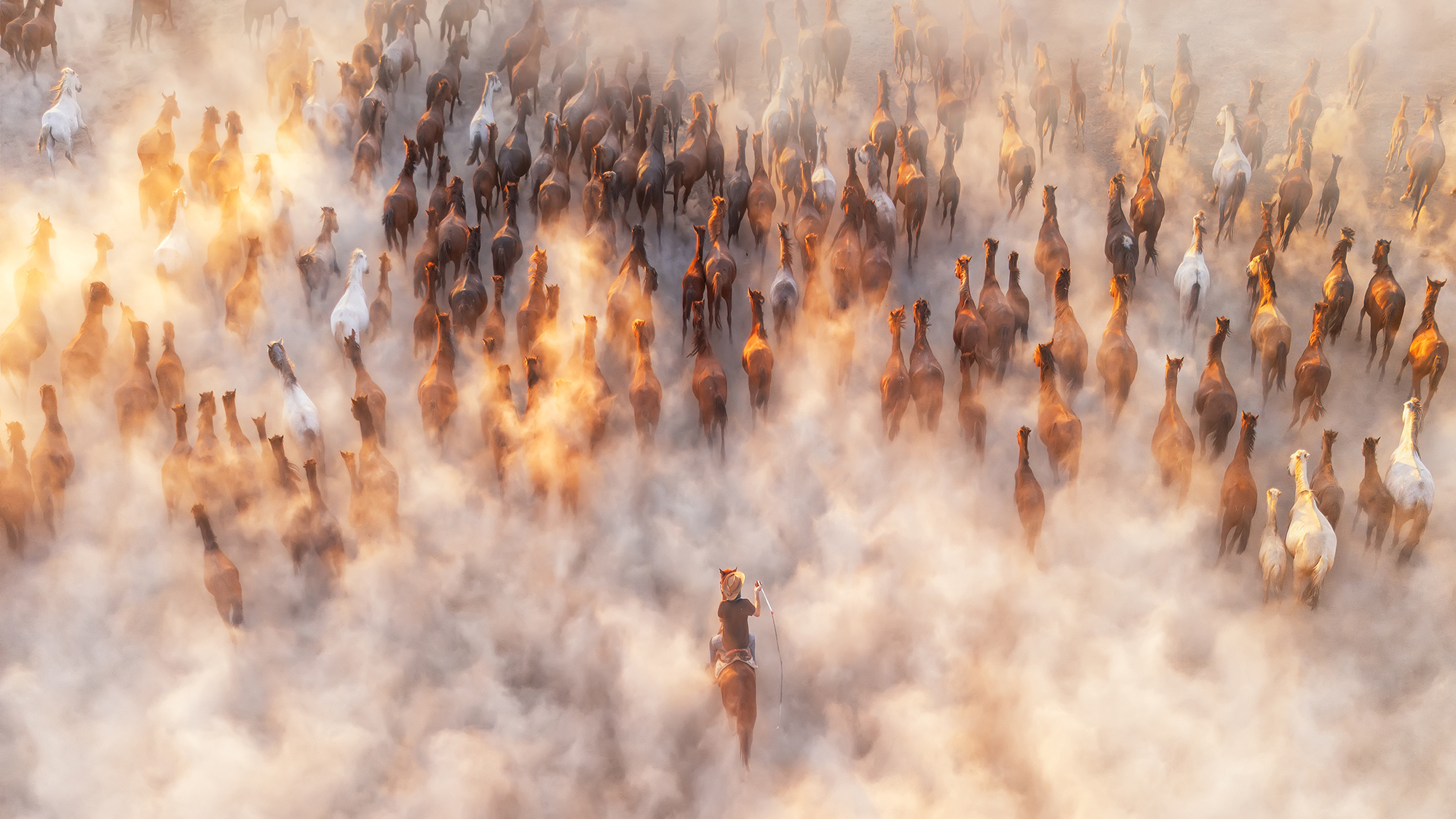
    Yilki horses stream across a dusty plateau in Cappadocia, Turkey, in “Thunder of Hooves”, a shot taken by Kah-Wai Lin that’s earned him third place in The International Aerial Photograph of the Year 2026. “Witnessing them galloping from above was an unforgettable experience,” Lin said on social media.

    Kah-Wai Lin / The International Aerial Photographer of the Year


    Puzzles

    Chain Word

    Try The Week’s new daily word challenge in our puzzles and quizzes section

    Play here


    THE WEEK RECOMMENDS

    ‘Edge of the map escapism’ on Norway’s Traena

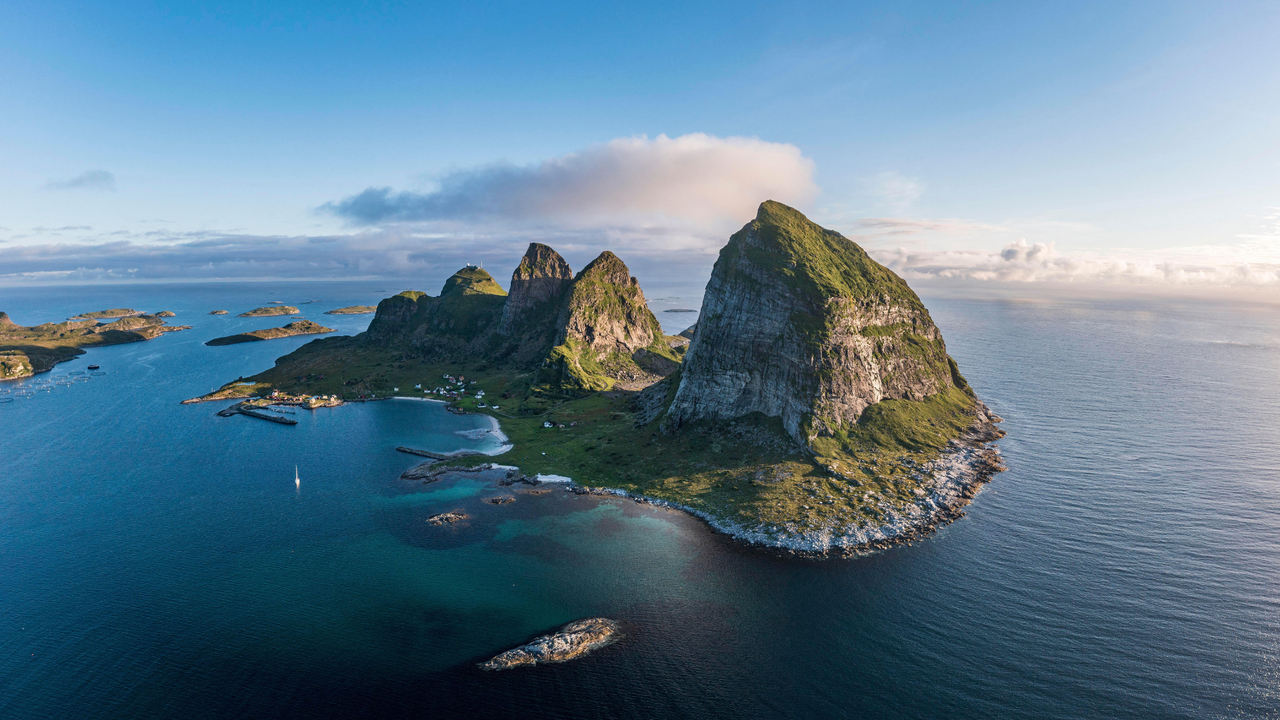
    Getting to Traena in Norway’s Arctic Circle is “a bit of a schlep”, said James Stewart in The Times. From Oslo, you can catch a flight to Bodo and then take a passenger ferry to Onoy, “a small island transit hub on the Helgeland coast”.

    The “first indication” that it’s going to be “worth it” comes as the ferry “weaves south where north Norway shatters into 20,000 islands”. But it’s confirmed on the final leg of the journey as a “fist of peaks nears in the open sea” during the hour-long crossing from Onoy to Husoy island.

    Here you’ll find Ytri: a new luxury hotel “billed as ‘Norway’s most remote island retreat’”. At first glance, it seems more like an “elongated village of small barns, their wooden cladding silvering nicely or painted rust-red, black and the green of oxidised copper”.

    This is a place made for “edge of the map escapism”, said Chloe Frost-Smith in Vogue. Ytri has been built like a “contemporary coastal hamlet” with 38 rooms and suites, a boathouse, a restaurant serving “traditional open sandwiches”, and a yoga and wellness area with saunas. Days are easy to fill with “hikes to ancient caves” and “candlelit dinners of seafood pulled from the water just metres from the hotel”.

    Consider taking a shuttle boat to the nearby island of Sanna, which “boasts three peaks”, said Worldcrunch. To reach the top of one of them, adventurous travellers must go through “what locals call ‘the tunnel of love’, an 800m-stretch dug inside the mountain”. The reward is the view: on your right stretches the “endless sea”, and on your left “the impressive contour of the continent dotted by white glaciers”.


    Statistic of the day

    £745,000: Scott Mills’ estimated annual earnings for hosting the Radio 2 breakfast show, making him the BBC’s highest paid presenter before he was sacked in March. The broadcaster’s latest annual report also lists Greg James, Stephen Nolan and Laura Kuenssberg among its top earners. Mills was accused of historical sexual offences, but denied the claims and was not charged.


    instant opinion

    Today’s best commentary

    Count Binface represents the Silly Sausage Britain I know and love
    Sofie Jenkinson in The Guardian
    The “pointless” Clacton by-election has “pitted two versions of Britain against one another”, writes Sofie Jenkinson. In the Reform UK corner, we have a “divided, cynical and jaded” country; in Count Binface’s, one “that has a laugh and doesn’t take itself too seriously” – the land of “Victoria Wood”, “2p arcade machines” and “the Liz Truss lettuce”. This is the “kind and funny” country that “I want to live in”; we must not “cede” it “to those who want to drive division”.

    An incomplete list of falling objects in India
    Leo Mirani in The Economist
    “India is the land of death from above,” writes Ashoka columnist Leo Mirani. Some of the things to have “fallen on people” recently include “slabs of concrete”, “a 40,000kg block of iron”, “a crane’s trolley”, “school roofs” and “airport-terminal canopies”. The “response is usually to suspend some officials”, make an “ex gratia” payment “and move on”. It’s “laudable” that the government is finally investing in “much-needed infrastructure”; if only “it could do so without killing passers-by”.

    There is nothing worse than a bad radio advert
    Jonathan Maitland in The Spectator
    Hell “may not be other people, but repeated, everlasting exposure to 30-second radio adverts”, writes Jonathan Maitland. The worst have an “annoying” voiceover that “creates a Pavlovian” loathing of the product, a “moronically simplistic earworm jingle” and an epic “terms and conditions bit” that’s spoken so fast, it “sounds like a chipmunk on speed”. I know “commercial radio can’t survive without advertising” but surely “there are less irritating ways to butter the bread” than subjecting us to these “soulless, pass-the-cyanide” half-minutes.


    word of the day

    Franken-trout

    Supersized wild trout, swimming in Scotland’s lochs. Activists claim fish feed leaking from salmon-farm cages has created artificially enlarged trout – some up to 20 times bigger than average. “These monster wild trout grow to a size nature never intended,” Dale Vince, founder of the environmental campaign group Green Britain Foundation, told The Telegraph. “They are Franken-trout, gorging on what pours out of the cages.”


    Evening Review was written and edited by Hollie Clemence, Rebecca Messina, Rafi Schwartz, Harriet Marsden, Chas Newkey-Burden, Irenie Forshaw, Adrienne Wyper, Natalie Holmes and Helen Brown, with illustrations from Stephen Kelly.

    Image credits, from top: Tomas Cuesta / Getty Images; illustration by Stephen P. Kelly / Getty Images; Robbie Jay Barratt / AMA / Getty Images; Kah-Wai Lin / The International Aerial Photographer of the Year; imagebroker.com / Alamy

    Morning Report and Evening Review were named Newsletter of the Year at the Publisher Newsletter Awards 2025
     

    Recent editions

    • Evening Review

      A death spiral for Obamacare

    • Morning Report

      Graham’s death shakes Senate

    • Sunday Shortlist

      The Minions invade 1920s Hollywood

    VIEW ALL
    TheWeek
    • About Us
    • Contact Future's experts
    • Terms and Conditions
    • Privacy Policy
    • Cookie Policy
    • Advertise With Us
    • FAQ
    Add as a preferred source on Google Add as a preferred source on Google

    The Week is part of Future US Inc, an international media group and leading digital publisher. Visit our corporate site.

    © Future US, Inc. Full 7th Floor, 130 West 42nd Street, New York, NY 10036.