The Week The Week
flag of US
US
flag of UK
UK
https://cdn.mos.cms.futurecdn.net/flexiimages/jacafc5zvs1692883516.jpg

SUBSCRIBE & SAVE

Less than $3 per week

Sign in
  • View Profile
  • Sign out
  • The Explainer
  • The Week Recommends
  • Newsletters
  • Cartoons
  • From the Magazine
  • The Week Junior
  • More
    • Politics
    • World News
    • Business
    • Health
    • Science
    • Food & Drink
    • Travel
    • Culture
    • History
    • Personal Finance
    • Puzzles
    • Photos
    • The Blend
    • All Categories
  • Newsletter sign up Newsletter
  • The Week Evening Review
    Ukraine’s cold winter, tourist taxes, and Reform’s ‘ticking time bomb’

     
    TODAY’S BIG QUESTION

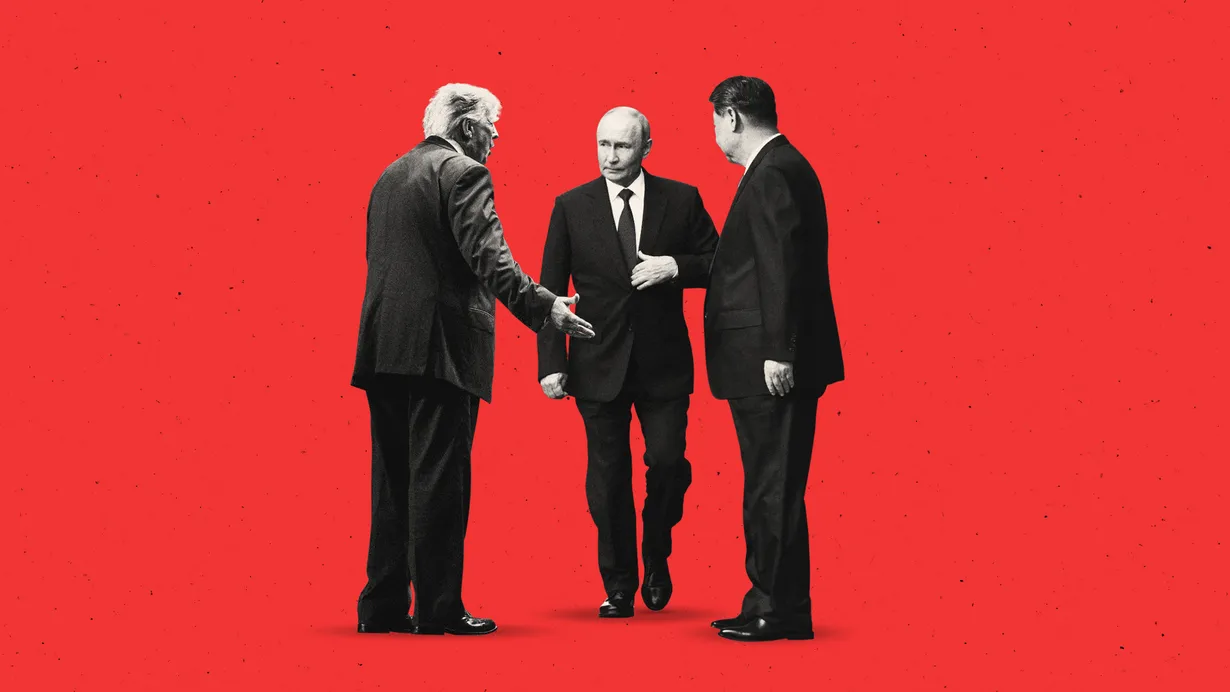
    Is Ukraine losing the war with Russia?

    Ukraine’s air defences are “dwindling”, said international relations expert Rajan Menon in The New York Times. And Vladimir Putin is “planning to make the most of it”. Although Russia is struggling to replace an estimated 30,000 battlefield casualties a month, its president appears “adamant he will pay whatever price – human or financial – necessary to win”.

    US special envoys Jared Kushner and Steve Witkoff met Putin in Moscow last week, before travelling to Ukraine to meet Volodymyr Zelenskyy, with the aim of resuming trilateral peace negotiations in September. But senior Kremlin officials subsequently “doubled down on Putin’s demands for Ukrainian capitulation”, said the Institute for the Study of War.

    What did the commentators say?
    This year has brought “a series of Ukrainian successes that led many to believe Kyiv may have regained the initiative”, said Miro Sedlák on the Atlantic Council website. But the “technological gap” between Russia and Ukraine is narrowing. And Russia is gearing up for “massive strikes” on Ukraine’s energy grid over the winter, in a bid to “break morale” and increase pressure on Zelenskyy to “seek a deal”, said Menon in The New York Times.

    Ukraine’s drone strikes are still “inflicting pain on some of the most strategic sectors of the Russian economy”, said Alexander Osipovich in The Wall Street Journal. But Zelenskyy is “deluded about Ukraine’s chances of defeating Russia”, said Owen Matthews in The Spectator. Western sanctions on Russia have “basically failed” because of the West’s “hunger” for its cheap oil and gas, and now Ukraine is heading into “the hardest and most punishing winter of war” about to run out of missiles, men and money.

    What next?
    After next week’s Russian parliamentary elections are done and dusted, “we’ll see whether Putin is going to throw the kitchen sink at this wall to finish it, in his view, once and for all”, said Sky News military analyst Michael Clarke.

    Alternatively, he may try to freeze the conflict or agree to a temporary ceasefire, said Tisdall in The Guardian. But a ceasefire without “cast-iron, pre-agreed security guarantees” could leave Ukraine more, not less, “vulnerable to renewed aggression”.


    THE EXPLAINER

    How England’s new tourist tax could work

    Andy Burnham is to give England’s mayors the power to introduce an uncapped tourist tax. Housing Minister Angela Rayner (pictured above) chaired a virtual meeting at No. 10 North today to discuss the tax, which will be set as a percentage of accommodation costs – rather than a flat fee – at the discretion of regional leaders. Burnham has committed to starting the scheme, first proposed by Keir Starmer’s government, towards the end of the 2027-28 financial year.

    Where would the money go?
    A tourist tax would allow mayors to “prop up crumbling local authority finances and invest cash back into the area”, said The Telegraph. Local authorities are already facing a financial crisis, with a “record 35 councils now relying on £1.5 billion of emergency government financial support to balance their books”. This tax would also provide a new “revenue-raising stream” for England’s 14 regional mayors, who are unable to raise council tax bills, which is a council-level decision.

    What about the rest of the UK?
    After Holyrood passed a law permitting the levies in 2024, Edinburgh introduced a 5% overnight rate this summer, capped at five nights. Glasgow also has a 5% rate, while Aberdeen’s is 7%. In Wales, a capped levy of £1.30 per person per night (reduced to 75p for hostels and campsites) will be introduced in April 2027.

    How will it affect the hospitality industry?
    This tax could raise hundreds of millions for local public services, said The Guardian. But it could also be a “blow for the hospitality industry”, already “squeezed by tax rises and extra employment costs”.

    UKHospitality’s chief executive Allen Simpson told BBC Radio 4’s “Today” programme that a tourist levy would add roughly £100 to £120 to the average cost of a family holiday, because it is uncapped and mayors would “pull that lever until it snaps”. Simpson’s trade body also claimed the move would cost 33,000 jobs and result in a £2.2 billion hit to the UK’s GDP.


    QUOTE OF THE DAY

    “We really do earnestly believe AI could kill all humans!”

    Anthropic’s safety researcher Evan Hubinger predicts that the odds of AI superintelligence wiping out humanity are at least “10% within the next decade”. His warning on X followed the resignation of fellow researcher Jacob Coxon, who said tech firms are “gambling with our lives”.


    Poll watch

    Andy Burnham’s economic boycott of Israeli settlements in the occupied West Bank is supported by the majority (52%) of Brits, and 33% “completely” back the measure. Of 4,506 adults polled by YouGov, 17% disapproved of the sanctions, while 31% said they “don’t know”.


    TALKING POINT

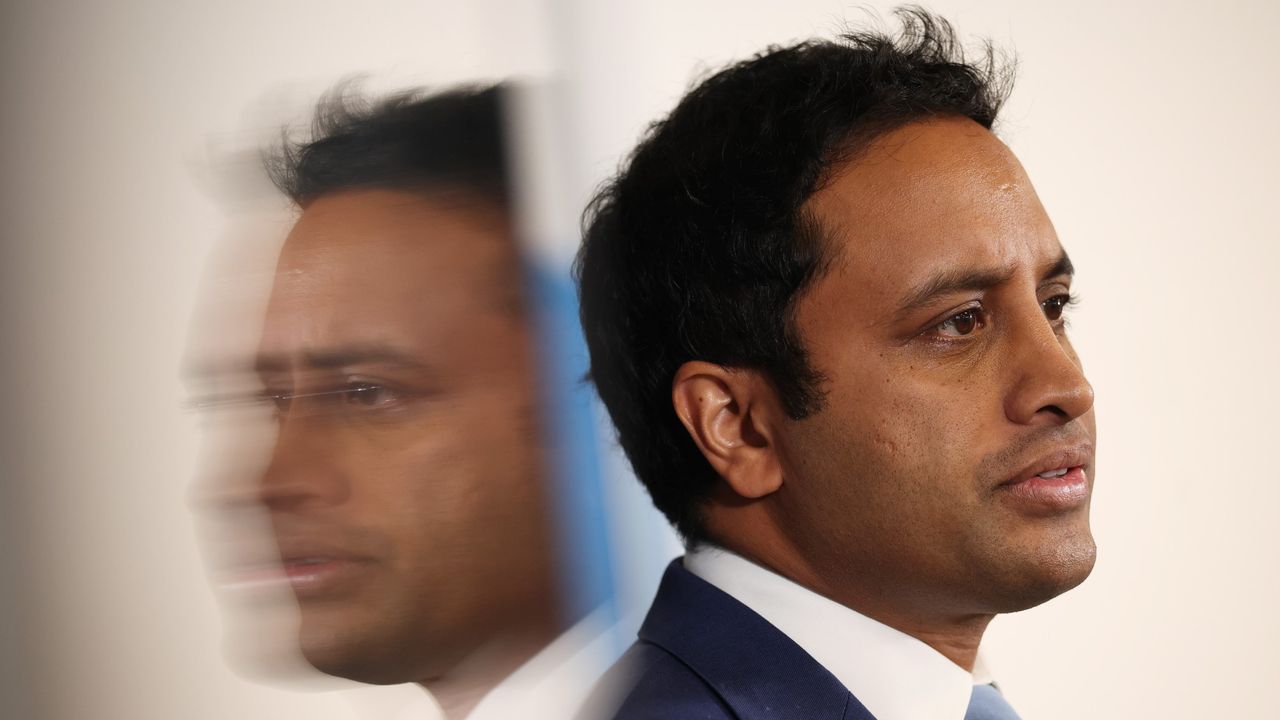
    Zia Yusuf: the polarising figure in Reform’s ranks

    “Zia Yusuf is a brilliant man, and he’s a genius actually,” Tory defector and Reform member Nadine Dorries told Times Radio recently. But “I wish he closed down his Twitter account”. The interview followed a tweet by Reform’s self-styled “shadow home secretary” about reports that Somali-born Sagal Abdi-Wali, the leader of Camden Council, was the favourite to be Labour’s candidate in the Holborn and St Pancras by-election. In a remark that drew condemnation from across the political spectrum for its apparent racial undertones, Yusuf asked his followers: “Do you understand what’s happening?”

    ‘Remarkable and rare gifts’
    “Even in these polarised times”, it is hard to imagine another politician as “unlikeable” and “rebarbative” as Yusuf, said Sean O’Grady in The Independent. Take, for example, his decision to accuse former defence secretary Ben Wallace, a former Scots Guards officer who served in Northern Ireland during the Troubles, of being a “traitor”. Yusuf then posted a poll asking if Wallace should be prosecuted for treason.

    The son of Sri Lankan immigrants, Yusuf built a hugely successful business career and is clearly “a man of remarkable and rare gifts”, said Stephen Pollard in The Spectator. But “the more one sees and hears from Yusuf, the more obvious it becomes that he is a liability for Reform”.

    ‘Ticking time bomb’
    Controversial or not, “behaving as he does is entirely politically rational”, said Daniel Finkelstein in The Times. Yusuf’s combative communication style “alienates” many, but it also “makes his signal – that with him there is no compromise or messing about – more reliable”. This has endeared him to rank-and-file Reform members. In a poll of 850 members in June, 22% said they would opt for Yusuf as leader in a contest to replace Nigel Farage, ahead of current deputy Richard Tice.

    Senior figures within the party are forming an “Anyone but Zia” group to try to prevent him from succeeding Farage should he step down, said The Observer. “They all know [Yusuf’s] a problem, but he is popular among the grassroots,” one critic told the newspaper. “He’s a slowly ticking time bomb.”


    Good day 📚

    … for bookworms, as the publishing industry embarks on its annual “Super Thursday”, which brings a bumper crop of new releases. A total of 379 new hardbacks hit the shelves today, spanning from Gillian Anderson’s erotic anthology “More” to “Gruffalo Granny”, the third instalment in Julia Donaldson’s best-selling children’s series.


    Bad day 💷

    … for Michael Owen, who has deleted social media posts promoting a trading platform flagged as a scam risk by the UK’s financial watchdog. The former England star had trumpeted his new role as a “brand ambassador” for ehamarkets, which is on the watchdog’s “warning list” of unauthorised companies. Consumers are advised to “avoid dealing with this firm”.


    PICTURE OF THE DAY

    Road to power

    A municipal employee marks out spaces designated for displaying political posters in Salé, Morocco. The country’s general election campaign kicks off today ahead of the vote on 23 September, when 27 parties will compete for 395 parliamentary seats.

    Abdel Majid Bziouat / AFP / Getty Images


    Puzzles

    Chain Word

    Try The Week’s daily word challenge in our puzzles and quizzes section, which also includes sudoku and Guess the Number

    Play here


    THE WEEK RECOMMENDS

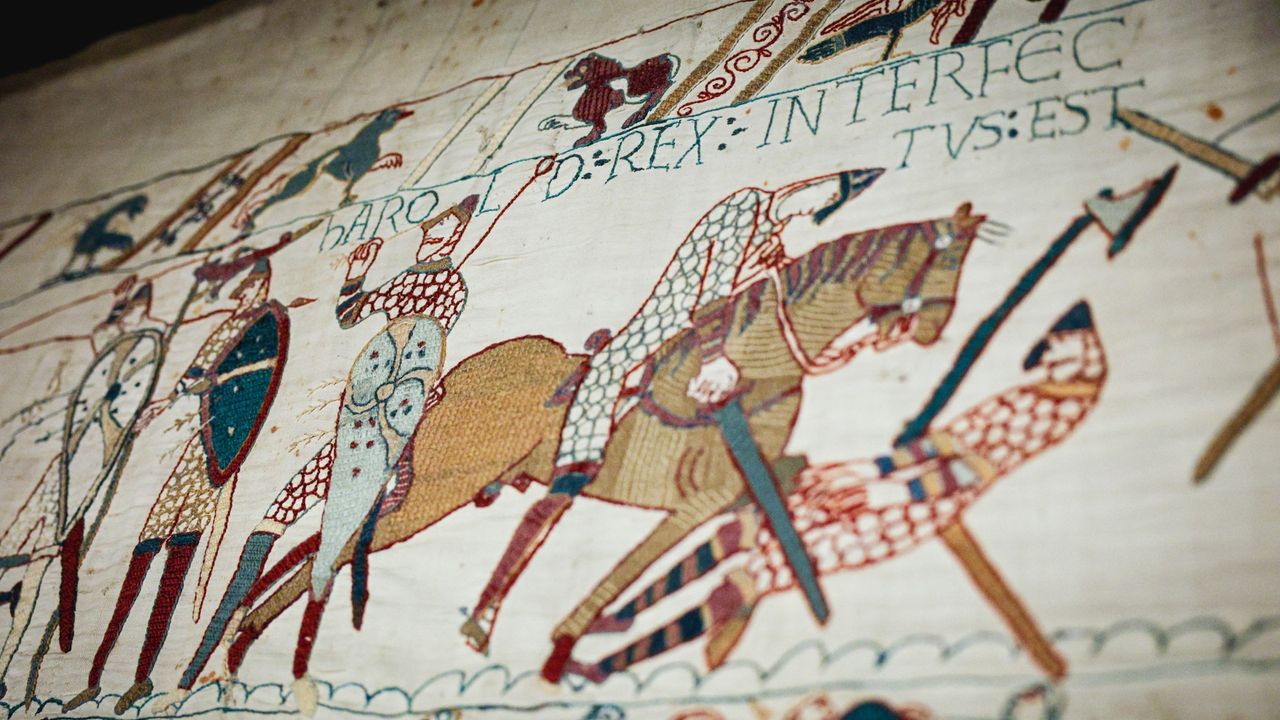
    The Bayeux Tapestry: a ‘magnificent’ spectacle

    The Bayeux Tapestry is “shivers-down-the-spine, tell-the-grandchildren sort of stuff”, said Laura Freeman in The Times. Textbooks can tell you the facts – “seventy metres, 58 scenes, 626 figures” – but the reconstructions and photographs can’t compare to seeing the real thing at the exhibition opening today at the British Museum. It’s “more than a shiver of excitement”; it’s the “loan of the millennium” and truly “magnificent”.

    Simply “let the images carry you”, said Mark Hudson in The Independent. The early sections, showing the Normans’ preparations for invading England, have a “documentary veracity” and “cinematic drive”.

    The tapestry’s “most famous section”, depicting the Battle of Hastings, feels like an “11th-century equivalent of Pablo Picasso’s anti-war masterpiece ‘Guernica’ (1937)”, said Alastair Sooke in The Telegraph. It’s “pure carnage”: horses fall, warriors are decapitated and a mace flies through the air. It is striking how much it feels like a “requiem” for Anglo-Saxon England, rather than a “tub-thumping celebration of Norman power”.

    Against the brutality of the violence, depictions of peasants working the land are stitched in “distracting, vibrant detail”, said Jonathan Jones in The Guardian. This is both “pointed and poignant: whoever wins, whoever rules England, country people will still work the soil”.

    There are moments of levity, too, said Andrzej Lukowski in Time Out. The narrow tapestry is “topped and tailed by joyously random images of fantastical beasts and the odd weird naked guy”. This is not just an artefact consigned to the past, but “an action comic realised in millennium-old cloth”.


    Statistic of the day

    $5,000: How much Donald Trump vowed to give every US adult as a “dividend” if the Republicans win the midterm elections, in a speech last night at the party’s convention in Dallas. J.D. Vance subsequently appeared to row back on the pledge, which would cost about $1.2 trillion to deliver.


    instant opinion

    Today’s best commentary

    Let’s give Harry and Meghan a break
    Annabel Denham in The Telegraph
    Royal history is full of “difficult children, sibling rivalries and unhappy marriages”, writes Annabel Denham. So “what’s surprising isn’t that Harry and Meghan happened, it’s that anyone thinks this is unprecedented”. Yes, the couple have made “spectacular unforced errors” and they’re “ridiculous, but they’re not wicked”. I “hold no torch for the Sussexes”, but the public pile-on is “vicious, tedious and unnecessary”. Our monarchy “has survived wastrel princes, warring relatives, abdications, and it will survive the current bunch”.

    Europe’s far right: Putin’s best friend?
    Dimitar Bechev on Al Jazeera
    A “good week” for Vladimir Putin was capped off by the AfD’s “resounding success” in the Saxony-Anhalt election, which raises hopes of a Russia-friendly German government, writes Dimitar Bechev, a senior fellow at Carnegie Europe. As Europe’s “populists and nativists” exploit “genuine economic grievances and cultural anxieties”, Russia’s “influence campaigns” seek to “amplify social cleavages and feed resentment” to “disrupt the established order from within”. The “choice” lies “with the voters in a given democracy”, but far-right gains could “hobble” EU geopolitical ambitions.

    Is Burnham trying to appease Trump? Or Reform? What other reason is there for these North Sea oil plans?
    George Monbiot in The Guardian
    Andy Burnham’s impending approval of further North Sea drilling offers “tiny material gains while risking huge political losses”, writes George Monbiot. His plan would create few jobs and make “no significant difference” to our energy bills. When our government “refuses to leave fossil fuels in the ground, its credibility diminishes” and the “diplomatic implications are considerable”. And while Burnham might imagine this move will get Reform UK “off his back” and “appease” Donald Trump, “of course, it won’t”.


    word of the day

    Arecoline

    A naturally occurring stimulant with psychoactive properties found in the seeds of the areca palm, aka betel nuts. New analysis of human remains from the Indonesian island of Sulawesi suggests people chewed on the mind-altering nuts as long as 25,000 years ago – the “earliest use of psychoactive drugs” on record, according to a study in the journal Science Advances.


    Evening Review was written and edited by Rebecca Messina, Jamie Timson, Harriet Marsden, Elliott Goat, Will Barker, Chas Newkey-Burden, Irenie Forshaw, David Edwards, Erica Jones and Kari Wilkin, with illustrations from Stephen P. Kelly.

    Image credits, from top: illustration by Stephen P. Kelly / Getty Images; Wiktor Szymanowicz / Future Publishing / Getty Images; Dan Kitwood / Getty Images; Abdel Majid Bziouat / AFP / Getty Images; Adrian Dennis / AFP / Getty Images
     

    Recent editions

    • Evening Review

      Will the Fed defy Trump?

    • Morning Report

      UK sanctions Israeli West Bank ‘settler terrorists’

    • Evening Review

      The trouble with Trump-a-palooza

    VIEW ALL
    TheWeek
    • About Us
    • Contact Future's experts
    • Terms and Conditions
    • Privacy Policy
    • Cookie Policy
    • Advertise With Us
    • FAQ
    Add as a preferred source on Google Add as a preferred source on Google

    The Week is part of Future US Inc, an international media group and leading digital publisher. Visit our corporate site.

    © Future US, Inc. Full 7th Floor, 130 West 42nd Street, New York, NY 10036.