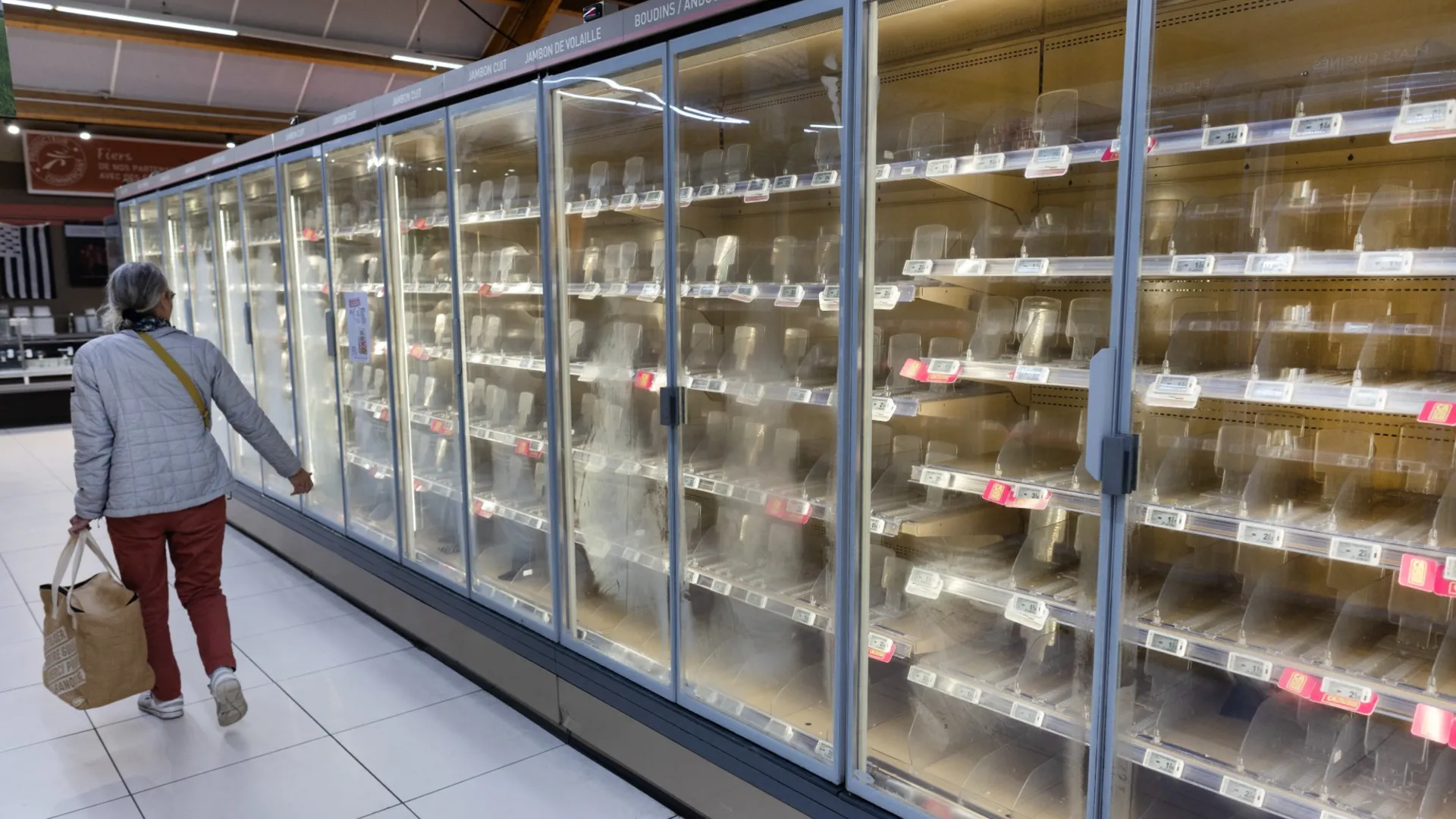
In France, hackers recently set their sights on an unusual target: supermarkets. After hundreds of French grocers had their refrigerators breached and taken offline, many are worried that attacks like these could become commonplace, including in the U.S.
How do hackers do it?
With the French grocery stores, criminals “remotely connected to refrigeration equipment” and “switched on defrost cycles that led to the loss of large quantities of fresh and frozen goods,” said CNN. Most shop fridges are connected to online controllers, allowing “maintenance firms to adjust the temperature remotely,” but this also makes the fridges vulnerable to hackers who can disable certain settings.
This isn’t the first instance of a widespread supermarket hack. In 2025, United Natural Foods, which supplies frozen foods to grocers in the U.S. and Canada, “discovered a cyberattack that forced it to take its systems offline,” said Al Jazeera. And last year, conglomerate Ahold Delhaize USA, which owns grocery chains like Food Lion and Stop & Shop, was the “victim of a cyberattack that disrupted operations at more than 2,000 stores.” Also, British chain Marks & Spencer suffered a 2025 hacking incident that reportedly cost $397 million.
How can this be prevented?
Most experts say consumers don’t have to be worried for now. But it’s a different story for businesses. “Smart appliances connected to the internet will always be vulnerable as hackers seize on security lapses to log in to the systems remotely and trigger malicious features,” said cybersecurity analyst Steven Lachance to Al Jazeera. These breaches also highlight “vulnerabilities in global food supplies that can be quickly and dangerously exploited,” said CNET.
To protect businesses, experts typically recommend “changing default passwords, enabling two-factor authentication where available and regularly installing software updates,” said Reuters. The “simplest rule is often the most effective: The fewer connected devices you have, the fewer potential entry points exist for attackers.”
Despite precautions, incidents like this remain the “next frontier for sabotage attacks,” said Muhammad Yahya Patel, the virtual chief information security officer at cybersecurity firm Huntress, to Bloomberg. Technology has now been “weaponized against food retail infrastructure,” and the “immediate financial consequences are significant and visible.”
|