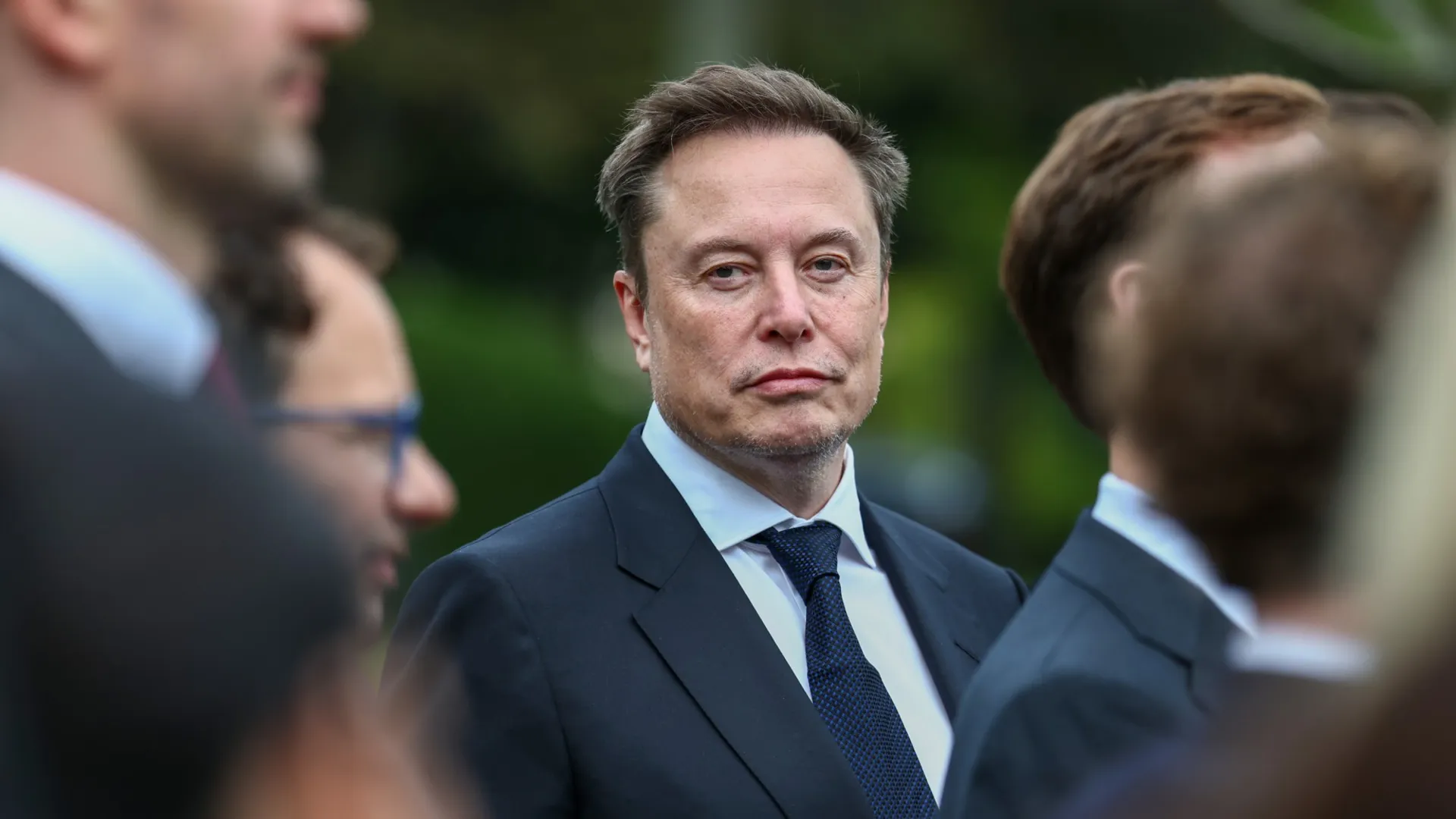
Licking his wounds after last week’s midterms, market capitalization losses for his companies SpaceX and Tesla, and the announcement of his Cybertruck’s discontinuation, Elon Musk has found his latest venture. The tech billionaire hopes to get a foothold in telecommunications by acquiring one of the U.S.’s most notable mobile phone companies.
‘Play’ for the US market
Musk wants SpaceX to acquire Boost Mobile via a deal with parent company EchoStar, according to The Washington Post. Marketed to low-income customers, Boost is one of the country’s largest budget-friendly cellular companies, and a deal with SpaceX could result in Musk “gaining access to its network, which it leases from AT&T and T-Mobile,” said the Post. Such access would “allow Musk to make a play for a U.S. wireless market that equity research firm MoffettNathanson estimates is worth $235 billion.”
Musk’s Boost venture comes after he approached AT&T, T-Mobile and Verizon about “buying capacity on their networks,” said TechCrunch. All three carriers declined. Together, these companies have about 100 million subscribers, far more than Boost.
SpaceX was already making moves in this space. Last year, it “acquired wireless spectrum licenses from EchoStar” and “recently purchased a portfolio of low-band spectrum licenses,” said The Verge.
‘Unparalleled ground coverage’
Despite Musk’s status as a controversial figure given his exorbitant wealth and unprecedented government access under Trump, some experts say there could be upsides to this deal. A joining of SpaceX and Boost would “combine SpaceX’s Starlink satellite broadband network with new mobile antennas, fiber connections and other ground infrastructure,” said Bloomberg, possibly bringing about “unparalleled ground coverage that makes wireless dead zones a thing of the past.”
Not everyone is enthusiastic about the deal’s prospects. It would “support Musk’s ambition to turn his business empire into an artificial intelligence powerhouse,” said Bloomberg, by giving him a platform through which to create future tech at a time when anti-AI sentiment has reached a fever pitch.
Musk may also face challenges in building out the network he desires. SpaceX would “likely need to invest heavily in ground infrastructure, customer service, handset subsidies and promotions — costly areas of the wireless business where the Big Three already have extensive operations,” said Reuters. |