Sign up to get Today’s Best Articles in your inbox
Join 350,000+ subscribers and keep yourself informed with a selection of
The Week’s most interesting, enlightening and entertaining stories - plus daily puzzles.
You are now subscribed
Your newsletter sign-up was successful
Want to add more newsletters?
An account already exists for this email address, please log in.
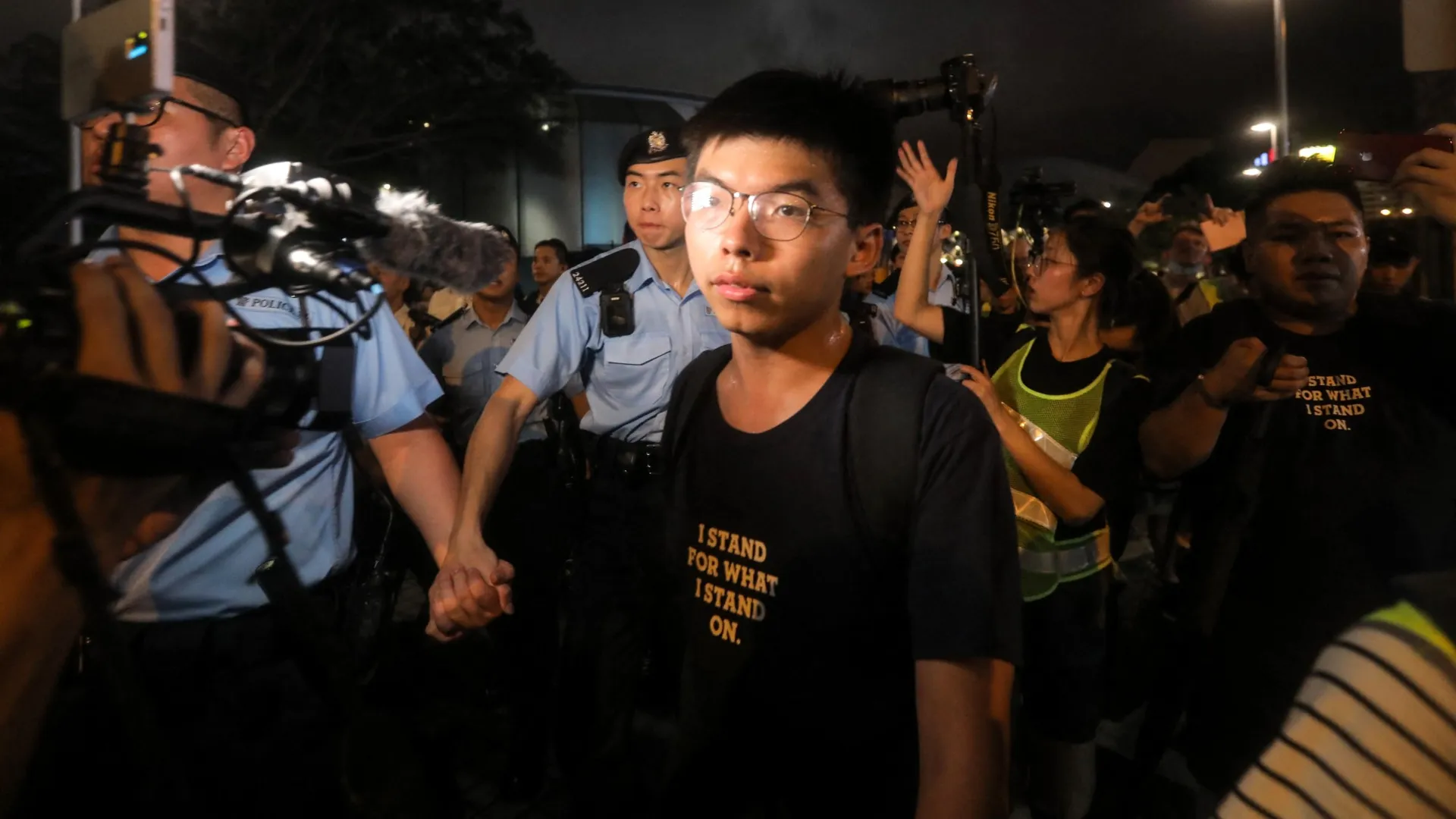
“The only thing I worry about is that people will forget Hong Kong,” Joshua Wong wrote from prison, in letters seen by The Guardian, after being given a further 10-year sentence for foreign collusion.
The pro-democracy activist, now 30, has been imprisoned since 2020 and was due to be released in January. But his second conviction under Beijing’s national security law – which “has been used to quash dissidence and lock up journalists”, said The Telegraph – has put paid to that prospect.
Wong wrote of his fears that, “amid competition and struggles between great powers”, people will “forget the countless ordinary, unknown people in different places who have paid a price for their beliefs”.
The Week
Escape your echo chamber. Get the facts behind the news, plus analysis from multiple perspectives.
Join more than 350,000 subscribers and keep yourself informed with a selection of The Week’s most interesting, enlightening and entertaining stories - plus daily puzzles.
Join more than 350,000 subscribers and keep yourself informed with a selection of The Week’s most interesting, enlightening and entertaining stories - plus daily puzzles.
Wong is the only activist to have been prosecuted twice under the controversial law, which Beijing imposed on the territory in 2019 following “huge and often violent pro-democracy protests” that “convulsed the international financial hub”, said CNN.
In his ruling, High Court judge William Tam said Wong had used an underground network and sought to “draw the attention of foreign countries” to bolster the cause.
The conviction represents more than another prison sentence for a prominent activist. It illustrates the increasingly difficult environment facing organised political opposition in Hong Kong.
What challenges lie ahead?
Since the national security law came into effect in 2020, “civil groups have disbanded, and some independent media outlets have been shut down”, said CNN, while “most pro-democracy figures are either in jail or in exile overseas”. The legal environment now creates significant risks for those seeking to organise within Hong Kong.
Sign up to get Today’s Best Articles in your inbox
A free daily email with the day’s biggest news and analysis – and the best features from TheWeek.com
It remains to be seen whether the pro-democracy movement can preserve its networks, identity and international connections without the visible street mobilisation that once defined it.
What will happen next?
The Wong verdict is another setback for the pro-democracy movement and highlights just how dramatically Hong Kong’s political environment has changed since the mass demonstrations of 2014 and 2019.
Large-scale protests on that scale are unlikely to return in the foreseeable future. Activism may increasingly shift overseas, but this brings its own challenges. Divisions within the diaspora, declining international attention and concerns about transnational pressure on activists and their families could all hamper efforts to sustain the movement.
There could also be a generational shift, as younger Hongkongers develop a different understanding of political participation in light of the perceived personal and professional risks.
But activism is not necessarily limited to elections and demonstrations. It can also involve preserving collective memory, cultural identity, historical narratives and freedom of expression.
So while the future of activism in Hong Kong looks increasingly difficult, it is not necessarily hopeless. The city’s democratic aspirations will not disappear simply because its political organisations have been dismantled.
Chas Newkey-Burden has been part of The Week Digital team for more than a decade and a journalist for 25 years, starting out on the irreverent football weekly 90 Minutes, before moving to lifestyle magazines Loaded and Attitude. He was a columnist for The Big Issue and landed a world exclusive with David Beckham that became the weekly magazine’s bestselling issue. He now writes regularly for The Guardian, The Telegraph, The Independent, Metro, FourFourTwo and the i news site. He is also the author of a number of non-fiction books.