The Week US
flag of US
US
flag of UK
UK
https://cdn.mos.cms.futurecdn.net/flexiimages/jacafc5zvs1692883516.jpg

SUBSCRIBE & SAVE

Less than $3 per week

Sign in
  • View Profile
  • Sign out
  • The Explainer
  • The Week Recommends
  • Newsletters
  • Cartoons
  • From the Magazine
  • The Week Junior
  • More
    • Politics
    • World News
    • Business
    • Health
    • Science
    • Food & Drink
    • Travel
    • Culture
    • History
    • Personal Finance
    • Puzzles
    • Photos
    • The Blend
    • All Categories
  • Newsletter sign up Newsletter
  • The Week Evening Review
    Israel’s Arab kingmakers, Venezuelan oil, and the Bayeux Tapestry

     
    TODAY’S BIG QUESTION

    Will Arab-led parties hold key to Israel’s future?

    Arab parties are on track to win a record number of seats in Israel’s bitterly fought election. The left-wing Joint List alliance and the socially conservative Ra’am party are projected to collectively secure 18 of the Knesset’s 120 seats.

    With neither Benjamin Netanyahu nor his main rival Gadi Eisenkot close to securing a majority on their own, the Arab parties’ strong showing could make them “kingmakers”, said Liam Stack in The New York Times. “But building a governing coalition with Arab participation remains a fraught exercise.”

    What did the commentators say?
    Arab Israeli citizens, who make up around 20% of the country’s population, turned out in record numbers for this week’s vote. The result poses an “urgent and fundamental challenge to the country’s mainstream opposition: either cooperate with Arab Israelis” or hand a “roadmap to political survival” to Netanyahu, said Julian Borger in The Guardian.

    This is an “opportunity to form a change government in partnership with Israel’s Arab citizens”, Yair Golan, leader of the left-wing Democrats, said on X. But for the larger opposition parties, the picture is “less straightforward”, said The Washington Post. Their voters tend to “lean further right, and many have long rejected any government propped up by Arab lawmakers”.

    Eisenkot has not explicitly ruled out working with the Arab parties but has set stringent conditions that may make any collaboration impossible. And the various Arab factions would be likely to demand concessions in return. “Cooperation would have to survive those disagreements,” said Zvika Klein in The Jerusalem Post. “A shared interest in replacing a prime minister does not settle what comes afterwards.”

    What next?
    Netanyahu and Eisenkot are both “unlikely to enter a formal coalition with Arab parties”, said Nada AlTaher in The National. But without a majority, Netanyahu would have to attempt to form a unity government with the cooperation of opposition parties. Although that’s “not the outcome” Arab voters will have hoped for, said Danny Citrinowitz, from the Institute for National Security Studies, it could at least keep extreme figures such as Itamar Ben-Gvir and Bezalel Smotrich out of the next cabinet.


    THE EXPLAINER

    Donald Trump, Venezuelan oil and ‘the 51st state’

    The US has received its first shipment of Venezuelan oil under Donald Trump’s opaque and highly controversial deal with the South American nation. The president claimed on Truth Social that the pact with Venezuela’s Washington-backed interim government would bring the US “BILLIONS of Barrels” of oil. But many Venezuelans view it as an illegal surrender of its natural resources to a colonial US – and fears have been fanned by Trump’s suggestion that “someday soon” Venezuela might “become a prosperous 51st state”.

    What are the terms of the deal?
    The Trump administration has taken a 35% stake in North American Blue Energy Partners (Nabep), a private firm run by Venezuelan billionaire Alejandro Betancourt López that has been handed control of 17 of the country’s oil fields. The deal allows the US government to purchase its first million barrels of Nabep’s crude oil for $30 (£23) each – less than a third of current market prices, sources told The Washington Post.

    “The agreement has raised eyebrows, to say the least,” said the BBC. Betancourt has been subject to multiple investigations for corruption and money laundering, although he has never been charged and denies any wrongdoing.

    Why is it so important for Trump?
    Oil prices have rocketed across the US since the outbreak of war with Iran, sending Trump’s approval ratings to record lows ahead of next week’s midterm elections. This first shipment “gives Trump a chance to tout access to cheaper crude as ​evidence his policies are delivering economic benefits”, said Reuters.

    But the deal is “not expected to have a significant impact” on prices at US pumps, said The Washington Post. US refiners are already operating at maximum capacity, and thick, heavy Venezuelan crude is particularly difficult to refine.

    What’s in it for Venezuela?
    Venezuela’s interim president, Delcy Rodríguez, has insisted that Caracas retains sovereignty over its massive oil reserves. The benefits of this oil deal are “endless”, she said in a televised address, citing revenues of more than $209 billion (£154 billion) and the potential to become an “energy powerhouse”.

    But the deal has “provoked outrage” across Venezuela’s political spectrum, said The Guardian. It’s a “massive land grab” by a “rapacious, mafioso” US, an unnamed Venezuelan opposition figure told the paper.


    QUOTE OF THE DAY

    “It is a truth universally acknowledged, that a single man in possession of a good fortune, must be in want of a wife.”

    The opening line of Jane Austen’s “Pride and Prejudice”, which will be spoken on screen for the first time in an upcoming Netflix adaptation. The newly released trailer for the series features Olivia Colman uttering the famous quote as Mrs Bennet.


    Poll watch

    More than half (52%) of professional pilots admit to having flown while dangerously tired at least once in the last three months. A European Cockpit Association survey of 7,200 pilots in 32 countries found only 37% report being unfit to fly when fatigued, with fear of punishment and management reactions cited as key reasons for staying quiet.


    TALKING POINT

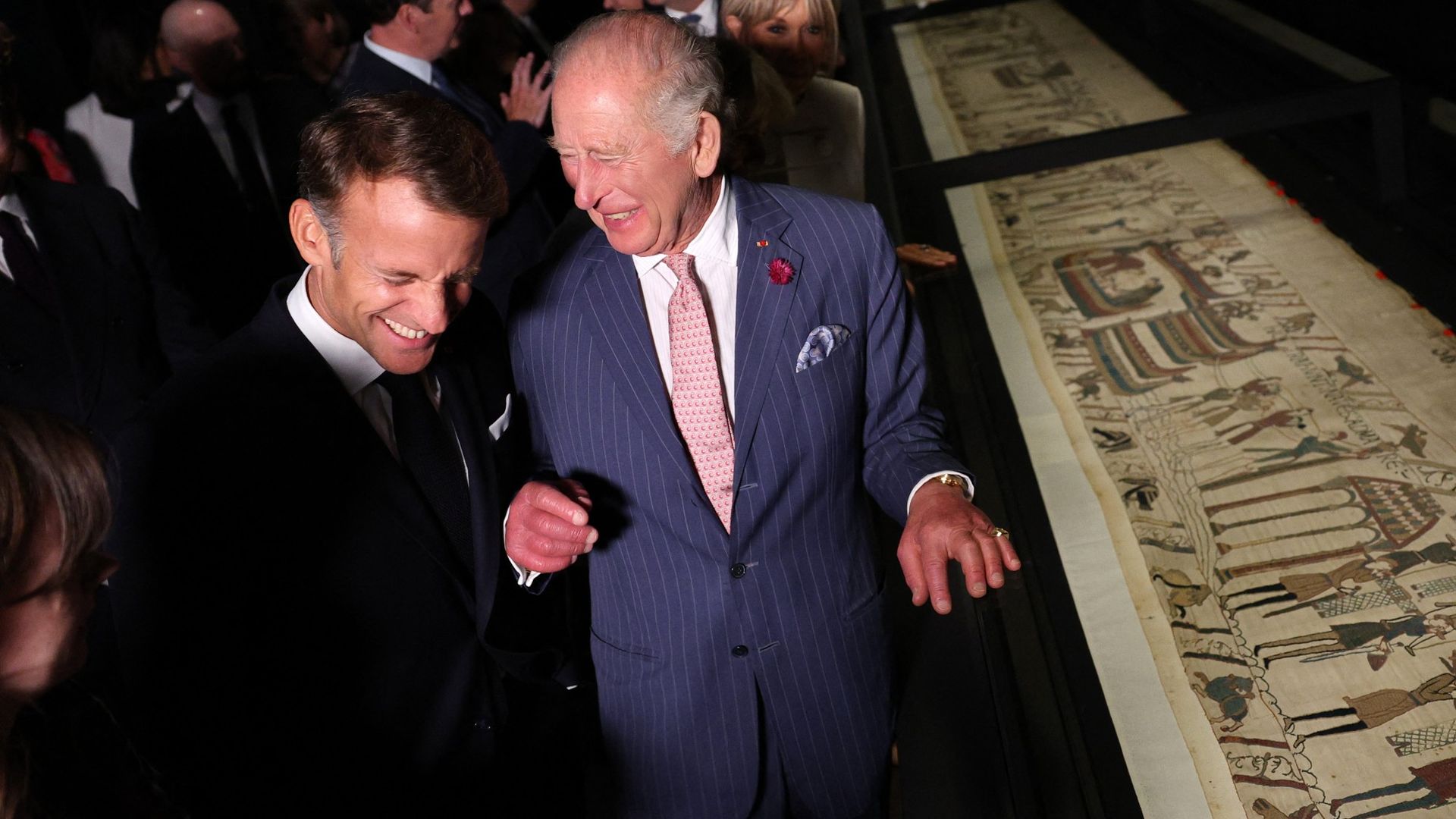
    The Bayeux Tapestry: one in the eye for commoners?

    The Bayeux Tapestry “holds a particular position in British public consciousness”, said The Wall Street Journal. For many, seeing it during its British Museum residency “is akin to a birthright”. But a “class war” has broken out, with would-be visitors complaining about “being treated like Taylor Swift fans on Ticketmaster” while “tech billionaires, luxury hotel guests and museum sponsors get to skip the line”.

    Flying visit
    As ordinary folk scrabble for tickets via the museum’s online queuing system, luxury hotel One Aldwych is offering guests a package that includes a viewing at the time and date of their choosing. “Art critics and journalists” are also being “permitted by museum marshals to stop and appreciate the thing”, said Lara Brown in The Spectator. But “the rest of us commoners will have no such luck”. I waited an hour to reach the display during a recent visit, only to find that the focus of the staff was to get us through “as fast as humanly possible”. I realised that “hundreds of thousands of people want to visit”, and I’m “grateful to have seen such an important piece of English history”. But I would have been “even more grateful if I had been allowed to properly look at it”.

    Smoother experience
    “The reason the queue is going slowly is because people are dawdling inside,” said Giles Coren in The Times. And “they are hustling people along inside because they don’t want the queue to be too long”. So “how, exactly, Einstein, do you think they can solve both” of those problems?

    British Museum director Nicholas Cullinan acknowledged that “the experience has not been as smooth as we would have liked”, and has announced new measures including longer opening hours, an audio guide and extra seating for those stuck in the queue. But his statement “stopped conspicuously short of an apology”, said The Telegraph. “The question now is whether the museum’s attempts to right the ship will prove enough, or be seen as too little, too late.”


    Good day 🧳

    … for gap years, as a record number of top students opt to take time out before applying to university. The number of 19-year-olds applying for the most competitive courses has risen by 16.2% this year, according to new data from admissions platform Ucas, while applications from 18-year-olds dropped by 4.9%.


    Bad day 🪑

    … for mid-century modern, the sleek retro look that has dominated decor trends in recent years. According to commentators, the unified aesthetic has become a symbol of “millennial cringe” for younger shoppers, who are turning to a more eclectic style that favours whimsy and individualism.


    PICTURE OF THE DAY

    Trick or treat

    Humboldt penguins feast on fish served in carved pumpkins, during a photo shoot to promote London Zoo’s Halloween events. 

    Henry Nicholls / AFP / Getty Images


    Puzzles

    Chain Word

    Try The Week’s daily word challenge in our puzzles and quizzes section, which also includes sudoku and Guess the Number

    Play here


    THE WEEK RECOMMENDS

    ‘Mind-warping’: Derren Brown’s Only Human

    Almost four years on from his last London stage spectacular, “ever affable illusionist” Derren Brown is back with his signature blend of “pop psychology, nimble storytelling and an instinctive ability to bond with his audience”, said Clive Davis in The Times.

    While “Only Human” doesn’t quite reach the dizzying heights of “Showman”, said Chris Harvey in The Telegraph, it’s a “thoroughly entertaining, at times mind-warping exploration of how magical we still find the idea of being able to predict the future, five centuries after Nostradamus”. Brown injects his live performances with “warmth and vulnerability”, but also with a hint of a “Hannibal Lecter-like figure lurking within that revels in the feeling of tricking us all”.

    The stunts featured in the first half don’t feel “all that high-powered”, said Brian Logan in The Guardian. Predicting whether an audience member will say yes or no to a series of questions is “amazing” but “low stakes”. But act two “raises the bar”. Without giving anything away, it kicks off with a routine that is “extraordinary and disconcerting in equal measure”. The audience is left reeling as Brown then puts in motion “one gasp-inducing stunt after another”.

    I found the new show “far more unsettling” than “Showman”, said Grace Beard in Time Out. Brown pushes the boundaries by bringing his “more extreme psychological manipulation, usually reserved for television, to the stage”. Parts of it will leave you feeling “completely baffled”. But “in a show all about uncertainty, one thing is certain”: this is Brown “at his astounding best”.


    Statistic of the day

    $5 billion: Fifa’s reported earnings from ticket and hospitality sales at the 2026 World Cup – up from $929 million at the 2022 Qatar tournament, before the introduction of dynamic ticket pricing. Football’s governing body has not confirmed this year’s figure, supplied to The Times by insider sources.


    instant opinion

    Today’s best commentary

    Liz Truss has brought our divided nation together – in mockery of her
    Emma Brockes in The Guardian
    In these divisive times, writes Emma Brockes, the publication of Liz Truss’ new book is “an opportunity to come together” and “warm our hands around a single point of scorn”. It’s “impossible to summon anything but rage and derision” for this woman of “chaos unrelieved by charm”. Yet she’s achieved the “seemingly impossible” in creating this moment of “unity”. So as she “stares out” from her book cover, “provoking howls of laughter and explosive diatribes from everyone”, I want to say, “thank you”.

    Netanyahu, Eisenkot, Bennett must put Israel first and talk unity
    The Jerusalem Post’s editorial board
    Israeli voters “have had their say”, says The Jerusalem Post. Now comes the “difficult task of turning those votes into a functioning government”. Before coalition negotiations “descend into the familiar arguments”, Benjamin Netanyahu, challenger Gadi Eisenkot and former PM Naftali Bennett should “sit down together and talk” about a “broad Zionist government” that wouldn’t need to negotiate “every significant” national security decision with more “uncompromising coalition partners”. Governing together wouldn’t be easy but “they owe the country at least a serious conversation”.

    Why are there suddenly so many dessert cafés in London?
    Angus Colwell in The Spectator
    The “increasingly common” dessert café comes “in varying degrees of garishness”, writes restaurant reviewer Angus Colwell, but each caters “for the bizarre need of someone who, at 10 p.m, wants to head out for banana chocolate French waffle toast”. Just reading the menus gives me “indigestion”, but they’re popular with “Uber Eats and Deliveroo customers, for whom the pandemic never ended” and “for whom Tupperware has replaced plates”. Yes, it all “tastes weirdly good”, but that’s “because it’s all sugar”.


    word of the day

    Yuurei

    Literally “faint spirit”, a Japanese term for a ghost believed to haunt the scene of a sudden or violent death. Superstition around yuurei is affecting the Japanese property market, according to the BBC. Estate agents must disclose if homes are associated with such tragedies, so “for house hunters who are not superstitious or squeamish”, there are “big bargains to be found”.


    Evening Review was written and edited by Rebecca Messina, Jamie Timson, Harriet Marsden, Elliott Goat, Chas Newkey-Burden, Irenie Forshaw, Helen Brown, David Edwards and Kari Wilkin, with illustrations from Stephen P. Kelly.

    Image credits, from top: illustration by Stephen P. Kelly / Getty Images; Alex Wong / Getty Images; Adrian Dennis / Pool / AFP / Getty Images; Henry Nicholls / AFP / Getty Images; Pamela Raith
     

    Recent editions

    • Evening Review

      Musk prepares for war

    • Morning Report

      Israel votes, heads toward gridlock

    • Evening Review

      A corporate reckoning

    VIEW ALL
    TheWeek
    • About Us
    • Contact Future's experts
    • Terms and Conditions
    • Privacy Policy
    • Cookie Policy
    • Advertise With Us
    • FAQ
    Add as a preferred source on Google Add as a preferred source on Google

    The Week US is part of Future US Inc, an international media group and leading digital publisher. Visit our corporate site.

    © Future US, Inc. Full 7th Floor, 130 West 42nd Street, New York, NY 10036.