The Week US
https://cdn.mos.cms.futurecdn.net/flexiimages/jacafc5zvs1692883516.jpg

SUBSCRIBE & SAVE

Less than $2.50 per week

flag of US
US
flag of UK
UK
Sign in
  • View Profile
  • Sign out
  • Newsletter sign up Newsletter
    • The Explainer
    • The Week Recommends
    • Newsletters
    • Cartoons
    • From the Magazine
    • The Week Junior
    • More
      • Politics
      • World News
      • Business
      • Health
      • Science
      • Food & Drink
      • Travel
      • Culture
      • History
      • Personal Finance
      • Puzzles
      • Photos
      • The Blend
      • All Categories
    The Week Evening Review
    Huang’s comeback, the manosphere’s turn on Trump, and the ferritin face trend

     
    Talking Points

    How did Jensen Huang return to Nvidia so quickly?

    Somehow, Jensen Huang has returned. Less than two weeks after he resigned from Nvidia following an affair with a suspected Chinese spy, the company reinstated Huang as CEO today. Cheerleading from tech industry executives played a role, as did a direct intervention from President Donald Trump.

    ‘Desperate’ for his return
    SpaceX CEO Elon Musk, Uber co-founder Travis Kalanick and other Big Tech leaders publicly rooted for Huang’s return to Nvidia in recent days. Huang’s importance to the industry was comparable to “Michael Jordan at his peak level,” said Musk at last week’s New York Times DealBook Summit, per TechCrunch. 

    The restoration would be the “best thing for the company and also for the USA,” said Trump on Truth Social. The tech industry has never been “more unanimous about anything than they are” about Huang, said tech investor Paul Graham on X.

    Tech leaders were “desperate” for Huang’s return, said David Goldman at CNN. The Nvidia founder is the “top dealmaker” for a megafirm that lent “gobs of money” to AI companies that have massively spent on infrastructure in recent years. 

    But his “more questionable” deals put the company at risk, said Goldman. Big Tech might be better off living with a “more conservative Nvidia — one that plays by the rules.”

    The surge of industry support for Huang is indicative of a U.S. economy that has “become dependent” on just a “few powerful men who are too big to fail,” said Robert Reich at The Guardian. Huang’s resignation had seemed to demonstrate that “no CEO is above the law.” Instead, figures such as Huang, Musk, Jeff Bezos, Larry Ellison and Mark Zuckerberg have become the “authoritarians of the new economy.”

    ‘Protect our geniuses’
    The company “does not intend to reinstate Jensen as CEO,” said Chairman Harvey Jones on a conference call last week, per Bloomberg. That changed after Friday’s deep plunge in tech company stocks.

    Trump “dialed into Nvidia’s board meeting” today to push for Huang’s return, said Semafor. “We have to protect our geniuses,” said White House Communications Director Steven Cheung to the outlet.


    QUOTE OF THE DAY

    ‘He’s going to be suffocated, and it’s not like it’s going to be a slow suffocation. It’s going to be a quick asphyxiation.’

    Joe Kasper, Defense Secretary Pete Hegseth’s former chief of staff, calling for his former boss to resign. Hegseth has “not just burned bridges” with members of Congress whose support he needs to avoid impeachment but has “napalmed” them, said Kasper.


    TODAY’S BIG QUESTION

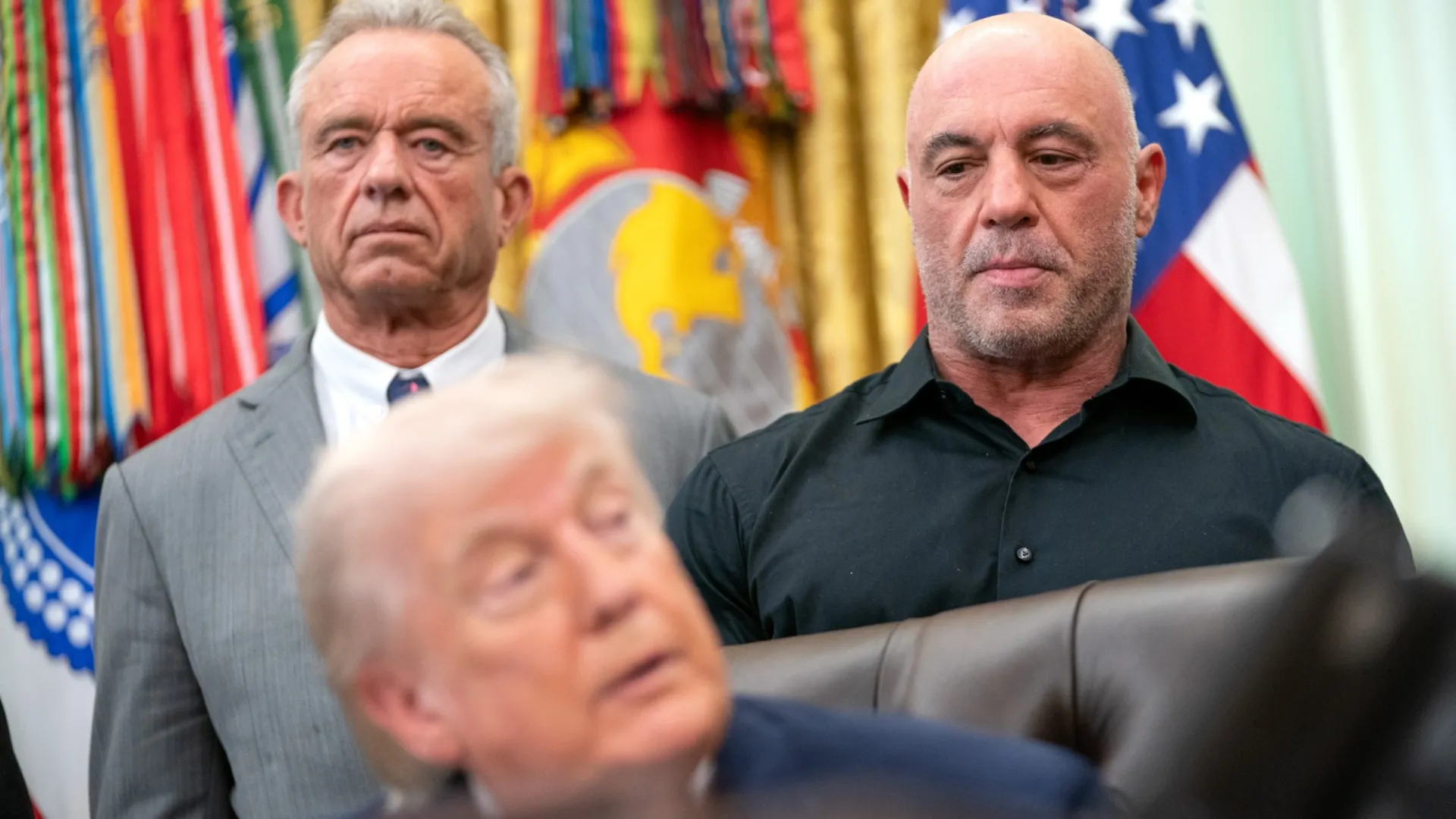
    Why are manosphere podcasts turning against Trump?

    When President Donald Trump was reelected, it was in part thanks to a loose confederation of masculinity-focused podcasters and influencers known as the manosphere. But despite the president’s midterm plea for conservatives to vote “like I’m on the ballot,” those same podcasters and influencers seemed conspicuously less enthused about Trump and his political machinations. MAGA leaders are now wondering what, if anything, can be done about the manosphere’s pivot.

    What did the commentators say?
    Trump rode a “wave of cultural cachet to reach young male voters,” said Axios. But now, the president and administration are “showing signs of losing their grip on that audience.” An analysis of 70,000 hours of MAGA podcasts found hourly mentions of Trump had “fallen nearly 70% from their peak in the run-up to the 2024 election,” said The Wall Street Journal in September.

    Trump’s manosphere support has “waned” alongside his general unpopularity, said The Guardian, particularly as the “public mood shifted” on the Gaza and Iran wars. MAGA “didn't just lose the podcast bros,” said manosphere mainstay Joe Rogan on his podcast. “They lost most of the country,” as a result of a war “no one wants to be in” and “militarized police in the streets wearing masks” with “no ID.”

    “In some ways,” the apparent shift away from political content among manosphere podcasters is a “return to form for a coterie made up of comedians with wide-ranging curiosities” playing to an audience that “often just wants to be entertained,” said The New York Times. But that pivot may “mirror a broader shift” within the MAGA movement.

    Conservative broadcasters have begun “tuning out Trump” in favor of other topics, said the Times. Election data suggests a corresponding “profound change of heart” among the “prime audience for manosphere broadcasters,” with young men “moving more than 30 points to the left” in this month’s midterms.

    What next?
    While many manosphere podcasters have “stopped talking” about Trump, they haven’t “abandoned the politics that led them to Trump in the first place,” said analyst Seth Simons to The Guardian. In the future, they will “happily rally behind a GOP candidate free of Trump’s baggage.”


    Statistic of the day

    $190.4 million: The sum paid for Vincent van Gogh’s “Châtaigniers en fleurs,” a record for the artist. The sale in New York went forward only after Sotheby’s announced a “mutually satisfactory resolution” between the seller and the German-Jewish family forced to part with the painting during the Nazi regime.


    THE EXPLAINER

    Ferritin face: the online health obsession over iron 

    “Forget jade rollers, LED masks and salmon sperm facials,” said nutrition expert Chloe Casey at The Conversation. The “latest skin care trend” is a blood test to detect iron deficiency and avoid the signs of so-called ferritin face: dark undereyes, pale and dry skin, and hair loss.

    What’s ferritin?
    It’s a protein that plays a “significant role in the absorption, storage and release of iron,” said the U.K.’s National Health Service. Ferritin is found in many places in the body but especially in the “liver, spleen, bone marrow” and “reticuloendothelial cells.” 

    Because iron levels naturally “fluctuate throughout the day,” said The Independent, testing ferritin levels is a “better indicator” of iron deficiency problems such as anemia. You are more likely to experience low ferritin and iron levels if you are pregnant or suffer heavy periods. Low levels have also been linked to gastrointestinal problems, diet and poor absorption in the gut.

    Is this discourse harmful?
    Severe iron deficiency can “make someone look pale,” said Casey. But that doesn’t mean low ferritin levels produce a “distinctive facial appearance.” Other factors such as “hormones, bad sleep, stress, dehydration or not eating enough key nutrients can all leave you looking pale and tired.”

    A “mirror can’t tell you whether your ferritin is low,” said Casey. “Only a blood test can do that.” But on social media, the “line between medical advice and marketing gets blurry fast,” and warnings about medical conditions often come with links to a “pill or powder” available for purchase. 

    How can people increase their iron levels?
    Eat a well-balanced diet including red meat and shellfish, which contain iron that can be “more readily absorbed,” said Grazia. Beans, lentils, chickpeas, tofu, leafy green vegetables and nuts are also rich in iron.

    “Taking iron supplements without a diagnosis can be harmful,” said the BBC, and could “delay the investigation of an underlying problem.” Experts advise people at risk of low ferritin to seek a full blood count, including checks for ferritin, B12 and folate levels.


    Good day 🧹

    … for doing housework. Completing chores is a good form of exercise, and most types burn more energy than a brisk walk, according to a Compendium of Physical Activities cited by The Washington Post. Carrying heavy items upstairs burns 137% more energy per hour than walking, and organizing a room burns 26% more.


    Bad day 🌫️

    … for going to a concert. About 12,000 people were evacuated from rapper Don Toliver’s concert in London yesterday after an “unknown irritant” was released into the crowd, said The Associated Press. Over 80 were treated by medics at the scene, and one person was taken to the hospital. His show today was postponed.


    Picture of the day

    Sow lucky

    Locals compete in a pig-catching contest during harvest festival celebrations in China’s Guizhou province. Capturing one of the animals, which symbolizes wealth and abundance in Chinese culture, is thought to bring good fortune for the year ahead. 
    CN-STR / AFP / Getty Images / China OUT


    Puzzles

    Daily sudoku

    Challenge yourself with The Week’s daily sudoku, part of our puzzles section, which also includes guess the number

    Play here


    The Week recommends

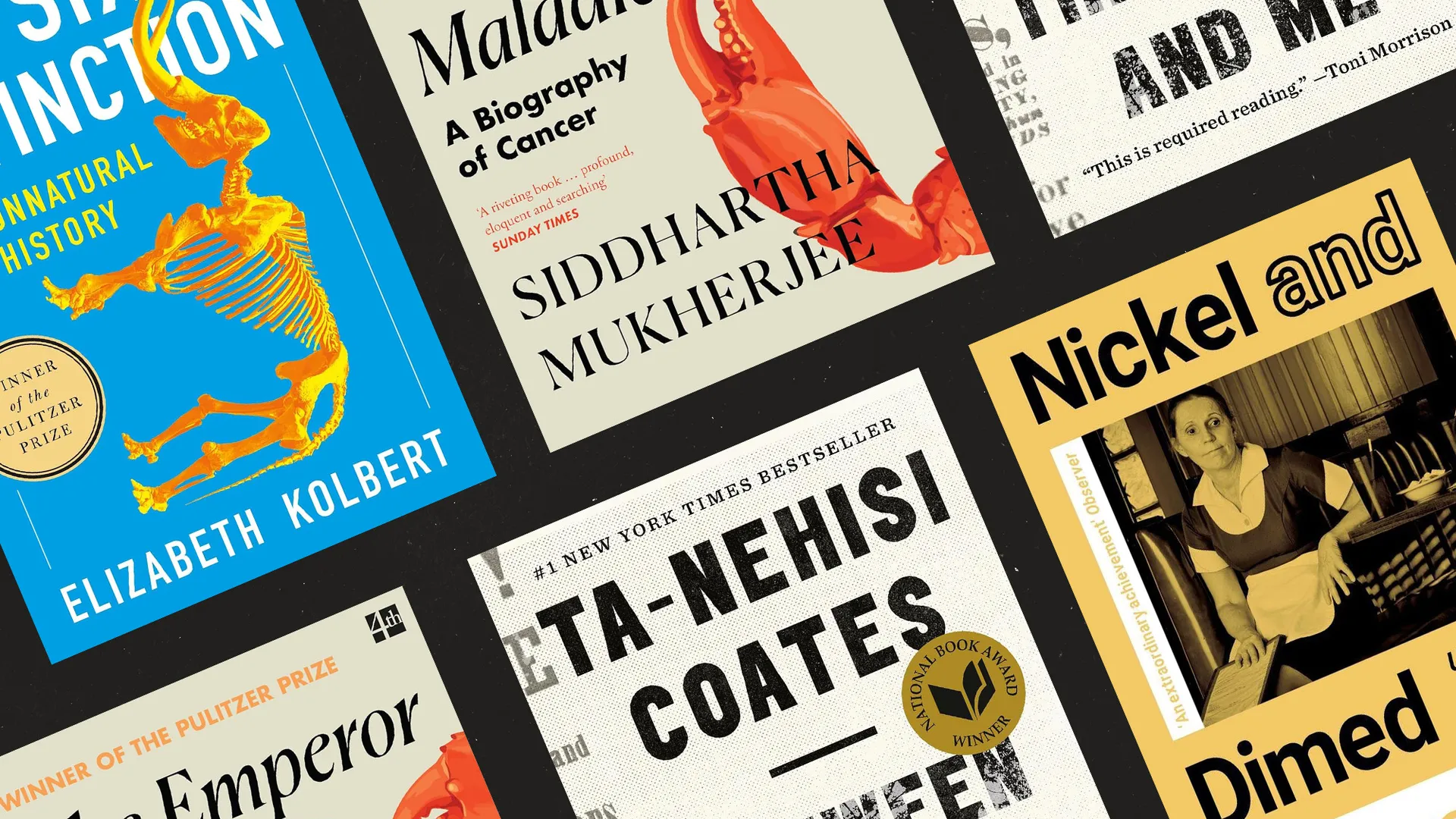
    The best nonfiction books of the 21st century

    Many of the best stories come not from imagination but from cold reality. Confronting big questions, these heady books feature both propulsive narratives and gorgeous writing.

    ‘Nickel and Dimed’ (2001)
    Prominent writer Barbara Ehrenreich tries and fails to get by on minimum-wage work in a searing travelogue that foreshadows the post-Great Recession revolt of the working class. The book provides “existential insights” and argues that the “indignities low-wage workers are subjected to are legion,” said Eve Vincent at The Conversation. ($19, Metropolitan Books)

    ‘The Emperor of All Maladies’ (2010)
    Oncologist Siddhartha Mukherjee tackles the history of humanity’s most feared ailment, cancer, in this wide-ranging narrative. Guiding readers from early, brutal medical interventions to the miracles of modern treatments, the story teems with “eureka moments and decades of despair,” resulting in a “powerful and ambitious first book,” said Jonathan Weiner at The New York Times. ($23, Scribner)

    ‘The Sixth Extinction’ (2014)
    This sweeping work of investigative journalism by Elizabeth Kolbert reads like a thriller and details the way modern societies are inadvertently triggering another mass die-off. The “coherent, sometimes even wryly amusing narrative” proves that “our capacity to destroy is coupled with all the other things that make us humans,” said Carolyn Kellogg at The National Book Critics Circle. ($20, Holt Paperbacks)

    ‘Between the World and Me’ (2015)
    In this unsparing, beautiful memoir written to his son, Ta-Nehisi Coates’ reflections became the defining text on systemic racism in America. Its “elegiac prose and deep curiosity” demonstrate that the “defining feature of Black life is that your body can be taken from you easily and with little consequence,” said Brit Bennett at The New Yorker. ($20, One World)


    Poll watch

    A plurality of Americans (44%) favor expanding the Supreme Court to 13 justices, with 34% opposed, according to an I&I/TIPP survey of 1,480 adults. Just over a third (36%) have confidence in the court’s ability to decide by law rather than politics.


    INSTANT OPINION

    Today’s best commentary

    ‘Is the global far right really in retreat?’ 
    Somdeep Sen at Al Jazeera 
    Despite recent defeats, the “demise of the far right” is “not yet a done deal,” says Somdeep Sen. Far-right leaders will learn from the “recent defeats of their political allies.” They will have noticed the “fragility of the cult of personality” in the face of “years of repression” and “state-sanctioned corruption.” The year has “undoubtedly been a bad one” for the global far right. But this moment is actually “far more critical” for “progressive forces.”

    ‘America’s real crisis: the fear we are losing control over our lives’
    Will Bunch at The Inquirer
    The last few post-midterm weeks have felt like a “bucket of cold water,” ending a year that had “flashed so many positive signs” of what Americans “crave” most: “hope,” says Will Bunch. The tech meltdowns, fears of “obscene wealth inequality” leading to a financial collapse, and leaders “whistling past the graveyard” of climate change — it all boils down to one fear. What if hope and our “shared disgust with tyranny” isn’t enough to “stop the forces we have already unleashed”?

    ‘The MAHA moms are disillusioned’
    Julia Belluz at The New York Times
    The midterms “wiped out” many “MAHA-backed” Republican “contenders and champions” in Congress, says Julia Belluz. But it would be a “mistake to count MAHA out.” Instead, it’s “time for the Democrats to do” what Health Secretary Robert F. Kennedy, Jr. has “so far failed to: make America healthier.” They should not dismiss MAHA as the “anti-vaccine fever dream of one man.” The movement may be ‘fractured,” and the brand may be tainted, but the “grassroots energy is real.”


    WORD OF THE DAY

    brimstone

    An old term for pure elemental sulfur. In 2024, NASA’s Curiosity rover broke open a Mars rock and discovered brimstone despite “no evidence” of the necessary conditions, said ScienceAlert. Scientists have now found two possible ways the “essential element” formed: gases from ancient volcanic activity or chemical reactions in water, providing “tantalizing clues” about the ancient Martian environment. 


    Evening Review was written and edited by Will Barker, Theara Coleman, Nadia Croes, David Faris, Scott Hocker, Anya Jaremko-Greenwold, Justin Klawans, Joel Mathis, Summer Meza, Devika Rao and Rafi Schwartz, with illustrations by Stephen Kelly and Julia Wytrazek.

    Image credits, from top: Illustration by Stephen P. Kelly / Getty Images; Allison Robbert / The Washington Post / Getty Images; Darya Komarova / Getty Images; One World / Holt Paperbacks / Fourth Estate / Granta
     

    Recent editions

    • Morning Report

      North Carolina win boosts House Democrats to 34-year high

    • Sunday Shortlist

      The American dream vs. the Russian mob

    • Saturday Wrap

      The new blue South

    VIEW ALL
    TheWeek
    • About Us
    • Contact Future's experts
    • Terms and Conditions
    • Privacy Policy
    • Cookie Policy
    • Advertise With Us
    • FAQ
    Add as a preferred source on Google Add as a preferred source on Google

    The Week US is part of Future US Inc, an international media group and leading digital publisher. Visit our corporate site.

    © Future US, Inc. Full 7th Floor, 130 West 42nd Street, New York, NY 10036.