The Week US
flag of US
US
flag of UK
UK
https://cdn.mos.cms.futurecdn.net/flexiimages/jacafc5zvs1692883516.jpg

SUBSCRIBE & SAVE

Less than $3 per week

Sign in
  • View Profile
  • Sign out
  • The Explainer
  • The Week Recommends
  • Newsletters
  • Cartoons
  • From the Magazine
  • The Week Junior
  • More
    • Politics
    • World News
    • Business
    • Health
    • Science
    • Food & Drink
    • Travel
    • Culture
    • History
    • Personal Finance
    • Puzzles
    • Photos
    • The Blend
    • All Categories
  • Newsletter sign up Newsletter
  • The Week Evening Review
    Burnham’s eco credentials, the Ray-Ban family feud, and ‘ferratin face’

     
    TODAY’S BIG QUESTION

    Are Burnham’s climate credentials up to scratch?

    Andy Burnham has promised a “new era of British leadership” on climate policy. He told the Cop31 conference in Turkey today that Britain “would live up to” its clean-energy commitment, and announced a new special UK representative on climate security.

    But critics at home – including some on his own backbenches – claim the prime minister has already prioritised affordability over clean energy by permitting drilling at the North Sea’s Jackdaw gas field.

    What did the commentators say?
    Detractors on the right lambast his commitment to net zero, but there is “little evidence” to suggest it’s been “a political priority” for Burnham so far, said the Financial Times. Chancellor John Healey “took the scalpel to various green capital spending programmes in the Budget”, including the Warm Homes insulation programme and carbon capture schemes.

    Burnham’s recent decisions “may worry climate-conscious onlookers”, said The New Statesman’s political editor Ailbhe Rea. There has been a “radical move away” from the clean-power drive of Ed Miliband’s tenure as energy secretary, and an “unrelenting focus on affordability”.

    The PM is facing an “uncomfortable paradox”, said former government energy adviser Michael Jacobs in Prospect Magazine. Fewer than a fifth of British voters “now regard the environment and climate change as among their top three political issues”, but foregoing it entirely is likely to bleed Labour support to the Greens or “greenish” Lib Dems – risking defeat at the next general election.

    What next?
    Labour needs to find a way out of its political and economic “bind”, said political economist James Jackson on The Conversation. The party manifesto didn’t include an “ambitious climate policy”, and the government has been boxed in by its tax commitments and the UK’s “tight fiscal position”.

    Burnham’s longer-term climate agenda “remains unknown”. He will undoubtedly argue that any position is “entwined (and somewhat undermined)” by the “so-called fossilflationary pressures” triggered by the Iran war. But at best, a greener climate policy has been “lost”. And at worst, the PM has decided it’s a “price worth paying to achieve his other objectives”.


    IN THE SPOTLIGHT

    The family feud threatening Italy’s luxury fashion empire

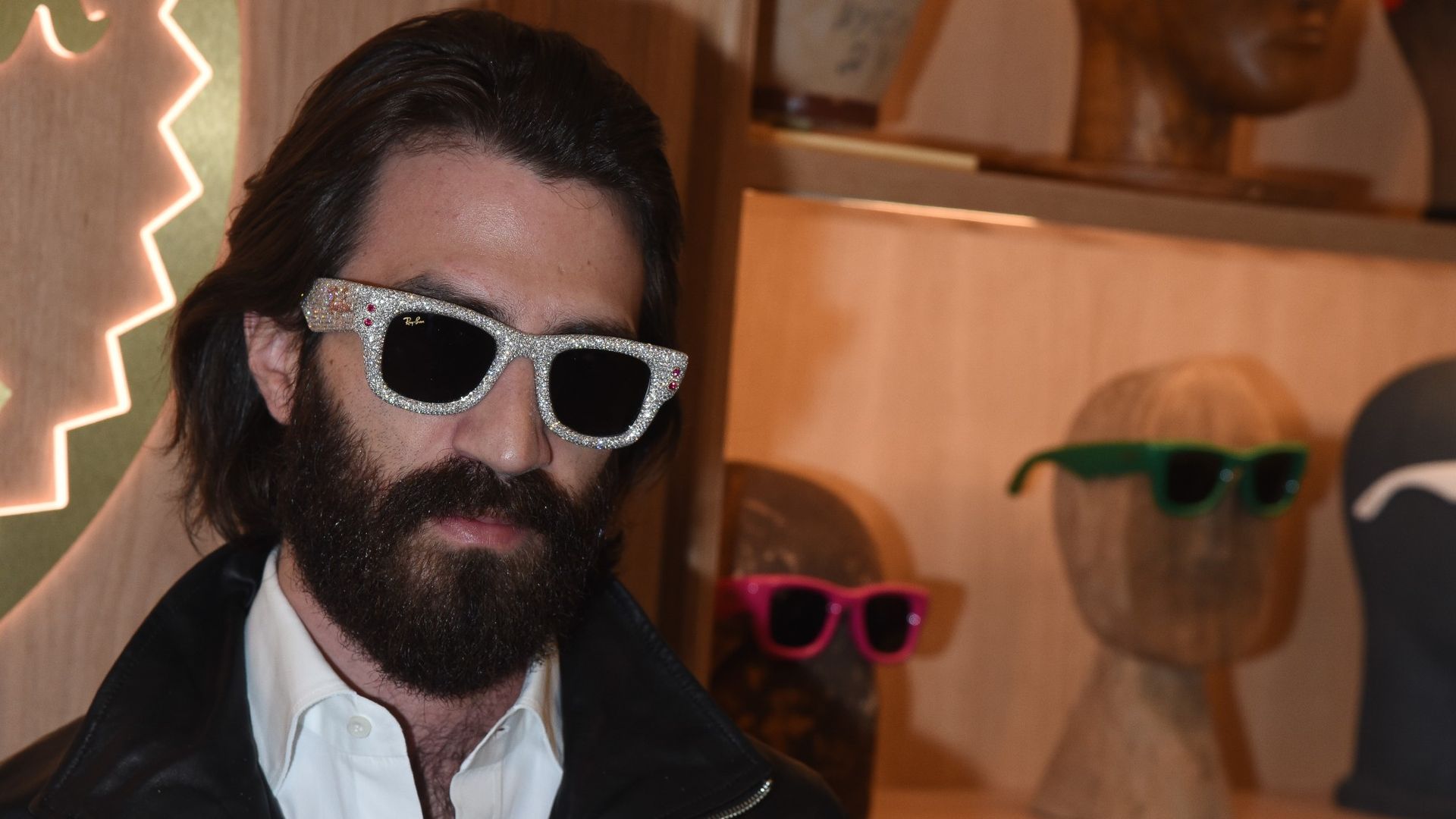
    The late Leonardo Del Vecchio must be “rolling in his grave”, said The Observer. The Italian businessman, who died in 2022, left his multibillion EssilorLuxottica fashion empire – which includes Ray-Ban and Oakley – to his seven children and his widow. But now a family feud “is draining patience and payouts”.

    The outcome of the increasingly bitter fight for control of the company “carries weight well beyond the family”, said Euronews. Holding company Delfin, which controls around a third of EssilorLuxottica, also “holds influential positions in some of Italy’s most important financial institutions”.

    Industrial relations
    Del Vecchio’s 31-year-old son, Leonardo Maria Del Vecchio (pictured above), launched a €10 billion bid this summer to buy a combined 25% stake in Delfin from two of his siblings, which would have given him a controlling share of 37.5%. Delfin’s voting rules require an 88% supermajority shareholder approval for major decisions, giving any one of the eight heirs veto power. Leonardo Maria’s half-brother, Rocco Basilico, argued that the buyout plan required supermajority approval. Although Basilico later withdrew his legal challenge, Leonardo Maria’s financial backers pulled out and the bid collapsed.

    However, he returned last week with a €29.6 billion bid for the entire family holding in Delfin. If accepted, it would block a rival approach from Czech arms billionaire Michal Strnad, “while vaulting Leonardo Maria into the dominant position in one of Italy’s most important industrial families”, said Bloomberg.

    Intimate origins
    In the case of the Del Vecchios, “an effort to have complete equality – and potentially preserve family peace that way – has not worked”, economic anthropologist Bridget Kustin told The Observer. Large, public disputes over huge fortunes “can have extremely small, intimate, private family origins”, such as “a perception of favouritism, a childhood feud”.

    The infighting is a warning to Italy’s legions of family firms facing generational change, according to Carlo Verdone, head of industrial association Federitaly. “Ten per cent of Italy’s family firms are run by bosses in their 70s,” he told The Times. “It’s a serious problem.”


    QUOTE OF THE DAY

    “We knew this vote was coming, so people should have gotten their raggedy selves up these steps to vote.”

    California congresswoman Sydney Kamlager-Dove calls out 11 fellow Democrats for missing this week’s House of Representatives bid to advance the impeachment of Defence Secretary Pete Hegseth, which failed by eight votes. Six of the absent lawmakers blamed Washington D.C. traffic.


    Poll watch

    Almost half (46%) of UK illustrators have lost work to generative AI this year and 31% are under pressure to cut their fees, according to an Association of Illustrators survey of 549 artists. The industry is facing “lost commissions, tighter budgets” and shorter deadlines as clients switch to using AI images, the trade body warned.


    THE EXPLAINER

    Ferritin face: the latest online health obsession

    “Forget jade rollers, LED masks and salmon sperm facials,” said nutrition expert Chloe Casey on The Conversation. The “latest skincare trend” is a blood test to detect iron deficiency and avoid the signs of so-called “ferritin face”: dark under-eyes, pale and dry skin, and hair loss.

    What is ferritin?
    Ferritin is a protein that plays a “significant role in the absorption, storage, and release of iron”, said the NHS. It’s found in many types of cells in the body, but especially in the “liver, spleen, bone marrow, and in reticuloendothelial cells”. 

    Because iron levels naturally “fluctuate throughout the day”, said The Independent, testing ferritin levels is a “better indicator” of iron deficiency problems such as anaemia. You are more likely to suffer from low ferritin and iron levels if you are pregnant or suffer heavy periods. Low levels have also been linked to gastrointestinal problems, diet and poor absorption in the gut.

    Is the ‘ferritin face’ discourse harmful?
    Severe iron deficiency can “make someone look pale”, said Casey on The Conversation. But that doesn’t mean low ferritin levels produce a “distinctive facial appearance”. Other factors such as “hormones, bad sleep, stress, dehydration or not eating enough key nutrients can all leave you looking pale and tired”.

    So a “mirror can’t tell you whether your ferritin is low – only a blood test can do that”. But on social media, the “line between medical advice and marketing gets blurry fast”, and warnings about medical conditions often come with links to a “pill or powder” available for purchase. 

    How can people increase their iron levels?
    Eat a well-balanced diet including red meat and shellfish, which contain iron that can be “more readily absorbed”, said Grazia. Beans, lentils, chickpeas, tofu, leafy green vegetables and nuts are also rich in iron.

    “Taking iron supplements without a diagnosis can be harmful,” said the BBC, and could “delay the investigation of an underlying problem”. Experts advise people at risk of low ferritin to seek a full blood count, including checks for ferritin, B12 and folate levels.


    Good day 😷

    … for public health, as Kenya’s last Ebola patient leaves hospital, marking the success of strict quarantine and contact tracing protocols since the country’s outbreak began in early October. With no new confirmed cases of the deadly virus since 20 October, Kenya now begins a 42-day countdown to officially being declared Ebola-free.


    Bad day 🍺

    … for Guinness, which faces losing its status as Britain’s favourite pint as drinkers turn to lighter, fruity flavours. Fuller’s boss Simon Emeny told City A.M. demand for the stout was declining at his chain’s pubs, while sales of peach-flavoured lager Jubel and spritzes soared by 71% and 118%, respectively, in the six months to September.


    PICTURE OF THE DAY

    Falling in line

    A member of the Republican Guard faints as Emmanuel Macron prepares to welcome Slovakia’s President Peter Pellegrini to the Élysée Palace in Paris. The soldier was carried away to receive medical attention as Pellegrini ascended the palace steps.

    Guillaume Saligot / AFP / Getty Images


    Puzzles

    Chain Word

    Try The Week’s daily word challenge in our puzzles and quizzes section, which also includes sudoku and Guess the Number

    Play here


    THE WEEK RECOMMENDS

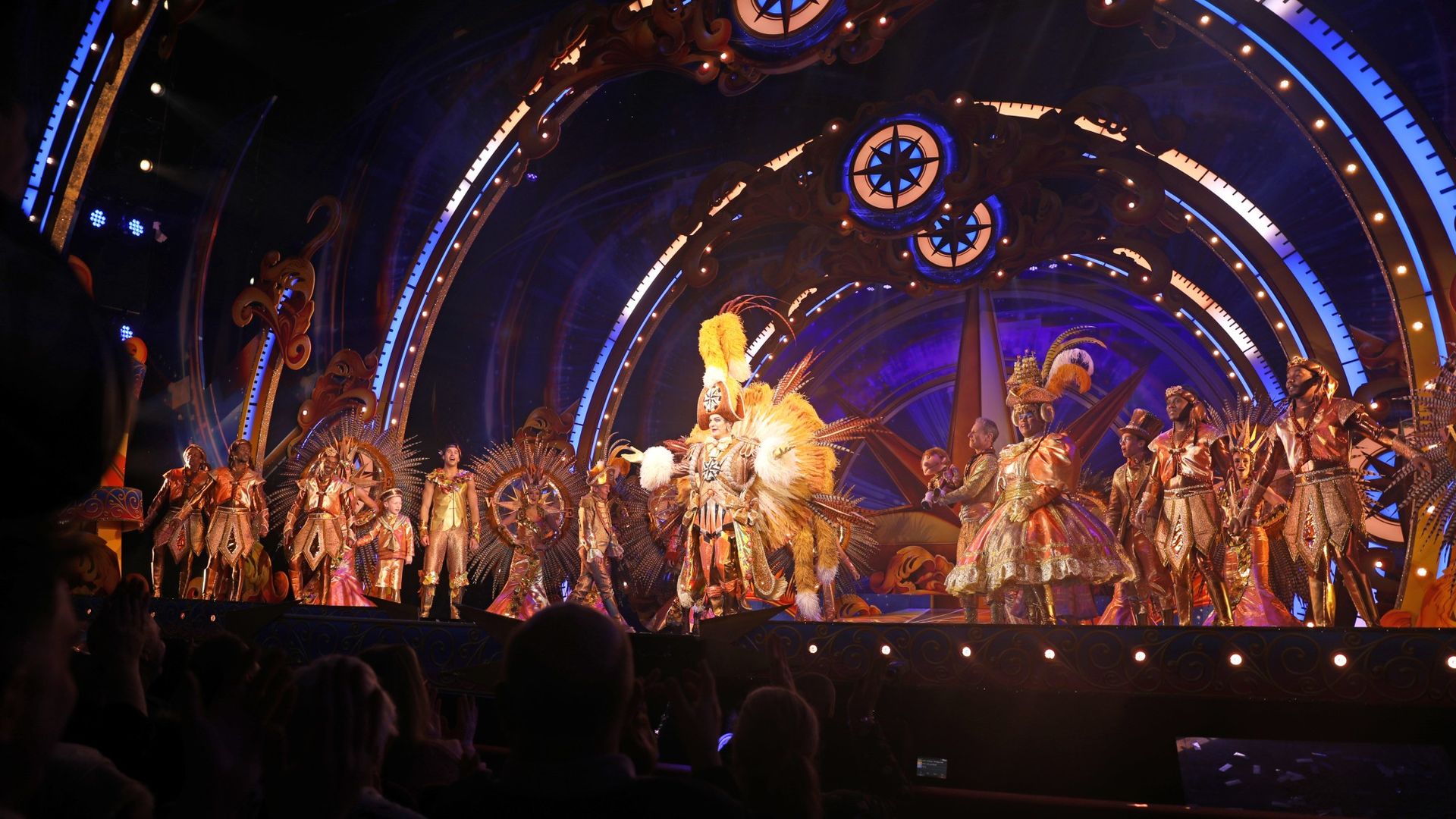
    Fun festive theatre around the UK

    The ultimate Christmas countdown includes mulled wine at a festive market, a spot of carol-singing and, of course, a trip to the theatre. Here’s our pick of the top festive shows across the country, from Dickens adaptations to star-studded pantomimes.

    A Christmas Carol, The Royal Lyceum, Edinburgh
    “What’s Christmas without this classic about moral wrongdoings, ghostly reckonings and redemption?” said Arifa Akbar in The Guardian. This Edinburgh-set adaptation is “comfy Christmas fare” but, amid the fun, there are also “resonant messages for our times about the duty to be charitable”.

    Cinderella, The London Palladium
    “For the first time in The Palladium panto’s history,” said Andrzej Lukowski in Time Out, Julian Clary “might not be the centre of attention”. He plays the Fairy Godfather this year, but Dawn French and Jennifer Saunders are expected to steal the show as they reunite after 17 years to play the Ugly Sisters.

    Sleeping Beauty, Bristol Hippodrome
    This could be the “pantomime of your dreams”, said Olivia Garrett in Radio Times. The “fab-u-lous” musical theatre star and “Strictly Come Dancing” judge Craig Revel Horwood plays the “wicked” fairy, Carabosse.

    The Further Adventures of Peter Pan, Sunderland Empire
    Captain Hook “may not be as gone” from Neverland “as Peter thought”, said British Theatre. “Heartstopper” star Bradley Riches swoops in for a new adventure as Peter Pan, and drag queen Miss Rory plays a “deliciously despicable” Rorina the Mermaid. Expect a festive extravaganza of “flying, sword fights and crocodile chases”.


    Statistic of the day

    151: The number of years since Mississippi last sent a Black representative to the US Senate. After a knife-edge count following last week’s midterms, Scott Colom has claimed victory to become the state’s first Democratic senator since 1982 and its first Black senator since Blanche Bruce, a formerly enslaved man who held office from 1875 to 1881.


    instant opinion

    Today’s best commentary

    How Luddites can learn to love data centres
    Paul Ormerod on City A.M.
    Critics are “vociferous in their hostility” towards data centres, writes economist Paul Ormerod. Like the 19th-century Luddites angered by new machine technology “slashing the wages of skilled workers”, today’s “liberal arts graduates” fear their employment is “being undermined by AI”. But we could “manage the transition better than we did in the first Industrial Revolution”. Data centres won’t bring direct economic gains to local communities, but payments could be taken from each “incoming hyper-scaler” to fund local childcare, education or business initiatives, generating “outcomes which benefit everyone”.

    We have become a nation of lazy dog owners
    Patrick Galbraith in The Telegraph
    I’m not “timid”, writes Patrick Galbraith, but “I’ve found myself crossing the road” when big dogs come “barrelling” towards me. “Every year, there are countless dog attacks”, not to mention the ruined family picnics when “some b-----d of a golden retriever” bounds over to “devour” the sandwiches. “Some dogs are simply born bad”, but “canine terrors tend to be owned by people” who don’t take training seriously. “If you aren’t going to teach it not to jump up”, just “don’t get one”.

    Can Antonia Romeo fix Whitehall?
    Meghan Kenyon in The New Statesman
    The “extraordinary case” of the man who was “able to coast under the radar” in five full-time civil-service jobs “has done little to assuage” concerns about how sluggishly Whitehall operates, writes Megan Kenyon. Cabinet Secretary Antonia Romeo has “made a pledge to take on the problem” and “to take a new approach to managing performance”. But such reform has been attempted before and, so far, “meaningful change has been hard to come by”.


    word of the day

    Disappointing

    Man United’s verdict on Michael Carrick’s start to the season, in a statement confirming that he has been sacked as the team’s manager. The club said it had “come to the extremely difficult conclusion that a change is necessary in order to achieve our ambitions”. Mauricio Pochettino is reportedly in late-stage talks to replace him.


    Evening Review was written and edited by Rebecca Messina, Jamie Timson, Elliott Goat, Will Barker, Chas Newkey-Burden, Irenie Forshaw, Helen Brown, David Edwards and Kari Wilkin, with illustrations from Stephen P. Kelly.
    Image credits, from top: illustration by Stephen P. Kelly / Getty Images; Steve Eichner / WWD / Getty Images; Darya Komarova / Getty Images; Guillaume Saligot / AFP / Getty Images; Sama Kai / Dave Benett / Getty Images
     

    Recent editions

    • Evening Review

      AI’s new political headwinds

    • Morning Report

      House Republicans save Hegseth

    • Evening Review

      A political boost for Wall Street?

    VIEW ALL
    TheWeek
    • About Us
    • Contact Future's experts
    • Terms and Conditions
    • Privacy Policy
    • Cookie Policy
    • Advertise With Us
    • FAQ
    Add as a preferred source on Google Add as a preferred source on Google

    The Week US is part of Future US Inc, an international media group and leading digital publisher. Visit our corporate site.

    © Future US, Inc. Full 7th Floor, 130 West 42nd Street, New York, NY 10036.