The Week US
flag of US
US
flag of UK
UK
https://cdn.mos.cms.futurecdn.net/flexiimages/jacafc5zvs1692883516.jpg

SUBSCRIBE & SAVE

Less than $3 per week

Sign in
  • View Profile
  • Sign out
  • The Explainer
  • The Week Recommends
  • Newsletters
  • Cartoons
  • From the Magazine
  • The Week Junior
  • More
    • Politics
    • World News
    • Business
    • Health
    • Science
    • Food & Drink
    • Travel
    • Culture
    • History
    • Personal Finance
    • Puzzles
    • Photos
    • The Blend
    • All Categories
  • Newsletter sign up Newsletter
  • The Week Evening Review
    AI’s defensive crouch, an end to election fraud claims, and colon cancer in young people

     
    TODAY’S BIG QUESTION

    Is AI on defense after the midterms?

    Republicans lost big in the midterm elections. So, perhaps, did the artificial intelligence industry. Democrats won with promises to rein in AI companies, and multiple communities voted to restrict the data centers that power the boom. Critics warn hobbling the tech sector could hurt the broader U.S. economy.

    What did the commentators say?
    “The blue wave is straining the AI boom,” said Politico. Democrats won governor’s races in Georgia, Ohio and Texas on promises to restrict data center development. The election results are “unlikely” to halt the spread of the tech facilities but “could make it more expensive” to build them. 

    Newly victorious Democrats might still look to “balance voters’ disdain” for the facilities with the “economic benefits” of construction, said Politico. Big companies such as Alphabet, Amazon and Meta could also choose instead to “shift their focus to states with fewer restrictions.”

    Tech leaders are feeling the whiplash after they once seemed poised to use the sector’s wealth to “tip the 2026 midterms” in their favor, said Time. Instead, exit polling found 56% of voters said AI centers were a “major” factor in their votes for Congress. 

    Now, the industry expects Democrats to “haul executives before committees” and work to “undo Republican efforts to block state-level laws,” putting guardrails on development. But GOP candidates may also be rethinking their stance. Sen. Josh Hawley (R-Mo.) became the “highest-ranking Republican to back a nationwide moratorium” on data centers today, said Politico.

    What next?
    AI faces other headwinds. Credit markets have “grown wary” of the “astronomical infrastructure spending” undergirding the industry’s expansion, said Axios. And the espionage scandal involving Nvidia CEO Jensen Huang has caused his company to “shed more than $1 trillion in market value.” The midterm results were the capstone on Big Tech’s “week from hell.”

    Voter backlash against artificial intelligence could “help the economy,” said The New York Times. Easing the “frenetic pace” of industry development might cause some “short-term hardship” but also make the enterprise “more sustainable.” That will be a challenge. AI growth is now “embedded into nearly every aspect of the U.S. economy.”


    QUOTE OF THE DAY

    ‘My analogy here is the Titanic hit the iceberg on Nov. 3, and I offered people a life raft, and they said, “No, thanks, we’ll stick with the Titanic.”’

    Rep. Thomas Massie (R-Ky.) to reporters after his failed effort to impeach Secretary of Defense Pete Hegseth. Democrats are likely to push for their own impeachment efforts against Hegseth when they take over Congress in January.


    IN THE SPOTLIGHT

    This could be the end of GOP election fraud claims

    Last week’s midterms lacked something that has become a hallmark of some in the Republican Party: an effort to sow doubt about election results. The blue tsunami that will send Democrats cruising back into power could be the end of Republicans, including President Donald Trump, stoking claims of fraud.

    ‘Slowed to a trickle’
    In the months leading up to the midterms, some Republicans “spread baseless theories that the vote would be rigged,” and experts had “anticipated a wave of legal challenges from election deniers seeking to contest the results,” said AFP. Some were especially concerned Trump himself would “try to tilt the outcome in his favor, as he did when he tried to overturn his 2020 election defeat.” But none of that occurred, and “evidence-free claims of fraud slowed to a trickle.”

    Experts say the size of the blue tsunami made these claims impossible. It was “essentially too big to rig,” said a Trump adviser to CNN. Even allies who propped up Trump’s false 2020 claims accepted the Democratic midterm wins. But other factors may be at play. “I don’t know necessarily that margin of victory makes much difference to those who have profited off of the economy of grift around election conspiracies," said David Becker, the executive director of the nonpartisan Center for Election Innovation and Research, to AFP.

    ‘Does not mean an end’
    Most Republicans did not contest the elections. In the races involving GOP election deniers, almost “all of them lost, and none of them, or the network of activists and groups backing them, have raised any questions about the results,” said Wired. Rep. Tom Tiffany (R-Wisc.), who questioned former President Joe Biden’s 2020 victory, lost his reelection bid and “conceded defeat without any reference to election rigging.” Colorado GOP secretary of state candidate James Wiley “made undermining trust in elections a centerpiece of his campaign,” but after he lost, he conceded the race “without questioning the results.”

    But this “does not mean an end to the administration’s war on alleged voter fraud by noncitizens,” said the Los Angeles Times. And Trump himself, despite initially accepting the results, is still casting doubt. “Does anybody really believe that this ‘election’ was honest?” said Trump on Truth Social. “It’s all about the machines, which are far more important than the voter.”


    Statistic of the day

    $420 million: The budget of Bollywood film “Ramayana: Rise of a Legend,” making it the most expensive Indian movie and non-English-language movie ever made. This first installment of a two-part epic, filmed in Hindi, adapts the “Ramayana, an ancient Hindu poem.”


    THE EXPLAINER

    Why colon cancer may be harder to treat in young people

    For years, scientists have been stumped by the rise of early-onset colorectal cancer, which appears to be more treatment-resistant than in older patients. A new study may have discovered distinct biological traits that prove the cancers are indeed different.

    What did the study uncover?
    Scientists have long believed that early-onset colorectal cancer must be “biologically distinct” from the cancer found in older patients, said Stat News, since younger patients tend to be more difficult to treat. Patients under the age of 50 are often diagnosed at “later stages” with “tumors with more aggressive features.” Their outlook, especially for those under 35, may not be as good as that of someone in their 60s, despite receiving “more aggressive treatment” and “being at baseline healthier,” said study co-author Kimmie Ng to Stat News.

    Researchers from Dana-Farber Cancer Institute, Mass General Brigham and the Broad Institute, who published the study in Nature Medicine, found the biggest difference between the two age groups to be a “higher presence of stromal cells” in younger colorectal cancer patients, said The Washington Post. Stromal cells influence a tumor’s growth and can “shield it from immune cells or drugs.” The team also identified dozens of genes associated with cancer’s “propensity to metastasize and spread,” perhaps explaining why early-onset colorectal cancer is faster-growing, said the Post.

    What will the findings change?
    Researchers hope the paper will encourage more research into the distinct attributes of early-onset cancer tumors and how to approach them. Patients are typically treated the same, regardless of age. But following up on these findings could highlight “therapeutic targets” for a more precise treatment approach for young patients in the future, said Ng to the Post.

    While the study doesn’t offer any “immediate new takeaways” for young people concerned about colon cancer, study co-author Ana Anderson suggests following existing guidance to lower your risk, said Business Insider. The recommended screening age was lowered from 50 to 45 a few years ago, but you should see a doctor sooner if you experience common colon cancer symptoms. If you are “extra cautious,” she said, it’s never a bad idea to stay active and cut down on inflammatory foods.


    Good day 🏃‍♀️

    … for record-breaking runs. A Canadian ultramarathoner has become the first woman to complete a 100-mile race across Antarctica. Stephanie Case, a 43-year-old lawyer, endured temperatures as low as -31 degrees Fahrenheit to make history and claim second place in the Antarctic Ice Ultra, finishing in 17 hours, 31 minutes and 39 seconds.


    Bad day 🧊

    … for ice baths. Cold plunges may be worse for your body after a workout than doing nothing, according to researchers from the University of East London. Three days after exercising, a control group that simply rested regained 89% of maximum muscle strength, while those who used cold water therapy only recovered 82%.


    Picture of the day

    Getting its kicks

    A 1951 Buick Special sedan is parked at the Blue Swallow Motel in Tucumcari, New Mexico, on Route 66. The iconic former highway turns 100 years old today, with celebrations along the 2,400-mile route from Chicago to Santa Monica.
    Al Drago / Getty Images


    Puzzles

    Daily sudoku

    Challenge yourself with The Week’s daily sudoku, part of our puzzles section, which also includes guess the number

    Play here


    The Week recommends

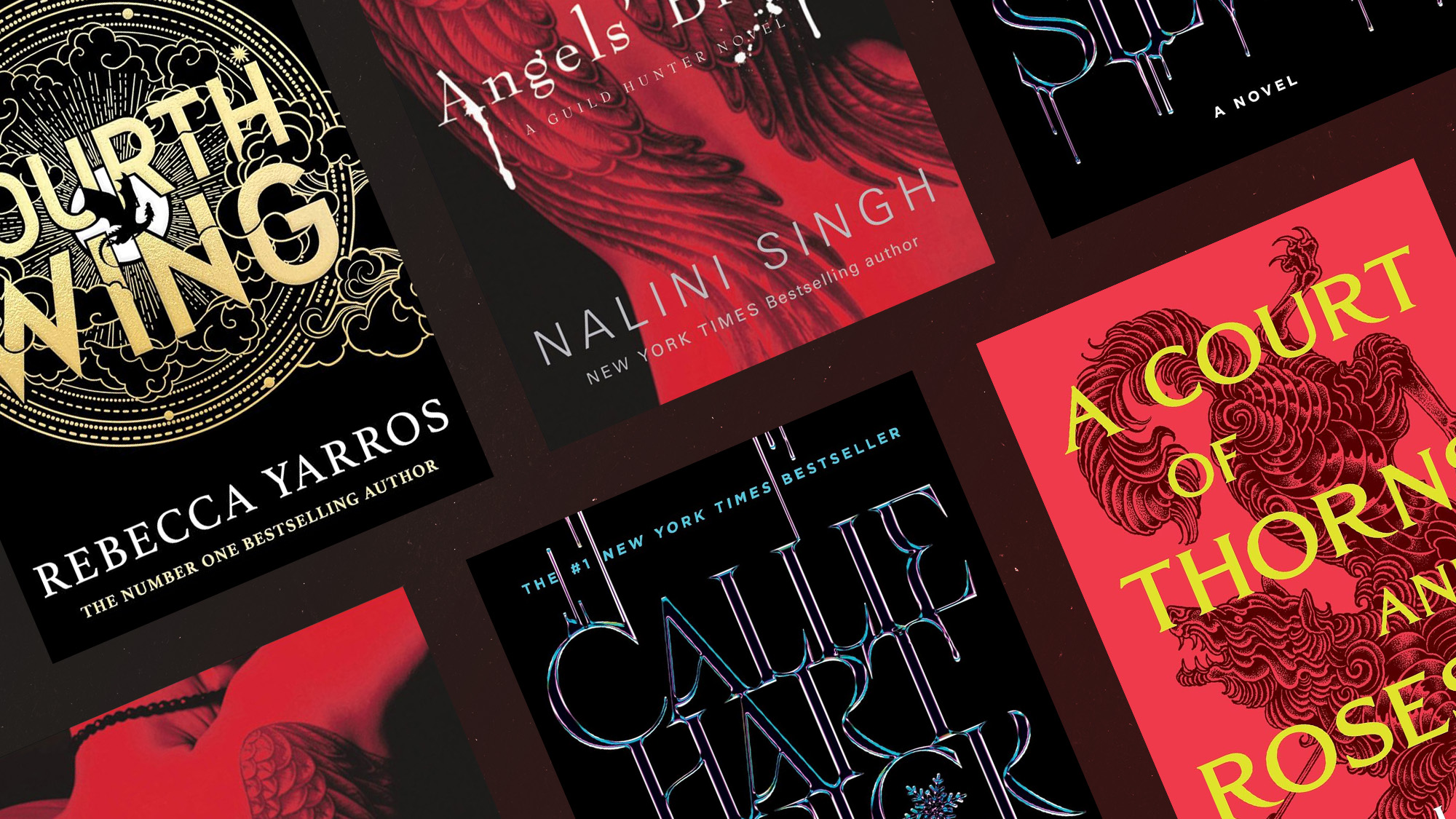
    The magical romantasy books for your collection

    Romantasy may be a relatively new publishing category, but it has become mighty popular mighty quickly, and true fans know the combination of romance and fantasy has long titillated readers. These books are the perfect starting point for anyone seeking an introduction to the steamiest among them.

    ‘Angels’ Blood’ (2009)
    Nalini Singh kicked off the “Guild Hunter” series in the late 2000s, “before the term romantasy entered the lexicon,” said Harper’s Bazaar. In Singh’s world, angels, humans and vampires become intertwined in steamy, action-packed ways. The first book follows Elena Deveraux, a vampire hunter hired by the “very hot, very powerful” Archangel Raphael. ($9, Berkley)

    ‘A Court of Thorns and Roses’ (2015)
    Sarah J. Maas reigns as the “queen of fairy smut,” as “some fans lovingly call her,” said The New York Times. She was the U.S.’s bestselling author in 2024, writing stories filled with “magical creatures, ancient curses, warring royal courts” and “smoking-hot fairies” who can’t resist each other. ($19, Bloomsbury)

    ‘Fourth Wing’ (2023)
    Rebecca Yarros is a BookTok heavy hitter, captivating fans with the romantic flings of dragon riders in “The Empyrean” books. Even the most “dragon-averse” will “fall head over heels” for this series, which is “just as spicy as it is thrilling,” said Cosmopolitan. ($15, Red Tower Books)

    ‘Quicksilver’ (2024)
    Although it was published two years ago, this bestseller by Callie Hart ranked among Goodreads’ most-read books of 2026. The recognition “underscores just how quickly” the novel has become “one of the biggest breakout hits in contemporary fiction,” said Parade. ($10, Grand Central Publishing)


    Poll watch

    Just 2% of Americans have a “very positive” view of the current U.S. relationship with Canada, according to an Ipsos survey of 1,023 adults. But many expect things to improve over time, as 10% think the relationship will be “very positive” a decade from now. 


    INSTANT OPINION

    Today’s best commentary

    ‘Some of the right’s worst men are being held accountable’ 
    Jessica Grose at The New York Times
    Post-midterm defeats have gone “beyond the ballot box,” says Jessica Grose. The “manosphere” is “also wounded.” It’s a “welcome change” to see men like Russell Brand being “held accountable” after two years of Trump’s “he-man, woman-hating rule.” MAGA and the manosphere may seem “neutered right now,” but it would be “foolish to count them out.” The antidote to the “poison they are spewing” is “political content” that “shows young men a different and better way to be.” 

    ‘The reason Veterans Day endures’ 
    The Deseret News Editorial Board
    The joy felt on the “11th hour of the 11th day of the 11th month” in 1918 was the “precursor to today’s Veterans Day,” says The Deseret News Editorial Board. The “end of all wars” and the establishment of “universal democracy” sound wonderful, but the “truth was much harsher.” Unfortunately, Veterans Day, originally known as Armistice Day, will “never fade away” due to a “lack of new veterans.” Threats to our freedom and liberty “abound and never rest.”

    ‘MAGA’s European buddies are suddenly changing their tune’
    Lionel Laurent at Bloomberg
    Europe’s “MAGA-aligned politicians” appear “less forthcoming these days” about their ties to the White House’s “global alt-right network,” says Lionel Laurent. Blaming the Iran war is a way of “avoiding too many hard truths” after years spent “cajoling Trump” to get favorable treatment or “emulating him to build support at home.” The strategy of “flattering a bully” is a “sunk political cost,” even if the U.S.’s “beaten-up allies” know to be careful “not to poke the bear.”


    WORD OF THE DAY

    palinopsia

    A neurological symptom in which someone continues seeing something in their field of vision after it’s no longer there. A unique form of palinopsia has been found in a 28-year-old man who constantly sees his cat’s features, said Popular Science, including “almond-shaped eye sockets, enlarged pupils” and “stripes,” on human faces, according to a report in the journal Cortex.


    Evening Review was written and edited by Theara Coleman, Nadia Croes, Scott Hocker, Anya Jaremko-Greenwold, Justin Klawans, Joel Mathis and Summer Meza, with illustrations by Stephen Kelly and Julia Wytrazek.

    Image credits, from top: Illustration by Stephen P. Kelly / Shutterstock / Getty Images; David Paul Morris / Bloomberg / Getty Images; Panuwat Dangsungnoen / Getty Images; Grand Central Publishing / Entangled / Bloomsbury / Gollancz
     

    Recent editions

    • Morning Report

      House Republicans save Hegseth

    • Evening Review

      A political boost for Wall Street?

    • Morning Report

      Massie starts clock on Hegseth impeachment

    VIEW ALL
    TheWeek
    • About Us
    • Contact Future's experts
    • Terms and Conditions
    • Privacy Policy
    • Cookie Policy
    • Advertise With Us
    • FAQ
    Add as a preferred source on Google Add as a preferred source on Google

    The Week US is part of Future US Inc, an international media group and leading digital publisher. Visit our corporate site.

    © Future US, Inc. Full 7th Floor, 130 West 42nd Street, New York, NY 10036.