The Week US
https://cdn.mos.cms.futurecdn.net/flexiimages/jacafc5zvs1692883516.jpg

SUBSCRIBE & SAVE

Less than $2.50 per week

flag of US
US
flag of UK
UK
Sign in
  • View Profile
  • Sign out
  • Newsletter sign up Newsletter
    • The Explainer
    • The Week Recommends
    • Newsletters
    • Cartoons
    • From the Magazine
    • The Week Junior
    • More
      • Politics
      • World News
      • Business
      • Health
      • Science
      • Food & Drink
      • Travel
      • Culture
      • History
      • Personal Finance
      • Puzzles
      • Photos
      • The Blend
      • All Categories
    The Week Evening Review
    Tensions in Kaliningrad, Jensen Huang’s return, and documentary accolades

     
    THE EXPLAINER

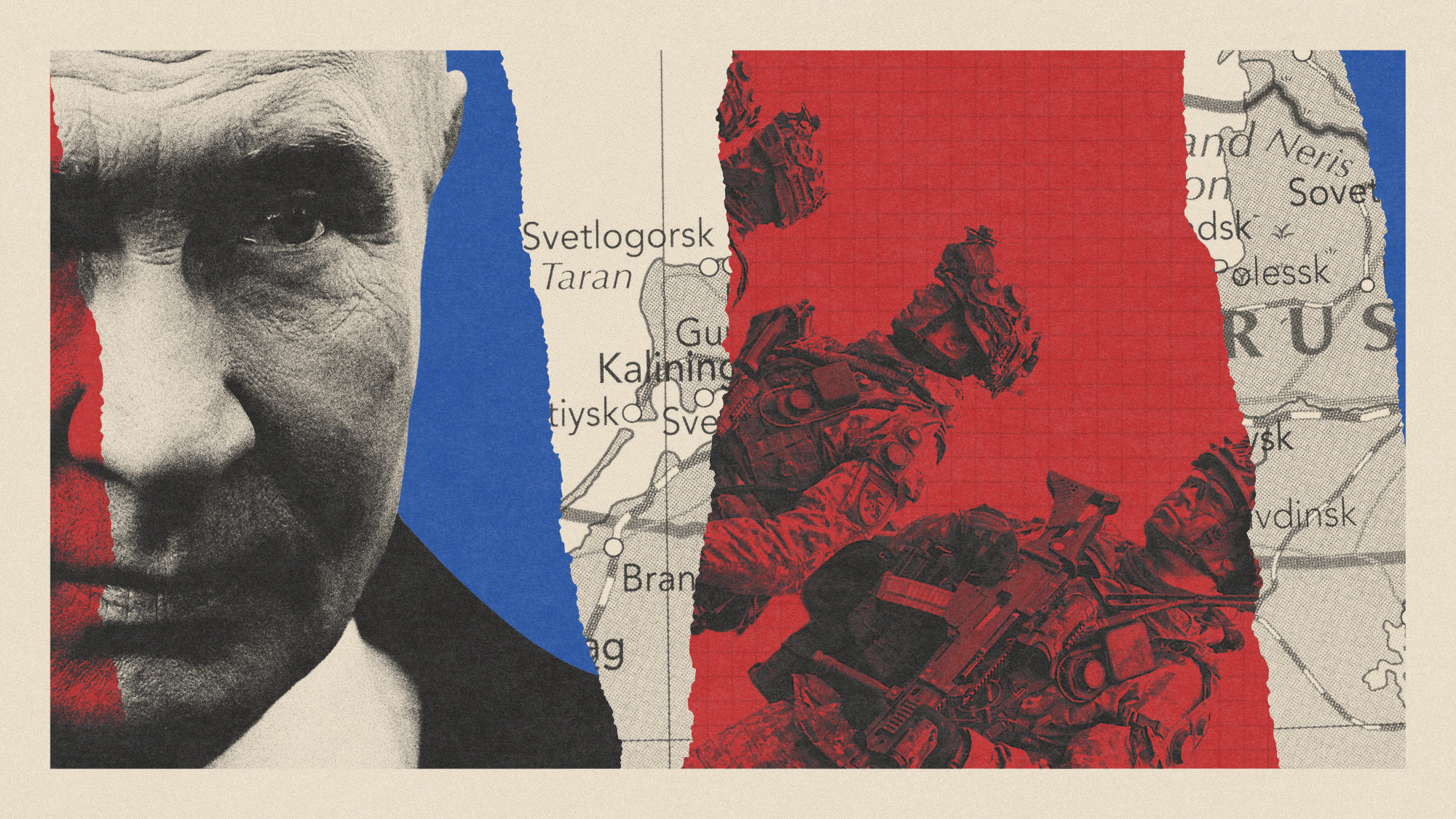
    The Russian exclave where tensions are mounting

    Kaliningrad has long been a geographical anomaly. Sandwiched between Poland and Lithuania on the Baltic coast, the Russian exclave is completely cut off from Russia. Yet the Kremlin has repeatedly warned against any attempt to threaten the territory, vowing to defend it at all costs, including with nuclear weapons if necessary. Now, security analysts are warning that Kaliningrad could become a flashpoint if Vladimir Putin decides to escalate tensions with Nato.

    What is Russia doing there?
    The East Prussian city of Koenigsberg was renamed Kaliningrad after being annexed by the Soviet Union at the end of the Second World War. Kaliningrad was also the name given to the entire region, which is home to around a million Russian citizens.

    As well as being granted “special economic status” in 1996, the highly militarised territory is of “great strategic importance to Moscow”, said the BBC. The Russian Baltic Fleet is based in the exclave, at Baltiysk, the country’s only ice-free European port. Kaliningrad provides Russia with a “platform for air defence, missile and naval forces that can project power deep into northern and central Europe while also restricting Nato forces’ ability to reach the Baltic member states overland” across the Suwałki Gap, said Reuters.

    Why is it a problem for Nato?
    The Suwałki Gap is the 40-mile section of the Polish-Lithuanian border that separates Kaliningrad from the Russia-friendly and authoritarian state of Belarus. From Nato’s perspective, it “poses a tremendous risk to the Baltics and is viewed as the alliance’s single greatest terrestrial vulnerability”, said Daniel Peris on Engelsberg Ideas. The “dual character of the Suwałki Gap – dangerous to both Russia and Nato – encapsulates the predicament in which Kaliningrad places Moscow”.

    Why are tensions rising?
    When Russia invaded Ukraine in 2022, Lithuania restricted transit of sanctioned goods through its territory. So Kaliningrad is “not just strategically exposed in the event of war” but also relies “on a transit agreement with Lithuania”, a “point of great sensitivity for Moscow”, said The Times. Russia has responded by increasingly using Kaliningrad as a forward operating hub for hybrid warfare attacks against EU and Nato countries. The Western military alliance has “also become markedly more explicit about its readiness to obliterate Kaliningrad’s military infrastructure should Russia start a war against the alliance”.

    “Any miscalculation could lead to a direct military confrontation,” said The Independent.


    TODAY’S BIG QUESTION

    How did Jensen Huang return to Nvidia so quickly?

    Jensen Huang is back, less than two weeks after he resigned from Nvidia following an affair with a suspected Chinese spy. His reinstatement as CEO on Monday followed interventions by not only tech industry executives but also Donald Trump. 

    What did the commentators say?
    Tech leaders were “desperate” for Huang’s return, said David Goldman on CNN. The Nvidia founder is the “top dealmaker” for a megafirm that lent “gobs of money” to AI companies that have spent massively on infrastructure in recent years. 

    SpaceX CEO Elon Musk, Uber co-founder Travis Kalanick and other Big Tech leaders publicly rooted for Huang. His importance to the industry is comparable to “Michael Jordan at his peak level”, Musk said at last week’s New York Times DealBook Summit. His restoration would be the “best thing” for the company and the country, Trump said on Truth Social.

    As “investors were hitting sell on the entire AI trade” last week, said The Wall Street Journal, the president mounted an “unprecedented campaign” to “bend a company board to his will”. On Sunday, the board held a “marathon session” with Huang, who was said to be “contrite about his behaviour”. Trump also “dialled” in, said Semafor, and made the case for Huang’s reinstatement, underscoring “how fully he has redefined the role of the US government in private enterprise”.

    The surge of support for Huang is indicative of a US economy that has “become dependent” on a “few powerful men who are too big to fail”, said Robert Reich in The Guardian. Huang’s resignation seemed to demonstrate that “no CEO is above the law”. But leading tech figures now appear to be the “authoritarians of the new economy”.

    What next?
    Huang is “back at the helm”, said the Financial Times, but he and Nvidia still face a “barrage of investigations and complaints from federal agencies, congressional committees and shareholders”. The pressure will intensify next week, when Huang is due to testify before Congress on his “potential breach of national security” and the company’s compliance with US export controls.


    QUOTE OF THE DAY

    “Playing a decade-long role of the serial dater has made my real dating life challenging.”

    YouTube star Amelia Dimoldenberg explains why her “Chicken Shop Date” show is ending this Friday after more than 10 years. In an essay for The Cut, the 32-year-old said she feared that the viral hit’s “success is tethered to why I am still single”. 


    Poll watch

    Brits are having less sex than past generations, according to the National Survey of Sexual Attitudes and Lifestyles. The latest results, based on polling of 6,700 adults, suggest that people aged under 45 now have sex twice a month on average, down from once a week in 1990, when the research began. Among those aged 16 to 24, 38% of women and 28% of men are virgins, compared with around one in five in recent decades.


    IN THE SPOTLIGHT

    Why documentaries are having a moment

    “You Can See Everything” has already taken more than $100 million (£77 million) worldwide and smashed UK box-office records for the opening weekend of a non-music documentary. Nathan Fielder and Lance Oppenheim’s “outsize and outrageous” film about Elizabeth Holmes (pictured above), the disgraced founder of health-tech company Theranos, “deserves every accolade it has received, and every one it will”, said Travis M. Andrews in The Washington Post.

    Global audiences are also flocking to see other documentaries, including “NAZA” and “Musk” (due for UK release in January). Maybe that’s down to the “emotional pull” of real people’s experiences and a “desire to search for the truth”, said Andrews. Or maybe this year’s non-fiction movies are just better than usual, and “genre be damned”.

    ‘Best picture’ material
    “You Can See Everything” is “every bit as slippery and manipulative as its subject”, said Wendy Ide in The Observer. The film’s “mind-melting” journey makes for “easily the most compulsive three hours you will spend in the cinema this year”. Calling it a “documentary” fails to capture just how “provocative and bracingly weird this genuinely singular film is”.

    It’s sparked “endless conversation”, said Coleman Spilde in Salon, and even “chatter about whether it might be the first documentary nominated for best picture at next year’s Oscars”. That would be a “watershed moment” for the genre. The film has also “taken a sledgehammer” to the “era of cobbled-together documentaries” by executives convinced there was an “endless cash cow to milk in true crime and tawdry scandal”.

    Never ‘plain and simple’
    This is “far from the only” documentary generating talk of Oscar honours, said Spilde. There’s also “NAZA”, a “harrowing” uncovering of “the extent of Israeli surveillance and war crimes”; Alex Gibney’s “Musk”, an unvarnished portrait of the US tech billionaire; and “Once Upon a Time in Harlem”, a “funny, moving and pertinent” film featuring unseen footage of a “gathering of Black luminaries” in 1972’s Harlem Renaissance.

    None of these non-fiction films deliver “plain and simple” facts or the “whole picture”: their “reality exists somewhere in the middle, in the opaque”. And the “thrill” for the viewer “comes from the squint – the desperate, reflexive need to make out something in the haze”.


    Good day 🎄

    … for baubling, as shoppers snap up Christmas decorations that capture the zeitgeist of 2026. This season’s on-trend tree trinkets include an M&S Collin caterpillar, a miniature LED mask with red diamantes and a Claudia “Winklemouse” inspired by the “Traitors” host.


    Bad day 🔥

    … for billpayers, with millions facing a 26% hike in fuel costs from January, after Ofgem confirmed the latest energy price cap rates. The regulator said typical annual bills could increase from £1,723 to £2,166 for households in England, Scotland and Wales on variable energy tariffs.


    PICTURE OF THE DAY

    Raising hopes

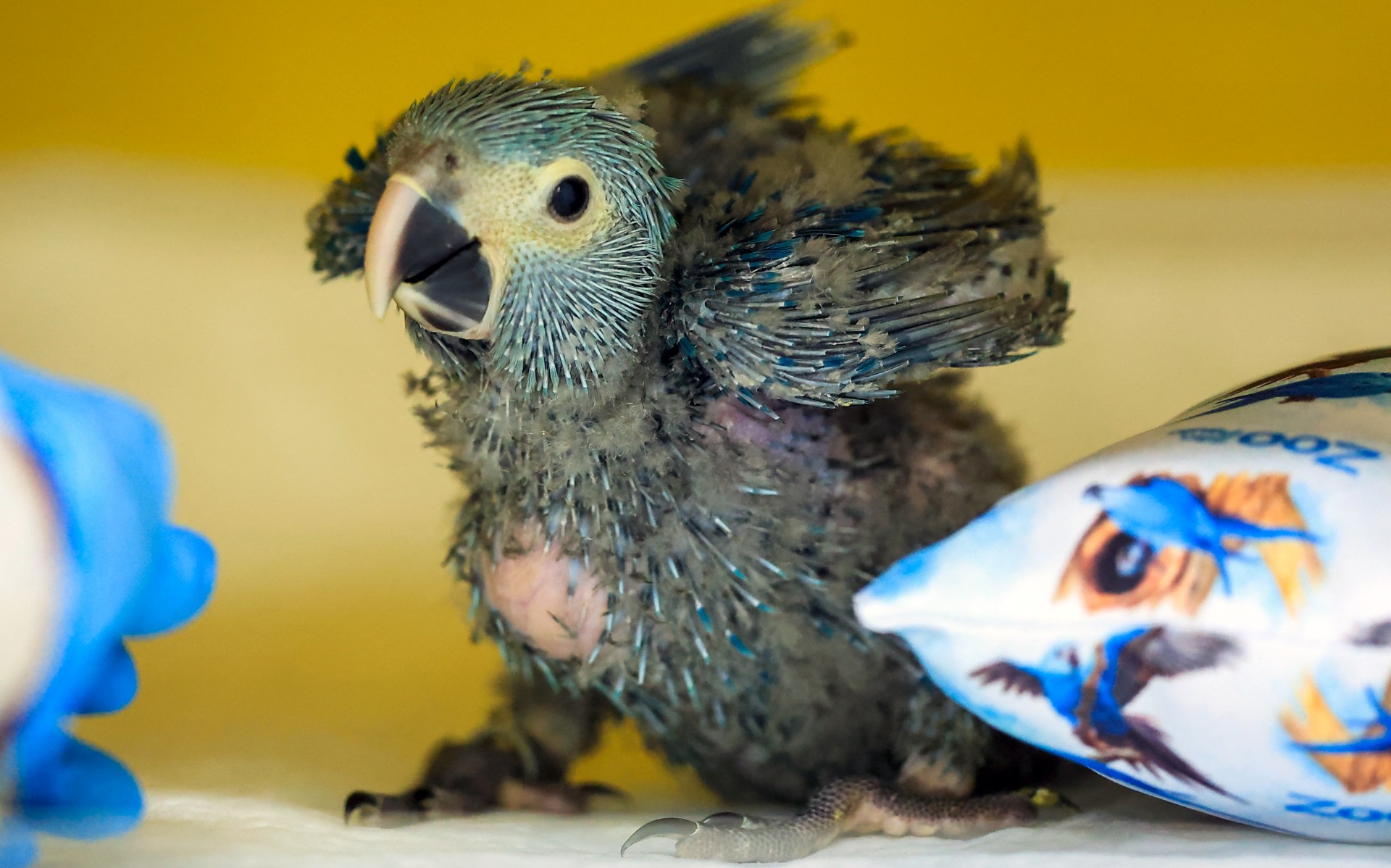
    A Spix’s macaw chick ruffles her feathers at ​Brazil’s São Paulo Zoo. Named Hope, the bird hatched last month as part of a breeding programme to conserve the parrots, which were popularised by the 2011 ​animated film “Rio” but are now classified as extinct in the wild.

    Miguel Schincariol / AFP / Getty Images


    Puzzles

    Chain Word

    Try The Week’s daily word challenge in our puzzles and quizzes section, which also includes sudoku and Guess the Number

    Play here


    THE WEEK RECOMMENDS

    Top disaster movies

    Audiences’ enduring fascination with disasters both real and imagined has produced a string of box-office smash hits. Explorations of how humans respond to unexpected mass tragedies take centre stage in these four blockbusters.

    Airport (1970)
    A sprawling, influential melodrama, “Airport” depicts a snowstorm that paralyses fictional Lincoln International Airport while a suicide bomber attempts to blow up a Boeing 707 in flight. A “cheesy antithesis of the frowning, arty groundswell” of the era, the film has a “certain magnificent cache”, said Ian Nathan in Empire.

    Titanic (1997)
    The human-made catastrophe is brought to life in this award-winning epic that combines a doomed romance with a stunningly rendered recreation of the Titanic’s sinking. A “generous, compassionate spectacle”, it “turned into a cultural landmark and reference point”, said Brian Eggert on Deep Focus Review.

    The Wave (2015)
    A mountain crumbles into a Norwegian fjord and triggers a tsunami that puts thousands in mortal peril. The movie makes the “most of the unique location, which lends itself to jaw-dropping vistas from every camera angle”, said The Hollywood Reporter. 

    Don’t Look Up (2021)
    A metaphor for the shambling response to climate change, this witty satire centres on the incentives of global elites denying the reality of a civilization-ending comet strike. The film’s “heartbreaking, unspeakable” warning is that “narcissism and all that it has wrought, including the destruction of nature, will finally be our downfall”, said Manohla Dargis in The New York Times.


    Statistic of the day

    96%: How much easyJet pre-tax profits fell by in the 12 months to September, from £658 million to £24 million. The low-cost carrier, which has agreed to a takeover by US private equity firm Apollo Global Management, said the Iran war’s effect on demand and fuel prices had “materially impacted” its financial performance.


    instant opinion

    Today’s best commentary

    Men have used wealth and fame to get away with abuse. No longer
    Andy Burnham in The Guardian
    We’ve recently seen how “abuse can hide in plain sight” because rich and powerful men “think they can get away with it”, writes Andy Burnham. “This needs to stop.” I want to rebalance the “scales of power away from perpetrators and towards victims”. From January, no one will be able to use NDAs to “gag employees who have suffered harassment or discrimination”. Victims “will be able to tell their story”, with “no exceptions” and “no loopholes for lawyers to exploit”.

    Boomer grandparents have forgotten good manners – just look at their screen time
    Rhiannon Picton-James in The i Paper
    Old people consider it “bad parenting” when children use tech in public, writes Rhiannon Picton-James, but they’re “hopelessly addicted” to smartphones themselves. Grandparents lecture that children “should be using colouring books”, not iPads, during family meals out, then scroll “on Facebook while their food goes cold”. “Children learn about manners by watching adults”, so how can we tell them to put “tech away at the table when grandpa is on YouTube the whole of lunch”?

    Is Vanity Fair’s Hit Piece on Taylor Swift Really Journalism?
    Chris Willman in Variety
    An “attention-seeking” Vanity Fair article about a celebrity identified only as “The Star” clearly “aims to unload secrets” about Taylor Swift, writes Chris Willman. But it’s just “snark masquerading as reportage”, a “veneer” that “mostly shows just how low the bar is for an attempted exposé” these days. The article makes claims about “over 100 sources”, but only quotes six “on the record”. A few “interesting questions and critical observations” aside, it’s an “expensive, exhaustive fishing expedition” that “fails to turn up much”.


    word of the day

    Tiangong

    Mandarin for “celestial palace”, the Tiangong space station will soon welcome its first non-Chinese astronaut. A rocket carrying Pakistani former pilot Muhammad Zeeshan Ali launched from northwest China this morning, “marking a significant milestone for international participation in the Chinese space programme”, said Space.com. 


    Evening Review was written and edited by Hollie Clemence, Jamie Timson, Joel Mathis, Irenie Forshaw, Chas Newkey-Burden, David Faris, Jamie Timson, Helen Brown, David Edwards and Kari Wilkin, with illustrations from Stephen P. Kelly.
    Image credits, from top: illustration by Stephen P. Kelly / Getty Images / Shutterstock; illustration by Stephen P. Kelly / Getty Images; A24 / Blow Out Productions / To Be Formed / Album / Alamy; Miguel Schincariol / AFP / Getty Images; Hulton Archive / Getty Images
     

    Recent editions

    • Evening Review

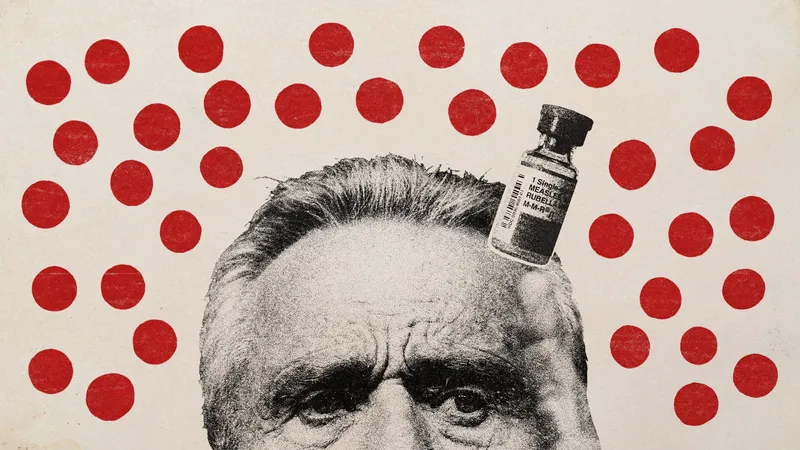
      Defeating measles once again

    • Morning Report

      Trump engineers Huang’s restoration

    • Evening Review

      How Huang landed back on top

    VIEW ALL
    TheWeek
    • About Us
    • Contact Future's experts
    • Terms and Conditions
    • Privacy Policy
    • Cookie Policy
    • Advertise With Us
    • FAQ
    Add as a preferred source on Google Add as a preferred source on Google

    The Week US is part of Future US Inc, an international media group and leading digital publisher. Visit our corporate site.

    © Future US, Inc. Full 7th Floor, 130 West 42nd Street, New York, NY 10036.