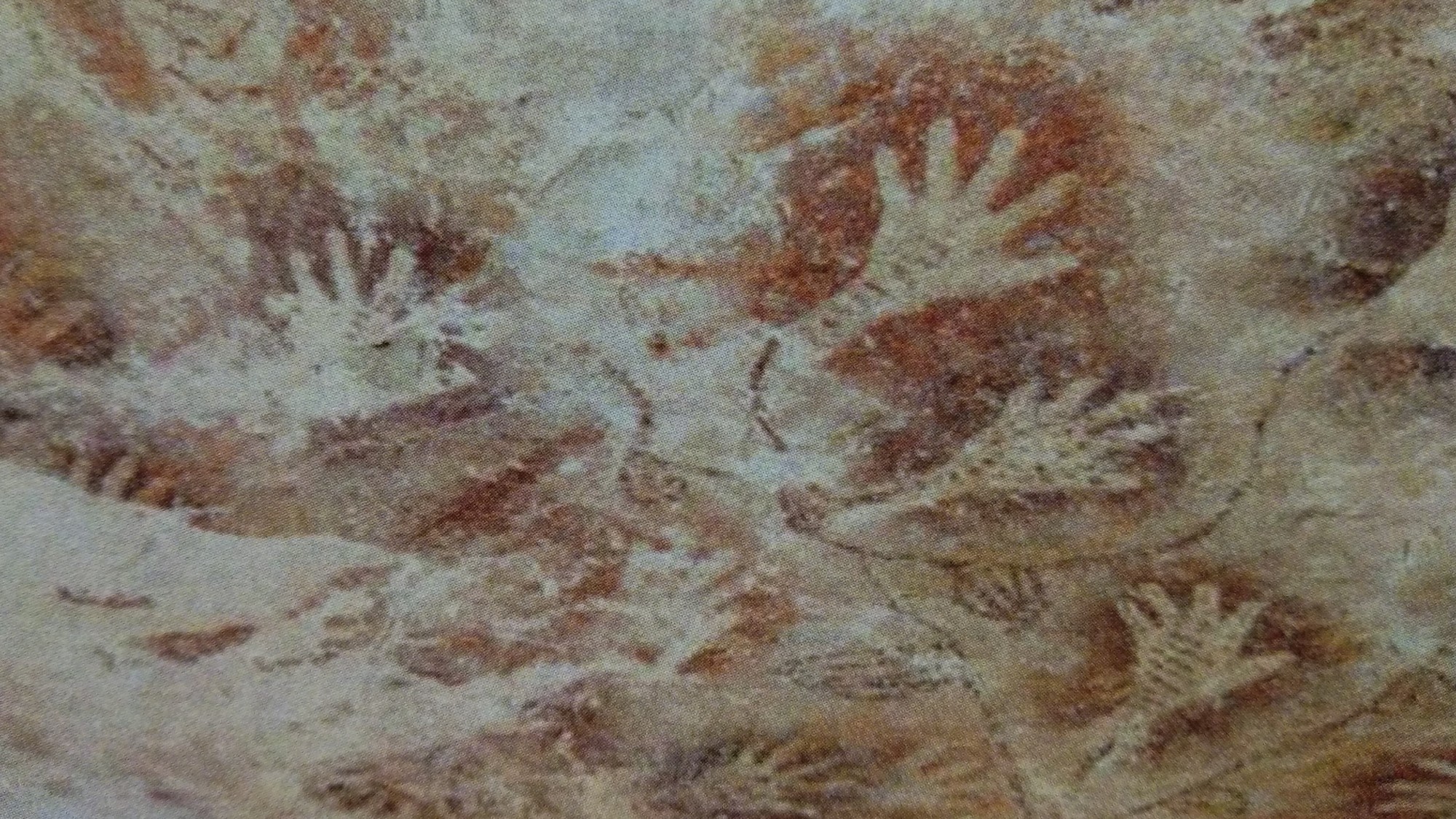
Indonesia’s vast archipelago is covered with the fingerprints of human history: ancient cave paintings.
But on an island just off Sulawesi, archaeologists have now identified the world’s oldest known example of rock art to date: the outline of a handprint. Using new laser techniques, scientists dated the faded red imprint back to “at least 67,800 years ago”, said the study, published in Nature. That’s about 1,100 years earlier than hand stencils in Spain, previously thought to be the oldest (although that’s disputed).
Crucially, the tip of one finger appears to have been deliberately “narrowed”, researchers say, creating a “claw-like effect” that suggests complexity of thought – and a Homo sapiens artist. The finding adds to growing evidence challenging the “Eurocentric views of ancient intelligence that once dominated archaeology”, said National Geographic.
Many archaeologists believed art and abstract thinking “burst suddenly into life in Ice Age Europe and spread from there”. They argued for a mental “big bang” in Europe, because cave paintings, carvings and new tools “all seem to appear together in France and Spain about 40,000 years ago”. As Adam Brumm, who co-led the fieldwork on Sulawesi, said: “When I went to university in the mid to late 90s, that’s what we were taught.”
But a “new consensus is being shaped”, said the BBC. A series of discoveries in South Africa and Sulawesi has “overturned the old idea” and suggested “a much deeper and more widespread story of creativity”.
We’re seeing “traits of modern human behaviour, including narrative art”, in Indonesia, said Brumm. That makes the “Eurocentric argument very hard to sustain”. |