The Week The Week
flag of US
US
flag of UK
UK
https://cdn.mos.cms.futurecdn.net/flexiimages/jacafc5zvs1692883516.jpg

SUBSCRIBE & SAVE

Less than $3 per week

Sign in
  • View Profile
  • Sign out
  • The Explainer
  • The Week Recommends
  • Newsletters
  • Cartoons
  • From the Magazine
  • The Week Junior
  • Student Offers
  • More
    • Politics
    • World News
    • Business
    • Health
    • Science
    • Food & Drink
    • Travel
    • Culture
    • History
    • Personal Finance
    • Puzzles
    • Photos
    • The Blend
    • All Categories
  • Newsletter sign up Newsletter
  • The Week's Saturday Wrap
    Shakers on the big screen, Bridgerton goes full Cinderella, and why it matters to matter

     
    FILM review

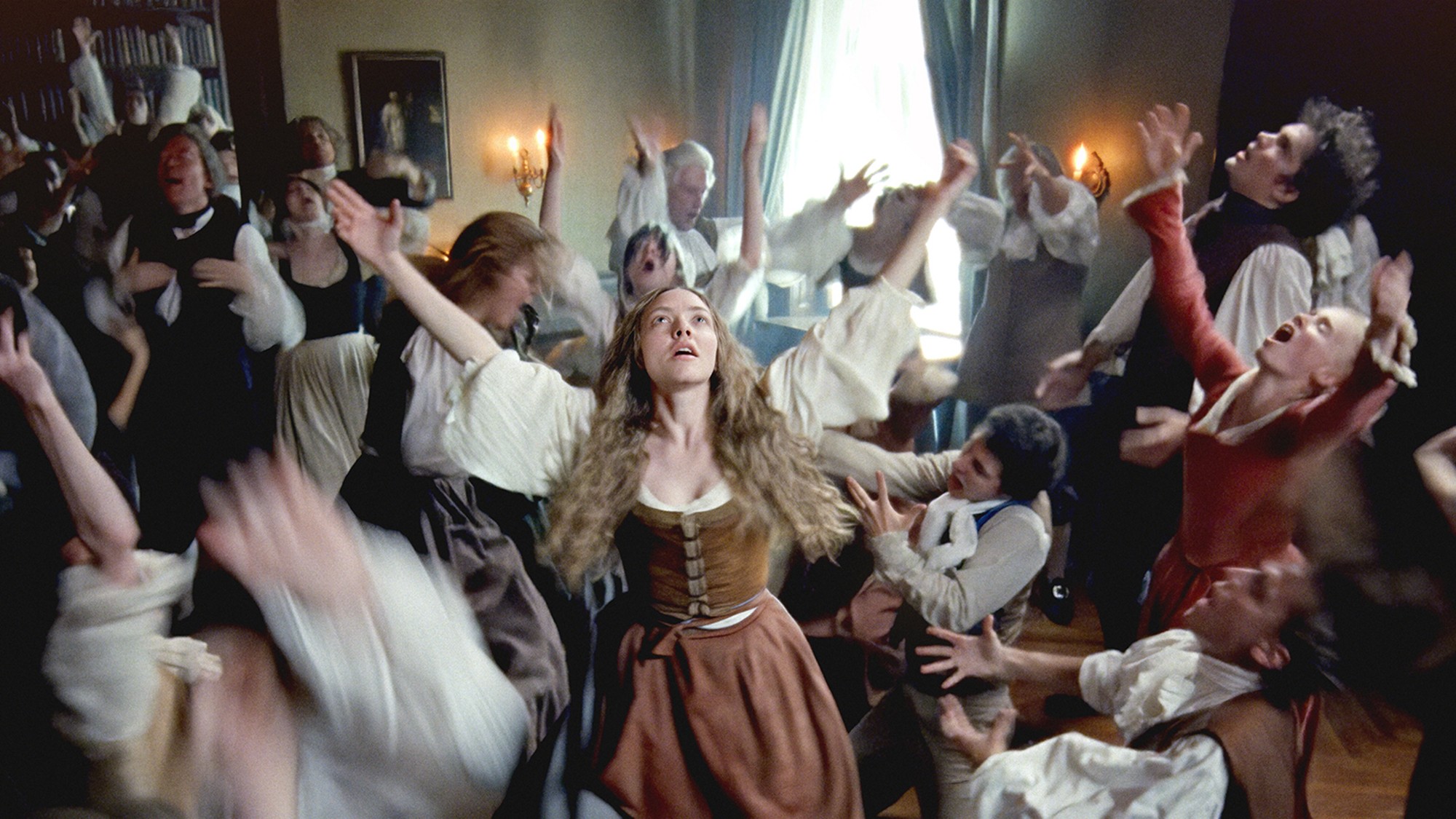
    The Testament of Ann Lee

    A full-immersion portrait of the Shakers’ founder

    The “singular, astonishing, otherworldly” new biographical musical about the founder of the Shakers “may not be to everyone’s taste,” said Alissa Wilkinson in The New York Times. But who cares? “When an artist takes a swing this colossal and stays true to their vision in every way, the resulting work deserves respect, and is always worth seeing.” With a “spectacular” Amanda Seyfried as her star, director Mona Fastvold has found a way to pull viewers inside the life of Ann Lee as the 18th-century mystic experienced it, particularly when engaged in the ecstatic form of group song and dance that was central to the sect’s form of worship. “Rationalists in the audience might be tempted to ask, ‘Well, what is the testament of Ann Lee, exactly?’” said Peter Bradshaw in The Guardian. We learn that after she had four children die in infancy, Lee declared sex the root of all evil and demanded her followers renounce it, then somehow persuaded several devotees to leave England for America, where the movement’s celibate flock peaked at about 6,000. But while the shaking and shivering and speaking in tongues looks, to a modern audience, “like collective hysteria,” this “genuinely strange” film refuses to say so, “because it wants us to take Lee seriously at some level.” Sure, the movie is “unlike anything you’ve seen,” said Monica Hesse in The Washington Post. But Fastvold, who with partner Brady Corbet co-wrote both this film and 2024’s The Brutalist, is assured enough in her approach to convince you “there was no other way to tell this story.” It’s the story of one woman who was ravenous to be closer to God, and following that journey proves “richly satisfying.”


    tv review

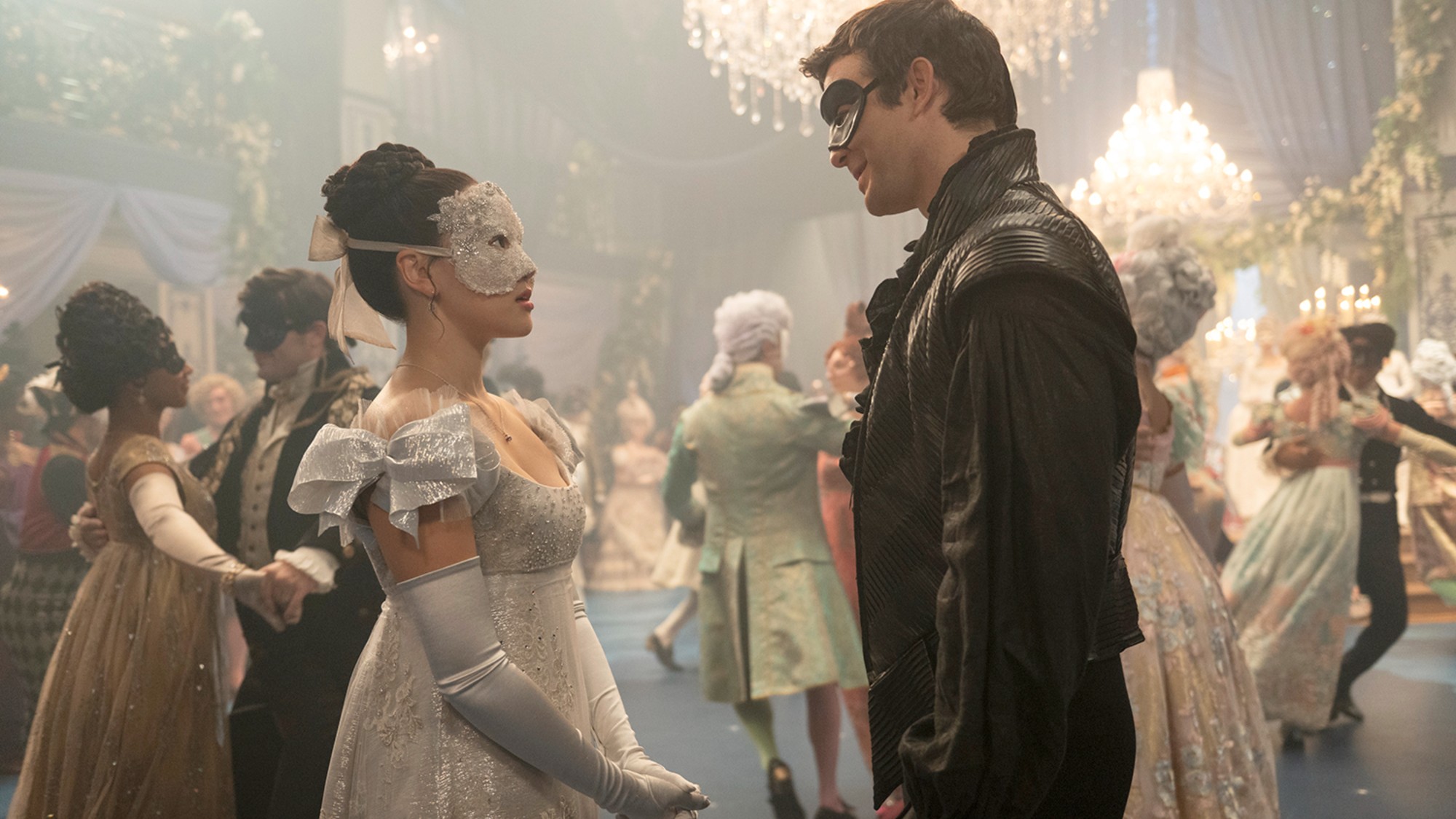
    Bridgerton

    Dearest gentle reader: Listen closely and you just might hear the racing hearts of Bridgerton’s many avid fans. The willfully anachronistic Regency-era drama, narrated by a polite gossip writer, is returning for a Season 4 focused on the rakish Benedict Bridgerton, who by motherly decree must finally marry. A masquerade ball in his honor initiates a Cinderella plot: The masked beauty who enchants him departs suddenly at midnight, leaving behind a glove. With his sister, Benedict searches for the mystery figure, only to become intrigued by a maid hesitant to reveal that she’s the one he’s seeking. Thursday, Jan. 29, Netflix


    FOOD & DRINK

    Spirits: The best rye whiskeys

    “The best rye whiskey should be the spicysweet backbone of your bar cart, holding together classic cocktails like a Manhattan or a Sazerac,” said Sam Stone in Bon Appétit. Our editors put 12 widely available young ryes to a blind taste test, favoring those that delivered “an herbal pepperiness” smoothly integrated with a touch of warm spice and a bit of sweetness. Below are our top three, unranked: 

    Sazerac Rye ($32)
    Sazerac is “softer, sweeter, and rounder than some of its peers,” making it a favorite of bourbon lovers and a great choice for a Manhattan. 

    Michter’s Rye ($48)
    Michter’s opens its seduction with vanilla, then brings “a universe of other flavors,” from “caramel” to “baked goods” to “a fresh cut grass pepperiness.” 

    Rittenhouse Rye ($29)
    This bold but well-structured rye follows up its “heady maple syrup aroma” with “warm spice notes like cinnamon” and “a pleasantly tingly pepper.”


    BOOK OF THE WEEK

    The Mattering Instinct: How Our Deepest Longing Drives and Divides Us 

    by Rebecca Newberger Goldstein 

    “Rebecca Newberger Goldstein isn’t the first philosopher to argue that we are driven by the quest to justify our existence,” said John Kaag in The Atlantic. But in her stirring new book, the accomplished author presents the pursuit of what she calls “mattering”—an idea she introduced in her 1983 novel, The Mind-Body Problem—as the human instinct that overrides all others. Seeking to pinpoint the origin of the instinct and exploring how its existence informs the definition of a life well lived, she comes to “a somewhat surprising conclusion”: that we are all fighting entropy—the tendency of any closed system to slide into chaos—and any of us is living a good life if we are contributing to that fight by assisting in, in her words, “the spread of flourishing, knowledge, love, joyfulness, peace, kindness, comity, beauty.” 

    Goldstein groups people into four mattering types, and those categories prove “very helpful,” said Yascha Mounk in Persuasion. “Socializers,” she says, find meaning in being useful to others. “Competitors,” meanwhile, seek to matter more than others. “Transcenders,” in turn, look for fulfillment in their relationship to the divine, while “heroic strivers” set a standard of excellence for themselves and chase it. All four types of pursuit can go awry, as Goldstein shows, and it’s hard to see exactly how any of us can be certain we don’t take such a path. But her systematic approach to defining the good life is “going to change how I think about the world,” and it’s reassuring to read about examples of journeys heading in a destructive direction that turn toward the good. In one story she tells, a neo-Nazi skinhead befriends Black inmates in prison, finds a Jewish mentor, and has since dedicated his life to fighting extremism. 

    “As philosophy, The Mattering Instinct stands on uncertain foundations,” said Dominic Green in The Wall Street Journal. Goldstein, with her love of physics, makes much of the connection between “matter” the verb and “matter” the noun, but the overlap is really just a quirk of English. She also talks about “mattering instinct” and “longing to matter” as if the phrases are interchangeable, but “an instinct is innate” while “a longing is culturally determined.” More problematically, she imagines that we may one day arrive at a way to objectively distinguish between the ways that individuals seek to matter while being open-minded enough to accept that everyone seeks meaning in their own way. That’s not the pursuit of truth through logic. That’s wishful thinking, and the wide readership this book has enjoyed is further evidence of “an entire civilization undergoing an existential crisis.”


    OBITUARY

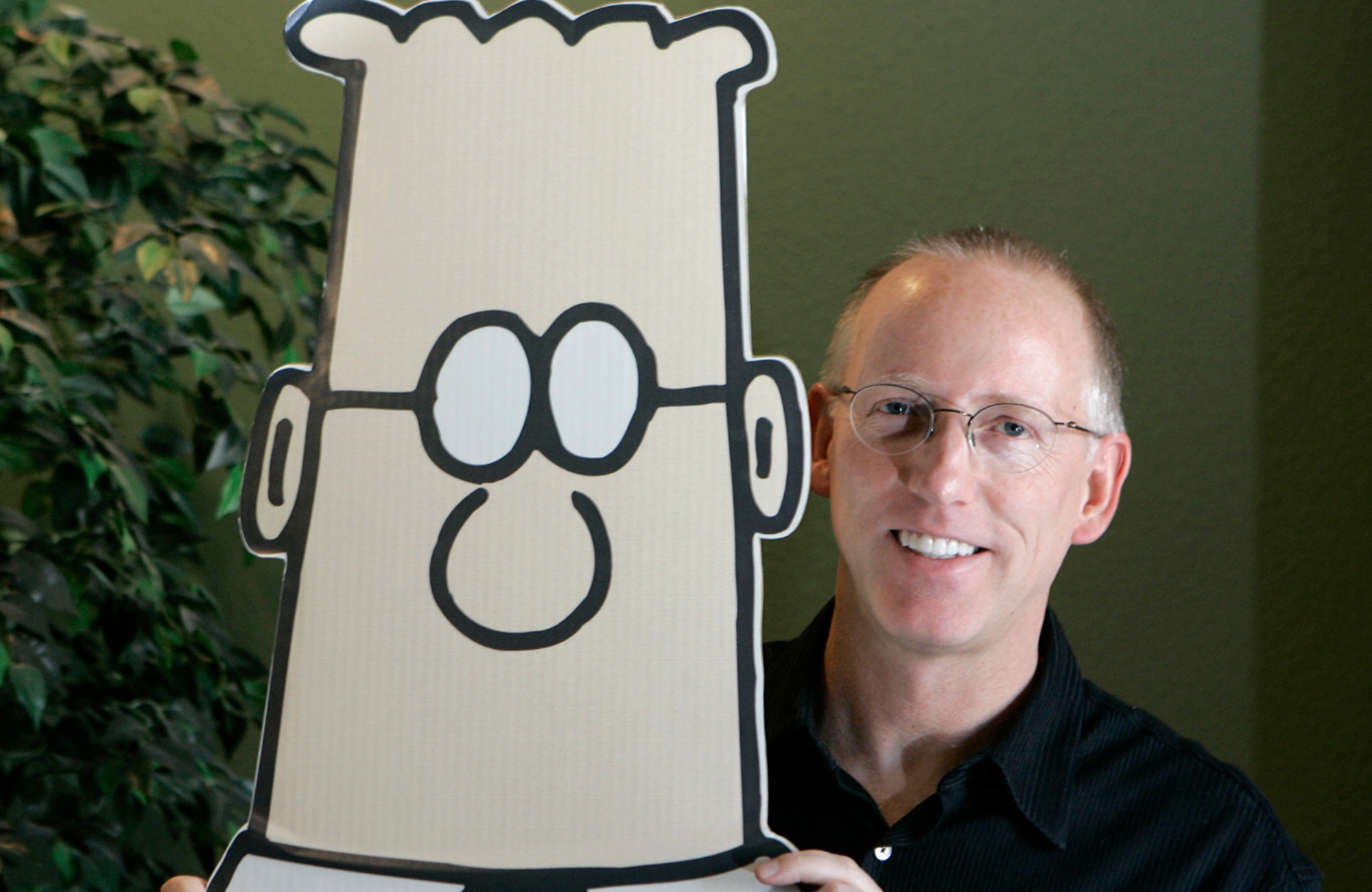
    Scott Adams

    The cartoonist who mocked corporate life

    Scott Adams spoke for frustrated cubicle dwellers across the U.S. In his wry syndicated comic strip, Dilbert, the cartoonist lampooned corporate America’s inane, jargon-spewing middle managers in the 1990s and 2000s. Millions of readers saw themselves in the eponymous, potato-shaped protagonist, a powerless engineer who had to suffer through pointless meetings and moronic dictates from incompetent bosses. Dilbert was joined by a cast of recognizable office stereotypes, including the underappreciated Alice, cynical Wally, and the ineffective Pointy-Haired Boss. The strip’s success enabled Adams to write several semiserious business books, including 1996’s The Dilbert Principle, which theorized that companies promoted their most ineffective workers to management because “they’re the ones you don’t want doing actual work. You want them ordering the doughnuts and yelling at people for not doing their assignments.” 

    Scott Raymond Adams was born in Windham, N.Y., and as a “Peanuts fan” dreamed of becoming a cartoonist since the age of 5, said The New York Times. But he opted for a more pragmatic path: economics and MBA degrees and corporate gigs at Crocker National Bank and Pacific Bell in San Francisco. Dilbert emerged from Adams’ habit of sketching cartoons of his co-workers and bosses during “dull meetings” and faxing them to colleagues. In 1989, he secured a deal to distribute his work to 35 newspapers, but he stuck with his day job for several years, drawing the comic before commuting to the office. He finally escaped his cubicle in 1995, as Dilbert took off. 

    By the 2000s, Dilbert was ubiquitous, running in 2,000 papers internationally and spawning “books and other merchandise, desktop computer games, and an animated TV show,” said Rolling Stone. Adams, however, became increasingly controversial: He was “known for baiting progressives and proponents of political correctness,” said the San Francisco Chronicle, and “mocked inclusion and hiring quotas,” which he blamed for not getting promoted in his pre-Dilbert days. As he moved further right, he questioned the death toll of the Holocaust, became a Donald Trump supporter, made disparaging remarks about women, and called Black people “a hate group.” In 2023, the vast majority of papers carrying Dilbert dropped the strip. But his work left a mark. “My comics weren’t funny in the ha-ha sense,” Adams wrote. “But they reminded people of their jobs, and that seemed to be enough.”


    Sunday Shortlist was written and edited by Susan Caskie, Ryan Devlin, Chris Mitchell, Tim O'Donnell, and Matt Prigge.

    Image credits, from top: Searchlight; Netflix; Getty; AP
     

    Recent editions

    • Saturday Wrap

      The provocations of ICE

    • Evening Review

      Trump’s ‘Board of Peace’ expands

    • Morning Report

      Minnesota recoils at child arrest

    VIEW ALL
    TheWeek
    • About Us
    • Contact Future's experts
    • Terms and Conditions
    • Privacy Policy
    • Cookie Policy
    • Advertise With Us
    • FAQ
    Add as a preferred source on Google

    The Week is part of Future US Inc, an international media group and leading digital publisher. Visit our corporate site.

    © Future US, Inc. Full 7th Floor, 130 West 42nd Street, New York, NY 10036.