The Week The Week
flag of US
US
flag of UK
UK
https://cdn.mos.cms.futurecdn.net/flexiimages/jacafc5zvs1692883516.jpg

SUBSCRIBE & SAVE

Less than $3 per week

Sign in
  • View Profile
  • Sign out
  • The Explainer
  • The Week Recommends
  • Newsletters
  • Cartoons
  • From the Magazine
  • The Week Junior
  • Student Offers
  • More
    • Politics
    • World News
    • Business
    • Health
    • Science
    • Food & Drink
    • Travel
    • Culture
    • History
    • Personal Finance
    • Puzzles
    • Photos
    • The Blend
    • All Categories
  • Newsletter sign up Newsletter
  • WeekDay AM: 10 Things you need to know this morning
    Iran appoints new leader, oil prices surge, and Australia’s work-from-home crusade

     
    today’s international story

    Ali Khamenei’s son Mojtaba becomes Iran’s new leader

    What happened
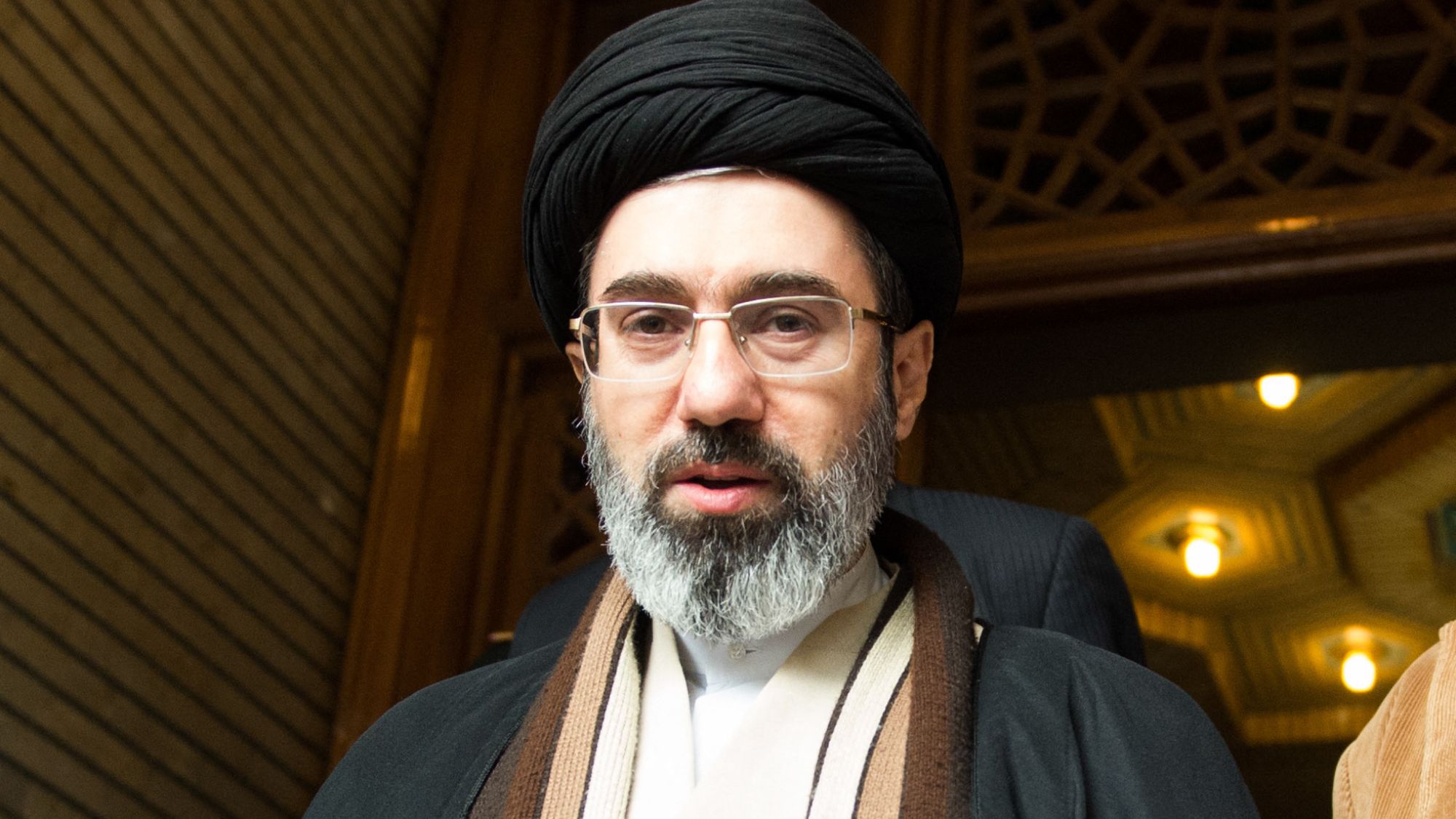
    Iran’s clerical assembly responsible for selecting the country’s supreme leader has appointed Mojtaba Khamenei (pictured above), the son of the late Ayatollah Ali Khamenei, to the role. The decision was announced yesterday following what officials described as a “decisive vote”.

    Who said what
    The clerical assembly has called on Iranians, “especially the elites and intellectuals of the seminaries and universities”, to unite behind the new leadership and maintain national cohesion.

    Khamenei’s selection marks the first time since the 1979 Islamic revolution that the position has passed directly from father to son, “a development likely to ignite debate inside Iran about the emergence of a dynastic system in a state founded explicitly to overthrow hereditary rule after the shah”, said Lorenzo Tondo in The Guardian.

    US President Donald Trump had earlier warned that the new leader was “not going to last long” if he did not gain Washington’s approval, and has called the appointment “unacceptable”.

    Iran’s “shadowy new leader hated America before”, said Benedict Smith in The Telegraph. But after a bombing campaign that has killed his father, mother, wife and son, “now it’s personal”.

    What next?
    The elevation of Khamenei “points to the promotion of securitarianism over clerical authority”, said Catherine Philp in The Times, “making the regime’s acceptance of President Trump’s demands ever more unlikely” and “dashing hopes of an accommodation with the West”.

    The younger Khamenei’s ascension is a “clear sign that the more hardline factions in Iran’s establishment retain power”, agreed Al Jazeera, and “could indicate that the government has little desire to agree to a deal or negotiations in the short term”.


    today’s commodities story

    Oil prices surge above $100 as jittery markets react

    What happened
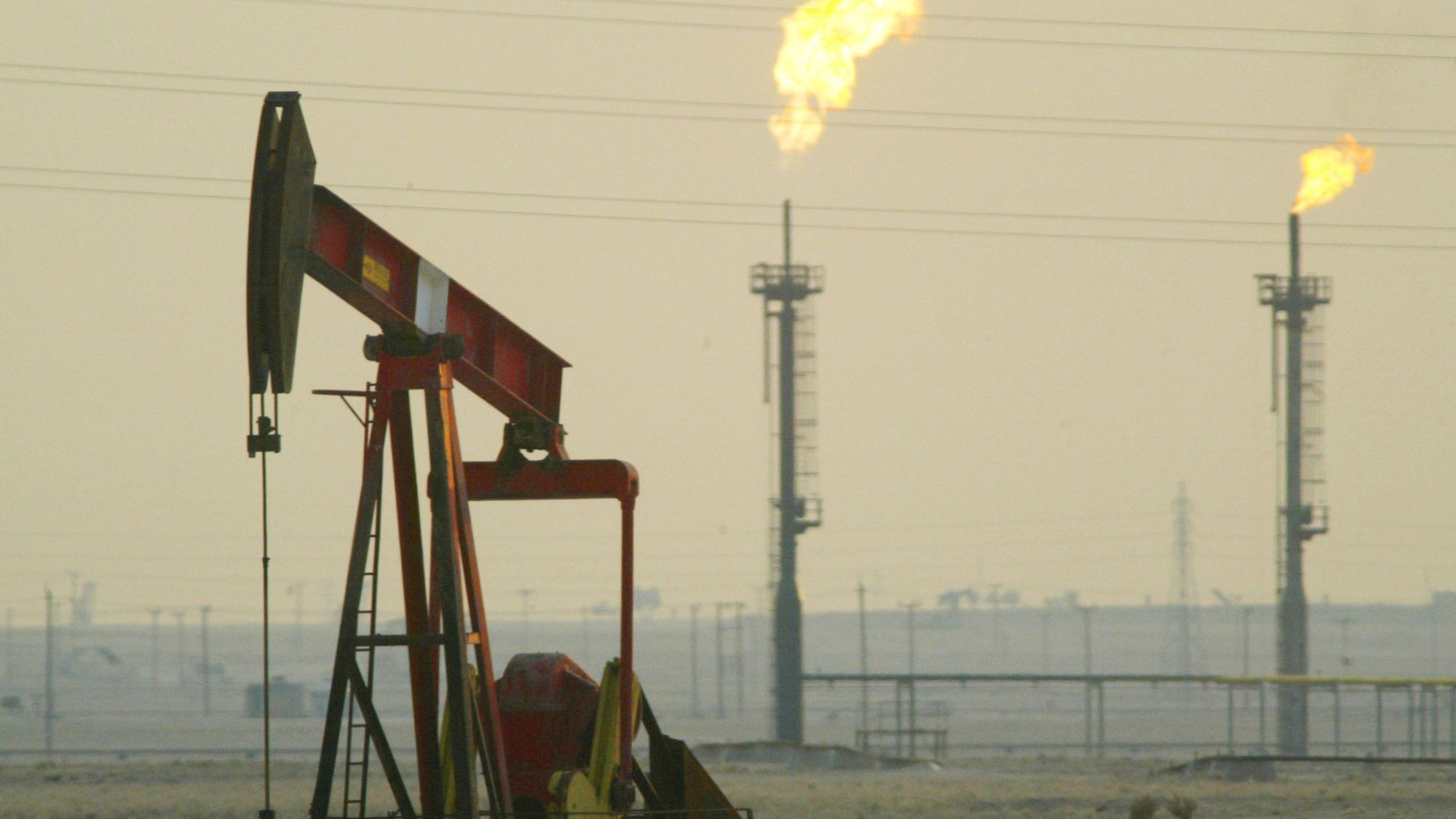
    Global oil prices have climbed above $100 a barrel for the first time since 2022 as the conflict involving the US, Israel and Iran intensifies, fuelling concerns about continuing disruptions to shipments through the Strait of Hormuz.

    Early trading in Asia today saw Brent crude rise to about $107.16, roughly 15.5% higher, while Nymex light sweet crude gained more than 17% to hit $106.77. Traders had anticipated prices reaching the $100 mark this week, but the move happened rapidly once the markets opened.

    Who said what
    US President Donald Trump described the spike in energy costs as a “small price to pay” for eliminating what he called Iran’s nuclear threat. His Energy Secretary Chris Wright said Israeli forces, rather than Washington, were responsible for targeting Iran’s energy infrastructure.

    Rising oil prices “threaten to push up prices for consumers and businesses around the world”, said Faisal Islam on the BBC. This means “pain for consumers, many of whom don’t support the war and didn’t have any real warning that it was coming”, said Ben Geman on Axios. It’s also a “political setback for President Trump, who has relished touting lower gasoline prices on his watch”.

    What next?
    Analysts warn that oil prices could climb much higher if the Strait of Hormuz remains unusable for an extended period.


    Today’s health story

    Man dies outside Glasgow’s safe drug facility

    What happened
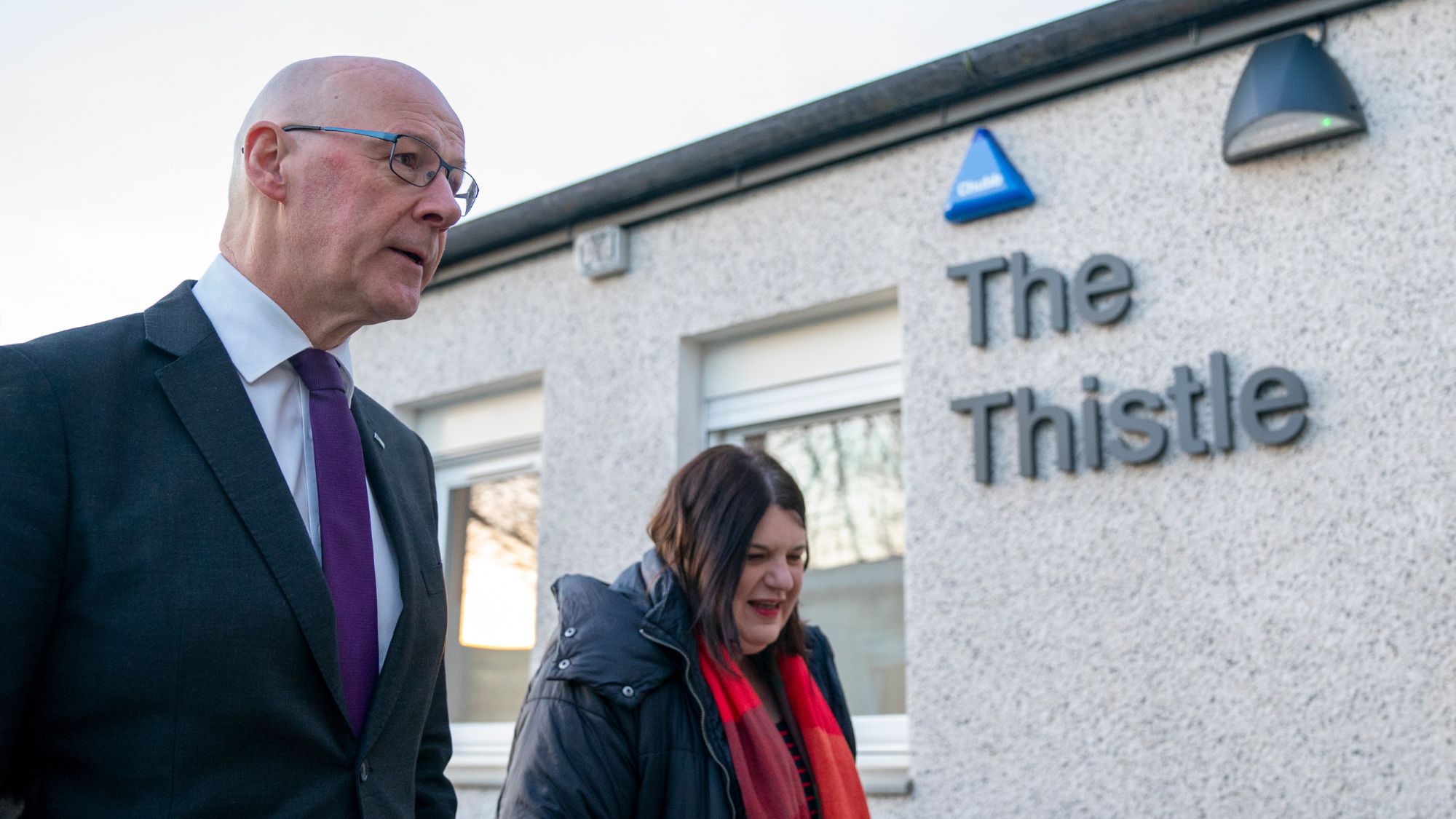
    A man has died outside the UK’s first supervised drug consumption centre. Police cordoned off the entrance to The Thistle facility on Hunter St in Glasgow after emergency services were called at about 10.20am yesterday.

    The death occurred outside the building (pictured above during a visit by Scotland’s First Minister John Swinney and Glasgow City council leader Susan Aitkenrather) rather than within the centre itself. The Thistle opened in January last year as a pilot project, allowing people to inject drugs such as heroin or cocaine under medical supervision without facing prosecution.

    Who said what
    Police Scotland said inquiries were ongoing, but that there did not appear to be any suspicious circumstances surrounding the death.

    The death comes “amid growing concerns surrounding the centre – which is the only one of its kind in the UK”, said Lisa Hodge in The Scottish Sun. “The ‘fix room’ allows addicts to inject substances such as heroin and cocaine under medical supervision – at an eye-watering cost of £362 per hit.” Yet supporters of the project say this type of service will help reduce the number of overdoses and connect users with health and social support services.

    What next?
    Authorities will submit a report to the procurator fiscal. The consumption facility continues to operate as a three-year pilot programme.


    It’s not all bad

    More than 400 lives may have been saved by Martha’s rule, a new system allowing patients and families in England to request an urgent review of hospital care. In its first 16 months the helpline received more than 10,000 calls, prompting thousands of treatment changes, including transfers to intensive care and urgent medication. Named after 13-year-old Martha Mills, who died from sepsis in 2021, the initiative now operates in every acute hospital in England, helping ensure that concerns about deteriorating patients are heard quickly.


    under the radar

    The Australian state on a work-from-home crusade

    Businesses in the Australian state of Victoria will be “forced to allow staff to work from home two days a week” under what the state government describes as “world-first” laws.

    According to The Times, the “sweeping measures” will apply to employers of all sizes and put in place a legal guarantee that every Victorian employee who can “reasonably” work from home will be eligible.

    However, the Labor state government, which faces an election in November, has raised concerns among small businesses, who claim that the laws will restrict growth, while the proposed policy has also sparked fears that some firms would move interstate or abroad as a result.

    Working from home suits families because it “saves time and money and it gets more parents working”, said Victoria’s Premier Jacinta Allan. “If you can work from home for a small business, you deserve the same rights as someone working for a big bank.”

    In last year’s federal election campaign the Liberal-National Coalition, which was resoundingly beaten, had promised to “crack down on ‘unsustainable’ remote working patterns” and force staff back to five days a week in the office. That policy produced a “political spark” and Allan’s Labor Party is seeking to benefit from it. Its work-from-home initiative will form a large part of her re-election campaign in November.

    “It is hard to keep up with Australia,” said Pilita Clark in the Financial Times. It has recently passed “some of the toughest anti-vaping laws on the planet”, a “world-first ban on social media for kids under the age of 16” and banned “artificial stone used for kitchen worktops that is linked with lung disease”.


    on this day

    9 March 1776

    Adam Smith published the influential economics book “The Wealth of Nations”. The University of Glasgow will lead a programme of events throughout this year to mark 250 years since the book’s publication, including public talks featuring leading experts in business ethics, political economy and philosophy.


    Today’s newspapers

    ‘Challenge to Trump’

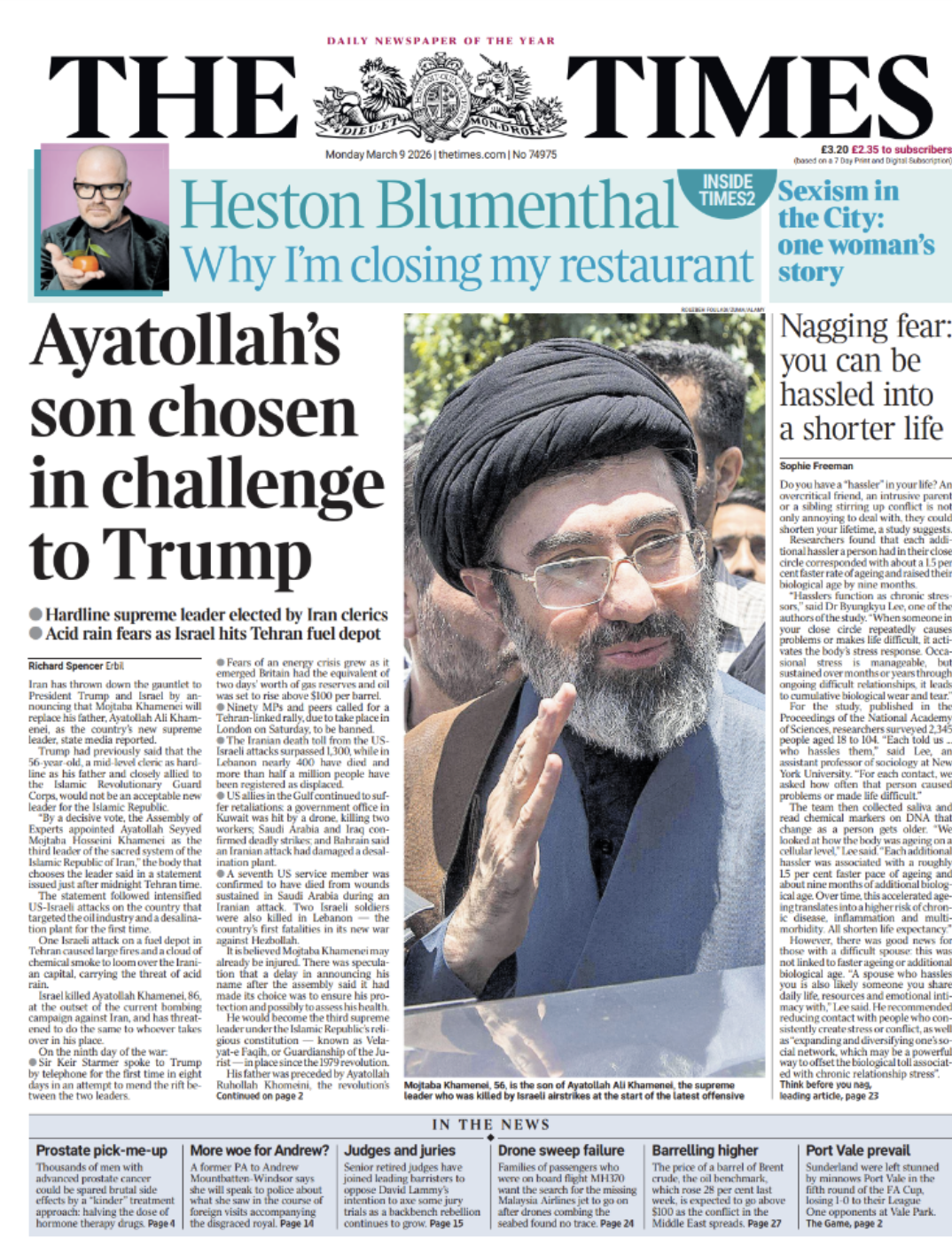
    The Times says that the selection of Ayatollah Ali Khamenei’s son Mojtaba as Iran’s new Supreme Leader is a “challenge to Trump”. The choice is “defiant”, says The Telegraph. Israel and Iran have targeted “fuel storage depots in Tehran, sparking fires that sent huge plumes of thick, black smoke over the capital”, says the Financial Times. “Have you learned nothing, Mr Blair?” asks The Mirror, after the former PM said that Keir Starmer should have immediately supported the US strikes on Iran. The Sun reports on Soham murderer Ian Huntley’s “self-pitying final letter”.

    See the newspaper front pages


    tall tale

    Silicon Valley buzz

    Tech companies such as Palantir and Hello Patient are filling office vending machines with nicotine pouches to increase productivity among employees – “and it seems to be working”, according to Fortune. As companies stock their fridges with these pouches “they’re seeing an increased byproduct of the new office treat: If you can’t get them hooked on the work, get them hooked on the office perks”.


    Morning Report was written and edited by Arion McNicoll, Jamie Timson, Will Barker, Ross Couzens and Chas Newkey-Burden, with illustrations by Julia Wytrazek.

    Image credits, from top: Reza B / Middle East Images / AFP / Getty Images; Joe Raedle / Getty Images; Jane Barlow – Pool / Getty Images; Illustration by Julia Wytrazek / Getty Images.

    Morning Report and Evening Review were named Newsletter of the Year at the Publisher Newsletter Awards 2025
     

    Recent editions

    • Saturday Wrap

      Can MAGA forgive its leader?

    • Evening Review

      The Gulf States’ war stakes

    • Morning Report

      Noem out

    VIEW ALL
    TheWeek
    • About Us
    • Contact Future's experts
    • Terms and Conditions
    • Privacy Policy
    • Cookie Policy
    • Advertise With Us
    • FAQ
    Add as a preferred source on Google Add as a preferred source on Google

    The Week is part of Future US Inc, an international media group and leading digital publisher. Visit our corporate site.

    © Future US, Inc. Full 7th Floor, 130 West 42nd Street, New York, NY 10036.