The Week The Week
flag of US
US
flag of UK
UK
https://cdn.mos.cms.futurecdn.net/flexiimages/jacafc5zvs1692883516.jpg

SUBSCRIBE & SAVE

Less than $3 per week

Sign in
  • View Profile
  • Sign out
  • The Explainer
  • The Week Recommends
  • Newsletters
  • Cartoons
  • From the Magazine
  • The Week Junior
  • Student Offers
  • More
    • Politics
    • World News
    • Business
    • Health
    • Science
    • Food & Drink
    • Travel
    • Culture
    • History
    • Personal Finance
    • Puzzles
    • Photos
    • The Blend
    • All Categories
  • Newsletter sign up Newsletter
  • Saturday Wrap, from The Week
    European tensions, the Groyper movement, and the AI boom

     
    Briefing of the week

    Nick Fuentes and the Groypers

    White supremacism has a new face in the US: a clean-cut 27-year-old with a vast social media following

    Who is Nick Fuentes? 
    Fuentes is a 27-year-old activist and political commentator best known for his Christian nationalist and racist rhetoric. He first attracted attention as a teenager at the 2017 Unite the Right rally in Charlottesville, Virginia. Since then, he has built up a large following as a social media influencer, particularly via his America First broadcasts, on which he airs white supremacist, antisemitic, misogynistic and authoritarian views. On an episode of his show in March, he summarised his politics as: “Jews are running society, women need to shut the fuck up, blacks need to be imprisoned for the most part, and we would live in paradise. It’s that simple.” He has also repeatedly described Hitler as “cool”. 

    Why is he significant? 
    Because he has become disturbingly influential. His X/Twitter account, which Elon Musk reinstated in 2024, has 1.2 million followers; this month each of his America First livestreams has attracted around a million views each. On 27 October, the former Fox News star Tucker Carlson broadcast a sympathetic two-hour interview, which was watched by more than 6.5 million people. Carlson did not challenge Fuentes’ views, which precipitated a major ruction inside the Republican Party and Donald Trump’s Maga movement. Rod Dreher, a conservative columnist, warned that the party has a neo-Nazi problem: between 30% and 40% of Republican staffers in Washington under the age of 30, Dreher said, are “Groypers”. 

    What is a Groyper? 
    Fuentes’ fanbase call themselves Groypers, or the “Groyper Army” after their logo: an unwholesome-looking cartoon toad named Groyper, a variant on the “Pepe the Frog” meme that became popular with far-right activists in 2015. More a loose-knit network of internet trolls than an organised movement, they see themselves as Maga’s edgy youth wing, and like to mock right-wing figures who are (relatively) more moderate. Unlike the Maga mainstream, they favour Catholic ultra-traditionalism or Eastern Orthodoxy over Evangelical Protestantism, and they oppose US support for Israel. But they’re so steeped in social media in-jokes, memes and irony that it’s hard to know what they really believe. 

    So what does Fuentes believe? 
    Being more outrageous than his competitors while suggesting it’s all a big game is a part of Fuentes’ act. As well as praising Hitler and Stalin, he has coined the slogan “Your body, my choice” to needle women concerned about abortion rights after Trump’s second election victory. His irony gives plausible deniability, and helps confuse mainstream critics – but there’s no reason to think he isn’t sincere about his positions: support for an ethnic and religious hierarchy with white Christian men at the top; a belief that Black people are inclined to criminality; opposition to legal as well as illegal immigration; vehement antifeminism; respect for authoritarianism; disdain for democracy. A former fan (and, in 2022, dinner guest) of Trump, Fuentes now says that “Trump 2.0 has been a disappointment in literally every way”, while Trump himself is “incompetent, corrupt and compromised”. He sees the vice president, J.D. Vance, as a corporate stooge and “a fat, gay race traitor” (Vance’s wife is of Indian descent). He has particularly criticised the administration for its support of Israel. 

    What are his views on Israel? 
    He rails against US backing and funding for Israel, questioning the mainstream rationale for the alliance, and suggesting that it serves the interests of Jewish elites rather than the US itself. His thinking often tips over into conspiratorial antisemitic tropes. Central to Fuentes’ thinking is the belief that “organised Jewry” exerts a disproportionate control over US political, financial and media institutions – in ways that harm “traditional America”. He has also said “Hitler was right. And the Holocaust didn’t happen.” Although he later claimed that this was a mere provocation, Fuentes has repeatedly said that the Holocaust is used to push a liberal, multicultural agenda – to “browbeat” whites and suppress white pride. 

    How is the Republican Party reacting? 
    Republican mainstays such as Mitch McConnell and Ted Cruz have denounced Fuentes, and Carlson for giving him a platform. Senator Lindsey Graham, of South Carolina, made clear his position by declaring: “I’m in the ‘Hitler sucks’ wing of the Republican Party.” Elsewhere, the situation has not been so clearcut. After Carlson’s interview, Kevin Roberts, the director of the Heritage Foundation, a prominent right-wing think-tank, put out a video describing Carlson’s critics as a “venomous coalition” of “the globalist class”. (“Globalists” is often used as code for “Jews”.) This led to resignations at the Heritage Foundation; Roberts eventually had to apologise. However, neither Trump nor Vance has ever condemned Fuentes; presumably because they share some of his beliefs and don’t want to alienate the Groypers. 

    What does Fuentes want? 
    Apart from attention and money – his influencing operation is carefully monetised, from paid-for questions to branded merchandise – he has said for years that he wants the Groypers to infiltrate the US establishment and the Republican Party, and to displace traditional conservatism with his brand of far-right white nationalism. “Your job is to get into the Ivy League,” he told his followers. “Your job is to get into these offices and do what you need to do, say what you need to say.” He advises them to hide their views: “Hold it close to the chest.” Fuentes generally demurs when he’s asked if he wants to be president himself. But as the Maga movement begins to contemplate the post-Trump future, there are likely to be opportunities for a white nationalist influencer with a large, fervent online fanbase.

    The making of an extremist 
    Fuentes was born and raised in La Grange Park, Illinois. He describes his childhood, in a largely white suburb near Chicago, with a home-maker mother, a breadwinner father of Mexican heritage, and a strong Catholic ethos, as idyllic. He thinks women should stay at home, and shouldn’t have the right to vote. He told Piers Morgan recently that he had never had sex with a woman; he said he was not gay, “but I will say that women are very difficult to be around.” He studied politics at Boston University, but dropped out after his first year to become an activist. In 2019, Fuentes started to criticise the conservative activist Charlie Kirk, whom he saw as insufficiently right-wing and in the pay of corporate donors. (“Conservative Inc.” is his name for Kirk’s brand of activism.) Fuentes’ supporters often attended Kirk’s events to heckle, in a conflict later referred to as the “Groyper War”. In some ways, Fuentes’ livestream show harks back to a traditional format: he wears a suit, sits behind a desk, and talks rapidly and fluently about current affairs, in a thick Chicago accent. The difference, said Jay Caspian Kang in The New Yorker, is that he inhabits a post-Trump, “post-woke” world, in which “all norms in political commentary have been destroyed”.




    Spirit of the age

    Of the 18-year-olds who had an offer to start at a UK university in the autumn, 89,510 said they intended to live at home – a record high; 6.9% more than in 2024. It means 31% of them planned to live at home, up from 22% a decade ago.


    talking point

    The AI bubble of 2025

    Last week, Cisco Systems hit a big milestone, said James Mackintosh in The Wall Street Journal. Shares in “the dotcom-era champion”, which became the world’s most valuable company in March 2000, have finally regained the price of that peak. “It’s a cautionary tale of how far stock prices can depart from reality” – and how long it can take them to recover when the market bursts.

    Cisco was no fly-by-night dotcom. Much like Nvidia now, it sold “the equivalent of picks and shovels to the gold rush”: making the routers needed to connect up the internet. Well over $100 billion was sunk into fibre-optic networks in the hope that the internet would deliver “a new era of profits from business models that were yet to be proven”. In the event, much of the fibre “ended up being mothballed for a decade before internet traffic expanded enough to justify using it”. Sounds familiar? The race to build data centres in the current AI boom is even more extreme, with investment figures in the trillions thrown around. “Some say if everyone is talking about a bubble, it’s a sign there isn’t one.” Yet similar arguments raged in 1999, even as it continued to inflate. 

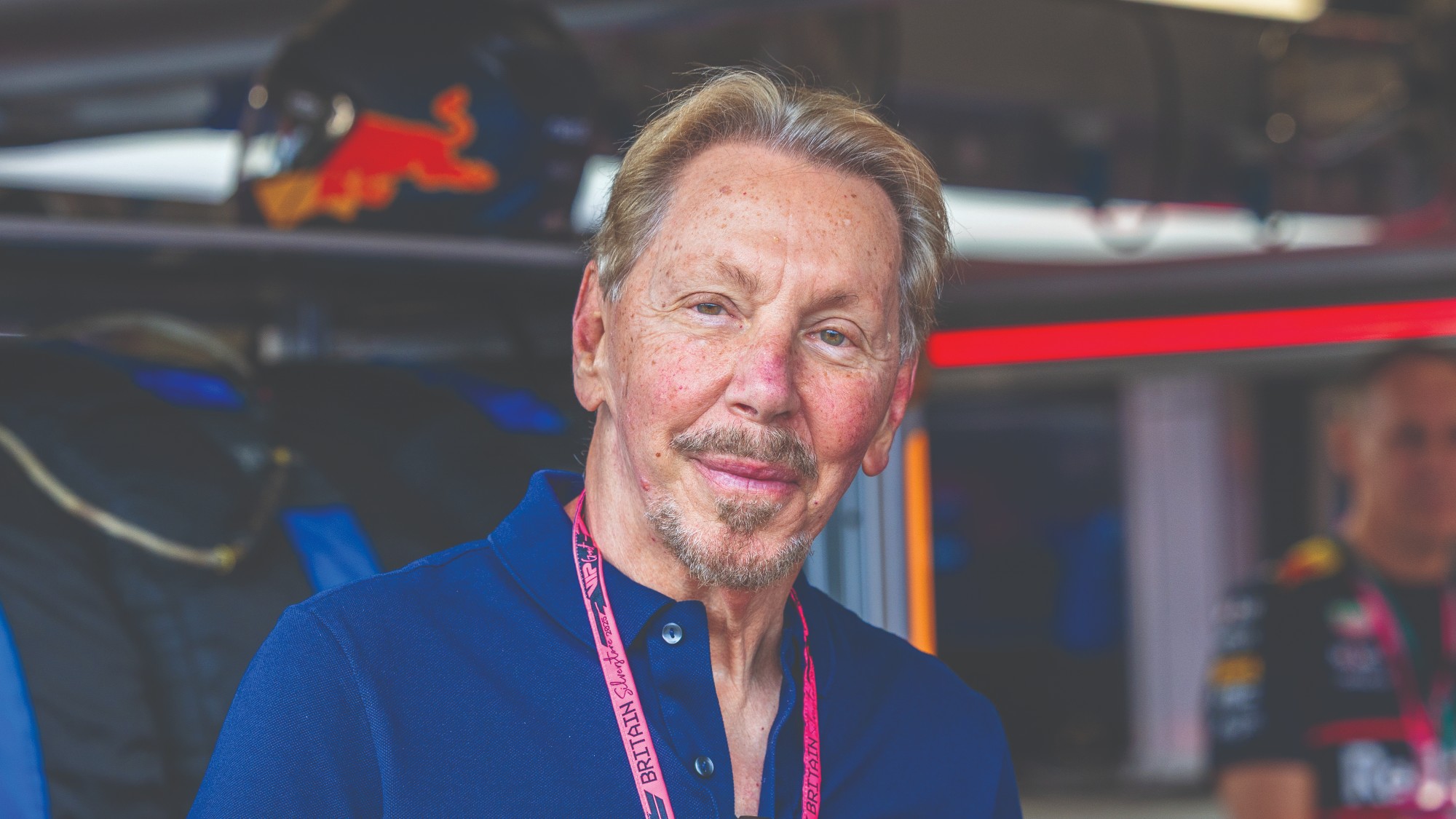
    No wonder “signs of scepticism” are mounting, said Jeran Wittenstein on Bloomberg. There are big differences between the two booms. “While Big Tech’s valuations are high, they’re nowhere near excessive compared with past periods of market euphoria.” Even so, it’s becoming hard to ignore red flags: from the “complex web of OpenAI-linked deals”, to the dramatic plunge of Oracle shares. Larry Ellison’s company is seen by many as a harbinger of danger, said Matthew Bishop in The Observer. In just three months, the Silicon Valley data giant has turned from “a surprise winner of the AI boom” to “a potential weakest link”. Oracle has borrowed billions from private credit markets to boost its data centre capacity. If a key customer such as OpenAI proves unable to pay for all the usage it has ordered, how much trouble would Oracle be in? Shares have crashed almost 40% while investors ponder that. 

    My test for whether a market is in bubble territory focuses on “four Os”, said Ruchir Sharma in the Financial Times: over-valuation, over-ownership (too much wealth going into stocks), over-investment (in data centres) and over-leverage (too much debt). Tallying all four suggests AI is certainly in an “advanced stage” bubble. However, history also shows there is no exact point at which it will burst. “The one constant trigger for a crash”, going back to 19th-century railroad bubbles, “has been rising interest rates and tightening financial conditions”. This bubble, in short, “could keep growing until the money inflating it starts drying up”.


    controversy of the week

    ‘Civilisational erasure’

    Pity Europe, said Michael Ignatieff on Substack. According to the Trump administration’s new National Security Strategy, the continent is facing “civilisational erasure” as a result of unchecked migration and a “loss of national identities and self-confidence”. Its nations are burnt out and trapped in a cycle of decay, it says, owing to over-regulation, woke policies and cratering birthrates. The document positively drips with America’s “contempt” for its long-time allies. Yet in many ways, Team Trump isn’t wrong, said Tim Stanley in The Telegraph. Europe has “strangled” its economies with excessive regulation, and is behind China and the US in crucial industries such as AI. It has neglected defence in favour of welfare. And when confronted with actual war, its response has been to hold numerous pointless summits, complete with self-congratulatory photocalls of Europe’s leaders hugging each other. Let’s face it: “this is hardly the civilisation of Charlemagne or Bach”. 

    It’s hard to judge “civilisational erasure”, said Francesco Grillo on The Conversation. But by many measures, Europe’s doing fine: better than America, in fact. In the US, despite its massive health spending, life expectancy is four years lower than the European average. The right-wing Cato Institute in Washington judges that six of the 10 most free nations in the world are in the EU; the US is at number 17. The White House is concerned about European immigration, but the US has a higher number of first- and second-generation immigrants – and its civilisation has thrived, even so.

    What did Europe do to so upset the American right, asked Janan Ganesh in the Financial Times. How has it let “Western civilisation” down? “If I took psychobabble more seriously”, I’d call this “projection” or “whatever”: Trump and his ilk hate Europe because of its resemblances to America. “The US birth rate is no higher than that of Britain or France.” As in godless Europe, fewer than half of Americans say religion is part of their daily life. Maga’s antipathy comes down to its ugly racial politics, said Noah Smith on Substack. To many on the US right, Europe has long been a bastion of “white Christianity”. When they realised this “hallowed” image was no longer accurate, they reacted with fury. 

    All this may be true, said Patrick Cockburn in The i Paper, but it’s hard to disagree with Trump’s view that Europe is “weak” and “decaying”. The EU is one of “the world’s greatest trading blocs”, yet it agreed a very damaging US trade deal that involved 15% tariffs. (The UK managed to agree 10%.) As the National Security Strategy points out, Europe has a “significant hard power advantage over Russia” in every area except nuclear weapons, yet it has failed to take a stand. It has pledged to defend Ukraine, yet obediently waits for direction from Trump. Europe’s elites lead some of the richest, most successful nations on Earth, yet at a time of historic change, they seem “paralysed”.


    Viewpoint

    Christmas lists

    “I always enjoy designer and socialite Nicky Haslam’s latest annual snooty tea towel, and seeing which phrases, items and people Haslam has deemed ‘common’ in time for Christmas. I agree with Haslam about air fryers, storm names, Stephen Fry, clapping the chef and ‘What’s not to like?’. I’d need to put out a bath towel, though, not a mere tea towel, to list my own bugbears, which include the phrases: ‘As you do!’; ‘Prosecco o’clock’; ‘girlie weekend’ and ‘hot take’. And I’ve heard enough about Dubai, ick, cringe, game-changers, pivoting, iconic anything, intermittent fasting, doomscrolling, cupcakes, kimchi and matcha to last me a lifetime.”

    Robert Crampton in The Times


    It wasn’t all bad

    After years in decline, the British wool industry is enjoying a small revival. At a recent auction in Bradford, wool fetched its highest price for a decade. This is largely the result of dwindling supply and pent-up demand for carpets and the like from a recovering hospitality sector; but it has also been credited to a growing interest in sustainable fashion and natural fibres such as tweed, fostered by TV shows such as “The Crown”. Most farmers are still selling wool at a loss, however.


    People

    Penny Lancaster

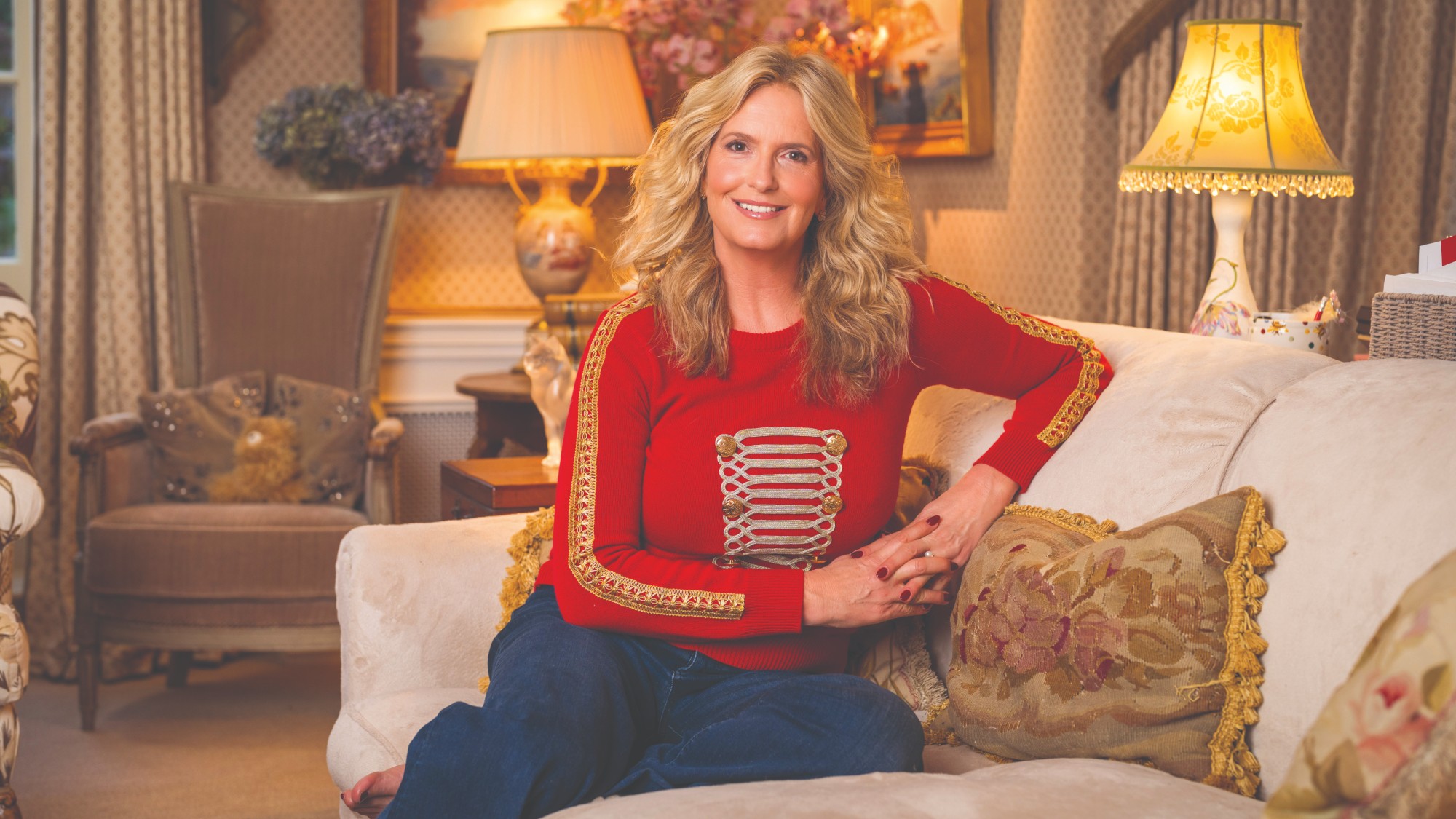
    In 2021, shortly after appearing on Channel 4’s “Famous and Fighting Crime”, Penny Lancaster joined the City of London Police as a special constable. She didn’t need the work: she’d been married to Rod Stewart for years, and had a successful TV career of her own. But “deep down” inside, she told Helen Brown in The Telegraph, what she wanted was to connect with other people. “Particularly vulnerable people.” She describes coming to the aid of revellers who’d got separated from their friends; and helping a female bar worker who believed that she was being stalked prove her case. 

    This vocation was, she thinks, informed by her own experiences. Aged five, a man tried to snatch her from her parents’ front garden. When she was 12, a man pinned her against the wall of an underpass as she walked to school. She recalls realising that her terror, as she thrashed about, trying to free herself, was his “thrill”, and the sound of his laughter as she ran away. 

    When she was 17 and working as a model, an older industry figure drugged and sexually assaulted her (“I was face down. On a mattress... my body was completely paralysed”). She still feels guilty that she didn’t report him. “In a sense,” she says, “the work has helped me heal from the past. The perpetrators were never caught in my case. So it helps me to stand up for women and their safety on the streets.”


    Image credits, from top: Chris J. Ratcliffe / AFP / Getty Images; Zach D. Roberts / NurPhoto / Getty Images; SOPA Images / LightRocket / Getty Images; Andrew Crowley
     

    Recent editions

    • Morning Report

      Brown, MIT murder cases end with dead suspect

    • Evening Review

      Trump takes a ‘sledgehammer’ to climate research

    • Morning Report

      GOP’s health care headache flares

    VIEW ALL
    TheWeek
    • About Us
    • Contact Future's experts
    • Terms and Conditions
    • Privacy Policy
    • Cookie Policy
    • Advertise With Us
    • FAQ
    Add as a preferred source on Google

    The Week is part of Future US Inc, an international media group and leading digital publisher. Visit our corporate site.

    © Future US, Inc. Full 7th Floor, 130 West 42nd Street, New York, NY 10036.