The Week The Week
flag of US
US
flag of UK
UK
https://cdn.mos.cms.futurecdn.net/flexiimages/jacafc5zvs1692883516.jpg

SUBSCRIBE & SAVE

Less than $3 per week

Sign in
  • View Profile
  • Sign out
  • The Explainer
  • The Week Recommends
  • Newsletters
  • Cartoons
  • From the Magazine
  • The Week Junior
  • Student Offers
  • More
    • Politics
    • World News
    • Business
    • Health
    • Science
    • Food & Drink
    • Travel
    • Culture
    • History
    • Personal Finance
    • Puzzles
    • Photos
    • The Blend
    • All Categories
  • Newsletter sign up Newsletter
  • Saturday Wrap, from The Week
    Kremlin pressure, tensions over Venezuela, and 2025’s best performers

     
    Briefing of the week

    The squeeze on Venezuela

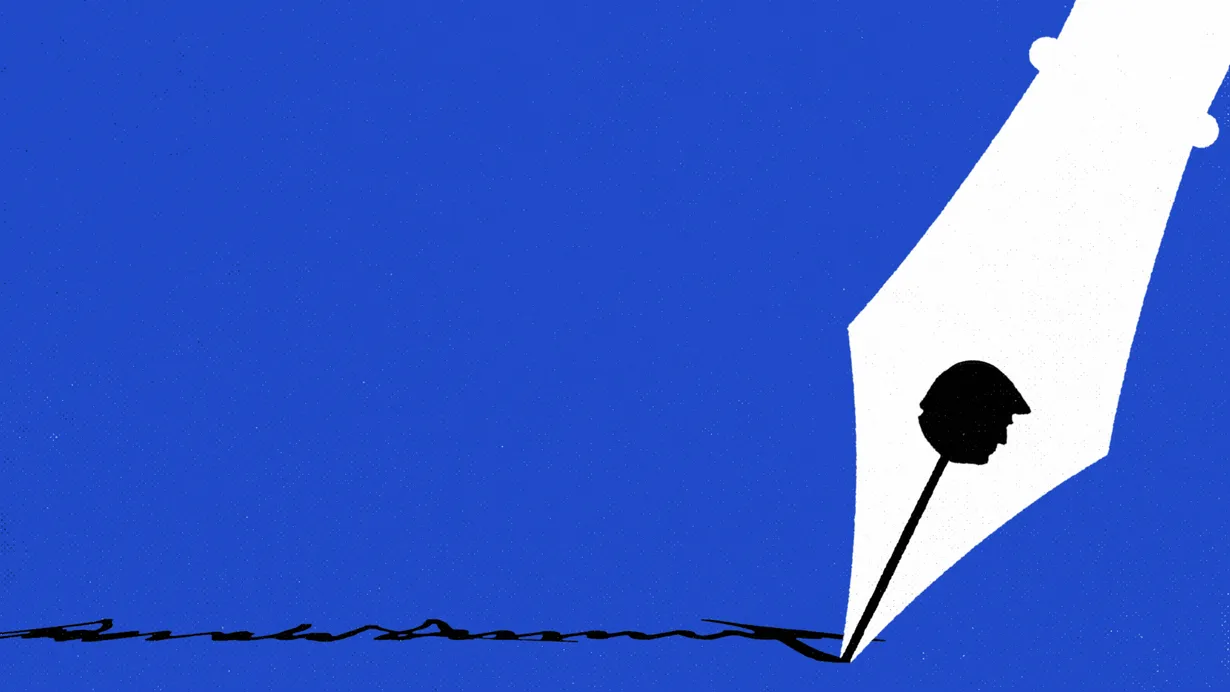
    Trump is relying on a ‘drip-drip pressure campaign’ to oust Maduro, tightening measures on oil, drugs and migration

    Donald Trump ramped up the pressure on President Nicolás Maduro by ordering a “total and complete” blockade of oil tankers subject to US sanctions heading to or from Venezuela. He accused Maduro’s government of using “stolen” oil to “finance themselves, drug terrorism, human trafficking, murder and kidnapping”.

    Referring to the US deployment to the region of a dozen warships and more than 14,000 troops, Trump wrote that Venezuela was “completely surrounded by the largest armada ever assembled in the history of South America”.

    Drug blockades
    Oil prices jumped in the wake of Trump’s blockade order, which came days after US forces had seized an oil tanker off the coast of Venezuela. Since September, the US military has killed around 100 people in more than two dozen strikes on alleged drug-trafficking boats in the Caribbean and Eastern Pacific. 

    Trump has also threatened to strike drug-related targets inside Venezuela. Caracas denounced his “warmongering threats” and called on oil workers to organise a worldwide protest “against the piracy of those who believe they have a licence to plunder the world’s resources”.

    Trump is tightening the screws on Caracas, said The Wall Street Journal – and not before time. While Maduro is accusing the US of piracy, he’s the one who “stole Venezuelan democracy” by refusing to cede power after losing the 2024 presidential election. More than eight million Venezuelans have fled his police state. Trump isn’t concerned about Maduro’s authoritarianism, said The Guardian. Nor is this about tackling drug cartels: Venezuela isn’t a big supplier of drugs to the US. Trump is driven mainly by the desire to stem refugee flows and get rid of the socialist Maduro, a long-term target. 

    The US blockade carries some risks, said The Washington Post. It could provoke a marine confrontation that drags the US into a land war in South America. And by reducing the regime’s main source of revenue, it could exacerbate a humanitarian crisis. Still, it’s a more “legally defensible” strategy than the US air strikes on alleged drug smugglers. Given that about 80% of Venezuela’s oil is sold on the black market, and that most tankers stopping there are sanctioned, Trump “can argue that he’s merely stepping up enforcement”. His first-term effort to oust Maduro failed because “his attention drifted”. Will he stay the course this time?

    Squeezing Venezuela’s oil trade
    Maduro is vulnerable, said Andrew Neil in the Daily Mail. Venezuela has the world’s largest-known oil reserves and used to be one of the region’s richest countries. But more than 25 years of hard-left rule, initially under Hugo Chávez and then his protégé Maduro, have driven it to ruin. Its poverty rate is now about 80%. People talk about the danger of civil war if Maduro is ousted, but this isn’t a divided country. Nobel Prize-winner María Corina Machado would have coasted to victory had she not been barred from standing in last year’s election. In a recent poll, nine out of 10 Venezuelans said they believed that the man who won that vote by a landslide – Machado’s chosen candidate, Edmundo Gonzáles – is their rightful president. 

    Trump is hoping that his “drip-drip pressure campaign” can bring about a coup without the need for direct US military force, said Tom Rogan in the Washington Examiner. US navy jets are wearing down Venezuelan defence units by forcing them to remain at a state of high readiness, and CIA assets inside the country are no doubt encouraging top officials to move against Maduro. It’s the right approach. If Maduro is ousted, there’s a good chance that there will be an insurgency involving narco-traffickers and at least some unreconciled elements of the old regime. Given Venezuela’s “abundance of deep jungles and sprawling favelas”, the US doesn’t want to get entangled in any counter-insurgency campaign. 

    Trump is squeezing Venezuela’s oil trade, said Keith Johnson in Foreign Policy. Activity in its ports has sharply reduced and multiple inbound tankers have turned around mid-voyage in recent days. Some oil is still flowing, said a report in the FT. US-based Chevron, which accounts for about a quarter of Venezuela’s oil production, still has a licence to sell oil; tankers not included in the US’ expanding list of sanctioned vessels can still ply their trade. If the US keeps tightening the noose, though, it will create enormous difficulties for Maduro’s regime. “But given that the ‘Bolivarian Revolution’ started by Chávez has survived for a quarter of a century, few are willing to bet on the Venezuelan regime collapsing” without direct US military action.

    Lack of storage capacity
    Trump says the US military build-up will continue until Caracas returns “all of the oil, land and other assets they previously stole from us”. Under Chávez, Venezuela expropriated assets belonging to US oil companies. Trump hasn’t given any further details about how the US blockade on sanctioned tankers will be enforced. 

    Until recently Venezuela produced about 0.8% of global crude oil output, exporting some 900,000 barrels a day. Most of this ended up in China. Last week, Venezuela’s state oil company, PDVSA, said that crude exports were “continuing as normal”, but experts believe it will soon have to halt production owing to a lack of storage capacity.


    Spirit of the age

    More than a quarter of dog owners plan to serve their pet a full Christmas dinner. Crufts advises that this should be specially prepared, as leftovers are likely to be too rich and salty for dogs, and possibly toxic.


    talking point

    Investment: the winners and losers of 2025

    Winner: Precious metals
    The gold price, at around $4,340 per troy ounce, surged more than 60% to a new record in 2025 and is on track for its best performance since 1979. Silver has put in an even more blistering performance, more than doubling to a record $68/oz. The rally was underpinned by “elevated” central-bank buying, said Bloomberg: uncertainty has boosted gold’s safe-haven status, which some now question. The Bank for International Settlements recently warned of a potentially “explosive” combination of all-time highs in gold and equity markets.

    Winner: Tech stocks
    Despite persistent worries of a bubble – and some jittery sell-offs – AI continued to drive global momentum. Bellwether Nvidia became the first ever $5 trillion company in October, thanks to demand for its AI chips from Silicon Valley’s “hyper-scalers”. Palantir Technologies – Peter Thiel’s data analytics firm – delivered 148%. In China, two chipmakers, MetaX and Moore Threads, surged 700% and 400% respectively on their first days of trading, said CNBC.

    Winner: Global stock markets
    Having dominated in previous years, US equities have lagged many European, LatAm and other global markets – despite the threat of tariffs to export-driven economies. The S&P 500 was up by around 15%, compared with a 69% gain on South Korea’s Kospi. South Africa, Spain and Poland also rose around 60%.

    Loser: Crypto
    Despite frenetic activity in the sector under a friendly Maga regime, the leading currencies, bitcoin and ethereum, ended the year down (by 5.75% and 11.2% respectively). In October, bitcoin hit an all-time high of $126,279, before slumping to around $88,093. Crypto’s 2025 roller-coaster was best reflected by the startling boom and bust in “crypto treasury companies” that switched their remit to bitcoin hoarding. The trade reached fever pitch in summer; many are now underwater.

    Loser: The squeezed middle
    If America’s trading partners shrugged off tariffs, the same isn’t true of the US consumer. As the year ended, talk of an “affordability crisis” gained ground, driven by rising grocery, consumer goods and healthcare insurance costs. The squeeze is taking hold in Britain too, said Fidelity’s Marianna Hunt. Although average mortgage rates continued falling, frozen tax thresholds and changes to pensions and savings regimes are going to bite.

    Loser: Japanese bonds
    Many big economies experienced a rout in longer-dated government bonds, as ballooning national debts came under scrutiny. “The moves in Japan’s long-maturity bonds have been particularly acute,” said Bloomberg. Yields (which move inversely to prices) reached record highs in December, amid concerns over interest rates and PM Sanae Takaichi’s $137 billion stimulus package.


    controversy of the week

    The Russian threat

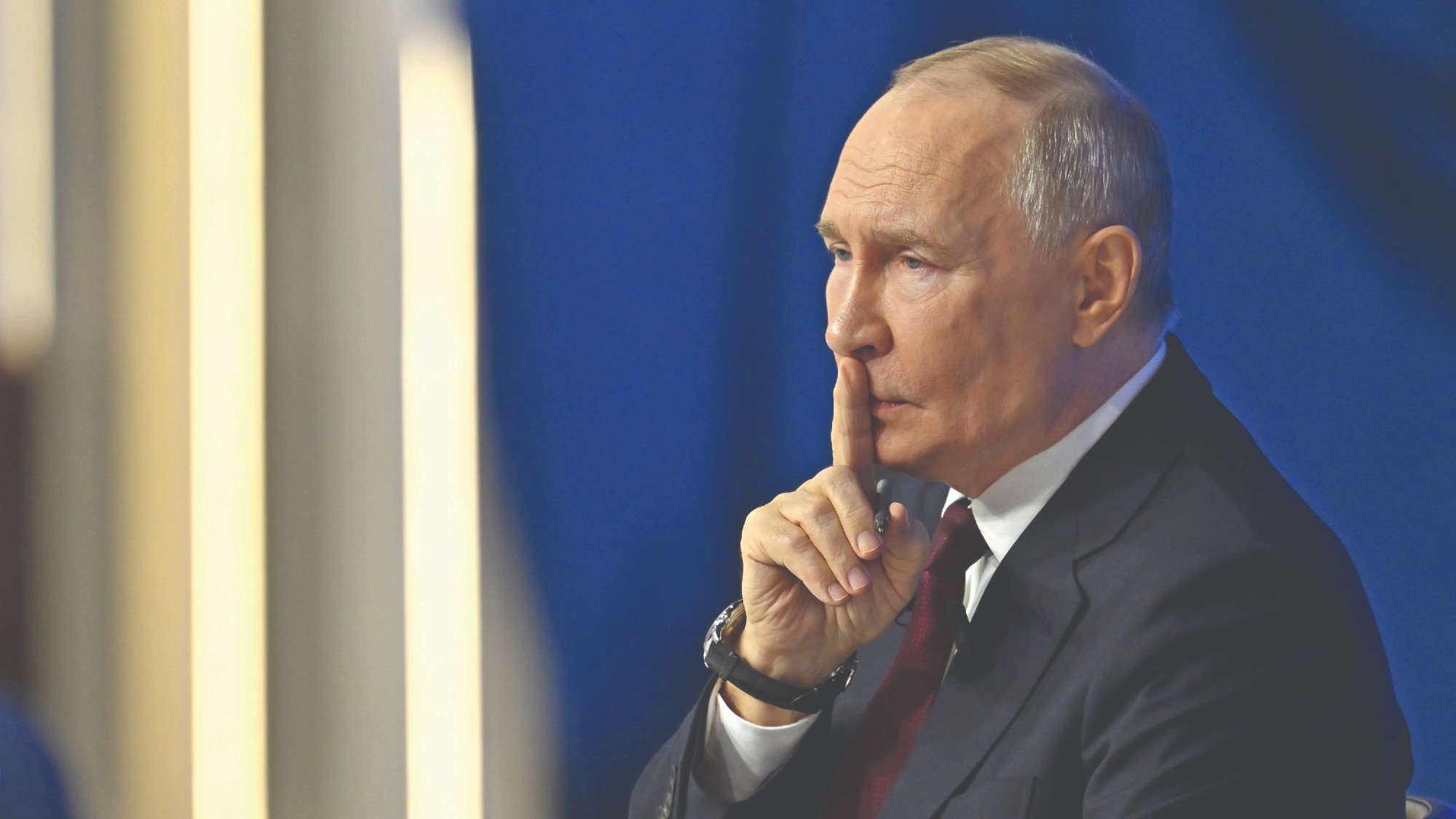
    “The drumbeats prophesying war are getting louder,” said Adam Boulton in The i Paper. In the past fortnight, we’ve had two stark warnings about the growing threat from Russia: from the new head of MI6, Blaise Metreweli, who says our two countries are already in a “space between peace and war”; and from the Nato secretary general, Mark Rutte, who claims that Europe and Russia must prepare for a conflict on a scale not seen since the days of “our grandparents and great-grandparents”. The evidence of Moscow’s hostility is “everywhere”, said Hamish de Bretton-Gordon in The Telegraph. The Kremlin’s spy vessels “prowl our waters”, mapping the undersea cables that underpin our economy and security. Cyberattacks from Russian sources have become “routine”. Drones regularly breach European airspace, including over military bases. And with every brazen provocation, Vladimir Putin grows bolder. “He believes the West is psychologically unprepared for war, desperate to avoid confrontation at any cost, and therefore unwilling to stand firm.” 

    Putin’s behaviour is alarming, said John Rentoul in The Independent. He clearly won’t stop in Ukraine until he “has subdued the entire country”, and there’s no doubt “he sees Nato as the enemy”. But a wider war in Europe? That feels a little overblown. Remember, the combined GDP of the UK and EU is $25 trillion – 10 times the size of Russia’s. “That is not a war Putin can win.” True, said an editorial in the same paper, but do we really think Europe’s leaders have the political will to make their collective and industrial strength count? It certainly doesn’t look that way. This week, they yet again failed to unlock €210 billion in frozen Russian assets for Ukraine’s defence, instead agreeing a €90 billion loan. And while serious people make serious statements about World War Three being a “real prospect”, said Juliet Samuel in The Times, our own government can only muster a pledge to raise defence spending by 0.2% of GDP within two years, even as it dedicates billions to welfare. The wolf is at the door, yet instead of buying guns, we’re “fattening up the lambs”. 

    Russia has been “running rings around Britain” for years, said Edward Lucas in the same paper – acting with impunity on UK soil, from the poisoning of Alexander Litvinenko in 2006 onwards. Today, our defences remain feeble. Our democracy is vulnerable to Russian money, as the recent conviction of Reform UK’s Nathan Gill shows. Our intelligence services are shackled by “a risk-averse, politically correct bureaucracy”. But that could be about to change. In her speech, the head of MI6 said it was time to “outplay” the Kremlin “in every domain, in every way” – and to take “calculated risks”. Good: “a dose of audacity is long overdue”. Still, if it does happen, “buckle up”. We can expect “ruthless retaliation” from Russia. Are our politicians ready for that? Are we?


    Poll watch

    Christmas lists

    For the second year running, Donald Trump tops the UK’s naughty list: 50% of Britons think he deserves a place on it. He is followed by Andrew Mountbatten-Windsor (on 48%), Keir Starmer (42%), Elon Musk (40%), Nigel Farage (37%) and Rachel Reeves (37%). NHS staff are top of the nice list, with 41% voting for them, followed by the Princess of Wales (35%) and money-saving expert Martin Lewis (33%).

    Ipsos


    It wasn’t all bad

    A suspected phone scammer was arrested by German police last week, after being led into a trap by an 85-year-old he had tried to con. The pensioner had received a call, ostensibly from a relative in urgent need of financial help. Smelling a rat, he told the caller he’d get the money together in cash and gold coins, while his daughter rang the police – who were waiting at the pick-up spot. The advice of British police is not to try to catch scammers, but to hang up and report them.


    People

    Meg O’Neill

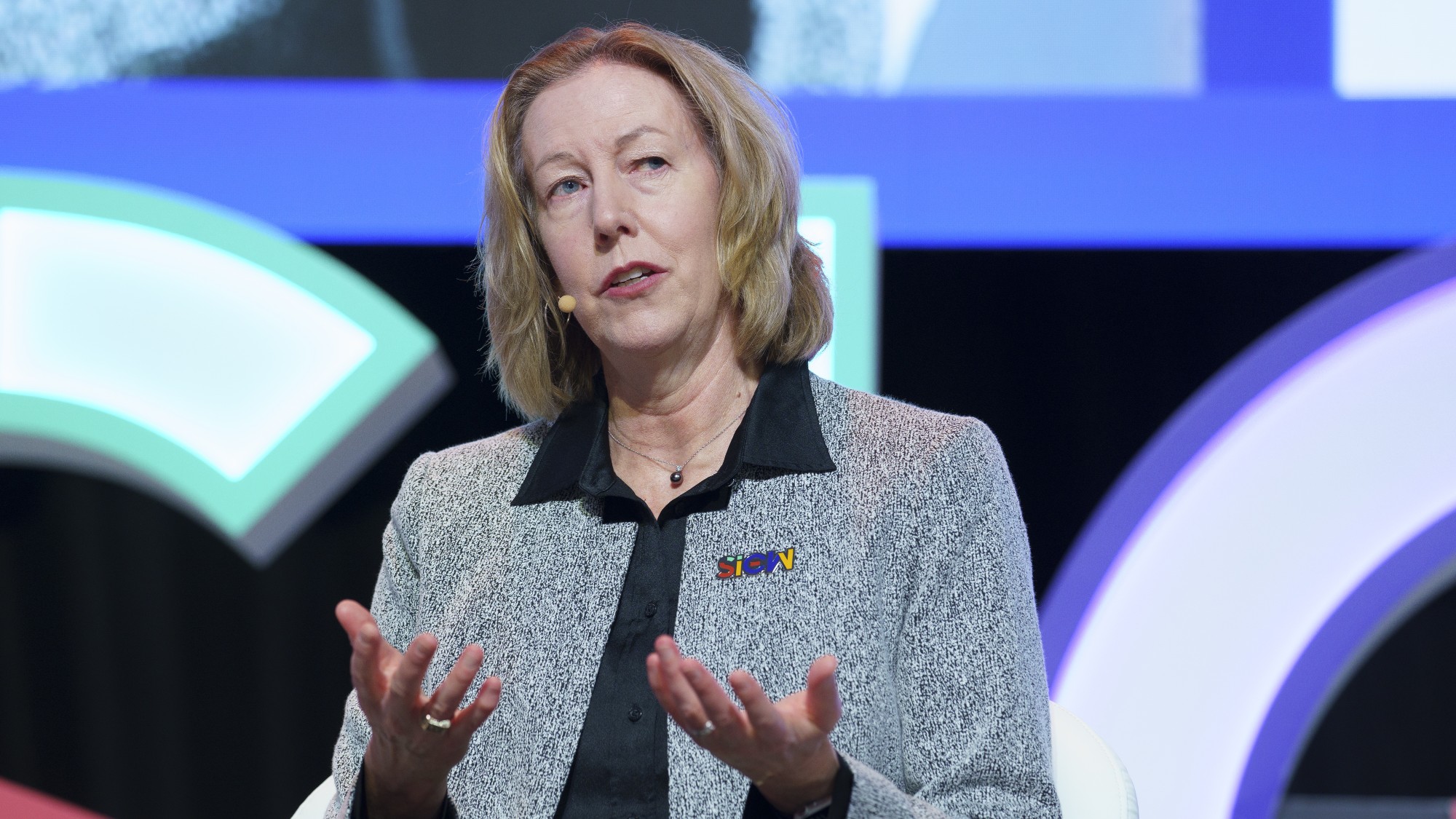
    BP hasn’t lost its power to shock, said Bloomberg. Without warning, just days before Christmas, the British energy giant has ousted its boss and made the first external CEO hire in its 115-year history – following “a top secret process” masterminded by its new chair, Albert Manifold. The winning candidate, Meg O’Neill – an avowed “fossil fuel enthusiast” – is an American who led Australia’s largest oil and gas independent, Woodside Energy, for four years, and before that spent more than two decades at ExxonMobil. Sources report she has been “given licence for a complete page-turn”. Her arrival underscores BP’s “hard pivot back to oil and gas” after a capital-destroying green-energy shift.

    BP’s outgoing CEO, Murray Auchincloss, “never lived down his earlier championing” of BP’s green push, said Alistair Osborne in The Times. O’Neill, 55, is “a statement hire who makes a clear contrast” with him. She also becomes the first woman to lead one of the five oil “supermajors”. Manifold points to her “track record of driving transformation” at Woodside – including a trophy $28 billion deal to buy BHP’s petroleum assets. 

    Sceptics retort that Woodside is a fraction of BP’s size, and O’Neill’s expertise is in oil production, not the “full monty”, from exploration to retail, covered by BP. Besides, Woodside’s shares have even “lagged BP’s”. O’Neill describes herself as “outspoken” and has become “a lightning rod for criticism” from Australian environmentalists. In 2023, activists were stopped by counter-terrorism police after trying to spray paint her Perth home.


    Image credits, from top: Sefa Karacan / Anadolu / Getty Images; Jesus Vargas / Getty Images; Jung Yeon-Je / AFP / Getty Images; Ore Huiying / Bloomberg / Getty Images
     

    Recent editions

    • Evening Review

      Vance’s ‘failed’ moral test

    • Morning Report

      Supreme Court clips Trump’s power

    • Evening Review

      New year, new government shutdown

    VIEW ALL
    TheWeek
    • About Us
    • Contact Future's experts
    • Terms and Conditions
    • Privacy Policy
    • Cookie Policy
    • Advertise With Us
    • FAQ
    Add as a preferred source on Google

    The Week is part of Future US Inc, an international media group and leading digital publisher. Visit our corporate site.

    © Future US, Inc. Full 7th Floor, 130 West 42nd Street, New York, NY 10036.