The Week The Week
flag of US
US
flag of UK
UK
https://cdn.mos.cms.futurecdn.net/flexiimages/jacafc5zvs1692883516.jpg

SUBSCRIBE & SAVE

Less than $3 per week

Sign in
  • View Profile
  • Sign out
  • The Explainer
  • The Week Recommends
  • Newsletters
  • Cartoons
  • From the Magazine
  • The Week Junior
  • Student Offers
  • More
    • Politics
    • World News
    • Business
    • Health
    • Science
    • Food & Drink
    • Travel
    • Culture
    • History
    • Personal Finance
    • Puzzles
    • Photos
    • The Blend
    • All Categories
  • Newsletter sign up Newsletter
  • The Week’s Saturday Wrap
    Trump gives up on Greenland, ICE’s child detainees, and the price of a presidential pardon

     
    controversy of the week

    Greenland: The lasting damage of Trump’s tantrum

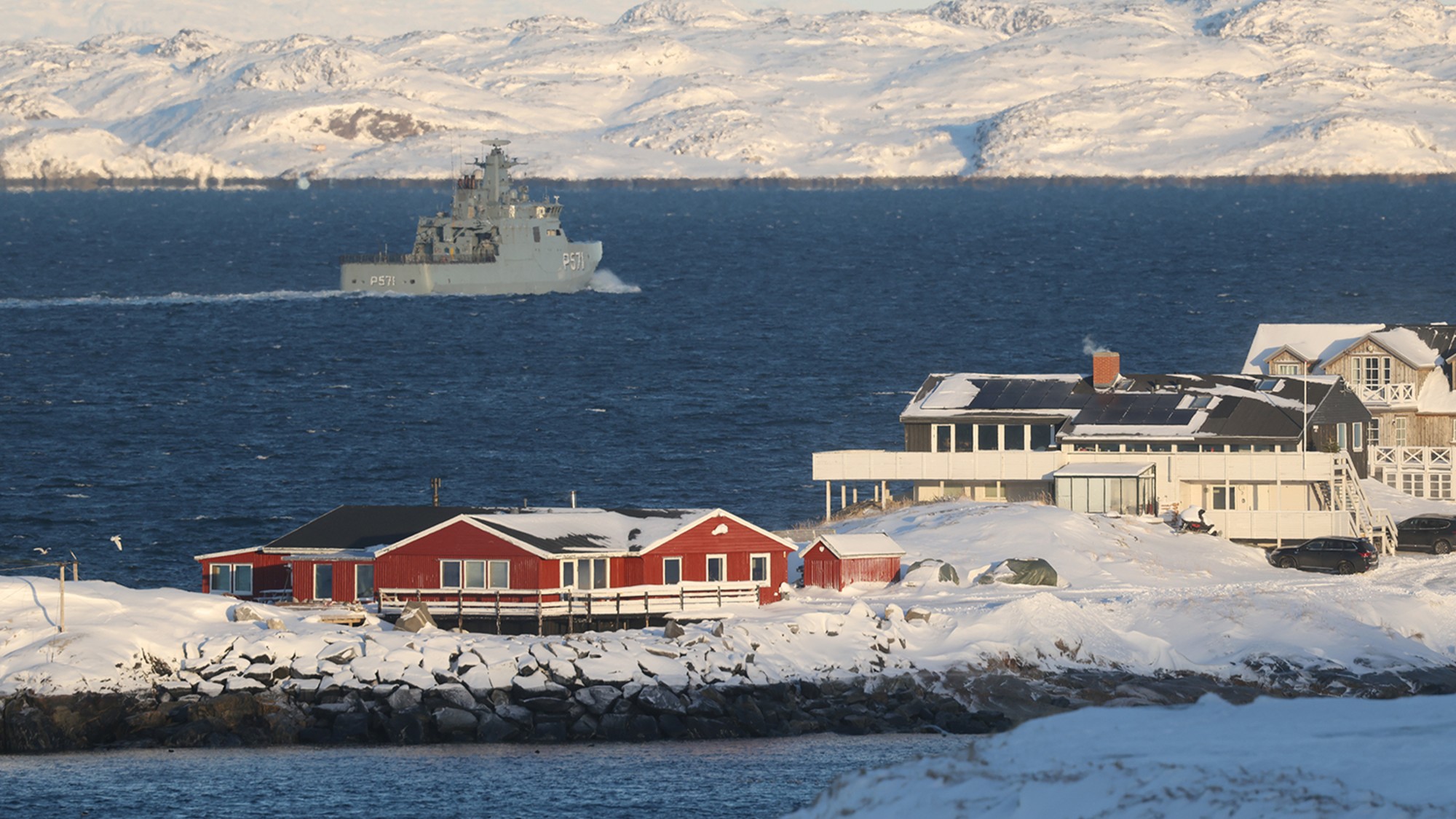
    “So: Was it worth it?” asked Judson Berger in National Review. The long saga of President Trump’s fixation with owning Greenland appeared to end last week with a merciful whimper. In a rambling address to the World Economic Forum in Davos, Switzerland, Trump not only withdrew his previous threats to annex Greenland through military force but also announced the cancellation of threatened tariffs against European nations who had opposed his plans to purchase the vast, semiautonomous island from Denmark. Instead, said Trump, he and NATO Secretary General Mark Rutte had hammered out “the framework of a deal with respect to Greenland.” Trump claims the vague, still-unwritten deal will allow the construction of his dubious “Golden Dome” missile-defense system, enable American companies to pay for licenses to mine Greenland’s minerals, and include “pockets” of U.S. sovereignty around an expanded number of military bases. That last claim is unconfirmed, said Douglas E. Schoen in The Hill, but the U.S. already had full military and commercial access to Greenland under a treaty signed in 1951. We’ve gained nothing we didn’t already have, while Trump’s “shock-and-awe” tactics have weakened NATO, emboldened Russia and China, and inflicted immense long-term damage to “America’s geopolitical, economic, and security interests.” 

    Typically, Trump is framing his U-turn as a triumph of hardball negotiation, said Isaac Stanley-Becker and Jonathan Lemire in The Atlantic, but the reality is that “Europe got Trump to cave on Greenland.” Domestic politics no doubt also played a role—86% of Americans oppose invading a NATO ally, and even some usually supine congressional Republicans denounced Trump’s expansionist ambitions. But the real pressure came from Europe, which responded to Trump’s bullying with steely, united defiance. A joint reconnaissance mission to Greenland by troops from eight European nations reportedly “rattled Trump,” as did a plunge in the U.S. stock market after the EU started selling U.S. bonds and threatened new, retaliatory tariffs. European “disgust” with the U.S. will long outlive Trump’s presidency. But the real lesson of Trump’s Greenland climbdown is that, as one EU official put it, Europe “is learning to bully back.” 

    So maybe Trump isn’t an “all-powerful” dictator after all, said The Wall Street Journal in an editorial. The liberal media has insisted that second-term Trump is a rampaging “Frankenstein’s monster, unchained to do whatever he wants.” Yet now they also tell us he abandoned his designs on Greenland under pressure from public opinion, markets, allies, and fellow Republicans. Which is it? The reality is that despite his “over-the-top” style, Trump remains a “democratic leader in a constitutional republic,” constrained by the same forces as any president. 

    Is sanity one of those constraints? asked David French in The New York Times. Trump’s conduct was “demonstrably irrational,” from claiming he had a “psychological need” to own Greenland to the “deranged and delusional” letter he sent Norway’s prime minister, threatening to invade Greenland because “your Country decided not to give me the Nobel Peace Prize.” In a healthier democracy, said Michael Hicks in the Muncie, Ind., Star Press, Trump’s unhinged behavior would be grounds for “impeachment or removal from office under the 25th Amendment.” But in our dysfunctional country, all that decent Americans can do is feel “ashamed, of our president and our nation.”


    VIEWPOINT

    American fascism 

    “Until recently, I resisted using the F-word to describe President Trump. The term has been overused to the point of meaninglessness, especially by left-leaning types who call you a fascist if you oppose abortion or affirmative action. Recent events have brought Trump’s governing style into sharper focus. Fascist best describes it, and reluctance to use the term has now become perverse. If historians object that Trump is not a copy of Mussolini or Hitler or Franco, the reply is yes—but so what? Trump is building something new on old principles. He is showing us in real time what 21st-century American fascism looks like.” 

    Jonathan Rauch in The Atlantic


    briefing

    The price of forgiveness

    President Trump’s unprecedented use of pardons has turned clemency into a big business.

    How many people has Trump pardoned? 
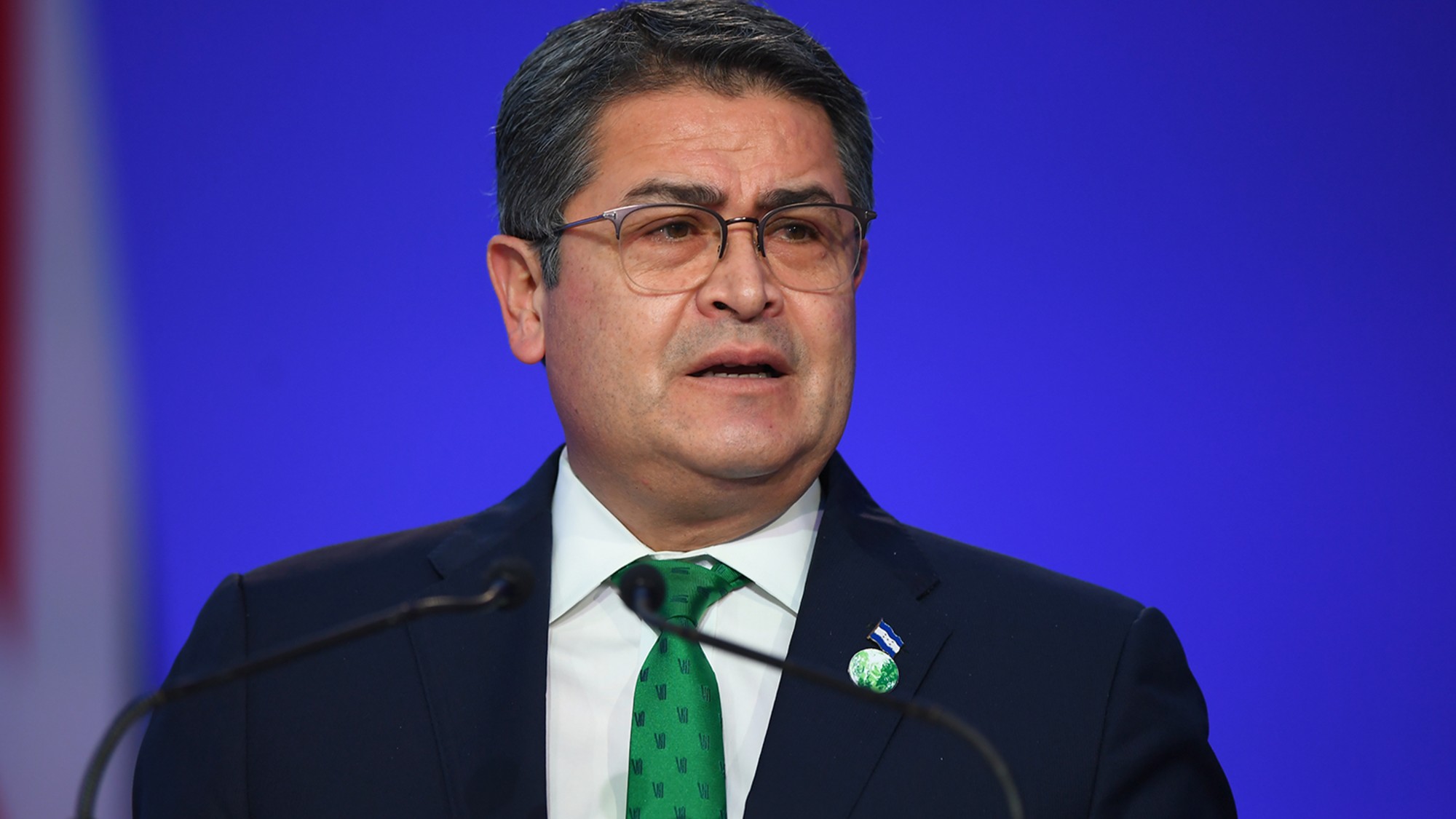
    A year into his second term, President Trump has issued more than 1,700 acts of clemency— both pardons that fully erase federal convictions and commutations that lessen sentences. In his entire first term, he issued 238. Trump’s clemency spree began on his first day back in office, when he granted clemency to nearly 1,600 people convicted or charged in connection with the Jan. 6, 2021, attack on the U.S. Capitol—including rioters who assaulted police with flagpoles and bear spray. Since then, he has issued clemency at an unprecedented clip, forgiving fraudsters, donors, drug lords, and minor celebrities. They include former Honduran president Juan Orlando Hernández, convicted of conspiring to traffic more than 400 tons of cocaine to the U.S.; Ross Ulbricht, founder of the dark web drug bazaar Silk Road; private equity exec David Gentile, who ran a $1.6 billion Ponzi scheme; and Adriana Camberos, a California fraudster who received clemency in Trump’s first term for a separate financial crime. Most recipients have styled themselves as victims of lawfare and a “weaponized” Biden-era Justice Department. Some have paid Trump-world insiders and consultants to campaign for clemency and have invested in Trump family businesses. Justice Department pardon attorney Ed Martin, a vocal defender of Trump’s bogus claims of fraud in the 2020 election, says a common philosophy guides all decisions: “No MAGA left behind.” 

    Is this how the process is supposed to work? 
    Not according to the Founders. The president’s pardon power, enshrined in the Constitution and rooted in English kings’ ancient “prerogative of mercy,” was initially conceived as a relief valve in cases of unjust prosecution or convictions. A president needed the power to make exceptions to the law for “unfortunate guilt,” Alexander Hamilton wrote in 1788, lest the justice system become “too sanguinary and cruel.” Hamilton thought the power was especially useful “in seasons of insurrection or rebellion,” when the speedy granting of mercy by the president—without the need for debate in Congress—would help “restore the tranquility of the commonwealth.” President George Washington issued the first pardons in 1795, saving two men sentenced to hang for treason over their involvement in the Whiskey Rebellion. “The misled,” Washington said, “have abandoned their errors.” 

    What did other presidents do? 
    Most used the power sparingly, and typically issued grants at the end of their term, to avoid controversies that could swamp the day-to-day business of governance. There have been exceptions. Andrew Johnson issued blanket pardons for all Confederate soldiers and officials in 1868, in an attempt to heal the wounds of the Civil War. Other presidents deployed clemency as a corrective for crimes no longer considered serious, such as Jimmy Carter granting amnesty to 200,000 Vietnam draft dodgers and Joe Biden to thousands of people convicted of marijuana possession. But the use of clemency for political and seemingly personal reasons increased sharply in the past half-century, with the turning point being the 1974 pardon of former president Richard Nixon by his successor and former vice president, Gerald Ford, a month after Nixon resigned over the Watergate scandal. In 2001, Bill Clinton pardoned Democratic donor and fugitive financier Marc Rich; in 2007, George W. Bush commuted the sentence of vice-presidential aide Scooter Libby; and in his final weeks in office, President Biden pardoned his son Hunter for gun and tax evasion charges and issued a string of pre-emptive pardons to protect family members and officials from retribution by the incoming Trump administration. Those decisions “smacked of nepotism and favoritism,” said Kimberly Wehle, a law professor at the University of Baltimore. But clemency under Trump has become an “instrument of corruption.” 

    Is there evidence of corruption? 
    A new pardon-shopping industry has emerged, with lobbyists telling The Wall Street Journal that their going rate is $1 million. Crypto exchange Binance paid about $800,000 to lobbyists to secure clemency for its founder, Changpeng Zhao, who pleaded guilty in 2023 to enabling money laundering. Trump pardoned him in October, saying he had “no idea” who Zhao was; he didn’t mention that Binance has done billions of dollars in business with World Liberty Financial, the Trump family’s main crypto firm. Paul Walczak, convicted of evading more than $10.9 million in federal taxes while running a health-care empire, was pardoned in April just a month after his mother attended a $1 million fundraiser for Trump. Other pardons have been issued to political allies, such as Trump’s former personal lawyer Rudy Giuliani and others accused of trying to overturn the 2020 election, and to reality-TV couple Julie and Todd Chrisley, whose daughter Savannah is a vocal presence in the MAGA-sphere. The power to pardon is “being totally and thoroughly politicized,” said Liz Oyer, who was fired as U.S. pardon attorney last year after she refused to reinstate the gun rights of Trump-backing actor Mel Gibson. It’s turning into a benefit for “those who are supporters of the president and not for those who do not express political loyalty.” 

    What are the consequences of that change? 
    Victims of those granted clemency by Trump say they are being denied justice—and often financial compensation. When Trump commuted the sentence of Ponzi schemer Gentile, he also declared that the fraudster will not have to pay the $15.5 million in restitution associated with his conviction. “It is disgusting,” said CarolAnn Tutera, 70, who invested more than $400,000 with Gentile’s company. “I have to keep working to make up for what I was owed.” Many other victims will likely never see a cent: The criminals pardoned by Trump in his first year owed more than $298 million in fines and restitution. This degradation of the pardon system will incentivize and entrench both political and corporate corruption, warns Casey Michel, a kleptocracy specialist at the Human Rights Foundation. “How stupid a corporate leader do you have to be,” he said, “to continue complying with rules and regulations that are no longer even enforced?”


    Only in America

    Ahead of a recent massive winter storm, Homeland Security officials instructed FEMA staffers to avoid using the word “ice” in bulletins, out of concern that warnings like “watch out for ice” would be turned into online memes aimed at Immigration and Customs Enforcement (ICE). Officials suggested FEMA instead employ the term “freezing rain,” which the agency used in communications throughout the storm. 


    talking points

    Minneapolis: The power of a boy’s photo

    “When I first saw the photograph of Liam Conejo Ramos,” said Ka Vang in The Minnesota Star Tribune, “my breath caught.” The 5-year-old Ecuadorian boy, detained last week by federal immigration agents on his way home from school in suburban Minneapolis, is seen wearing a “blue bunny hat with floppy white ears” and a Spider-Man backpack while “surrounded by ICE agents twice his size.” The Trump administration claimed Ramos’ father had “abandoned” him when ICE agents tried to arrest him, “and that ICE merely stepped in to help.” But this was “cruelty cloaked as concern,” and agents shipped the boy along with his father to a detention center in Texas—1,300 miles from his mom and home. In 1972, the “Napalm Girl” photo of “a child running naked in the street” helped pull Americans out of their “indifference” to the Vietnam War, said Philip Kennicott in The Washington Post. Will the image of the downcast little boy in the bunny hat “shock Americans into demanding an end to this cruelty?” 

    Sorry, but the media’s version of this story strains “credulity,” said Noah Rothman in National Review. Activists and school officials claimed ICE agents stole Ramos from his family. But the Department of Homeland Security said the officers stayed with the child for his own safety, after his father fled from them. Once Ramos’ father was apprehended, the pair “reunited in DHS custody,” per the agency’s protocol. The official version is “hardly nefarious.” 

    The official version is filled with lies, said Lisa Jarvis in Bloomberg. First of all, Ramos’ father was in the U.S. legally, on an active asylum claim, and had no criminal record. Secondly, why wasn’t the boy turned over to his mother or other family members? DHS claims that Ramos’ pregnant mother and other relatives “refused” to take him, but witnesses said ICE agents tried to use the boy as “bait” to lure them out of the house. They were too terrified to go outside. So agents took the 5-year-old as punishment, traumatizing him and his mom. In Minneapolis and other cities, many children are now living with constant anxiety about coming “home from school to find that someone in their family has disappeared,” or that they, too, will be grabbed by scary masked men. “What are we doing to our kids?”


    people

    Seyfried’s wild menagerie

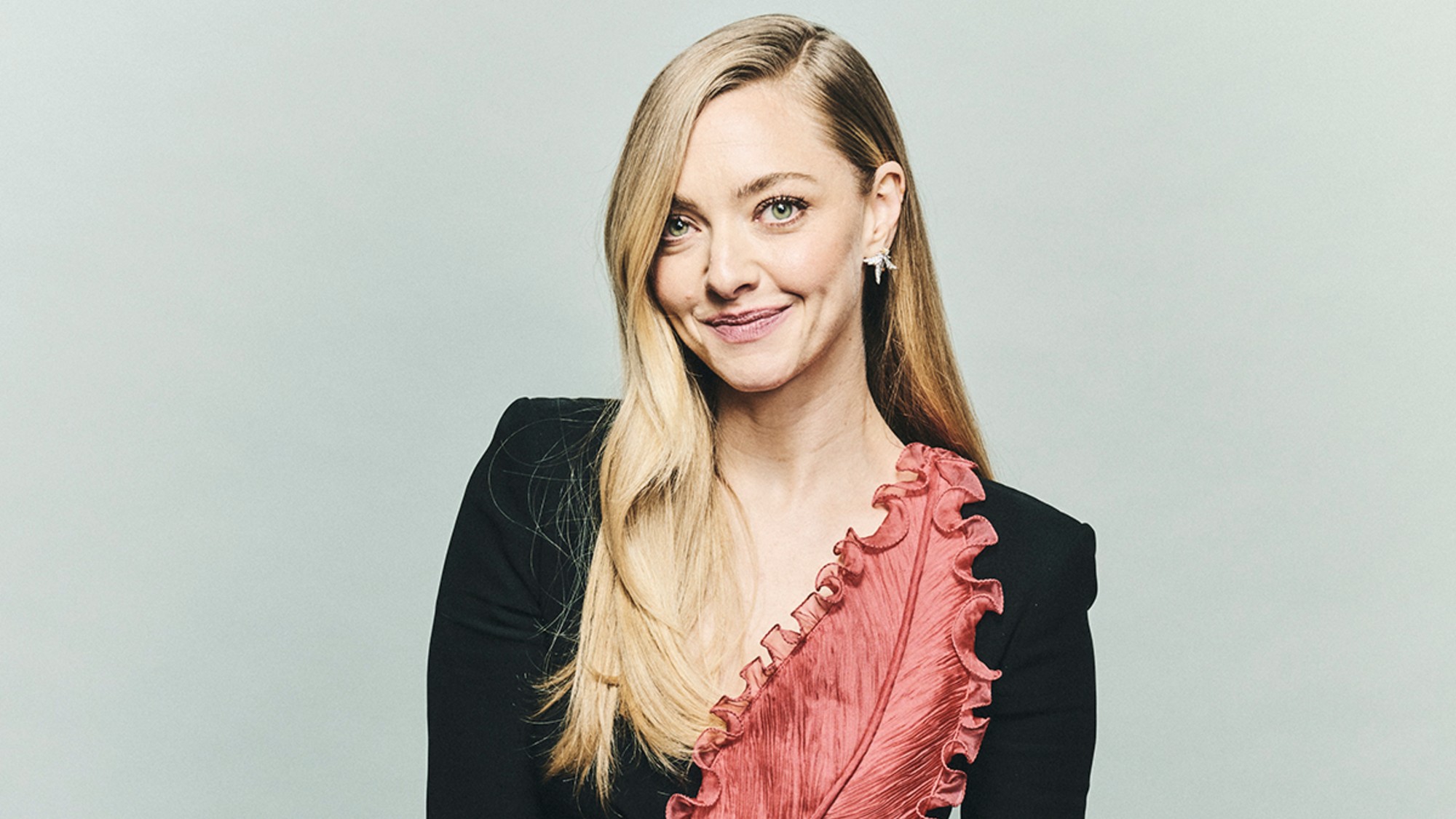
    Amanda Seyfried resides far from Hollywood, on an upstate New York farm with her husband, two kids, and 52 animals, said Rachel Syme in The New Yorker. “I had to count recently,” the actress says of her flock, which is mostly made up of rescues. “But I say that having been gone for two weeks. More might have shown up.” Goats, ponies, ducks, and chickens roam alongside a donkey, a rabbit, and a quarter horse named Officer Herman, who used to serve in the NYPD. “His legs are all f---ed up.” Seyfried, 40, also has a bearded dragon. Taking care of the lizard, it turns out, is no joke. “It’s like breastfeeding. I had gotten so much information before I had my kids, and then I breastfed for the first time, and it was, like, ‘I didn’t know any of this.’ With bearded dragons, it’s the same. Nobody talks about how hard it is to keep [one] alive.” Can’t you just feed them crickets? “They eat worms. And sometimes you don’t feed them at all, because if you feed them too much before they brumate”— enter a hibernation-like state—“it’ll kill them. It’s ridiculous.” Does the lizard have a personality? “I was told it has a brain that is like the static on TV. I don’t believe that. There’s a pretty shallow internal life in there, but there’s still an internal life.”


    Saturday Wrap was written and edited by Theunis Bates, Chris Erikson, Bill Falk, Allan Kew, Bruno Maddox, Rebecca Nathanson, Tim O'Donnell, and Zach Schonbrun.

    Image credits, from top: Getty; Getty; Columbia Heights Public Schools; Getty
     

    Recent editions

    • Evening Review

      The return of the 2020 election

    • Morning Report

      Trump and Democrats strike deal as shutdown looms

    • Evening Review

      A Republican gun rift

    VIEW ALL
    TheWeek
    • About Us
    • Contact Future's experts
    • Terms and Conditions
    • Privacy Policy
    • Cookie Policy
    • Advertise With Us
    • FAQ
    Add as a preferred source on Google

    The Week is part of Future US Inc, an international media group and leading digital publisher. Visit our corporate site.

    © Future US, Inc. Full 7th Floor, 130 West 42nd Street, New York, NY 10036.