The Week The Week
flag of US
US
flag of UK
UK
https://cdn.mos.cms.futurecdn.net/flexiimages/jacafc5zvs1692883516.jpg

SUBSCRIBE & SAVE

Less than $3 per week

Sign in
  • View Profile
  • Sign out
  • The Explainer
  • The Week Recommends
  • Newsletters
  • Cartoons
  • From the Magazine
  • The Week Junior
  • Student Offers
  • More
    • Politics
    • World News
    • Business
    • Health
    • Science
    • Food & Drink
    • Travel
    • Culture
    • History
    • Personal Finance
    • Puzzles
    • Photos
    • The Blend
    • All Categories
  • Newsletter sign up Newsletter
  • Saturday Wrap, from The Week
    Minneapolis shooting, Zelenskyy’s new chief of staff, and Venezuela’s uncertain future

     
    Talking Point

    The rise of the spymaster: a ‘tectonic shift’ in Ukraine’s politics

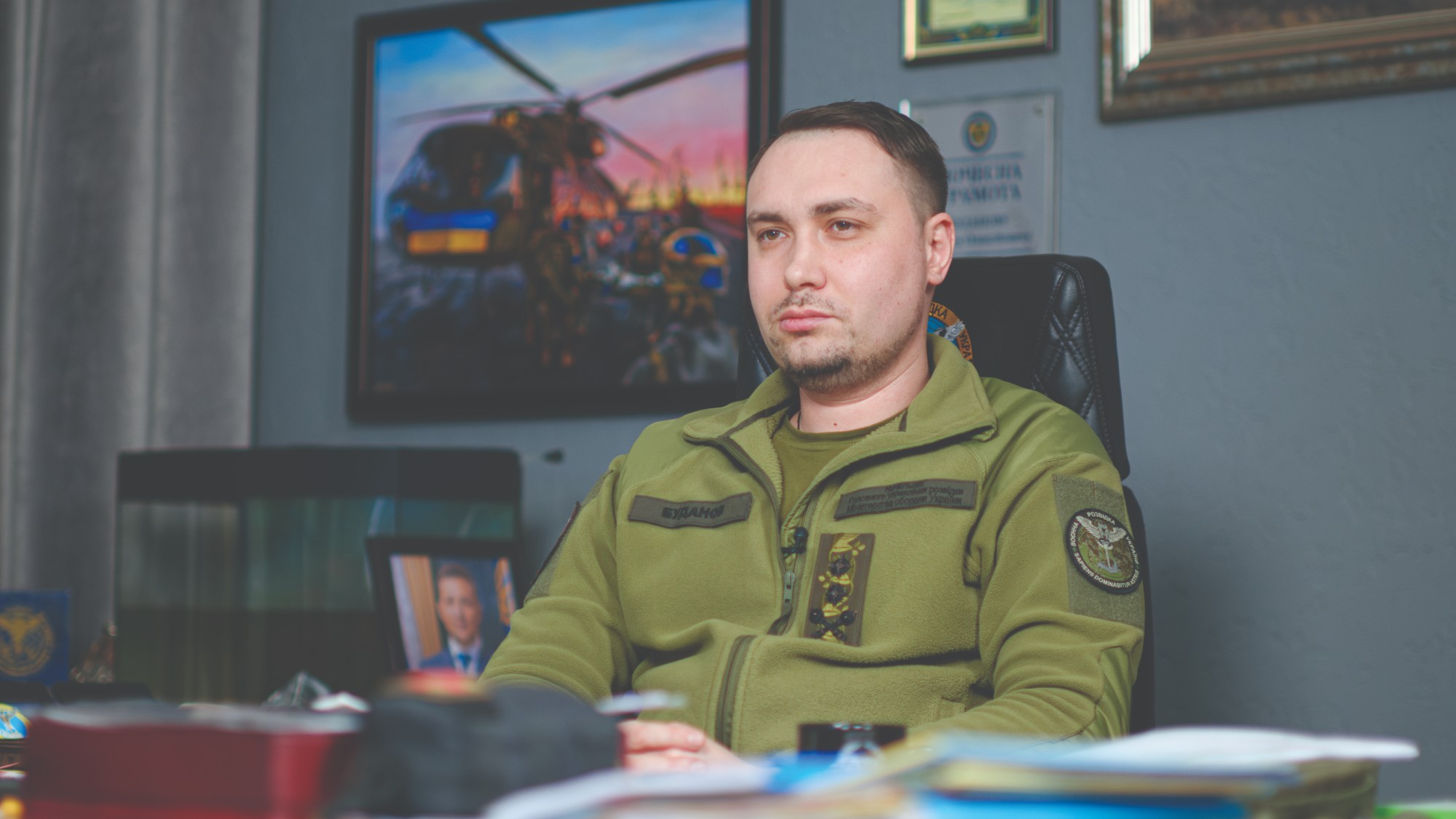
    “The man without a smile”, they call him, said Meduza. Known for his cold stare and for surviving 10 assassination attempts, Kyrylo Budanov, until this month the head of Ukraine’s military intelligence service (HUR), is renowned for daring operations against the Russians – the bomb attacks on the bridge to Russia-occupied Crimea, for example. Just after Christmas, he even tricked Russian spooks into handing over half a million dollars in bounty money for the killing of the general of a pro-Ukraine Russian militia, a death the HUR had faked. He’s a popular figure in Ukraine; some polls show he’s more trusted than President Zelenskyy. Last week, relieving him of his spymaster duties, Zelenskyy made him chief of staff. 

    That decision marks a “tectonic shift” in Ukrainian politics, said Jamie Dettmer on Politico. The man he has replaced, in a major shake-up of top officials, is Andriy Yermak, who was such a close confidant of Zelenskyy’s that he was “virtually a co-president”. But he was also mired in an energy corruption scandal, and for too long the “stubborn” Zelenskyy had resisted calls for his sacking. It was a bold, albeit belated, move on the president’s part, said Pavlo Vuets in Glavkom. Yermak, who had no love for Budanov and tried to get him sacked as spy chief, had “consciously absorbed all the negativity that fell on the presidential mantle”. Budanov has no such inclinations: indeed, he no doubt hopes to replace Zelenskyy should an election be held in the near future. It’s actually a smart move on the president’s part, said Tadeusz Iwanski on Polskie Radio. Appointing the highly popular Budanov to lead his team will bring “renewed lustre” to Zelenskyy, whose approval ratings have been sliding. Budanov’s rise bodes well for Ukraine’s prospects in peace talks, too. He’s well liked by the Americans, who view him as a credible negotiator, untainted by corruption and more willing than Yermak to make the needed compromises as Ukraine struggles with troop shortages, renewed attacks on its energy infrastructure, and pressure from Donald Trump to agree terms with the Kremlin. 

    Some senior Ukrainians see Budanov’s elevation as the start of “Operation Successor”, said Roman Romaniuk in Ukrainska Pravda. Yet it’s hasty to assume that Zelenskyy is heading for the exit. For a start, he has cut his protégé off from his base in HUR by choosing a Yermak ally as his successor as spy chief. Yes, Zelenskyy is happy to let Budanov become a serious political player, but only if “he plays strictly within Zelenskyy’s own team”.


    Spirit of the age

    Clinics and therapists say they are seeing a growing number of people who suffer from what they’ve termed “longevity fixation syndrome”. It describes an all-consuming obsession with living longer (or even for ever). Doctors say new technologies have raised the possibility of ultra-long lives – and in Silicon Valley and elsewhere, big business is now cashing in.


    talking point

    Venezuela: a strange kind of regime change

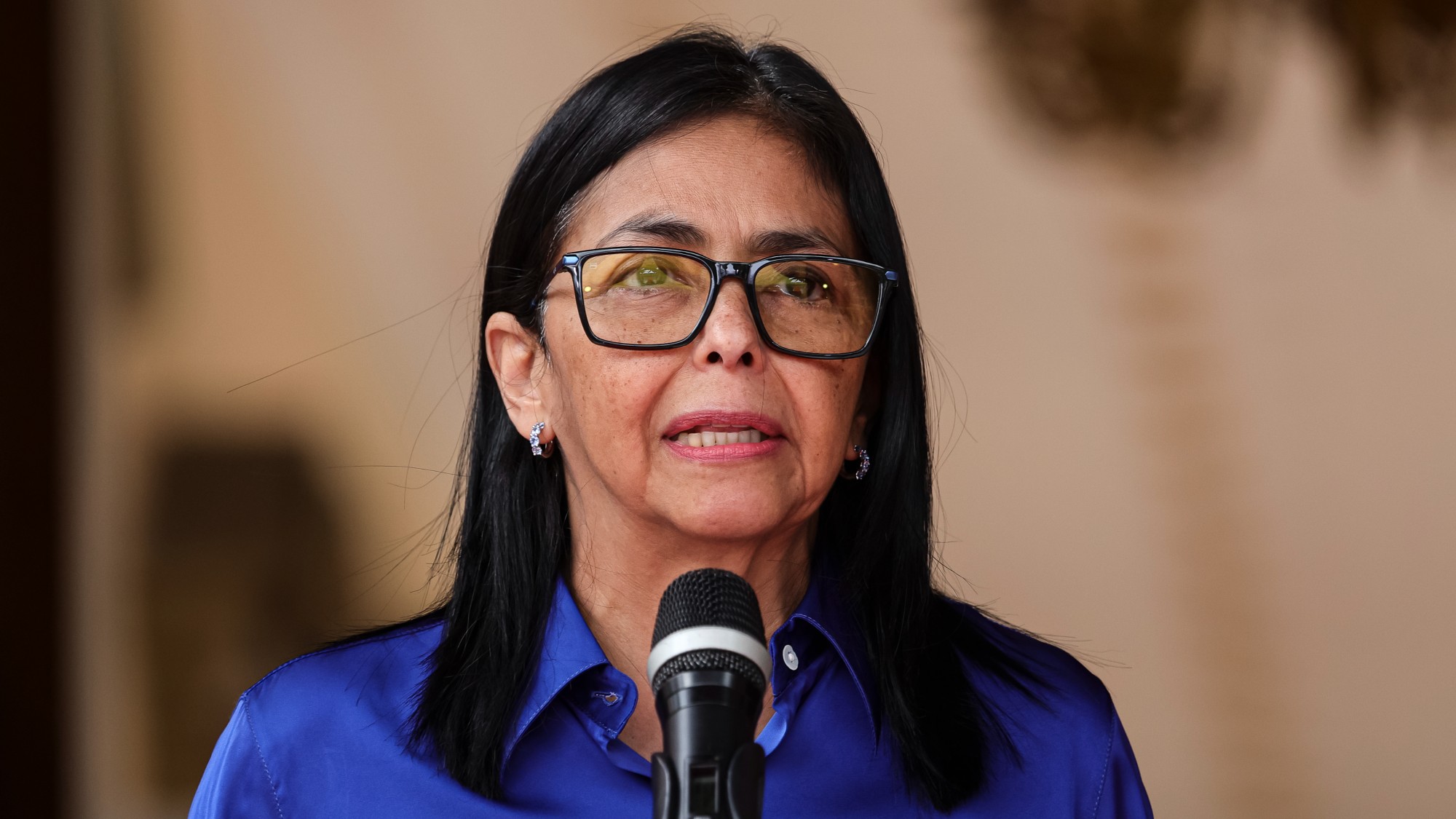
    After months of military build-up, deadly strikes at sea and threats of a ground war, the US finally attacked Venezuela on 3 January, and seized its president, Nicolás Maduro, said Alejandro Velasco in The Guardian. It seemed a momentous event; yet 48 hours later, little else had changed in Caracas. Regime-backed paramilitaries were once again patrolling the streets; and the country was being led not by the opposition – whose candidate was widely recognised as the true winner of the 2024 election – but by Maduro’s deputy, Delcy Rodríguez (pictured above). If this is regime change, it is a strange sort. Add in the minimal military resistance that met the US forces, and it points to a clear possibility – that Maduro’s inner circle had struck a deal to give up their leader, in exchange for staying in power. For the US, this would have made sense: the success of the raid would serve as an awesome show of American might; leaving Maduro’s regime in place would help it avoid the “quagmire” of nation rebuilding. 

    Having analysed the failed US interventions in Iraq and Afghanistan, Trump officials concluded that, in such cases, only two strategies can work, said Matthew Kroenig in Foreign Policy: committing 100,000 troops to remain indefinitely while a democratic state is built; or hitting the leadership hard, then rapidly pulling out, with a warning to the next regime to fall into line. They opted for the latter. The US’s priority now is not the well-being of Venezuela’s people; instead it wants to coax the acting president to pursue policies that are in its financial and security interests by using its economic and military power as carrot and stick. However, if Rodríguez does, for instance, enable US firms to ramp up oil production, the presumption is that the people will also prosper. 

    But is even that realistic? Venezuela’s heavy sour crude will cost billions to extract, said Michael Haigh in the Financial Times. Having had their fingers burned in Venezuela before, US oil giants won’t want to invest again until it has a stable government. Rodríguez’s is not that, said Benedict Smith in The Telegraph. She is a force to be reckoned with, but her position depends on two other powerful figures – Defence Minister General Vladimir Padrino López, and Interior Minister Diosdado Cabello, who has a power base in the security services and in the colectivos paramilitaries. Her challenge will be to keep those rivals on side while placating US demands to expel Iranian and Cuban operatives, stop selling oil to US adversaries and crack down on drug trafficking. If she fails, Venezuela could rapidly descend into chaos.


    controversy of the week

    Death in Minneapolis: a shooting dividing the US

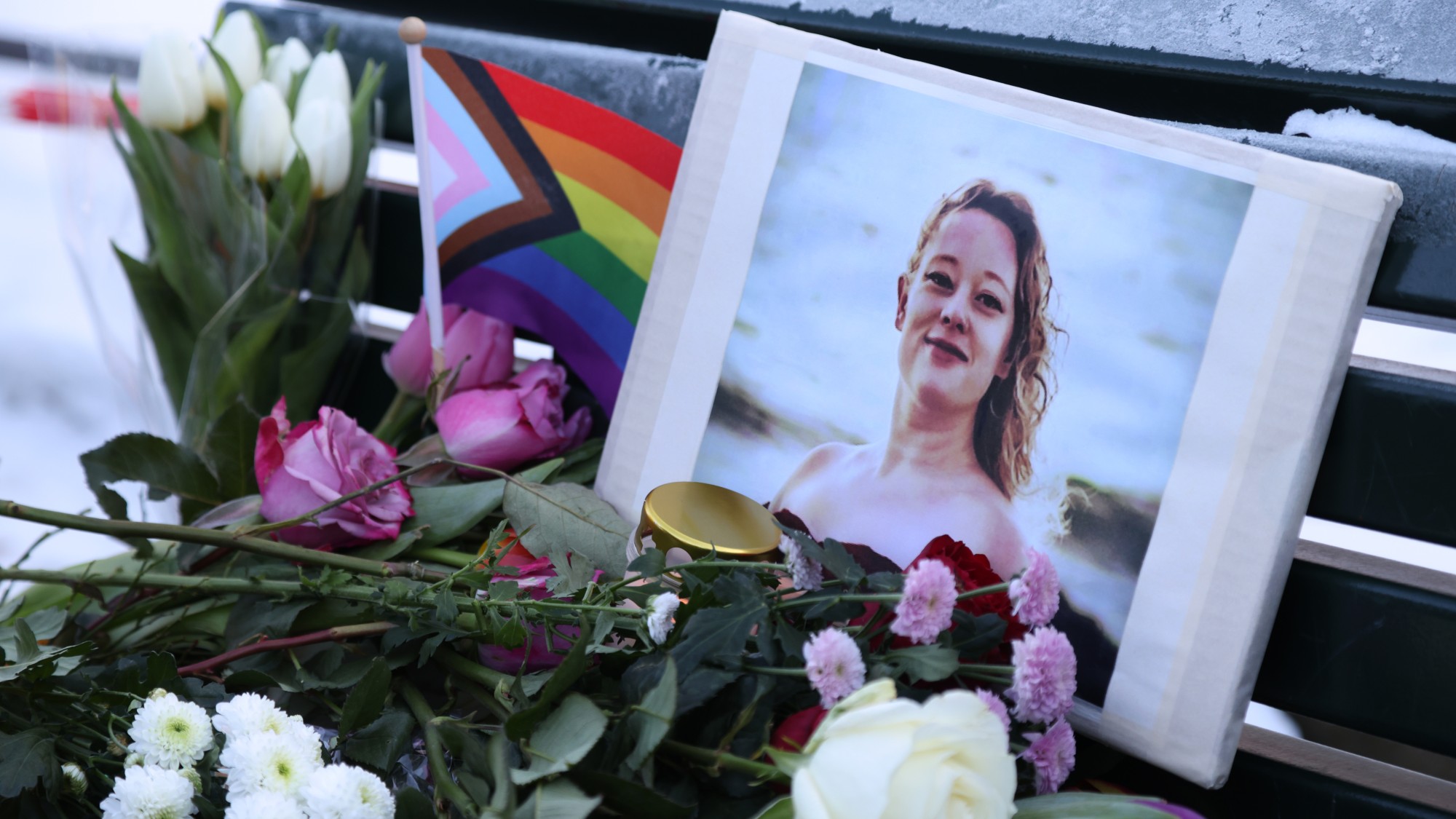
    How America has changed, said Molly Olmstead on Slate. When George Floyd was murdered by a police officer in Minneapolis in 2020, the country was united in horror. Republican commentators expressed their shock at the killing; President Trump called it “sickening” and “revolting”. Compare that with the response to the killing last week of Renee Nicole Good, a 37-year-old mother of three, who was shot by an Immigration and Customs Enforcement (Ice) officer just a mile from where Floyd died. Within hours, the administration was slandering her. A Department of Homeland Security spokesperson claimed that she’d “weaponised her vehicle” in an attempt to kill Ice officers, in “an act of domestic terrorism”. A Fox News pundit accused Democrat leaders of emboldening “thugs” to attack law enforcers. Vice President J.D. Vance called Good a “deranged Leftist”. All this despite an abundance of video evidence suggesting that Good’s killing was unjustified. 

    The lies were shocking, said Adam Serwer in The Atlantic. Officials could have pleaded patience while the full facts were established, yet they chose instead to spout falsehoods, such as that there were riots at the scene. “The federal government now speaks with the voice of the right-wing smear machine: partisan, dishonest and devoted to vilifying Trump’s perceived enemies rather than informing the public.” Trump was the worst offender, said Eric Levitz on Vox. He condemned Good on social media as a “professional agitator” who had “violently, wilfully, and viciously” run over the Ice officer who shot her. “Based on the attached clip,” he said, “it is hard to believe he is alive, but is now recovering in hospital.” Anyone who has seen footage of the event knows that’s nonsense. While the officer might have been clipped by the bumper of Good’s SUV as she turned to drive off, he clearly wasn’t run over. After firing through the windshield and open driver window, he calmly re-holstered his gun and walked away. It’s frightening. “If Ice agents know that they can kill US citizens on video – and still count on the president to lie in support of their freedom – Americans’ most basic liberties will be imperilled.” 

    Let’s keep things in perspective, said Charles C.W. Cooke in National Review. To listen to some people, you’d think Ice agents were wandering around randomly executing people. While Good certainly didn’t deserve to die, she did appear to disobey police orders. The agent who fired at her, Jonathan Ross, may well have feared for his life, said The Wall Street Journal. He reportedly received dozens of stitches last year after a fleeing car dragged him about 300 feet. Both sides need to lower the temperature. It’s not helpful for Mayor Jacob Frey to demand that federal immigration officials “get the f**k out of Minneapolis”. Trump should also tone down his rhetoric and reconsider his aggressive deployment of Ice agents. “His mass deportation policy is already unpopular and will become more so if there are more such violent incidents.” 

    On the contrary, the row over Ice may serve as a useful distraction for Trump, said Ed Kilgore in New York Magazine. At a time when his ratings have slumped and the Democrats are making headway by relentlessly highlighting cost-of-living issues, shifting the battleground towards immigration, crime and policing puts the Republicans in “more familiar and comfortable” territory. Hence why they were so eager to misrepresent the circumstances of Good’s death. Beyond the desire to show deference to Trump, they recognised that, facts aside, “support for the shooter is good politics for the GOP”.


    viewpoint

    Team politics

    “Modern politics is a team sport. You choose a team for rational reasons – it is local, or it is winning, or it plays with style – but after that, the attachment reinforces itself. Almost no turn of events can break it. I don’t doubt that, in 2016, lots of people chose Donald Trump for his opposition to foreign wars or the carnival of lobbying that is Washington, or for some other good reason. But once they were in, they were in. Point out to them how far he has veered from those ideas over the decade, and the response is a shrug, as though only a pedant would care. Pity future historians, who will have to get their heads around how simultaneously empty and dangerous our times were.”

    Janan Ganesh in the Financial Times


    It wasn’t all bad

    The 14-metre-tall Britton Organ – one of our largest and loudest musical instruments – was played again in public for the first time this week following an eight-year restoration. The organ, which has more than 5,300 pipes, was made in 1956 for Bristol’s Colston Hall (now Bristol Beacon), and by 2018 it needed serious work. The whole thing was dismantled and taken to specialist restorers in Durham, but the organ is back – and on Sunday, Anna Lapwood played it to a sold-out crowd.


    People

    Billy Bob Thornton

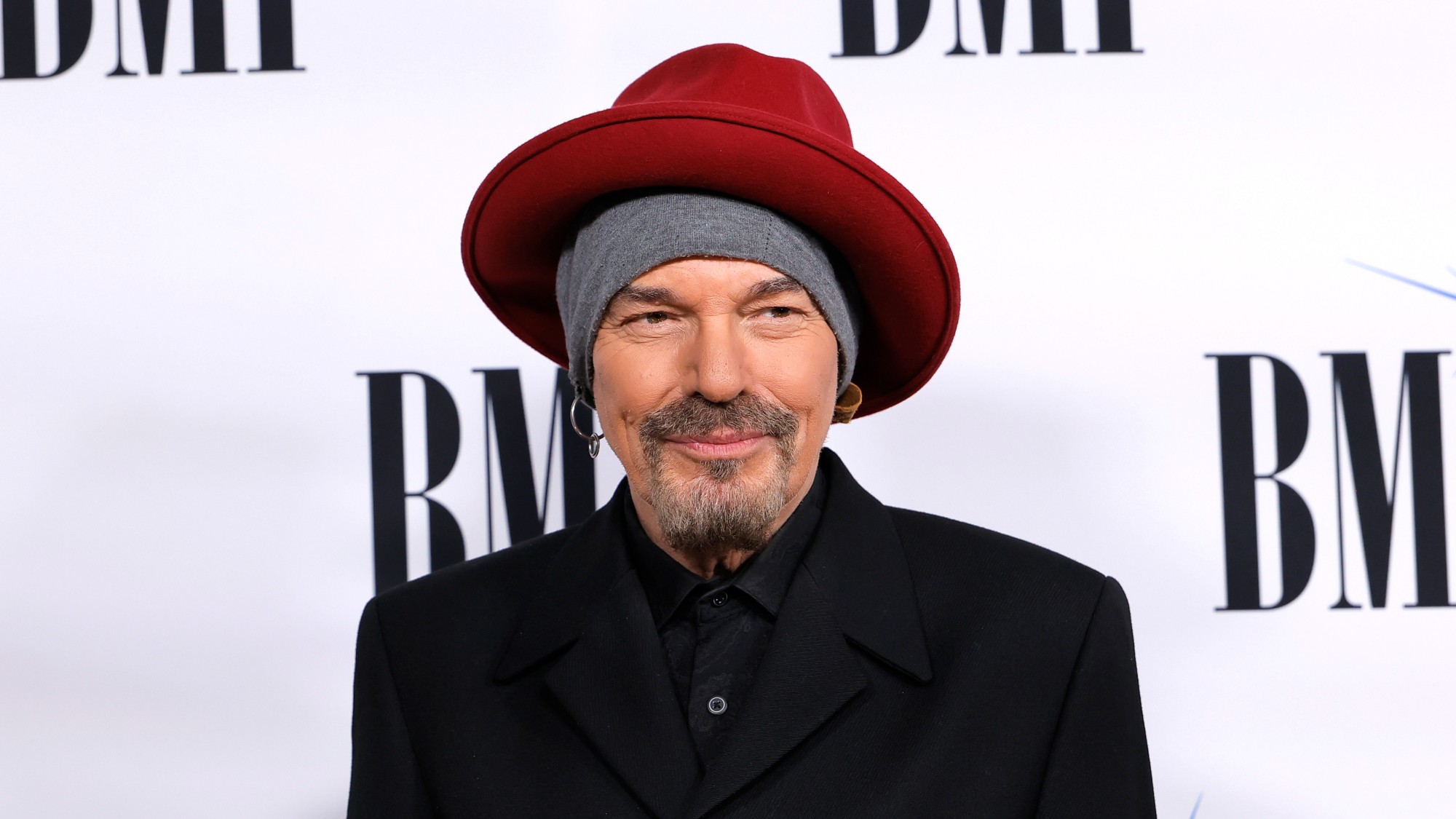
    Billy Bob Thornton has long been open about his obsessive compulsive disorder – and the idiosyncratic range of phobias it has left him with: the actor is afraid of things from Komodo dragons to French antiques. He traces the disorder back to his unstable childhood in rural Arkansas, and the violence he experienced at the hands of his father.

    “It’s a protective thing,” he told John Jurgensen in The Wall Street Journal. “My dad was very abusive. He’d get home from work around 4 o’clock. I used to look at the clock and say, ‘If I can count to a hundred 11 times before I hear the car come into the driveway, everything’s going to be OK.’

    “If you’re a kid who has no control over anything, it might be the only thing that gives you any peace of mind. And that’s how I’ve operated ever since.”


    Image credits, from top: Adam Berry / Getty Images; Vitalii Nosach / Global Images Ukraine / Getty Images; Jesus Vargas / Getty Images; Tibrina Hobson / Getty Images
     

    Recent editions

    • Saturday Wrap

      Trump’s oil grab

    • Evening Review

      The momentum to impeach Noem

    • Morning Report

      Trump escalates Minneapolis threats

    VIEW ALL
    TheWeek
    • About Us
    • Contact Future's experts
    • Terms and Conditions
    • Privacy Policy
    • Cookie Policy
    • Advertise With Us
    • FAQ
    Add as a preferred source on Google

    The Week is part of Future US Inc, an international media group and leading digital publisher. Visit our corporate site.

    © Future US, Inc. Full 7th Floor, 130 West 42nd Street, New York, NY 10036.