The Week The Week
flag of US
US
flag of UK
UK
https://cdn.mos.cms.futurecdn.net/flexiimages/jacafc5zvs1692883516.jpg

SUBSCRIBE & SAVE

Less than $3 per week

Sign in
  • View Profile
  • Sign out
  • The Explainer
  • The Week Recommends
  • Newsletters
  • Cartoons
  • From the Magazine
  • The Week Junior
  • Student Offers
  • More
    • Politics
    • World News
    • Business
    • Health
    • Science
    • Food & Drink
    • Travel
    • Culture
    • History
    • Personal Finance
    • Puzzles
    • Photos
    • The Blend
    • All Categories
  • Newsletter sign up Newsletter
  • Saturday Wrap, from The Week
    A by-election to savour, the US empire, and China’s military purge

     
    Briefing of the week

    American empire: a history of imperial expansion

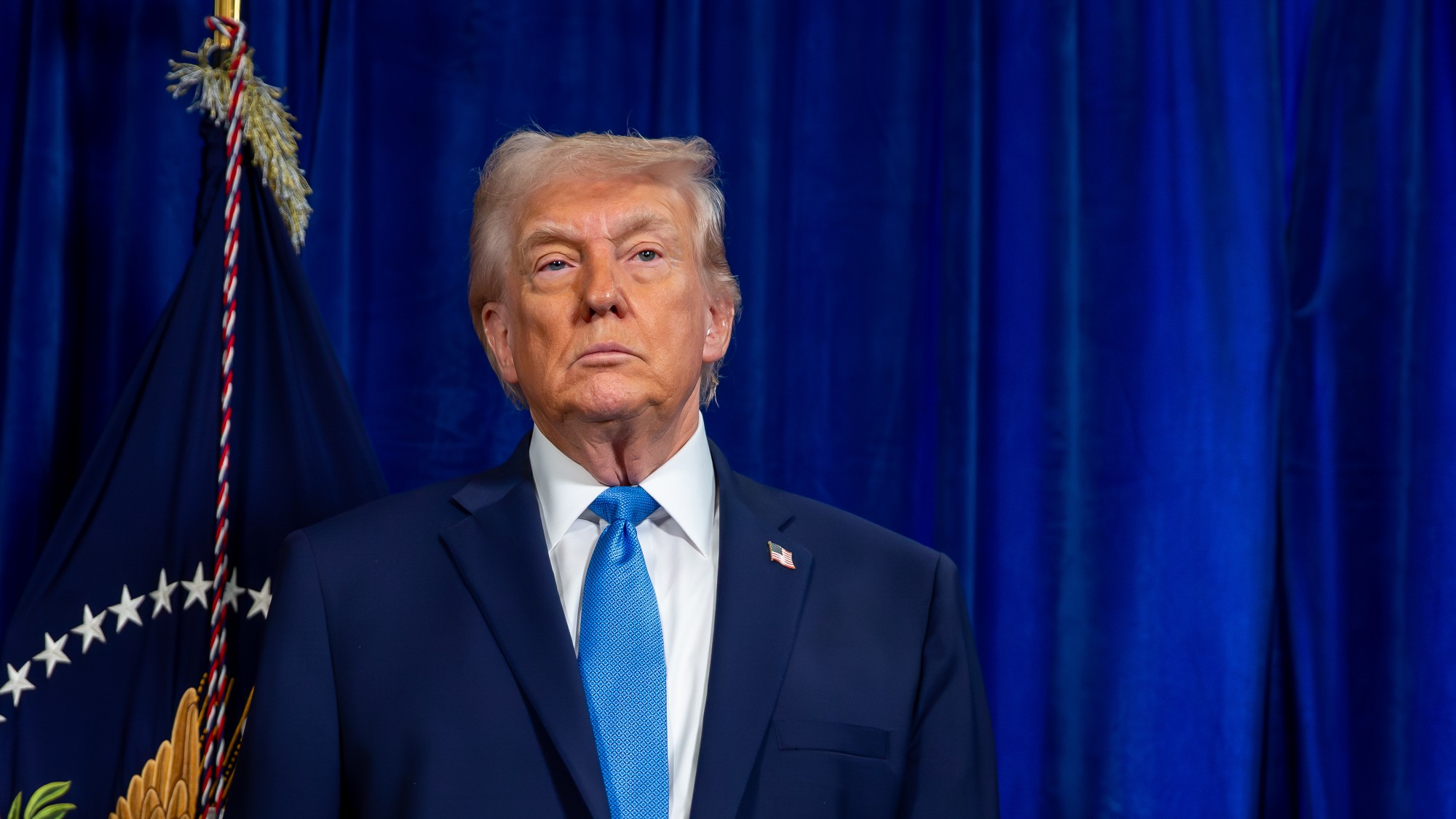
    President Trump has revived the 19th-century Monroe Doctrine to justify his aggressive foreign policy over the Americas

    What is the Monroe Doctrine?
    In December 1823, President James Monroe declared in his State of the Union address that “the American continents ... are henceforth not to be considered as subjects for future colonisation by any European powers”. In the years before, Spain’s vast empire in the Americas had collapsed: Venezuela, Mexico and around a dozen other former colonies had won independence and opened their once-closed ports to American and British trade. Rumours were circulating that Spain might try to reconquer its New World possessions, while Russia claimed control of the Pacific Coast from Alaska to Oregon. Monroe’s statement was, at the time, quite limited: he said that the US would “not interfere” with existing colonies (Britain and Spain’s Caribbean territories; and Russia’s in Alaska, which lasted until 1867).

    Did other countries take Monroe’s warning seriously?
    Not initially. The young US was not yet a major military power, making the policy more of an aspiration than a declaration of intent; it was not known as the “Monroe Doctrine” until the 1850s. And it did not, for instance, stop the French from invading Mexico and installing a puppet monarch, the Austria-born Maximilian I, in 1864, while the US was distracted by the American Civil War. It was only as the century came to an end that America started to meaningfully enforce and broaden the doctrine, during what became the nation’s only period of out-and-out imperial expansion beyond the continental United States.

    How did US policy change?
    The Monroe Doctrine was invoked during the 1898 Spanish-American War, when the US helped liberate Cuba from Spanish rule – and also took direct control of Madrid’s former possessions of Puerto Rico, Guam and the Philippines (which the US held until 1946). In that year, the US also annexed Hawaii. Emboldened, President Theodore Roosevelt would radically expand the doctrine after taking office in 1901. When British, German and Italian gunboats blockaded Venezuelan ports in 1902 to collect debts, he told the Europeans to strike a deal quickly with the dictatorship in Caracas or see a US fleet dispatched against their ships. The Europeans complied. In 1904, he laid out what became known as the Roosevelt Corollary to the Monroe Doctrine. The US, he said, must act as “an international police power” to keep America’s backyard “stable, orderly, and prosperous”. A period of extensive interventionism followed. 

    What did that entail?
    Between 1903 and 1934, US marines were deployed to half a dozen countries in the Western hemisphere. These included Honduras, where troops were sent seven times to quell revolutions; Nicaragua, which was occupied near-continuously from 1912 to 1933; the Dominican Republic, which US forces occupied in 1916; and Haiti, which the US controlled between 1915 and 1934.

    Why did such interventions happen?
    Their goals were to protect sea routes – including the new US-owned Panama Canal, completed in 1914 – and the interests of US companies such as United Fruit, which controlled the trade in bananas and other tropical fruits. A powerhouse in Washington, the company backed coups against elected leaders and the installation of accommodating puppet governments (hence “banana republics”). These occupations became military quagmires, in which hundreds of US soldiers and tens of thousands of civilians were killed. The “Banana Wars” became very unpopular in the US; and in 1933, the president, Franklin D. Roosevelt, put an end to them with his Good Neighbour Policy, which stressed regional cooperation over military force.

    Did FDR’s policy last?
    It did in the sense that the US became, in theory, anti-imperialist again. But in the Cold War, the Monroe Doctrine was invoked to combat the spread of Soviet-style communism across Latin America. In 1954, shortly after CIA-backed insurgents toppled a Leftist government in Guatemala, the secretary of state, John Foster Dulles, said the “intrusion of Soviet despotism” there was “a direct challenge to our Monroe Doctrine, the first and most fundamental of our foreign policies”. Over the following decades, the US covertly supported the overthrow of left-wing governments in Brazil (1964), Bolivia (1971), Chile (1973) and Nicaragua (the 1980s), among others. The historian John Coatsworth has detailed 41 interventions between 1898 and 1994, 17 direct and 24 indirect. In many of these cases (notably Guatemala and Chile), the US was implicated in atrocities: mass extrajudicial killings and forced “disappearances”. With the collapse of the Soviet Union, such interventions fell out of favour; in 2013, the then-secretary of state, John Kerry, won applause when he told an audience of Latin American officials, “The era of the Monroe Doctrine is over.”

    How has President Trump resurrected the doctrine?
    Trump keeps a portrait of Monroe in the Oval Office, and his administration’s recent National Security Strategy laid out a “Trump Corollary” to the doctrine, known as the “Donroe Doctrine”. The US, it states, will keep the Western hemisphere “reasonably stable and well-governed”, and will insist that governments cooperate to combat mass migration, drug trafficking and “hostile foreign incursion or ownership of key assets”. It soon followed through with the removal of the Venezuelan president, Nicolás Maduro – whom it accused of drug trafficking and hosting “foreign adversaries”. Trump later asserted that the US would “run” Venezuela. He has also threatened to use military force in Mexico and Colombia, to “take back” control of the Panama Canal, and to annex Greenland. The Monroe Doctrine “was very important, but we forgot about it”, Trump said last month. “We don’t forget about it any more.”

    The snatching of a strongman
    Fed up with a dictator who had overturned an unfavourable election result, and who had been indicted in the US for drug trafficking, the president ordered a military build-up – and sent in troops to grab the tyrant. The target wasn’t Maduro but General Manuel Noriega of Panama, who was toppled by President George H.W. Bush in 1989. Noriega had been a US ally, and a CIA informant. But after he’d had opponents killed, and his ties to drug cartels had been exposed, Bush demanded he step down. When Noriega refused, and an off-duty US marine was killed in Panama, Bush invaded on 20 December 1989, deploying 27,000 troops. Noriega fled to the Vatican embassy where, besieged and blasted with loud rock music, he surrendered on 3 January. He was flown to the US, and convicted of trafficking and other offences. Noriega died in 2017 in Panama, still a prisoner.

    Maduro joins a long list of Latin American and Caribbean leaders who have been dislodged by the US, from Nicaraguan president José Santos Zelaya, in 1909, to Hudson Austin, who led a Soviet-backed coup in Grenada in 1983. The great exception, of course, is Cuba’s Fidel Castro, who resisted not only the Bay of Pigs Invasion (1961) but a series of attempts on his life.



    Spirit of the age

    A film crew making a low-budget horror in Wales had to relocate the shoot to North Yorkshire, so that its actors could smoke real cigarettes. In Wales, smoking is banned on film sets, but in England it’s permitted provided the actor is smoking for the role. The team making the film, “Rabbit Trap”, said that using CGI to make fake cigarettes look real would have been too expensive.


    talking point

    The fall of the generals: China’s military purge

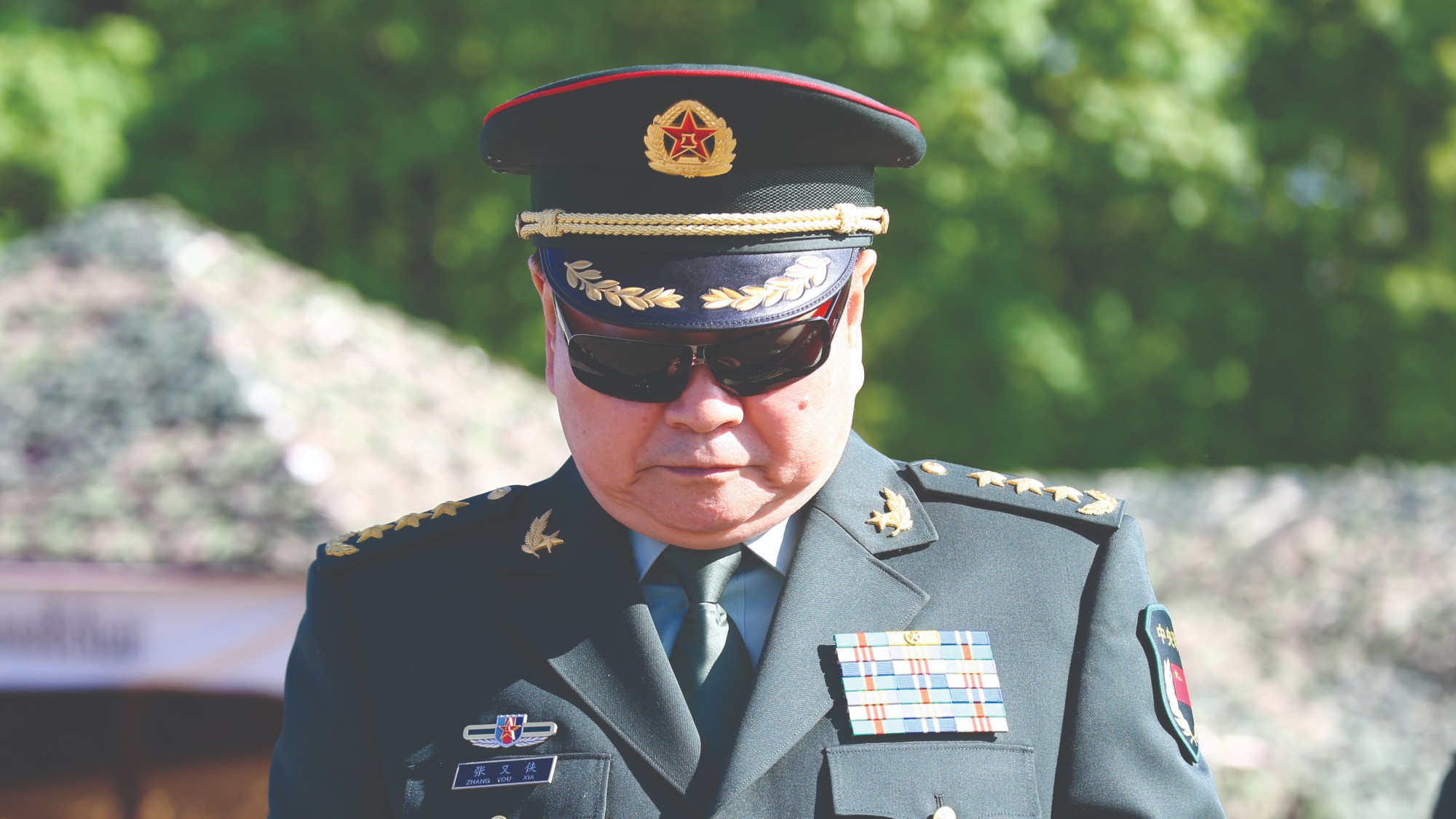
    Not since the era of Mao Zedong has China seen “a purge of this magnitude”, said The Indian Express (Noida). On 24 January, Beijing announced that the nation’s highest-ranking general, Zhang Youxia, was being investigated for “suspected serious violations of discipline and law” – party-speak for corruption. The move was extraordinary because Zhang, a Politburo member, had been one of Xi Jinping’s closest allies; both were “princelings” whose fathers were senior figures in the early Chinese Communist Party (CCP); they’ve known each other since childhood. Now, after the 75-year-old’s sudden fall from grace, China’s military hierarchy lies in tatters. Zhang and Liu Zhenli, another top general also under investigation, are set to be removed from the Central Military Commission (CMC), the body that controls the two-million-strong People’s Liberation Army (PLA). As three other members have already been expelled, this would leave only two people on the CMC – Xi himself (the commander in chief), and Xi’s anti-corruption tsar. 

    The action against the top generals is a “desperate measure”, said Youlun Nie in Nikkei Asia (Tokyo). The most likely explanation lies in the “scandalous defects” that have been discovered in the PLA, which has long been plagued by corruption. Xi has spent hundreds of billions every year to create an army capable of “fighting and winning wars” – notably to conquer Taiwan and reunite it with mainland China, but graft has turned it into something of a “paper tiger”. The hi-tech arsenal of its elite “Rocket Force” has been beset with systemic technical failures: missile tanks filled with water rather than fuel, silo lids failing to open, preventing rockets from being launched. Xi’s fear is that his supposedly world-beating missiles “might turn out to be nothing more than expensive fireworks”. 

    Zhang and Liu’s defenestration is part of a wider pattern, says Chun Han Wong in The Wall Street Journal (New York). Since mid-2023, at least 50 senior officials in the military and the defence industry have been investigated in corruption probes. What’s even more startling is that one-fifth of all senior generals promoted by Xi have either been fired or accused of wrongdoing. Xi is “stripping down his military command and starting over”. 

    The purges have led to “doubts about Beijing’s war-readiness”, said The Taipei Times. Xi’s “unprecedented reshaping of the PLA’s leadership”, doing away with generals like Zhang – a war hero who fought in the Sino-Vietnamese War of 1979 – means the top echelon is very short of much-needed combat experience. This could “weaken its capability to launch military aggression against Taiwan” in the short-term. But it doesn’t mean war is less likely, though: Xi will probably appoint replacements more willing to execute his military “blueprint”. Officers promoted in place of the old guard could be “far less likely to question Xi’s authority”, said Karishma Vaswani on Bloomberg (New York). And they’ll be more inclined to tell the president what he wishes to hear about the military – instead of the truth. 

    “These arrests are political, first and foremost,” said Deng Yuwen in Foreign Policy (Washington DC). “Anti-corruption is just a cloak in which the politics are wrapped”, as Xi amasses yet more power. This is not to say that Zhang and Liu are innocent. Corruption is so endemic in one-party China that any official can be taken down. The problem is that the rules have changed, and now no one is safe. In the past, being a member of the Politburo or a “princeling” guaranteed you protection. That’s no longer enough – just look at Zhang, who’s now in custody. Xi’s anti-corruption campaign has been running since 2012 and has investigated millions. CCP bureaucrats must be “frozen with fear”. No one will dare sign anything off, try to solve social problems, or launch reforms. The machine is “eating itself”. Who now will dare “to keep it moving forwards”?


    controversy of the week

    Gorton and Denton by-election: a ‘Frankenstein’s monster’

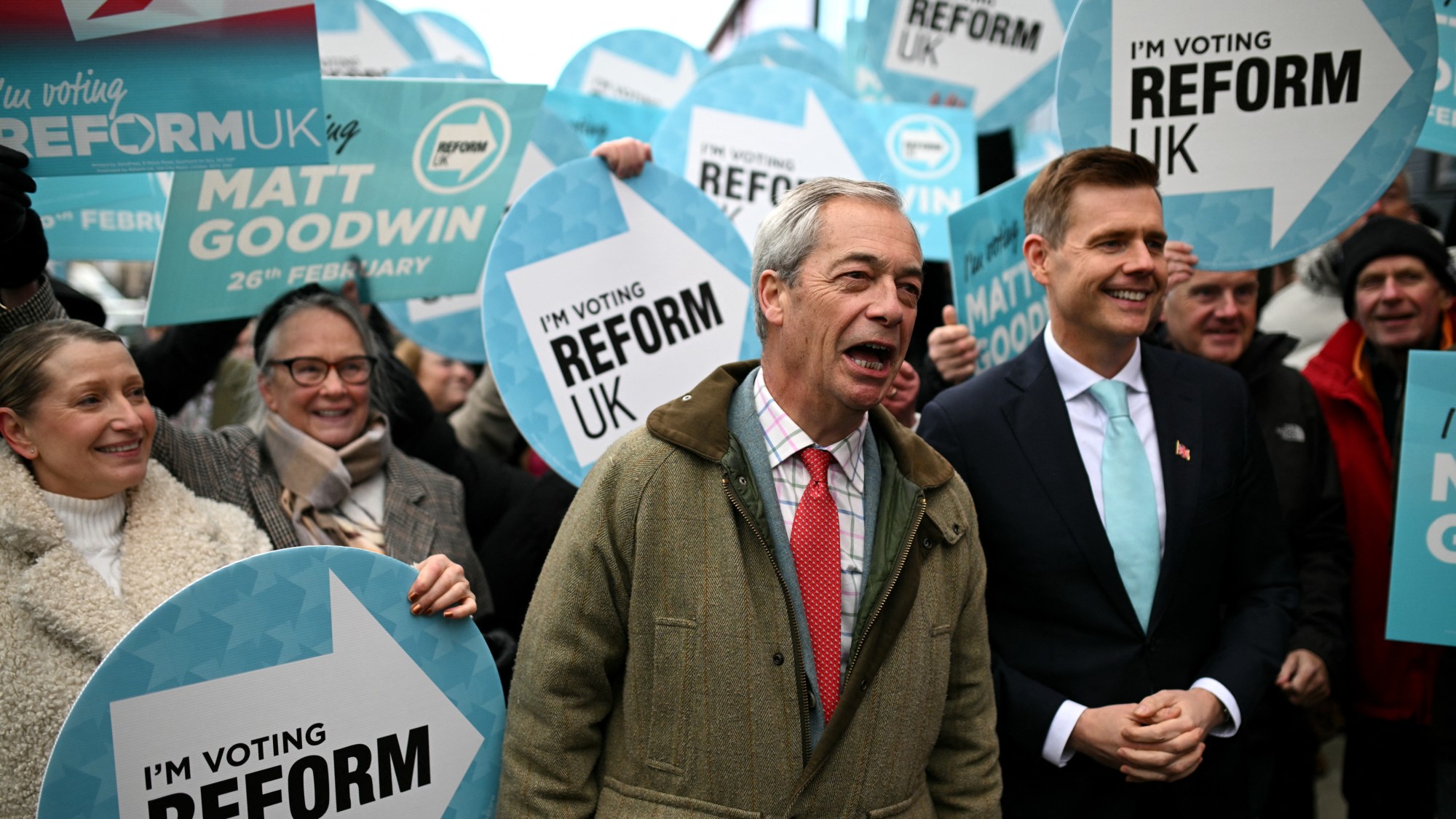
    A by-election is due at the end of this month, which “could have profound consequences for the future of both the Labour Party and British politics”, said John Harris in The Guardian. It’s being held in the Manchester constituency of Gorton and Denton, an area once regarded by one and all as a Labour stronghold. And had Andy Burnham, the Mayor of Greater Manchester, been allowed to stand, the party would have enjoyed pretty decent odds of retaining the seat. But now that Keir Starmer and his allies have blocked Burnham from taking part, there’s no certainty what might happen. Labour might still succeed in keeping the seat – it has “a formidable get-out-the-vote machine, and droves of activists” – but it’s facing a dissatisfied electorate and strong competition. The threat this time is not just coming from Reform UK, said John Rentoul in The Independent. Labour also needs to worry about the Greens, who have selected a promising candidate in Hannah Spencer, a no-nonsense 34-year-old plumber who lives in the constituency. 

    By-elections are unpredictable at the best of times, said Louise Thompson on The Conversation; what makes this one even more so is that Gorton and Denton is “a bit of Frankenstein’s monster”. The Gorton half has a high proportion of students and Muslim voters, while the Denton end is predominantly white working class; messages that work for Reform and the Greens in one area won’t go down so well in the other. That’s especially true for Reform, which has selected academic-turned-GB-News-presenter Matt Goodwin as its candidate, said Alan Rusbridger in The Independent. His controversial views – he has argued that British citizens born abroad and their children aren’t really British – will be a liability on some doorsteps. Indeed, the one thing the Greens and Labour agree on privately, said Ailbhe Rea in The New Statesman, is that Reform messed up by choosing Goodwin. 

    There are a lot of Machiavellian considerations at play in this contest, said Dan Hodges in The Mail on Sunday. Many Labour MPs are secretly hoping their party loses the by-election, as that defeat might enable them to replace Starmer with a better leader. Reform, for the same reason, wouldn’t be unduly upset if Labour won and Starmer were able to stagger on. We’re in for “a fascinating contest” in any case, said Rod Liddle in The Sunday Times. It could turn out to be a re-run of the Caerphilly election for the Welsh Senedd in October. Everyone assumed Reform would win that contest, but Plaid Cymru ended up pipping it to the post after siphoning votes from Labour. In Gorton, the Greens may likewise end up as the beneficiaries of an anti-Reform vote. The result will provide some clues about how the general election might go, “with an electorate polarised between those who wish to show their love for Nigel and those who would swallow any sort of political idiocy to stop him”.


    VIEWPOINT

    Epstein’s circle

    “The thing about Epstein’s many, many powerful [associates] is that if they ever break cover about their appearance in the files – and how terrifyingly quiet they’re all being – they tend to say they had no idea about his crimes. And yet, if one of your friends or my friends went to jail for a year, even if they told us it was a big old mistake/little local difficulty, we’d google what it was all about – right? So imagine being as worldly as Richard Branson/Elon
    Musk/Peter Mandelson/Steve Bannon/Bill Gates and thinking that a billionaire with billionaires’ lawyers in the malleable US justice system ends up in jail in Florida because of some fit-up.”

    Marina Hyde in The Guardian


    It wasn’t all bad

    A 13-year-old boy has been hailed as a hero for swimming for four hours through rough seas off Western Australia, to get help for his mother and younger siblings. Austin Appelbee and his family were swept out to sea soon after setting out from a beach on paddleboards and a kayak. Aware that her younger children, aged eight and 12, couldn’t be left alone, Austin’s mother asked him to try to paddle to shore. His kayak kept filling with water, however, so he had to swim instead; when he made it to the beach, after swimming 2.5 miles, he found it empty – so had to run a further 1.2 miles to raise the alarm. His mother said she had given up hope of ever seeing him again when help arrived.


    People

    Martha Lane Fox

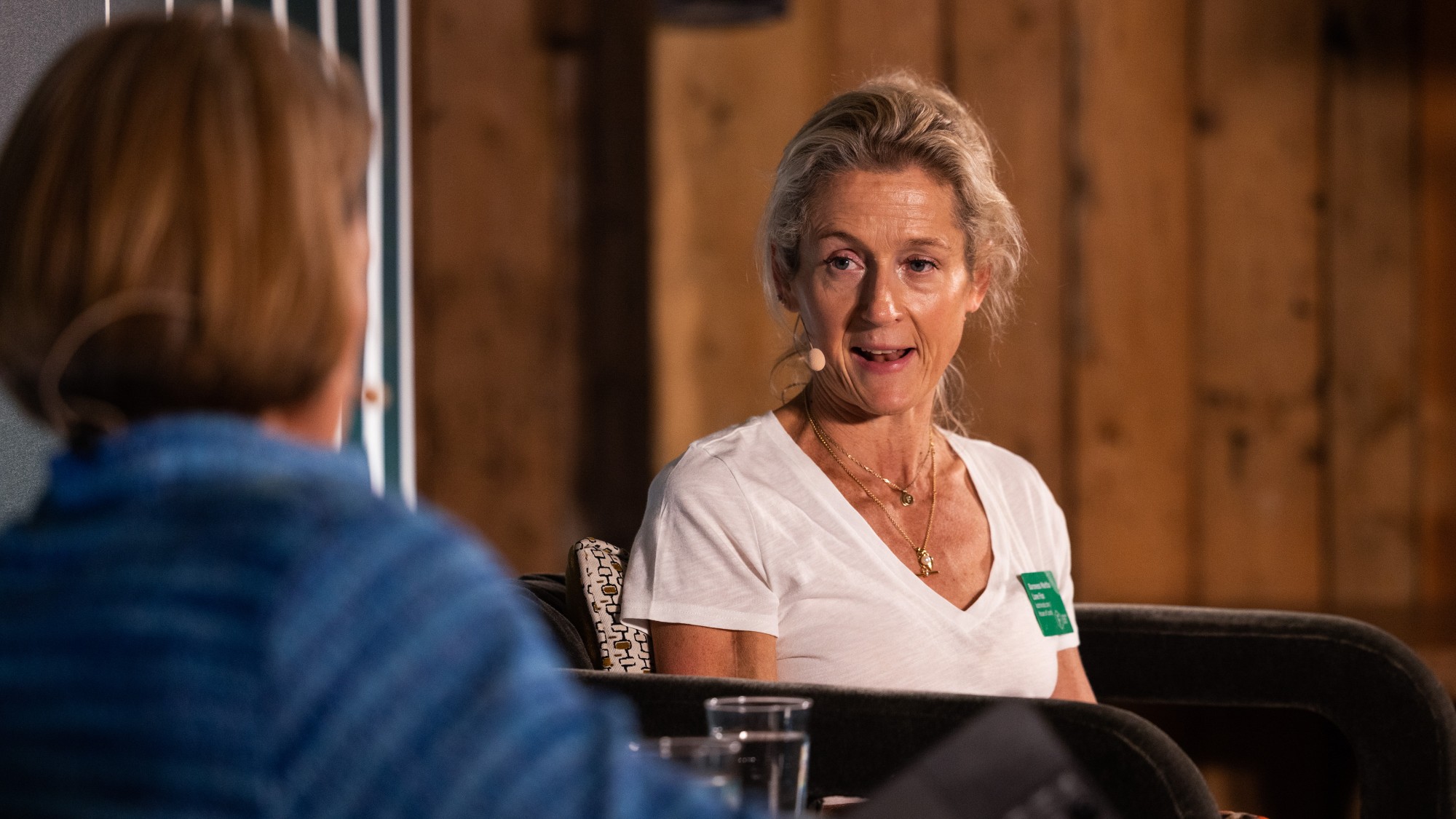
    In 2004, Martha Lane Fox was on holiday in Morocco, having just cashed in £4.6 million of shares from her company Lastminute.com, when the 4x4 she was being driven in skidded off the road, said Rachel Sylvester in The Observer. Thrown through the windscreen, she landed on a rock, broke 28 bones and nearly died on the way to hospital. 

    Today, she walks with two sticks and is in almost constant pain; but she has dealt with her injuries, she says, by refusing to let them hold her back. “I’ve just focused on what’s possible. If I focused on all the things that could go wrong, or on reasons not to do things, I’m not sure I would get out of the house very often. I think denial is a massively underrated emotion.” There’s a misconception, she believes, that resilience “is just a thing that happens – that, magically, you can be tough. And that’s not true. It takes hard work. It’s about breaking things down into minutiae and small goals.” 

    Even so, more than 20 years on from the accident, she finds the unpredictability of her recovery hard. “That’s the biggest change since going from being able-bodied to disabled. I was used to thinking: ‘If I work hard at something, I can probably achieve it’ – and now that’s not the case. If I say yes to something next Thursday, I don’t know that I’ll be able to do it. I find that slightly soul-destroying. You let people down.”


    Image credits, from top: Oli Scarff / AFP / Getty Images; Nicole Combeau / Bloomberg / Getty Images; Vasily Fedosenko / Reuters; Chris Ratcliffe / Bloomberg / Getty Images
     

    Recent editions

    • Morning Report

      Trump claims another slice of the civil service

    • Evening Review

      A post-nuclear treaty world

    • Morning Report

      ICE’s Minnesota legal mess

    VIEW ALL
    TheWeek
    • About Us
    • Contact Future's experts
    • Terms and Conditions
    • Privacy Policy
    • Cookie Policy
    • Advertise With Us
    • FAQ
    Add as a preferred source on Google

    The Week is part of Future US Inc, an international media group and leading digital publisher. Visit our corporate site.

    © Future US, Inc. Full 7th Floor, 130 West 42nd Street, New York, NY 10036.