The Week The Week
flag of US
US
flag of UK
UK
https://cdn.mos.cms.futurecdn.net/flexiimages/jacafc5zvs1692883516.jpg

SUBSCRIBE & SAVE

Less than $3 per week

Sign in
  • View Profile
  • Sign out
  • The Explainer
  • The Week Recommends
  • Newsletters
  • Cartoons
  • From the Magazine
  • The Week Junior
  • Student Offers
  • More
    • Politics
    • World News
    • Business
    • Health
    • Science
    • Food & Drink
    • Travel
    • Culture
    • History
    • Personal Finance
    • Puzzles
    • Photos
    • The Blend
    • All Categories
  • Newsletter sign up Newsletter
  • Saturday Wrap, from The Week
    Hegseth’s ‘purge’, North Sea drilling, and Kanye West’s travel ban

     
    controversy of the week

    Hegseth’s ‘purge’: turmoil at the Pentagon

    For the past few weeks, the US military has been focused on the conflict in Iran, said Tom Nichols in The Atlantic. At no point, however, has Defence Secretary Pete Hegseth let that distract him from his true passion: the “culture war”. Earlier this month, after quashing an investigation into two army helicopter crews who performed a private fly-by at the Tennessee home of Maga rapper Kid Rock, Hegseth abruptly fired General Randy George, America’s most senior army officer. The Pentagon gave no reason for the sacking, or for the dismissal of two other generals and the army’s top chaplain. It’s part of a “rolling purge” of the top brass by Hegseth that appears to be aimed at senior officers he believes have an overly “woke” mindset, or are insufficiently loyal to Donald Trump. A disproportionate number of those targeted have been women and minorities. Hegseth seems to want to turn the military into an “armed extension of the Maga movement”. But firing the chief of staff in the midst of a major war, without explanation, was “a reckless move”, even by his standards.

    The sacking reportedly came after George requested a meeting to protest Hegseth’s decision to remove two women and two black men from a list of colonels due to be promoted. But that wasn’t why George was fired, said Steven Nelson in the New York Post. The real reason, according to Pentagon insiders, is that Hegseth is “paranoid” about being sacked himself and replaced by Army Secretary Daniel Driscoll. Hegseth can’t directly fire Driscoll, because he is a close friend of vice president J.D. Vance, so he’s instead trying to edge him out by targeting his allies, such as George. Driscoll insisted last week he had “no plans to depart or resign”.

    Hegseth needn’t worry yet, said Nick Catoggio on The Dispatch. For Trump to fire him now would look like an admission that the Iran war didn’t go to plan. But as the unpopular conflict winds down, he’ll need scapegoats, and this “preposterous He-Man try-hard” could find himself back on the couch at Fox News, hawking health supplements or whatever. Well, Hegseth is better at “fighting culture wars than actual wars”, said Max Boot in The Washington Post: he spent much of the day before the war began trumpeting a deal with Scouting America to end “some diversity initiatives”. America will be dealing with the damage he has done to the military’s morale, reputation and leadership “long after he’s gone”.


    Briefing of the week

    Drill, baby, drill?

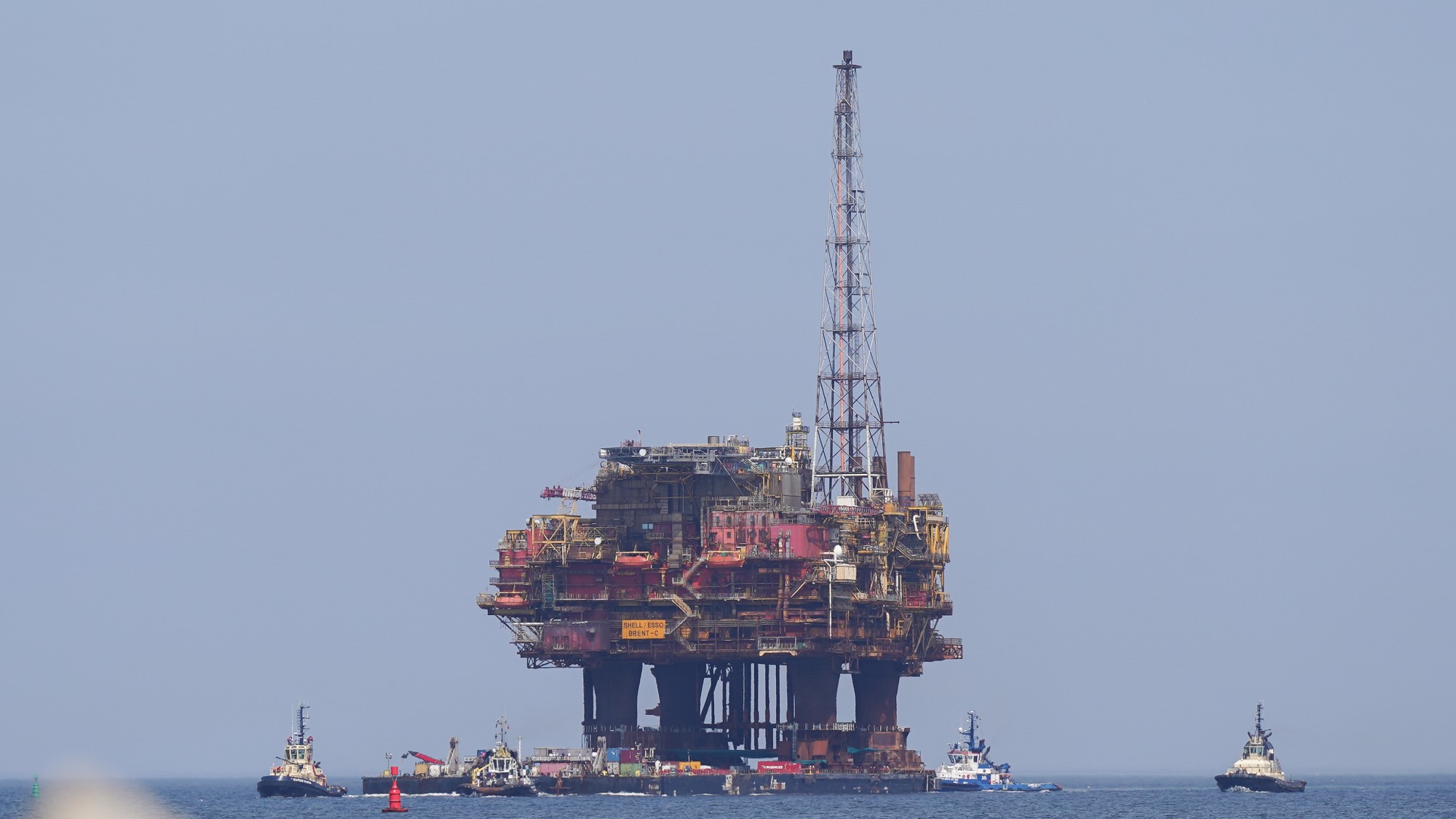
    With energy prices volatile due to the conflict in the Middle East, many are calling for North Sea oil resources to be fully exploited

    How much oil and gas do we use? 
    The UK has rapidly decarbonised its energy sector, with emissions falling by about 54% since 1990. Fossil fuels supply only around a third of our electricity, but when it comes to the total energy mix – including heating, transport etc – we still rely heavily on oil and gas: they accounted for 74% of the total in 2024 (36.5% oil; 37.5% gas). And the nation is producing less of both than it once did. In 1999, when production peaked on the UK Continental Shelf, Britain was a net exporter of oil, and was self-sufficient in gas. Today, only about 50% of UK oil comes from domestic sources; some 30% of the UK’s natural gas also comes from domestic sources. Whereas, of the imports: 76% of imported liquefied natural gas (LNG) comes from Norway; 17% from the US and about 2% from the Persian Gulf. 

    Is there much oil and gas left? 
    The UK Continental Shelf (largely in the North Sea, but also in the Irish Sea) is a mature basin: over the past 60 years, its most accessible oil and gas – about 47.7 billion barrels of oil equivalent (BOE) – has been extracted. Domestic production of oil and gas fell by 76% and 73% respectively between 2000 and 2024. Today there are over 280 active oil and gas fields, but 180 of these are expected to cease production by 2030. Estimates vary as to how much is left. According to the energy consultancy Wood Mackenzie, there’s an estimated 2.3 billion BOE of recoverable oil and gas in the North Sea – enough to cover a sixth of the UK’s projected needs until its net-zero target date of 2050. Offshore Energies UK, an industry group, estimates there are around 7.5 billion BOE of oil. The North Sea Transition Authority, the industry regulator, is more cautious: it thinks the North Sea is home to 2.9 billion BOE of “proven and probable reserves” of oil and gas, with an extra 10.8 billion that may or may not be accessible. 

    How easily could it be recovered? 
    “Easy oil is over,” says Dr Mark Ireland, a geologist at Newcastle University. “What remains are smaller, sometimes more remote, and often more technically challenging or expensive resources and reserves.” New exploration competes for investment with more accessible sources of hydrocarbons abroad, so the North Sea’s future depends on relatively high oil and gas prices, tax levels that aren’t too high and investor confidence. At present, a headline 78% tax rate and high costs mean British oil fields need global prices at nearly $40 a barrel just to break even, more than twice the threshold for Norway. There are undeveloped fields, where oil or gas are confirmed but not yet produced. Furthest along is Jackdaw gas field, which could be connected to the UK within months; but that and Rosebank have not been approved. 

    Could more drilling lower prices? 
    Probably not. Oil and gas prices are set on international markets; and given the North Sea’s relatively small reserves, drilling there would not impact global prices. Nigel Topping, chair of the Climate Change Committee, says the best way to bring down bills is by “making clean electricity cheaper and reducing demand for oil and gas – not doubling down on declining resources”. The Department for Energy Security and Net Zero wants to get Britain off “the roller-coaster of fossil fuel prices and onto homegrown power that we control”. 

    But might it be useful in other ways? 
    Yes. Advocates of further exploration point out that it would improve energy security: gas is pumped straight into the UK’s energy system, which insulates the nation from energy shocks, and potentially from price spikes such as the present one. Crucially, they point out, companies licensed to extract North Sea oil and gas would pay billions in tax – money that could be used, for instance, to lower domestic energy bills. (The industry has paid between £4.5 billion and £9 billion in annual tax in recent years.) Domestic production is good for the balance of payments, too: the UK spent £36 billion on oil and gas imports in 2024, money lost to the British economy. And jobs are at stake. In the past decade, the North Sea workforce has shrunk from 450,000 to 160,000; the hope that jobs would be created in renewable energy to replace them has not yet been borne out. 

    Wouldn’t more drilling undermine our climate policies? 
    On the face of it, yes. Over the Jackdaw field’s lifetime, if you include both “operational” and “downstream” emissions (those caused by burning the gas), it will generate the equivalent of 35.8 million tonnes of carbon – nearly Scotland’s total emissions per year. On the other hand, realistically, Britain is going to need a lot of oil and gas even if it does reach net zero by 2050, for domestic heating, transport – and to back up intermittent wind and solar. Shell, which owns Jackdaw, argues that “the UK will consume this gas, wherever it is produced” – and imported LNG from the US and Qatar is about a fifth more carbon intensive. Thus, arguably, domestic production can help reduce overall emissions. 

    So what should we do? 
    Opinion is divided. Reform UK, the Conservatives and most recently the SNP have all backed further drilling in the North Sea. Even Tara Singh, CEO of RenewableUK, the trade association for renewable power, has argued that the UK should continue, and even increase, North Sea gas production for energy security during the transition to net zero, to reduce imports. But Labour’s 2024 election manifesto explicitly ruled out issuing new oil and gas exploration licences, although it does allow “tiebacks” for existing fields. (The Lib Dems and the Greens are also opposed.) The Energy Secretary Ed Miliband argues that Britain should show “climate leadership”, and that if it were to allow more licences and more drilling, it would undermine efforts to slow global warming and to move to low-carbon energy sources.

    Jackdaw and Rosebank 
    In 2004, the energy giant Chevron discovered a huge new oil and gas field about 80 miles northwest of the Shetland Islands. Rosebank, as it was named, is the biggest undeveloped oil field in the North Sea, and is estimated to contain between 300 and 500 million barrels of oil equivalent. Another big discovery, the Jackdaw gas field, was made a year later – this time by Shell affiliate BG International, about 150 miles off the coast of Aberdeen.

    Since then, however, efforts to develop both fields have stalled. Jackdaw was eventually given the go-ahead in 2022; and Rosebank a year later. But both decisions were challenged in court by environmental groups. Last year, the Court of Session in Edinburgh found that the government had erred by not taking into account “downstream” emissions caused by burning the fossil fuels extracted; they now need fresh authorisation from Energy Secretary Ed Miliband. Experts say Jackdaw, which could supply 2% of UK gas demand, could come on stream this winter if given the green light. It has been reported that Miliband is minded to approve Jackdaw but not Rosebank. Another large prospective oil and gas field, Cambo, lies 20 miles southwest of Rosebank. Exploration has stalled over environmental objections.



    Spirit of the age

    A Polish videogame called “I Am Jesus Christ” that lets players live out the New Testament – turning wine into water, casting the money changers out of the temple, and even hauling a cross up to Calvary – has elicited a mixed response from Christians. Some have praised it for popularising the gospel; others say it trivialises scripture and may be blasphemous.


    VIEWPOINT

    Keeping up the grind

    “Anyone with parents who worked all hours will know that what kept them balanced was literally not having the time to reflect on things. Don’t let me romanticise that world. The rise of leisure was a humane and hard-won achievement. But life wouldn’t be life without perverse outcomes, and I sense that most people are not conscious of how leisure trips them up. To have lots of “executive time” without going astray takes a certain kind of temperament. I seem to have it, and don’t propose to work harder or acquire parental duties. The rest of you? A different matter. I instruct you to keep up the grind. A gaping diary is a dangerous thing.” 

    Janan Ganesh in the Financial Times


    talking point

    Kanye West: was it right to ban him?

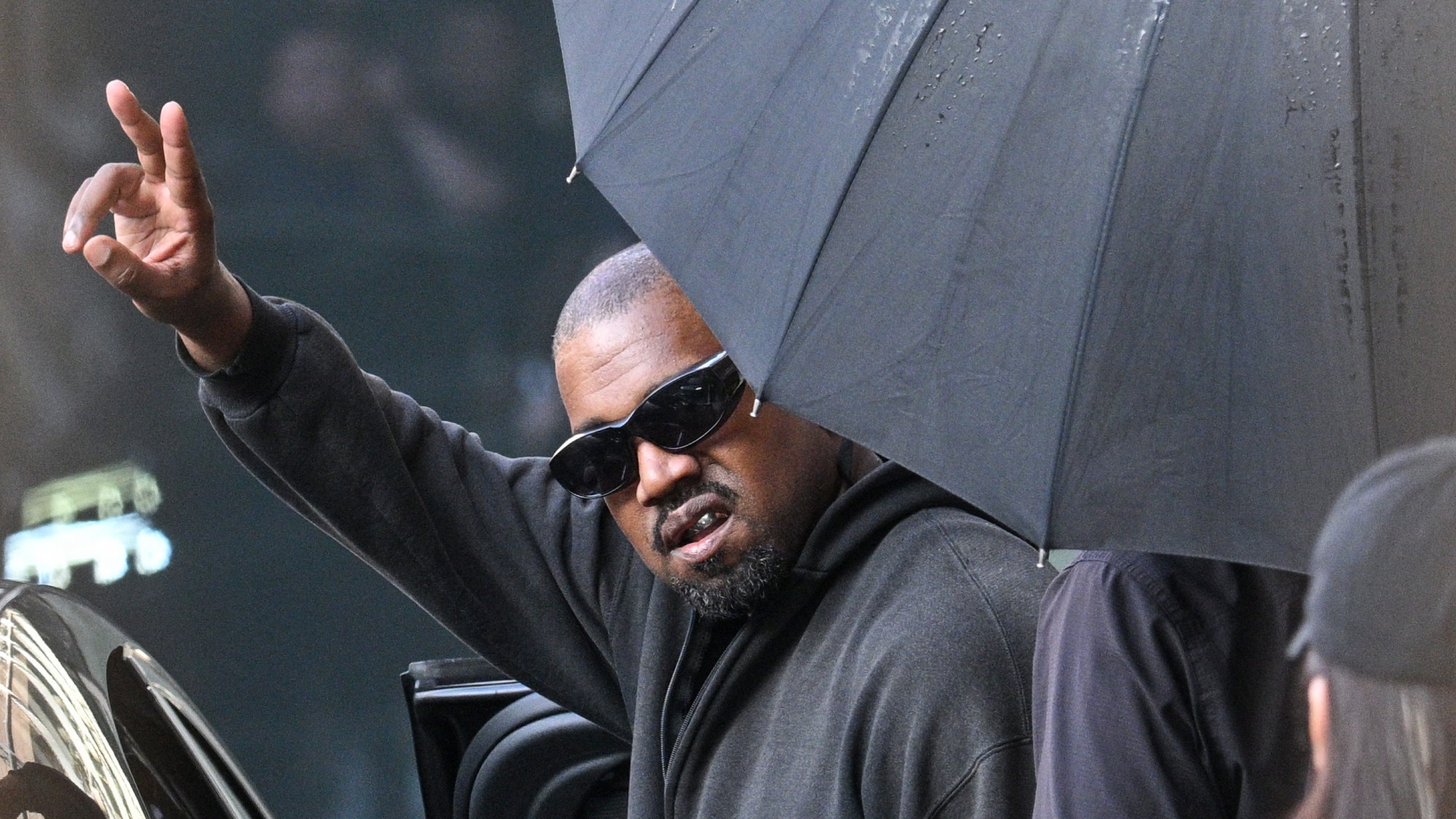
    In May 2025, Ye – formerly Kanye West – released a single called “Heil Hitler”, which contained a lengthy sample from one of Hitler’s speeches, said Dan Hancox in The Guardian. Around the same time, he started selling swastika T-shirts on his website. As a result, the musician, who has frequently been accused of racism, homophobia and sexism, was sued by his own talent agency, and denied entry to Australia. So news that he had been booked to headline the three-day Wireless Festival in north London was, shall we say, “a little surprising”. It brought condemnation from Jewish groups; sponsors withdrew; and a week later the Home Office barred Ye from entry into the UK, prompting the cancellation of the entire festival. Industry insiders were shocked by this sudden unravelling of a major event, said Eamonn Forde and Sarah Walker in the same paper – but were also puzzled as to why its organiser, Festival Republic, had risked booking Ye in the first place. 

    Well, festivals are big business these days, said Zing Tsjeng in The i Paper – and notoriety sells. Festival Republic must have looked at Ye’s still healthy streaming figures, and his ability to court outrage, and seen dollar signs. Their own defence, however, was that Ye’s antisemitic actions could be overlooked because they were attributable to his bipolar disorder, said Will Hodgkinson in The Times. In January, the rapper had taken out an ad in The Wall Street Journal, in which he explained that he had been in the grip of a long manic episode, and insisted that he loved Jewish people. He sounded sincere, but he placed the ad shortly before announcing a world tour; and it made no mention of his long history of spewing antisemitic hatred. In 2022, he publicly praised Hitler, and tweeted that he’d be going “death con 3” on Jews. He apologised then too – yet neither he nor his staff seem to have taken steps to prevent a public recurrence. He didn’t record and release Heil Hitler alone. He wasn’t printing his swastika merchandise in his shed. A manager with power of attorney could have stopped it. 

    I don’t really buy the mental health defence, said Ella Whelan in The Daily Telegraph. If Ye doesn’t hate Jews, he uses Jew hatred to get attention. But I still think the government was wrong to ban him. That only lends him the glamour of the censored. Many Britons will have applauded the decision that Ye’s presence would not be “conducive to the public good”, said Sarah McLaughlin on UnHerd; but do we really want ministers to filter visitors to the UK on the basis of their opinions? Banning them won’t make their offensive ideas go away; and it’s a power to limit free speech that could easily be misused.


    It wasn’t all bad

    A former professional ballerina who is “70% paralysed” has been able to dance on stage again, via an avatar whose movements were dictated by her brainwaves. Breanna Olson, 46, was left in a wheelchair after being diagnosed in 2023 with an incurable form of motor neurone disease that weakens muscles and, over time, affects speech, swallowing and breathing. But by using a headset which read her motor signals, she was able to direct an avatar for a ground-breaking performance at the OBA Theatre in Amsterdam. Olson said that she’d remember the experience “for the rest of my life”.


    People

    Lisa Kudrow

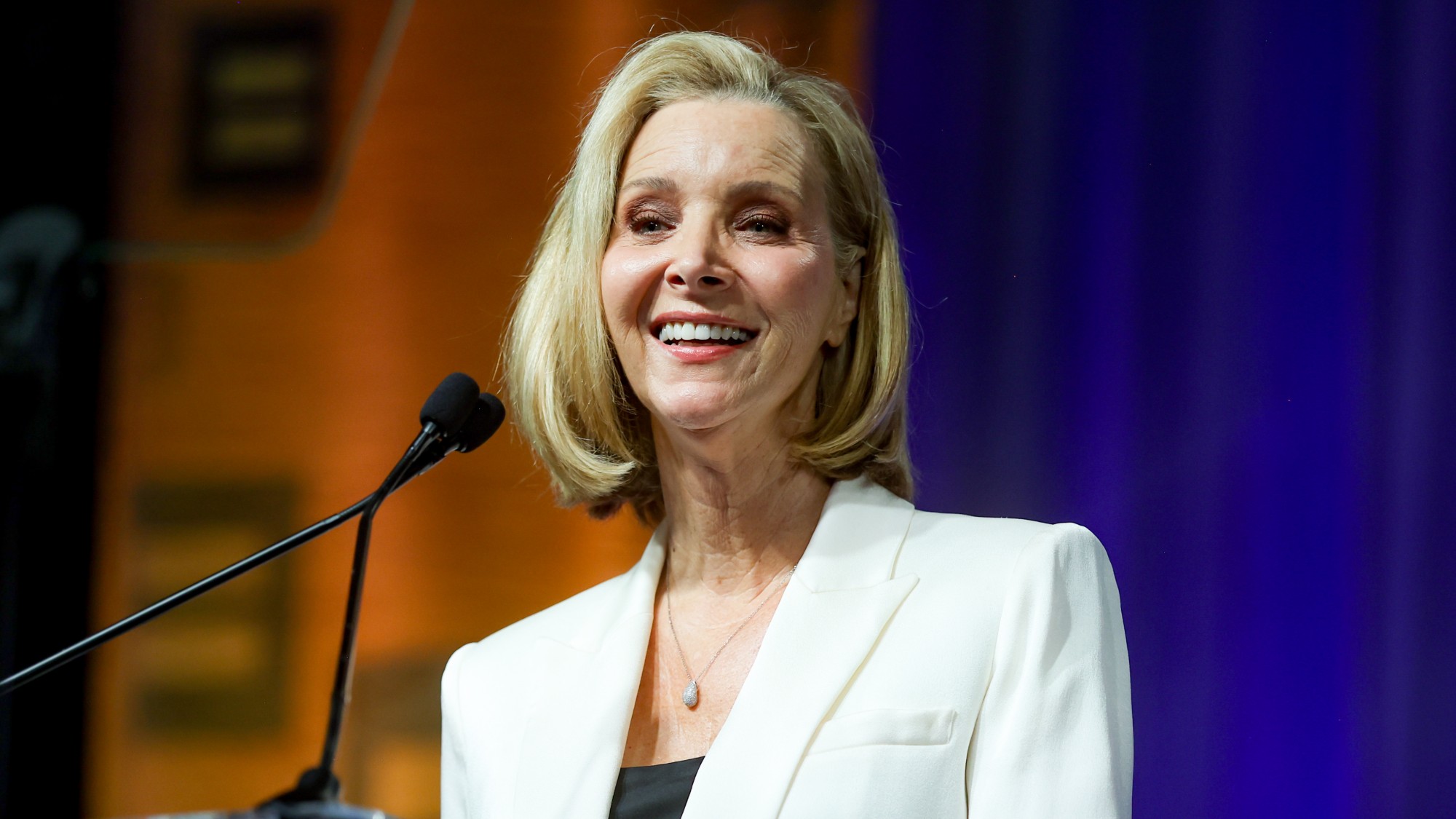
    In the summer of 1994, Lisa Kudrow joined five other struggling actors on a private plane to Las Vegas. Once there, the director James Burrows, a sitcom veteran, sat them down and told them something important, says Adam White in The Independent. Never again, he said, would they be able to socialise in public together without being noticed. Because once their new show, “Friends”, hit the airwaves? Forget it. 

    “I remember everyone going, ‘oooooh’,” laughs Kudrow. “Everyone but me, anyway. I was the odd one out. I thought maybe...? I mean, it’s a good show, but I don’t know about that.” Burrows, of course, was right; and that trip wasn’t the only time Kudrow felt like the odd one out. 

    Unlike the others, she’d studied for an academic degree, biology; she wanted to be an expert on cluster headaches. Her character, the kooky Phoebe Buffay, was the outsider in the “Friends” inner circle; and even when the show became a mega-hit, Kudrow didn’t get a great professional boost. “Nobody cared about me,” she chuckles. She’s sanguine about this, but it was strange: her own talent agency referred to her as “the sixth Friend”. “There was no vision for me, and no expectations about the kind of career I could have,” she recalls. “There was just, like, ‘Boy, is she lucky she got on that show.’”


    Image credits, from top: Alex Wong / Getty Images; Ian Forsyth / Getty Images; Hector Retamal / AFP / Getty Images; Christopher Polk / Billboard / Getty Images
     

    Recent editions

    • Morning Report

      Israel and Lebanon begin ceasefire

    • Evening Review

      China’s ‘electrostate’ power grows

    • Morning Report

      Senate cedes war powers to Trump, for now

    VIEW ALL
    TheWeek
    • About Us
    • Contact Future's experts
    • Terms and Conditions
    • Privacy Policy
    • Cookie Policy
    • Advertise With Us
    • FAQ
    Add as a preferred source on Google Add as a preferred source on Google

    The Week is part of Future US Inc, an international media group and leading digital publisher. Visit our corporate site.

    © Future US, Inc. Full 7th Floor, 130 West 42nd Street, New York, NY 10036.