The Week The Week
flag of US
US
flag of UK
UK
https://cdn.mos.cms.futurecdn.net/flexiimages/jacafc5zvs1692883516.jpg

SUBSCRIBE & SAVE

Less than $3 per week

Sign in
  • View Profile
  • Sign out
  • The Explainer
  • The Week Recommends
  • Newsletters
  • Cartoons
  • From the Magazine
  • The Week Junior
  • Student Offers
  • More
    • Politics
    • World News
    • Business
    • Health
    • Science
    • Food & Drink
    • Travel
    • Culture
    • History
    • Personal Finance
    • Puzzles
    • Photos
    • The Blend
    • All Categories
  • Newsletter sign up Newsletter
  • Sunday Shortlist, from The Week
    A ‘soulful’ performance, and a theatrical ‘tour de force’

     
    FILM REVIEW

    The Secret Agent   

    Powerful political thriller set in 1970s Brazil

    Set during Brazil’s brutal military dictatorship in the 1970s, this political thriller is “populated by so many characters”, you may despair of keeping track of who is who, said Deborah Ross in The Spectator. But “do hang on in there”, as it repays the effort. Justly nominated for four Oscars, this is a “truly special” (if rather sprawling) film.

    Wagner Moura (known for playing Pablo Escobar in the Netflix hit “Narcos”) stars as Marcelo, a widowed academic who has gone on the run from a pair of hitmen. Quite why they are targeting him isn’t initially clear but there’s a lot else to think about in the meantime: there is a “hitman hired by the hitmen”; there’s a corrupt police chief; there’s a “head-scratcher” of a sequence in which a human leg “comes to life and kicks gay people” (this is a reference to an urban legend; “Brazilians will get it, I was told”). It is, in sum, a heady mix, but it barely puts “a foot wrong”, and the performances are superb.

    “If you’re expecting a Brazilian ‘Bourne’, forget it,” said Tom Shone in The Sunday Times. “For a film about a man shadowed by two assassins, ‘The Secret Agent’ has a daringly languid pace” – it takes a full hour, for instance, to be sure who Marcelo actually is. And though there are “flashes of surreal comedy”, these belie “the seriousness of what is afoot” in a place “where evil comes with a grin and a cold beer”. Gradually, “a disquieting paranoia begins to creep into everything” until “even the sunlight seems off”.

    At 160 minutes, the film does teeter “on self-indulgence”, said Patrick Smith in The Independent, but it is sustained by its “energetic camerawork” and Moura’s “soulful and seductive” central performance. “Few thrillers this year will risk this much, or land it so powerfully.”


    theatre REVIEW

    Dracula

    ‘Radical’ reinterpretation of the vampire classic

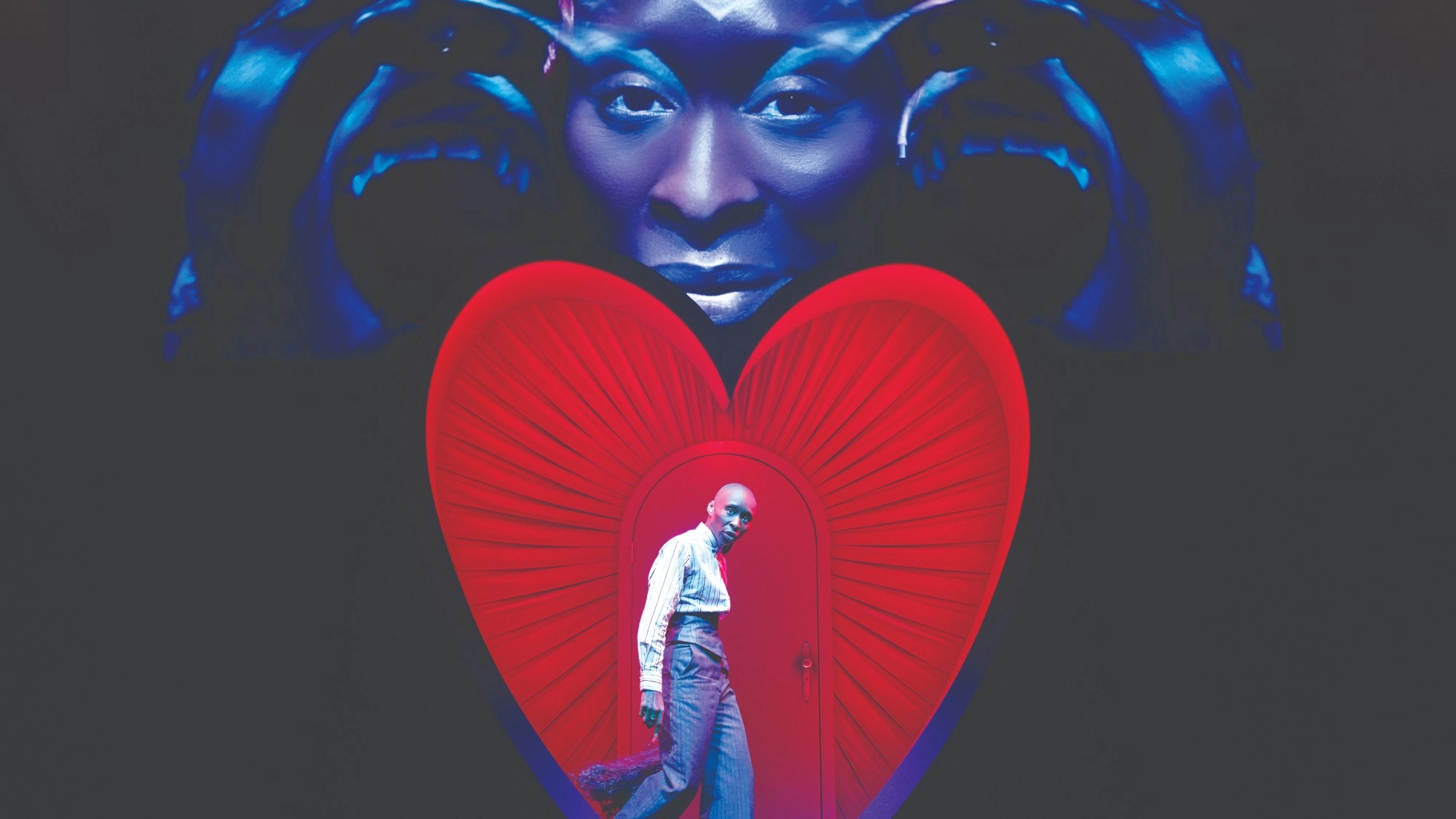
    The Australian writer-director Kip Williams was behind 2024’s hit West End staging of “The Picture of Dorian Gray”, said Dominic Cavendish in The Telegraph. Starring the “Succession” actress Sarah Snook, who played all the parts, Williams used “head-turning live-capture wizardry”, giant screens and pre-filmed sections to mesmeric effect.

    Now he is back with a “radical” “Dracula”, in which the British film star Cynthia Erivo plays all 23 characters. It’s not “flawless” – not quite as frightening as you’d hope – but it’s a “tour de force” even so.

    Erivo is “extraordinary”, said Nick Curtis in The Standard. Juggling costumes, wigs and accents, and interacting with “onscreen versions of herself”, she has to walk “a knife edge between virtuosity and absurdity”, and pulls it off triumphantly.

    This “Dracula” is certainly an astonishing technical achievement, said Dominic Maxwell in The Sunday Times. But it is also (“I’ll get the pun in early”) disappointingly “bloodless”. I wanted more dread, more drama and – paradoxically – more Erivo. Seemingly swamped at points by the technical wizardry, she is left struggling to connect with the audience.

    The basic problem, said Andrzej Lukowski on Time Out, is that Erivo is required to “portray multiple characters of roughly the same importance at the same time”. Williams tries to get around this by making use of a lot more pre-recording than he did for “Dorian Gray”, but the result is that the “real” – onstage – Erivo mostly plays the less interesting parts. Some of the characters here “verge on stereotypes”, and the “ropey selection of wigs and facial hair that the pre-recorded Erivo sports add a weirdly goofy note to proceedings”.

    Williams’ gimmicky camera-led approach “just about” worked with “Dorian Gray” because that is a story about narcissism, said Sarah Crompton on WhatsOnStage. This trick simply doesn’t fly with “Dracula”: it distances us from the dread, and “flattens rather than liberates the story”. I yearned for more “fever”, more “diabolism”, agreed Arifa Akbar in The Guardian. What Williams has given us is Dracula “defanged”.

    Noël Coward Theatre, London WC2. Until 30 May


    BOOK OF THE WEEK

    Discipline

    by Larissa Pham

    This “spare” debut tells of a “lapsed art student”, Christine, who’s touring America to promote her own first novel, said Alexandra Jacobs in The New York Times. That book is a revenge fantasy about the former art school professor who seduced her, discarded her and destroyed her confidence as a painter. On her travels she shares her story with a variety of interesting characters. But all roads lead to a confrontation with the professor on an island off Maine, at which point the book “acquires Stephen King vibes”. Will Christine, like her protagonist, resort to murder? “Thickly pigmented” with suspense, “Discipline” shows that Larissa Pham “is a writer to keep a close eye on”.

    Pham’s “spiky” novel provides rich insights into the art world, said Ceci Browning in The Sunday Times. It’s “splattered” with colourful descriptions of artists’ materials and references to specific paintings that will have you gleefully googling them. On the surface, it’s about the aftermath of an illicit affair: but, as with a painting, “far more can be revealed with a longer, more thorough look”.


    OBITUARY

    Jesse Jackson  

    Charismatic civil rights leader who ran for the presidency

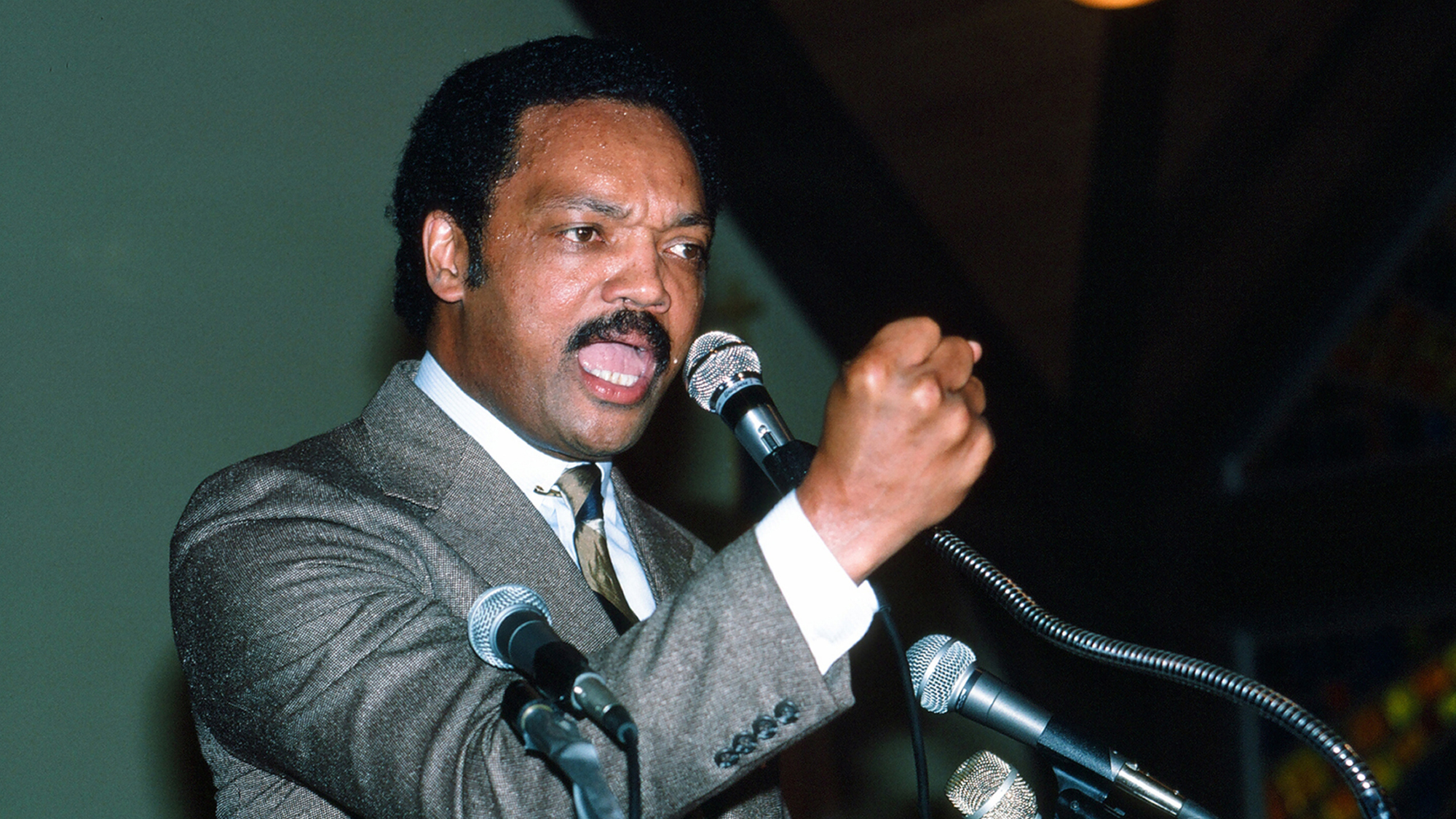
    On the night that Barack Obama was elected president in November 2008, Jesse Jackson, who has died aged 84, was there among the vast crowds that gathered in Chicago’s Grant Park, tears streaming down his face, said The Times. Growing up in the segregated Deep South, Jackson “could never have dreamt that he would one day see a black American winning the highest office in the land”. But he, as much as anyone else, “had blazed the trail for Obama’s victory”. A civil rights leader in the 1960s, Jackson became the most influential African-American leader in the decades after Martin Luther King Jr’s death; he ran for president twice in the 1980s, and though unsuccessful on each occasion, he won millions of votes and went “further than anyone at that time believed a black man could”. 

    Jesse Louis Burns was born in the small town of Greenville, South Carolina, in 1941. Nothing about his life was simple, said The New York Times, starting with his upbringing. His mother, Helen, was a 16-year-old schoolgirl; his father, Noah, was a 33-year-old former boxer who lived next door, married to another woman, and was not involved in his upbringing. In 1943, his mother married another man, Charles Jackson, who only adopted Jesse 14 years later. Before that, Jesse was sent to live with his maternal grandmother, Matilda, in a shack. “Rejected by his father and not fully embraced by his stepfather, he was taunted by other children, all while learning the racial caste system of the segregated South”.

    Jackson stood out at school and excelled as an athlete. In 1959, he won a football scholarship to the University of Illinois, but was shocked to find that, as a black student, he would not be able to play as a quarterback. While home from college, he joined a sit-in at Greenville’s segregated library and was arrested. He then transferred to the historically black North Carolina Agricultural and Technical State University in Greensboro, where he was elected student body president. There he met Jacqueline Lavinia Brown, a fellow student, whom he married in 1962. In 1964, Jackson enrolled at the Chicago Theological Seminary but, horrified by the beatings of black demonstrators in Selma, Alabama, in 1965, he left his studies to join the protesters (he was ordained a Baptist minister in 1968). He met Martin Luther King Jr and, “transformed”, offered his services to King’s Southern Christian Leadership Conference (SCLC). Jackson was appointed head of the Chicago branch of Operation Breadbasket, which boycotted businesses that did not hire black people. He made an impact; but his drive, ego and desire for self-promotion “led to clashes, even with Dr King”.

    In April 1968, King was shot dead on a balcony at the Lorraine Motel in Memphis, Tennessee. Jackson claimed to have raced to King’s side, cradling his head as he died. He appeared on TV shows the next day wearing the same sweater – now stained with blood – he had worn the day before. “I come here with a heavy heart because on my chest is the stain of blood from Dr King’s head,” he declared. His claims were disputed by others present, said The Telegraph: they “unanimously agreed” that Jackson had remained in the parking lot; he was accused of using King’s death for his own advancement. Whatever the truth, “the image of Jackson and his bloody shirt brought the horror of the assassination home to the American public” – and he became a “civil rights celebrity”. But he quarrelled with SCLC leaders and, in 1971, Jackson left to form his own group, People United to Save Humanity (Push).

    Criss-crossing America, “speaking out against racism, militarism and class divisions”, Jackson became a household name. In October 1983, he entered the race for the Democratic presidential nomination. Jackson was, in fact, the second black American to do so – Shirley Chisholm had run in 1972. His platform was partly “classic left liberalism: taxing the rich, cutting defence and using the savings for social programmes”, said The Economist. But he also had a “glorious vision”, rendered in his rousing Southern Baptist oratory: he told the Democratic National Convention that he would champion “the desperate, the damned, the disinherited, the disrespected and the despised”. He came third in the primaries, having run into trouble when he reportedly called Jews “Hymies”, and New York “Hymietown”.

    Jackson ran again in 1988, emerging from the contest in second place, with seven million votes. “The rest of his life was spent trying, unsuccessfully, to find a role that would match the excitement of the civil rights years and the presidential runs,” said The Guardian. His international profile remained high; he flew to Baghdad ahead of the first Gulf War to negotiate the release of hundreds of Americans. But he was no stranger to scandal, admitting in 2001 to a four-year affair with a member of his staff, who had become pregnant in 1998. He supported Obama’s run for the presidency, but not uncritically: he accused him of talking down to African Americans. Obama was brilliant, he conceded, but “I would say he ran the last lap of a 60-year race”, Jackson remarked in 2010. On the night of Obama’s victory, he said, his tears had been for King, his mentor and father figure. In 2017, Jackson was diagnosed with Parkinson’s disease and later with progressive supranuclear palsy. He is survived by Jackie and their five children, Santita, Jesse Jr, Jonathan, Yusef and Jacqueline, and by his daughter, Ashley.




    Image credits, from top: CinemaSco’pio / MK Production; Daniel Boud; Random House / Serpent’s Tail;  Robert R. McElroy / Getty
     

    Recent editions

    • Evening Review

      A breaking point for Pakistan and Afghanistan

    • Morning Report

      ICE and Columbia tangle over student arrest

    • Evening Review

      Trump’s Epstein allegations

    VIEW ALL
    TheWeek
    • About Us
    • Contact Future's experts
    • Terms and Conditions
    • Privacy Policy
    • Cookie Policy
    • Advertise With Us
    • FAQ
    Add as a preferred source on Google

    The Week is part of Future US Inc, an international media group and leading digital publisher. Visit our corporate site.

    © Future US, Inc. Full 7th Floor, 130 West 42nd Street, New York, NY 10036.