The insatiably curious scientist who wrote The Naked Ape
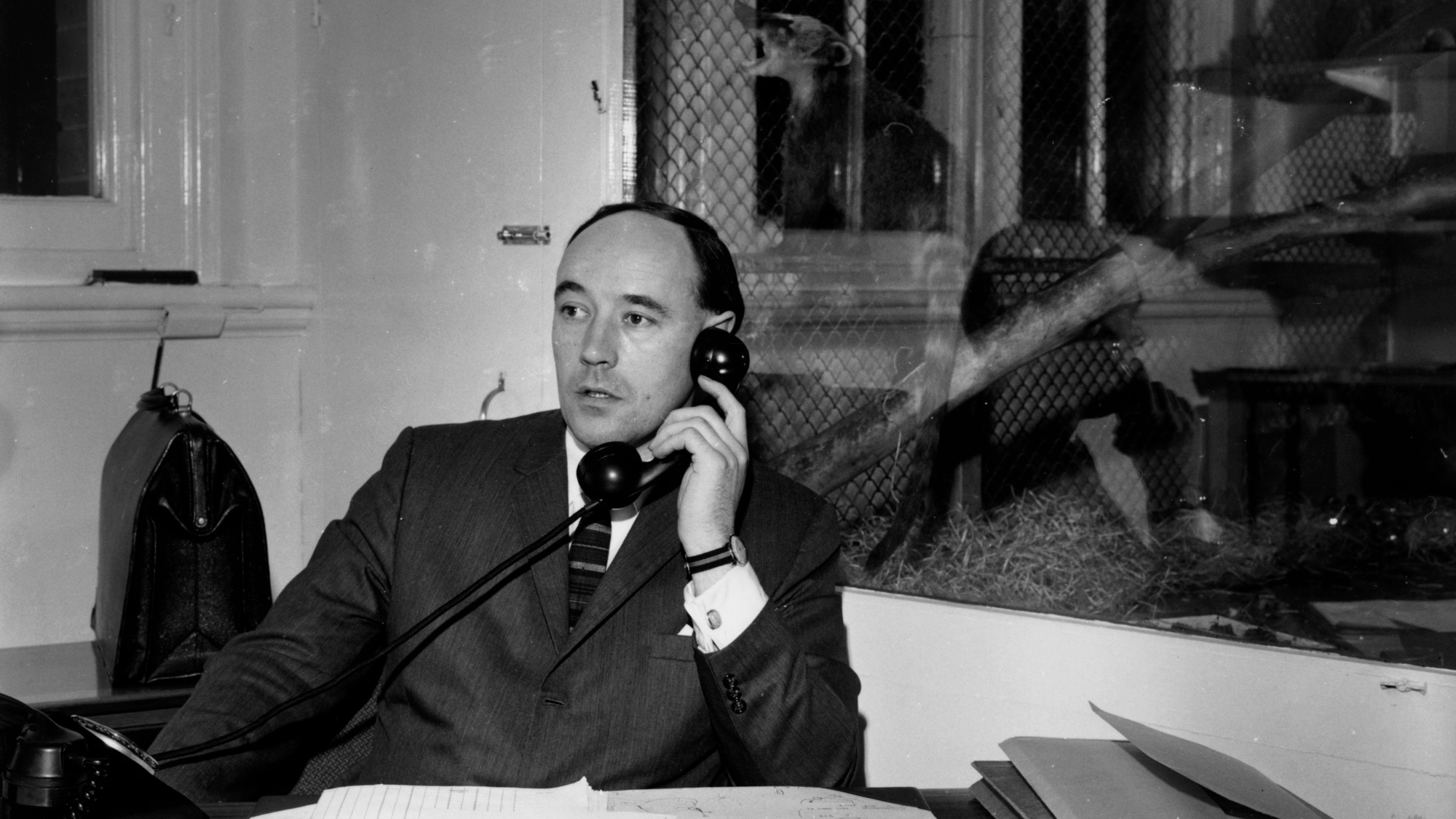
An artist, zoologist and television presenter, Desmond Morris, who has died aged 98, is the only curator of mammals at London Zoo to have become the head of the Institute of Contemporary Arts, said The Guardian. He did not stay long in the job, however, owing to the opportunities offered by the runaway success of “The Naked Ape” (1967), a book he had dashed off in four weeks a few months earlier. In it, he argued that man is best understood not as a “fallen angel” but as a “risen ape” – the only hairless primate and “the sexiest” of them.
Civilisation, he argued, is just a “veneer”. For all the millennia of progress, humans still have bodies and brains that adapted for life on the African savannah, and our behaviour is still “subject to all the basic laws of animal behaviour”. A mix of academic argument, intriguing facts and sometimes titillating detail, the book irritated many scientists. His suggestion, for instance, that female breasts evolved to mimic the buttocks, because when humans became bipedal – and had more face-to-face engagement – there was a need for a front-facing sexual signal, was regarded as speculative at best. (Why then, one critic asked, do the buttocks not have nipples?) It also outraged many Christians. But Morris’s arguments – such as that organised religion is an expression of the primate need for an “alpha” to keep the community in order, adapted for a larger group – chimed with the era, and proved highly influential. “The Naked Ape” became one of the bestselling science books of all time. He followed it up with some 50 other books, including “The Human Zoo”, “Bodywatching”, “Dogwatching” and even “Christmas Watching” (about the roots of human rituals).
Born in 1928, Desmond Morris grew up in Wiltshire, where he became fascinated by the natural world. His father, a children’s writer, had been gassed in the trenches, and died when Desmond was 14. His mother, he recalled, “never, ever said ‘Don’t do that’ about anything”. She did not baulk when he created a menagerie with 200 toads, said The Telegraph, nor when he painted his room black to intensify his dreams. After Dauntsey’s School, he read zoology at Birmingham University, where he took up painting. He had his first exhibition in a library in Swindon in 1948. Two years later, his surrealist works were shown at a gallery in London, alongside those of the great Spanish artist Joan Miró.
Having graduated with a first, he embarked on a doctorate at Oxford in 1951. His thesis was on the reproductive behaviour of the 10-spined stickleback. In 1956, he moved from academia to showbusiness when he began fronting ITV’s “Zoo Time”, a series about animal behaviour filmed at London Zoo. In the process of making it, he was bitten by a bear cub, sprayed with lion urine, and knocked over by a giant tortoise. It proved hugely popular, and ran for more than 500 episodes. One of its stars was a chimp named Congo, which he encouraged to paint so he could consider the evolutionary origins of art. He staged an exhibition of Congo’s work, and Pablo Picasso bought one of the chimp’s paintings. Later, Morris was sought out by Marlon Brando, who was fascinated by his ideas, and who became a lifelong friend.
His first girlfriend, aged 17, had been Diana Fluck – the future “blonde bombshell” Diana Dors. In 1952, he married Ramona Baulch, who died in 2018. They had, for a time, lived in a huge house on Malta, bought with the proceeds of “The Naked Ape”; latterly he had moved to Ireland to be close to their son, Jason. He published his final book, “101 Surrealists”, in 2024. His life, he said, had been driven by an insatiable curiosity; but this, he would add, was just an intense version of a fundamental human trait.