The Week The Week
flag of US
US
flag of UK
UK
https://cdn.mos.cms.futurecdn.net/flexiimages/jacafc5zvs1692883516.jpg

SUBSCRIBE & SAVE

Less than $3 per week

Sign in
  • View Profile
  • Sign out
  • The Explainer
  • The Week Recommends
  • Newsletters
  • Cartoons
  • From the Magazine
  • The Week Junior
  • Student Offers
  • More
    • Politics
    • World News
    • Business
    • Health
    • Science
    • Food & Drink
    • Travel
    • Culture
    • History
    • Personal Finance
    • Puzzles
    • Photos
    • The Blend
    • All Categories
  • Newsletter sign up Newsletter
  • Sunday Shortlist, from The Week
    A ‘champagne-crisp’ sequel and ‘effervescent’ comic performances

     
    FILM REVIEW

    The Devil Wears Prada 2   

    Meryl Streep returns as ‘silvery terror’ Miranda Priestly

    “Like Tom Cruise grinning away in the cockpit in ‘Top Gun: Maverick’, Meryl Streep’s Miranda Priestly is back, exactly as you remember,” said Robbie Collin in The Telegraph. In this “champagne-crisp” sequel to “The Devil Wears Prada” (2006), the “silvery terror” (Streep) is still editing Runway magazine with a “pursed lip that can crush an intern at 30 paces”, and dismissing her assistants with the dread words: “That’s all.”

    But the world she inhabits has shifted. Miranda’s one-time assistant Andy (Anne Hathaway) has just lost her own job as an award-winning reporter, owing to cutbacks in the print media, and is rehired by Runway to help it cope with the fallout from a sweatshop scandal. There, she finds the once seemingly “invincible” Miranda struggling with the squeeze on advertising revenue in the digital age, bowing reluctantly to modern sensibilities on issues such as “body positivity”, and having to kowtow to “brash tech bros” for funding.

    As Miranda navigates these “choppy seas”, Streep lets us glimpse a little more of the character’s “psyche without losing that magnetic elusiveness”, said Beth Webb in Empire. And there are some funny moments along the way, such as a scene in which Miranda tries to hang up her coat, having been told to stop throwing it at her assistants. But while the future of print journalism feels a topic worthy of exploration, the drama is “rather frictionless”.

    The first film thrived on the dynamic between Miranda and Andy; here we’re supposed to fear B.J. Novak’s fashion-illiterate “Silicon Valley scion” and Justin Theroux’s Bezos-like billionaire, though both are “forgettable”. The sequel is also let down by Andy’s “dreary” romance with a real-estate magnate (Patrick Brammall), said Peter Bradshaw in The Guardian. Still, this is “good-natured” entertainment, and it is a pleasure to be reunited with Miranda’s former senior assistant Emily (Emily Blunt), who is now a hotshot at Dior, and the ever-loyal Nigel (Stanley Tucci). The film even allows another appearance by Andy’s cerulean-blue polyblend sweater.

    The first film was made by Streep’s performance, said Deborah Ross in The Spectator. And she is terrific here too; but it’s a pity that the characters haven’t really developed over the years: Miranda is still icy, Emily scornful, and Andy high-minded. There are good lines (“Look what TJ Maxx dragged in,” says Nigel when he sees Andy), but the script is not laden with zingers, and the whole thing is more sentimental, and less satirical. In short, it is just not as good as the original.


    THEATRE REVIEW

    A Midsummer Night’s Dream

    Two ‘fun’ new productions at Birmingham Rep and the Globe 

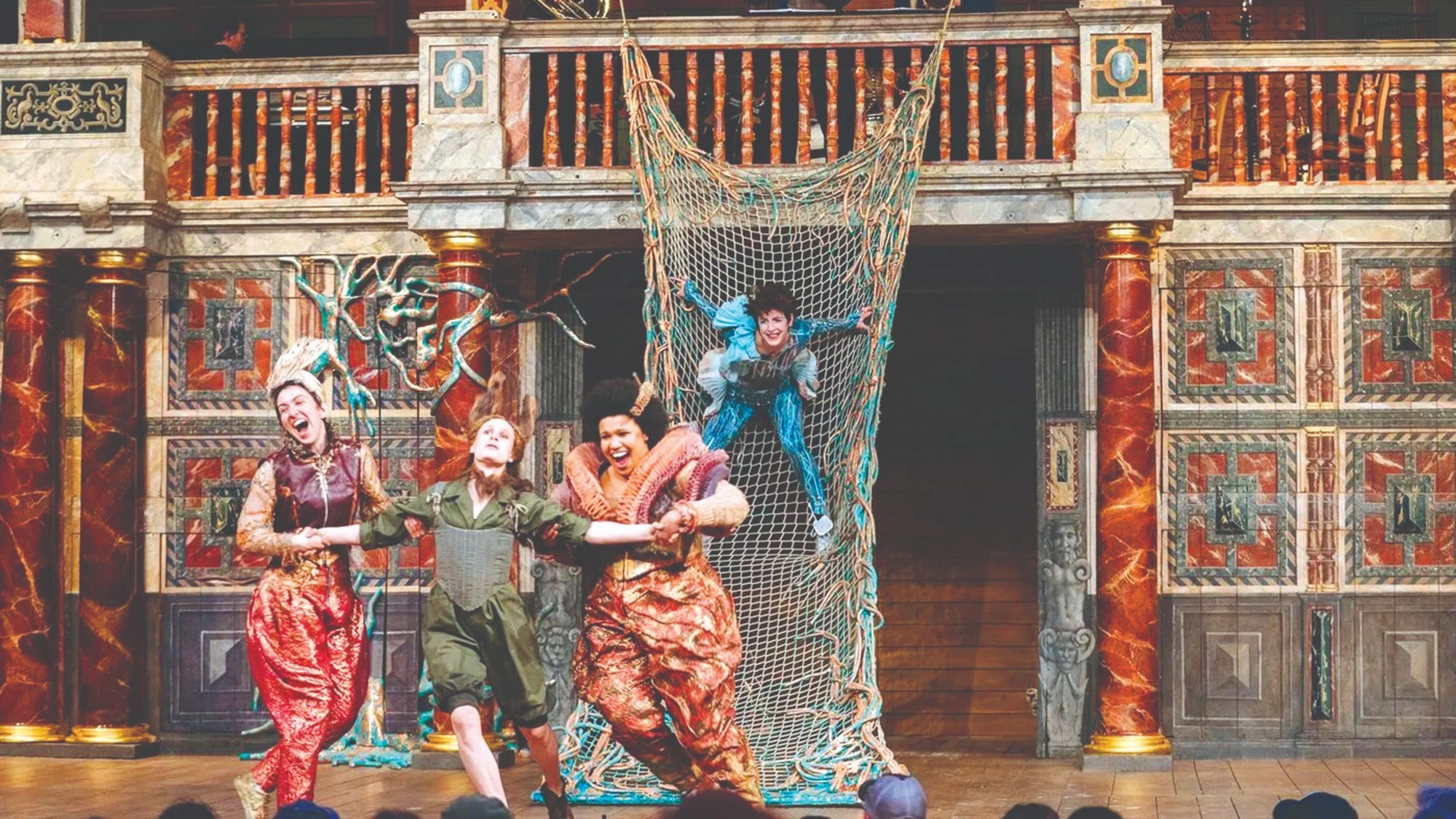
    If all of Shakespeare’s plays offer scope for reinvention, said Dominic Maxwell in The Times, his “wonky comedy” “A Midsummer Night’s Dream” seems positively to cry out to directors: “Do something new to me!” As ever, summer is bringing a host of new “Dreams” across the country, and kicking off proceedings are two big productions – in Birmingham and at Shakespeare’s Globe in London – that foreground fun and silliness.

    The former, from the Birmingham Rep’s new artistic director Joe Murphy and his deputy Madeleine Kludje, is a “larky”, panto-like “spectacle that feasts on popular culture, drag, local accents, crowd-play and newly added quips. It sets out to be fun, and it really is”.

    Designed with Birmingham’s young, multicultural population in mind, this “lively, progressive” take on the “well-worn classic” has the feel of a “club night”, said Alison Brinkworth on WhatsOnStage. It features a highly camp Puck (Adam Carver, aka cabaret artiste Fatt Butcher), neon-pink lighting, gender reversals, queer romances, and pop hits including Queen’s “A Kind of Magic”. But although it opens with Hippolyta preaching about climate change, it is very “faithful to the Bard’s script and language”.

    At the Globe, Emily Lim has produced a “crowd-pleasing” staging with a similar “kick-off-your-shoes-and-join-the-party kind of vibe”, said Theo Bosanquet on the same website. In one of several “ingenious little twists”, Puck accidentally squirts love potion into his own eye, and falls for an unsuspecting member of the audience.

    Michael Grady-Hall is an “inspired” Puck, said Miriam Gillinson in The Guardian. “More court jester than fairy, he spends much of the show joking with the crowd, ad-libbing with exquisite timing and pelting everyone with bubbles.”

    With “effervescent comic performances”, gloriously extravagant costumes, a charming set and hearty folk music by Jim Fortune, “this is the rarest of things: a ‘Dream’ the whole family can enjoy. Just cover the kids’ eyes for the slightly naughtier bits.”

    Birmingham Rep to 24 May, Shakespeare’s Globe, London to 29 August


    PODCAST REVIEW

    History’s Greatest Fails

    “There will soon come a day when the entirety of the entertainment industry will consist of podcasters appearing on each other’s podcasts,” said James Marriott in The Times. Imagine it: a “never-ending M.C. Escher staircase of loosely structured banter”. Which is to say: I didn’t have high hopes for “History’s Greatest Fails”, a “cross-pollination” of Elizabeth Day (of “How to Fail” fame) and Dan Jones (“This is History”). Silly me: it’s actually a fun, fruitful and worthwhile listen; “breezily executed” but grounded by “historical heft”. “I am quite ignorant of medieval politics, but if anybody mentions Richard III to me in future I now know to nod sagely and lament that his tragedy was to become caught in a spiral of bad decisions.”


    BOOK OF THE WEEK

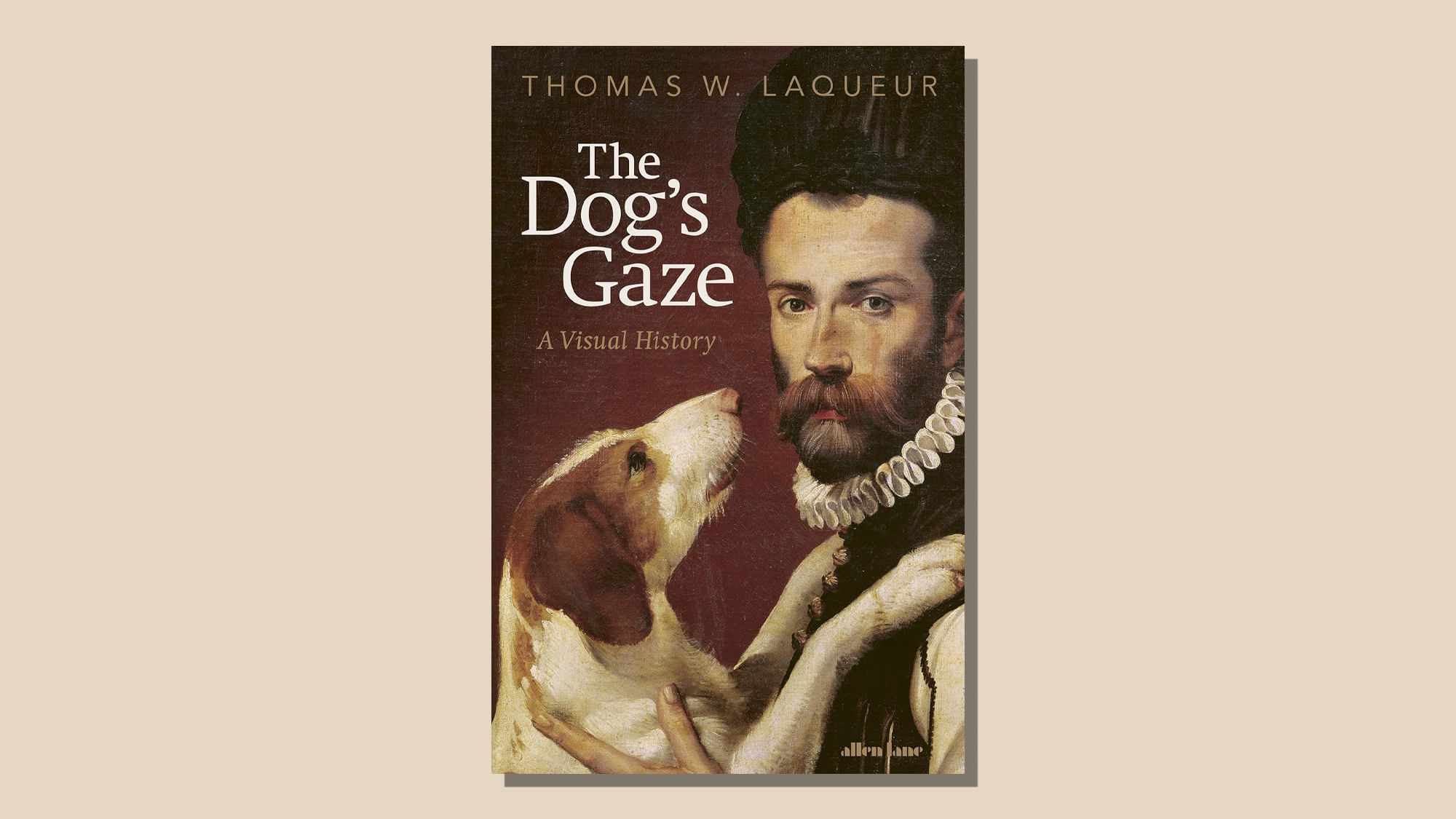
    The Dog’s Gaze  

    by Thomas W. Laqueur 

    When the American cultural historian Thomas W. Laqueur first got a “dog of his own” in his early 40s, he began to notice “all the waggy tails and raised paws, the wet noses and watchful eyes in Western art”, said Chloë Ashby in The Times. And that prompted him to start thinking about “what the dogs do for the artists and how they do it” – with the result being this “charming and lavishly illustrated book”. Unlike cats, who are reluctant to pose, dogs, Laqueur points out, “can’t help being there, being social, and paying close attention with their eyes to our every move”. In paintings, not only do they act as framing devices, but they help “draw us into a picture and generate a visual narrative”, with their gazes often directing us to what the artist wants us to see. In Carpaccio’s “St Augustine in His Study” (1502), for example, the “upward gaze of the fuzzy little fellow” focuses attention on the light streaming through the window, bearing the news that Jerome has died.

    Dogs have populated Western art right through its history, and Laqueur’s “clever, beautiful book” takes us on a “wonderfully illustrated tour”, from the “shitting cur in Rembrandt’s etching ‘The Good Samaritan’” to the many whippets in the paintings of Lucian Freud, said Kathryn Hughes in The Guardian. Just having a dog in a picture, he argues, is a “way for an artist to pack an image with extra resonance and second-order meaning”. “The Dog’s Gaze” isn’t flawless, said Robert Hanks in Apollo. By concentrating so closely on the role of dogs in “mediating between the viewers and the subjects”, Laqueur sometimes overlooks more basic things – the way, for example, dogs can help inject humour into a painting, or simply enliven the bottom part of the frame. “But these are quibbles about a magnificent, generous book.”


    OBITUARY

    Georg Baselitz

    German artist renowned for his upside-down technique

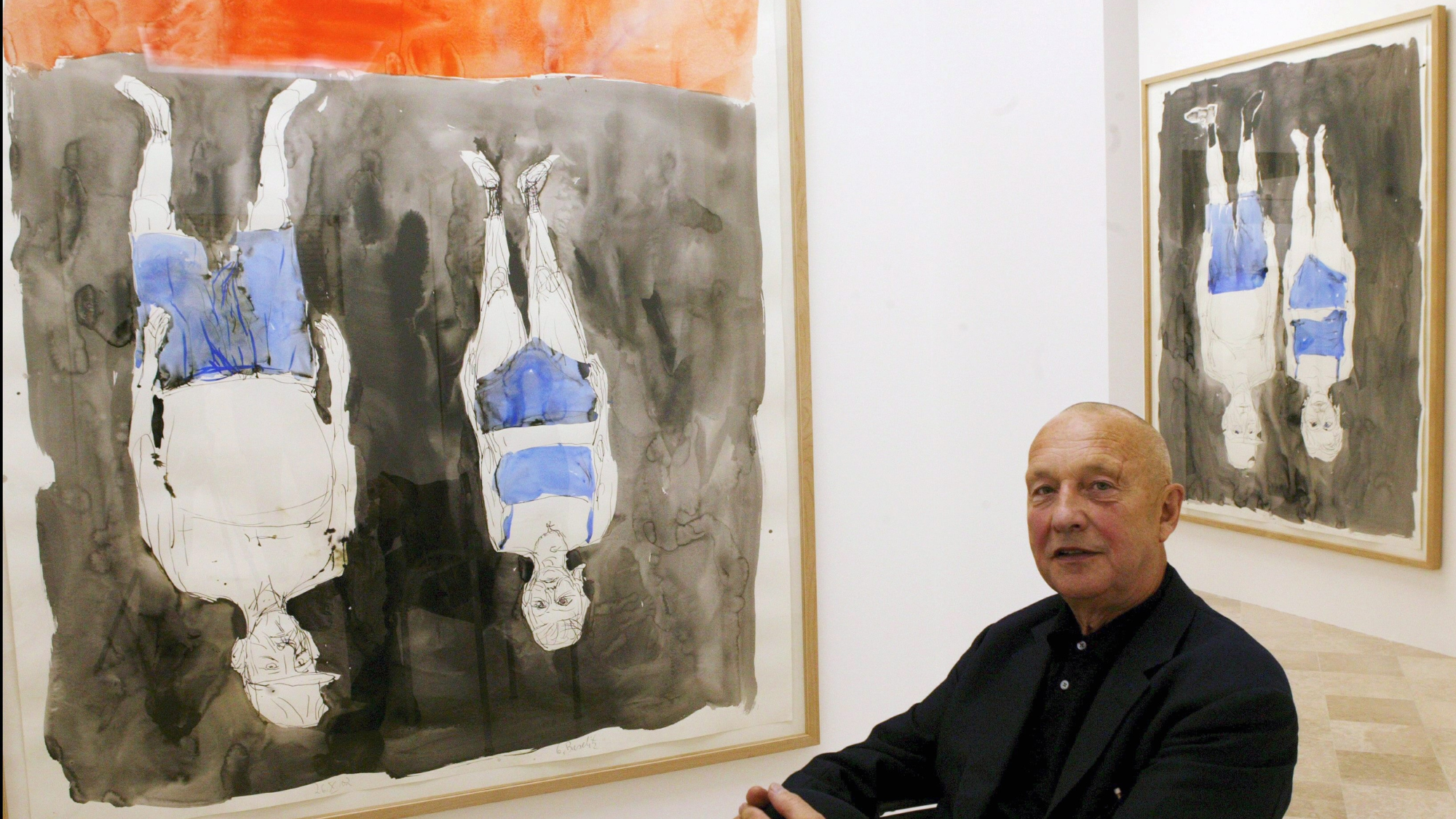
    One of the most significant German artists of the postwar era, Georg Baselitz was known in particular for his upside-down paintings. Having grown up under Nazi and communist rule, he’d rejected both the figurative work sanctioned in the GDR and the confident abstractionism dominant in the West, and by turning the world on its head he found a path between them, said The New York Times. Confronted with his inverted images, the viewer was forced to consider the mechanics of the piece – the patterns, the colours, the texture. Dark and often horrifying, his neo-expressionist work “revelled” in raw emotion, and engaged fiercely with the complexities of his country’s recent history. As he put it: “I was born into a destroyed order, a destroyed landscape, a destroyed people, a destroyed society.”

    He was born in 1938 as Hans-Georg Bruno Kern in Deutschbaselitz, some 20 miles from Dresden, where his father worked as a teacher, and had joined the Nazi Party. In February 1945, he saw the sky glow red during the firebombing of Dresden; and a few days later, he walked through the city’s smouldering streets with his mother, as she pushed their belongings in a handcart. “The dead, the half-dead, [were] everywhere,” he recalled. “No one … ever said: ‘The British did that,’ because everyone knew we were guilty.” They had hoped to flee the advancing Russians, but ended up trapped in the east, where they lived hand to mouth for a while. Aged 18, he enrolled in an art school in East Berlin, where the only permitted style was socialist realism. Angry and rebellious, he detested this repression, and after a year he was expelled for “sociopolitical immaturity” and was sent to work in a factory. The wall had not yet gone up, however, so he was able then to make his way to West Berlin, to continue his studies there. At this point, he changed his name in honour of his home in Saxony.

    In the West, he was inspired by abstract expressionism, but found it ultimately indulgent, said The Times. He took an interest in the raw distorted forms of prewar German artists including Emil Nolde and Ernst Ludwig Kirchner, and also “African tribal art and the art of the mentally disturbed”. He wanted to shock Germany out of its complacency, he said. His first solo show, in 1963, included “The Big Night Down the Drain” – which depicted a shirtless figure, holding a huge penis, as if masturbating. It was seized by the authorities on grounds of public decency, and only returned to him two years later after a court battle. “I am an avant-gardist,” he told Der Spiegel. “What I do is quite aggressive and quite evil.”

    After that, he produced his “The Hero” series, images of bedraggled figures in tattered military uniforms. The art critic Norman Rosenthal called them “a tragic mannerist elegy for the lost and burned landscape of Germany”. Then, in 1969, he started exhibiting his upside-down paintings. “The hierarchy where the sky is at the top and the ground down below is only an agreement, one that we have all got used to, but one that we absolutely do not have to believe in,” he said. Many of them featured eagles (symbols of both the Third Reich and the postwar German state) that seemed to be in freefall. He also repeatedly painted his wife, Elke Kretzschmar, upside-down. As well as oils, he produced prints and sculptures hewn out of wood. In 1980, he exhibited at the Venice Biennale a figure based on a West African Lobi carving, which seemed to be delivering a Nazi salute. It caused outrage, and brought him global renown. In 2013 he caused further controversy, by telling an interviewer that women “don’t paint very well”. Yet Baselitz did not seem sexist in person, said Jackie Wullschläger in the Financial Times. Happily married for 64 years, he came across as “gracious, friendly, articulate and independent in mind and spirit”. Elke survives him, with their two sons, who are both gallerists.




    Image credits, from top: FlixPix / Alamy; Helen Murray; Allen Lane; Raphael Gaillarde / Gamma-Rapho / Getty Images
     

    Recent editions

    • Evening Review

      JD Vance goes to Iowa

    • Morning Report

      Tennessee splinters its Black vote

    • Evening Review

      Rising U.S.-Canada tensions

    VIEW ALL
    TheWeek
    • About Us
    • Contact Future's experts
    • Terms and Conditions
    • Privacy Policy
    • Cookie Policy
    • Advertise With Us
    • FAQ
    Add as a preferred source on Google Add as a preferred source on Google

    The Week is part of Future US Inc, an international media group and leading digital publisher. Visit our corporate site.

    © Future US, Inc. Full 7th Floor, 130 West 42nd Street, New York, NY 10036.