Chicago-born critic who became a fixture on British TV
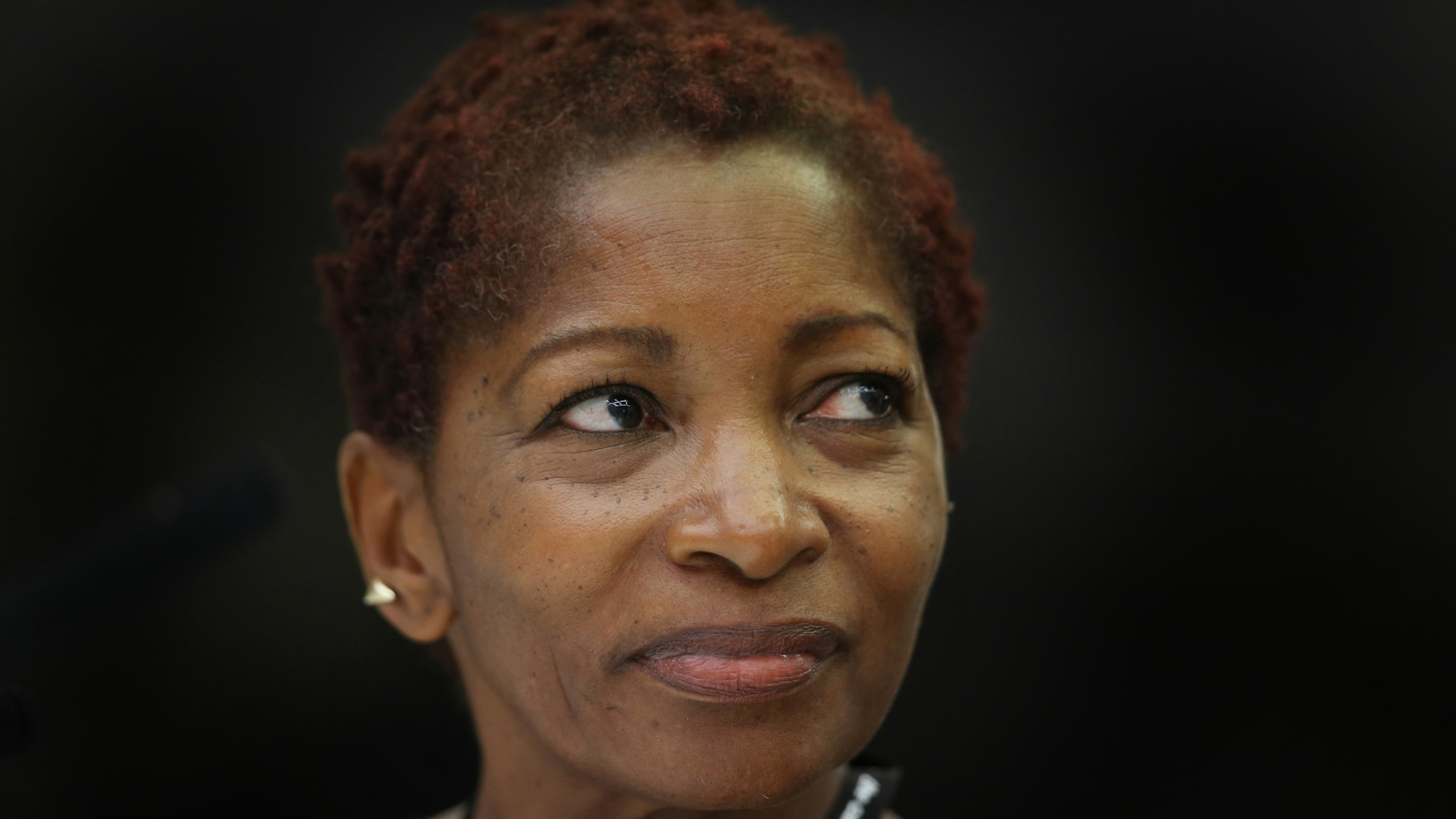
One of the UK’s leading cultural commentators, Bonnie Greer, who has died aged 77, had an unusual breadth of “technical experience” – across drama, fiction, biography and documentary, said Mark Lawson in The Guardian. She also brought an unusual perspective to the TV shows, such as “Late Review” and “Question Time”, on which she appeared regularly from the 1990s. As an American who had spent much of her adult life in England, she was well placed to “adjudicate” on the work of the many British filmmakers and writers who were focusing on America in that period – and to comment on the escalating Americanisation of British politics. Her celebrity was based on two elements: a critical mind that was sharp, curious and unpredictable; and a warm throaty laugh “that charmed those who were drawn to her, and disarmed the suspicious or the resistant”.
Her most notable TV encounter came in 2009, when she sat on a “Question Time” panel with the then BNP leader Nick Griffin, said The Telegraph. The far-right had never been represented on the programme before, and the BBC had faced intense criticism for inviting him. On air, Greer defended his appearance on free-speech grounds, adding there was no risk he’d win new converts, because “the British people have too much common sense”. She then proceeded to demolish his positions – calmly and with grace and wit. The most watched episode in show’s history, it was said to have ended Griffin’s political career. It inspired Greer to co-write an opera, staged at the Royal Opera House in 2011.
The eldest of seven children, she was born in Chicago in 1948. Prince Charles had been born two days earlier, and she was named after the “Bonnie Prince Charlie” headlines this had generated. Her father – a former sharecropper from Mississippi who worked in a canning factory – was an autodidact who brought home the Encyclopedia Britannica and continually urged her to expand her mind. Bonnie wrote her first play aged 10. She described herself as a “good Catholic girl” until her teens, when she drifted away from the Church and started to take an interest in civil rights. Having initially planned to study law, the better to fight the cause, she switched to a playwriting course, supervised by David Mamet. In 1978, she moved to New York, where she worked with Elia Kazan at the Actors Studio. She learnt, she said, “that theatre is supposed to slow the world down so it can be looked at, and the person who looks is not supposed to be the same when they walk out. Otherwise, there’s no f**king point. Art is not a leisure activity. It’s about engagement.”
In the early 1980s, the Aids epidemic ravaged the circles in which she moved. Having lost 35 friends, including her flatmate, she decided, in 1986, to move to the UK for a fresh start. Her father had been stationed in England before taking part in the D-Day landings. He had been amazed by the lack of overt discrimination there, and this sense of wonder had, she said, passed to her “by osmosis”. In London, she found a lively Black theatre scene, and a market for her work; by the 1990s, she was writing plays for the BBC. Her most successful stage play was “Marilyn and Ella” (2008), which explored the real-life friendship between Marilyn Monroe and Ella Fitzgerald. She also wrote novels, memoirs and works of non-fiction, and served on various boards, including that of the British Museum. She had thought she’d be too shy to appear on TV, but she found that she enjoyed it – because “I have a big mouth and opinions”. She had also been surprised when she fell in love with a white public school-educated solicitor named David Hutchins, whom she married in 1993. Her husband, who kept a low profile while supporting her career, survives her.