The Week The Week
flag of US
US
flag of UK
UK
https://cdn.mos.cms.futurecdn.net/flexiimages/jacafc5zvs1692883516.jpg

SUBSCRIBE & SAVE

Less than $3 per week

Sign in
  • View Profile
  • Sign out
  • The Explainer
  • The Week Recommends
  • Newsletters
  • Cartoons
  • From the Magazine
  • The Week Junior
  • Student Offers
  • More
    • Politics
    • World News
    • Business
    • Health
    • Science
    • Food & Drink
    • Travel
    • Culture
    • History
    • Personal Finance
    • Puzzles
    • Photos
    • The Blend
    • All Categories
  • Newsletter sign up Newsletter
  • The Week Evening Review
    Noem faces impeachment, Israel’s E1 zone, and teen social media bans

     
    TODAY’S BIG QUESTION

    Will Democrats impeach Kristi Noem?

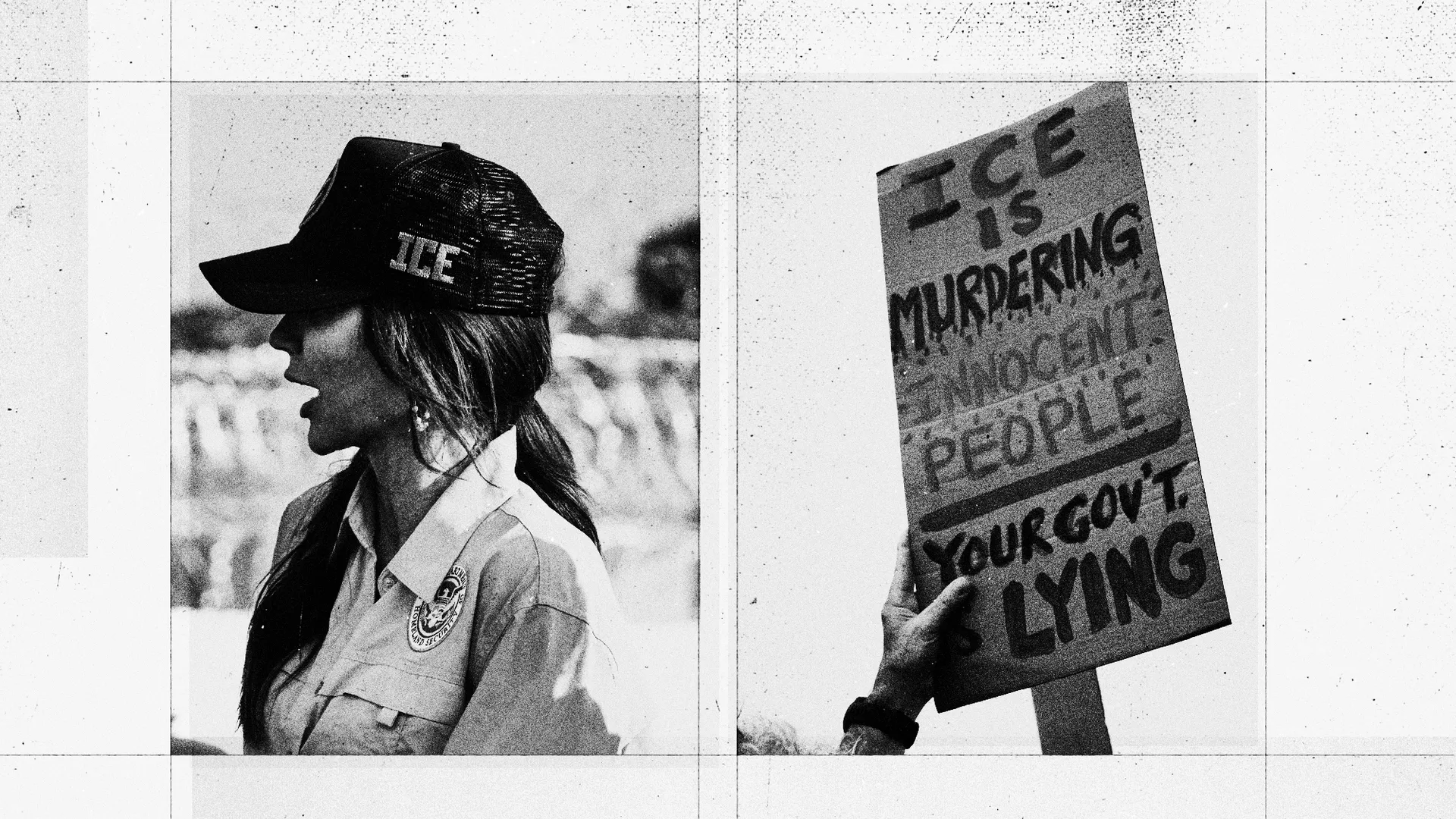
    The violence and protests in Minneapolis have left Democrats conflicted about how to respond. Some left-of-center activists want to abolish ICE, while some centrists are resisting. Another intra-party debate: whether or not to impeach Homeland Security Secretary Kristi Noem.

    The move to impeach Noem is gaining Democratic support at a “rapid clip,” said Axios, but “not all the party’s lawmakers are happy about it.” Centrists warn the effort is a “waste of the party’s time and energy.” A move against Noem “could be a distraction” from the Democrats’ affordability messaging, said Rep. Sanford Bishop (D-Ga.). Rep. Robin Kelly (D-Ill.), who introduced articles of impeachment on Wednesday, disagrees. People in Minnesota “can’t do their jobs because they’re snatching them off the streets,” she said.

    What did the commentators say?
    Republicans control Congress, so the impeachment push can easily be “dismissed as purely performative,” said Jan-Werner Muller at The Guardian. But such naysaying is too easy. Democrats need to start somewhere in signaling that Noem’s “actions have consequences.” Putting her under a microscope would also help the party break through the fog of multiple Trump administration scandals and outrages. Impeachment, after all, can “concentrate minds and slow down political time.” Impeachment is also an act of “good opposition” that would force members of Congress to “go on the record as to whether they support killings with impunity.”

    A similar conflict is playing out over the future of Immigration and Customs Enforcement. Some Democrats running for Congress in deep-blue districts are calling to “abolish ICE” following Renee Good’s shooting death at the hands of an ICE agent, said The New York Times, but it’s a “slogan that many Democrats had hoped to retire.” The agency is “an absolute problem,” said Sen. Ruben Gallego (D-Ariz.). Still, Americans prefer a “slimmed-down ICE that is truly focused on security.” 

    What next?
    The chaos in Minnesota is taking a toll on Noem’s national standing: Her approval rating slipped to 36% in the most recent Quinnipiac poll, said The Hill. Americans have also “soured” on ICE in the aftermath of Good’s shooting death. Most voters “say the shots should not have been fired by the ICE agent,” said analyst Tim Malloy, while just a third “believe the shooting was justified.”


    QUOTE OF THE DAY

    ‘This is, above all, absurd. The peace prize cannot be given away.’ 

    Kirsti Bergsto, Norway’s foreign policy spokesperson, on Venezuelan opposition leader Maria Corina Machado’s decision to present her Nobel peace prize medal to President Donald Trump. The Norwegian Nobel Committee and the Norwegian Nobel Institute had already said that the prize “cannot be revoked, shared or transferred.”


    THE EXPLAINER

    Israel’s E1 zone: the death of the two-state solution?

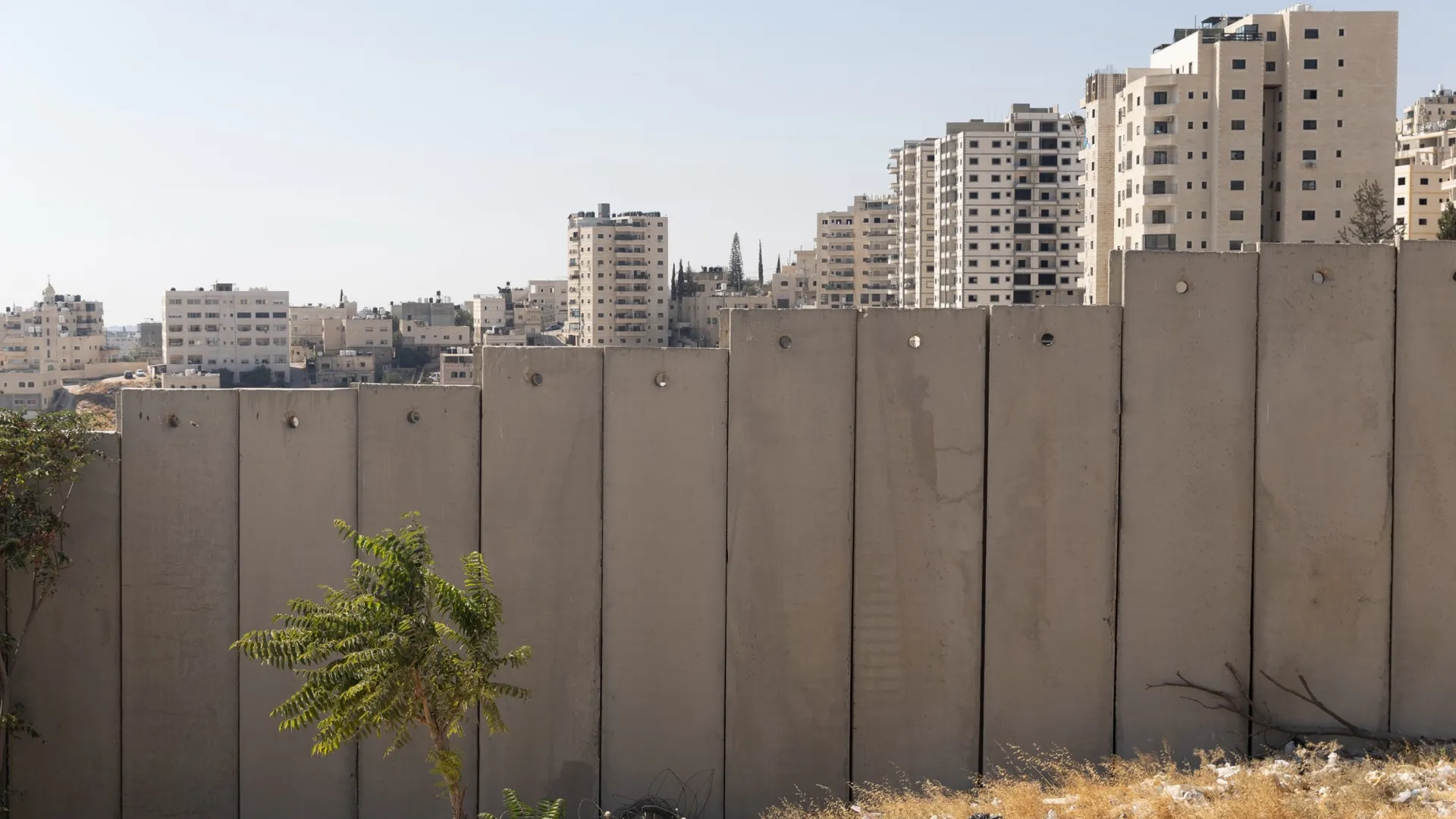
    A hugely controversial Israeli settlement project, with a bypass road that closes off the occupied West Bank to Palestinians, has cleared planning hurdles and is open to bids. Thousands of homes are to be built in the E1 area east of Jerusalem, in a move that will effectively divide the West Bank. In doing so, it will “bury the idea of a Palestinian state,” said Israeli finance minister Bezalel Smotrich.

    What is E1?
    First proposed in the 1990s but frozen by pressure from the U.S. until now, E1 covers the tract of desert between East Jerusalem and the large Israeli settlement of Ma’aleh Adumim. “It would be the last link in a chain of building projects that will slice the West Bank in half, and sever it” from East Jerusalem, which “Palestinians hope one day will be the capital of their independent state,” said The Telegraph.

    The new project proposes 3,401 housing units and a dual-use bypass road that is “designed as a sealed transit corridor for Palestinian vehicles,” said The Guardian. This provides Israel with a “pretext to bar Palestinians from existing roads in the planned settlement area.” Israeli politicians have named the planned bypass “sovereignty road.” Its opponents call it “apartheid road.”

    Is it legal?
    The Palestinian authorities and much of the international community have repeatedly called all Israeli settlements illegal. But this has not stopped their rapid expansion in the West Bank since Israel seized control of the territory in 1967.

    E1 falls outside the Green Line, which distinguishes Israel from Palestine in the eyes of the international community. This means that, although Israel has military and civil control of the area, granted by the Oslo Accords in the 1990s, it is not sovereign Israeli territory.

    Despite the International Court of Justice repeatedly ruling that Israel’s settlements should be withdrawn, “there is no sign of that happening,” said Reuters. And “by linking up with other Israel-controlled areas,” the E1 settlement “would go still further.”

    That is the “real concern right now,” said The Independent, as several countries, including Mexico, France and the U.K., formally recognized the Palestinian state last year. “Without concrete action,” recognizing statehood is ultimately “pointless, as there won’t be anything left to be a state.”


    Statistic of the day

    20 years: The amount of time Abu Zubaydah, a stateless Palestinian, has been in captivity in Guantánamo Bay. Zubaydah, one of Guantánamo’s first detainees, has been held without charge at the facility and subject to alleged torture. He recently settled out of court with the U.K. over the nation’s alleged complicity in his treatment.


    TALKING POINTS

    Is a social media ban for teens the answer?

    A month after Australia’s social media ban for kids under 16 took effect, debates have reignited over the effectiveness of such a sweeping measure in keeping children safe online. Almost five million social media accounts belonging to Australian teenagers have been deactivated or removed, according to the government. This announcement was the first metric since the laws’ rollout, which is “being closely watched by several other countries” weighing whether the regulation can be a “blueprint for protecting children from the harms of social media, or a cautionary tale,” said The New York Times. 

    ‘Not for a 12-year-old to fix’
    If there is anything “more ridiculous than taking a corporate failure and throwing it to the individual to solve, by self-discipline reinforced by legislation,” it is “doing so to under-16s,” said Zoe Williams at The Guardian. If a corporation is “selling radical misogyny and methods for self-harm,” that is “not for a 12-year-old to fix by turning off their phone and taking up crochet.” You could “make the case for government intervention,” but only if it had “time on its hands after tackling the problem at source.”

    Envisioning a “better digital life” should not “just focus on children,” but also on “workplaces and adult social norms,” said Jay Caspian Kang at The New Yorker. Everyone needs to “put down the phones and make efforts to move the public square away from private technology companies that incentivize cheap engagement.” Without “parallel changes in parenting practices and wider cultural norms,” bans can “simply push use underground rather than remove it,” therapist Laura Gwilt said at Huff Post. 

    Parents can ‘only do so much’
    Australia’s approach to protecting children from the dangers of social media “may seem ham-fisted to critics,” but it “sure beats what some elected leaders in D.C. are doing,” which is “nothing,” said Kathleen Parker at The Washington Post. Australia’s social media ban is “an incredibly bold, life-affirming move” that you can only imagine tech companies fought hard against, Robin Abcarian said at the Los Angeles Times. This generation of children is “unwittingly being used as lab rats for the effects of technology on the brain.”


    Good day 🐆

    … for ancient history. Scientists’ recent rare discovery of mummified cheetah remains from caves in northern Saudi Arabia could “help with future efforts to reintroduce the cats to places they no longer live,” said The Associated Press. Researchers also determined that the animals were most similar to modern-day cheetahs from Asia and northwest Africa.


    Bad day 🛳️

    … for quirky boat names. Oracle cofounder and billionaire Larry Ellison has changed the name of his megayacht after discovering that its original name, “Izanami,” which was inspired by a Shinto deity in Japanese mythology, spelled “I’m a Nazi” in reverse. The snafu was particularly awkward “given the family’s strong ties to Israel,” said Futurism.


    Picture of the day

    Money shot

    Coco Gauff practices her serve in Melbourne ahead of the start of the Australian Open on Sunday. The U.S. tennis star is leading a prize money dispute between players and the Grand Slam tournaments — despite the Australian Open announcing a record 16% prize-pot hike this year.
    William West / AFP / Getty Images


    Puzzles

    Daily sudoku

    Challenge yourself with The Week’s daily sudoku, part of our puzzles section, which also includes guess the number

    Play here


    The Week recommends

    In Okinawa, experience the more tranquil side of Japan

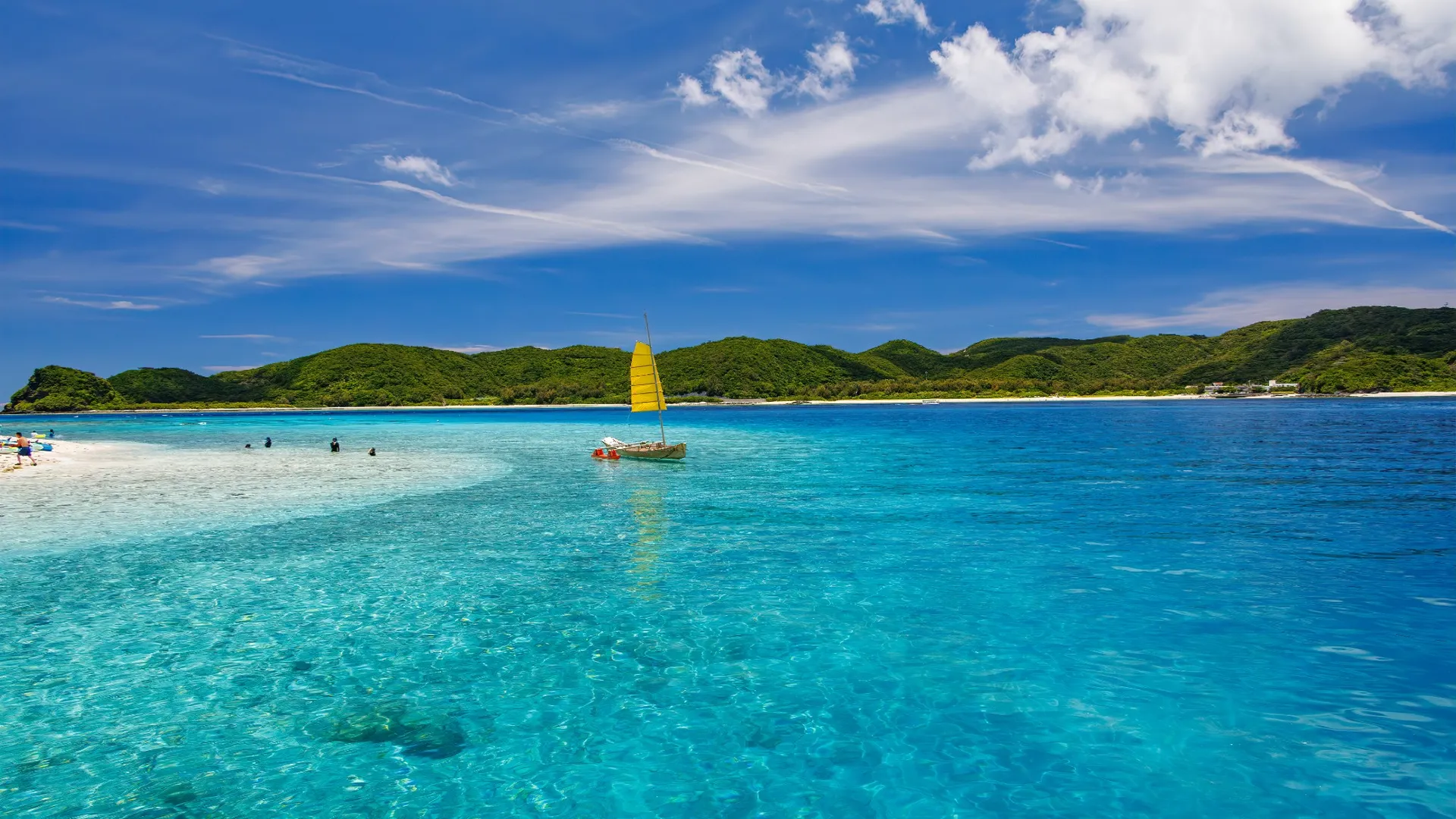
    Far from the neon lights of Tokyo, temples and shrines of Kyoto and the Osaka street food scene is Okinawa, Japan’s southernmost — and westernmost — prefecture. Here, expect a slower pace, where the hardest decision you’ll make is which beach to visit.

    What to know 
    Okinawa is Japan’s sole subtropical region, attracting visitors seeking white sand beaches and swaying palms. Of the 160 or so islands, about 40 are inhabited, and the locale comes by the nickname “Caribbean of the Sea” honestly, said Travel and Leisure.

    Popular spots include the jungle-filled Iriomote Island and Miyako Island, where travelers can swim and kayak through the turquoise waters. Going island hopping is easy, thanks to ferries and flights that connect through Naha Airport. Pack light and consider leaving the jacket at home.

    Hit the water
    Aharen Beach and Tokashiku Beach on Tokashiki Island are two of the “most sought-after” spots for diving because of the marine life, said Travel and Leisure. Cape Higashi Henna on Miyako Island is where the Pacific Ocean meets the East China Sea and boasts more than 200 plant and flower species and views from its lighthouse that will "take your breath away,” the BBC said.

    Dive into dining 
    Seafood is fresh and plentiful, with skipjack tuna, tiger prawns and sea grapes (green caviar) regularly appearing on menus alongside Okinawan staples like goya champuru, a stir-fry containing bitter melon, and rafute, or braised pork belly. The “iconic” Okinawan taco rice was created in the kitchen of King Tacos, a chain specializing in “hybrid cuisine born out of the long intermingling of American, Japanese and Okinawan culinary traditions,” said The Wall Street Journal.

    Read more


    Poll watch

    Nearly half of Americans (47%) think Trump is focused on the wrong priorities as president, according to an AP-NORC survey. And over half (52%) of the 1,260 adults polled consider Trump a poor or terrible president, while 31% describe him as a good or great president. 


    INSTANT OPINION

    Today's best commentary

    ‘Should Latin America adopt the dollar?’
    Judy Shelton at The Wall Street Journal
    Dollarization in Latin America has been “discussed at high levels before,” and it’s “time to reassess pushing the dollar in America’s backyard,” says Judy Shelton. Dollarizing nations will “effectively give the U.S. the profit from printing money,” which “amounts to an interest-free loan to Washington.” But “dollarized nations might assume they have a claim on U.S. support.” If “dollarization helped expand U.S. participation in Latin American markets, the U.S. would benefit disproportionately from their growth.”

    ‘The PhD students are not all right’
    Leonard Saxe at The Boston Globe
    Higher education is “currently facing a perfect storm,” says Leonard Saxe. Doctoral programs that “nurture the human capital to sustain society’s culture and promote innovation have been especially hard hit.” These programs have “borne the brunt of recent financially driven cutbacks.” The “ability of graduate programs to support students” has “always been important, but it is even more so today.” Failing to “address the challenges facing PhD students and the system of doctoral education will eventually have ramifications for the larger society.”

    ‘How WhatsApp took over the global conversation’
    Sam Knight at The New Yorker
    WhatsApp is “phatic before it is anything else,” says Sam Knight. It “winks with life, informing you who is online and when they were last seen.” The “entanglement of WhatsApp in everyday feeling makes it an inviting place for theorizing about the human condition.” But the “problem underpinning every problem at WhatsApp is the sheer capaciousness of the system.” Running on “practically every type of phone” means it is “hard to know whom you are optimizing for.”


    WORD OF THE DAY

    choppleganger

    A Gen Alpha slang term that combines the words “chopped” (meaning ugly or undesirable) with “doppelganger” (a look-alike), to describe an unattractive version of someone else. In other words, it means an “off-brand look-alike,” said TikToker Mr. Lindsay, who is known for decoding teen slang.


    Evening Review was written and edited by Theara Coleman, Catherine Garcia, Scott Hocker, Anya Jaremko-Greenwold, Justin Klawans, Joel Mathis and Summer Meza, with illustrations by Stephen Kelly and Julia Wytrazek.

    Image credits, from top: Illustration by Stephen Kelly / Getty Images; Amir Levy / Getty Images; Dragon Claws / Getty Images; d3_plus D.Naruse @ Japan / Getty Images
     

    Recent editions

    • Morning Report

      Trump escalates Minneapolis threats

    • Evening Review

      Can Democrats win the Senate?

    • Morning Report

      Greenland beefs up security amid Trump pursuit

    VIEW ALL
    TheWeek
    • About Us
    • Contact Future's experts
    • Terms and Conditions
    • Privacy Policy
    • Cookie Policy
    • Advertise With Us
    • FAQ
    Add as a preferred source on Google

    The Week is part of Future US Inc, an international media group and leading digital publisher. Visit our corporate site.

    © Future US, Inc. Full 7th Floor, 130 West 42nd Street, New York, NY 10036.