The Week The Week
flag of US
US
flag of UK
UK
https://cdn.mos.cms.futurecdn.net/flexiimages/jacafc5zvs1692883516.jpg

SUBSCRIBE & SAVE

Less than $3 per week

Sign in
  • View Profile
  • Sign out
  • The Explainer
  • The Week Recommends
  • Newsletters
  • Cartoons
  • From the Magazine
  • The Week Junior
  • Student Offers
  • More
    • Politics
    • World News
    • Business
    • Health
    • Science
    • Food & Drink
    • Travel
    • Culture
    • History
    • Personal Finance
    • Puzzles
    • Photos
    • The Blend
    • All Categories
  • Newsletter sign up Newsletter
  • The Week Evening Review
    Debating ICE’s future, Trump’s ‘Board of Peace,’ and Fukushima’s restart

     
    TALKING POINTS

    DC grapples with ICE’s footprint and future

    Even before Minnesota emerged as the latest flashpoint in the Trump administration’s anti-immigrant agenda, President Donald Trump’s deployment of thousands of Department of Homeland Security agents was already one of this White House’s most controversial domestic planks. In the wake of the shooting death of Renee Good by Immigration and Customs Enforcement officials, some in Washington have begun moving to address what many critics contend is an agency acting far beyond its mandate. 

    Abolish ICE?
    In a shift from the sentiment during Trump’s first term, it’s “not just progressives taking up the ‘defund ICE’ banner,” said Axios. Now, the notion of significantly reining in DHS is “proliferating even among the more moderate and establishment wings of the party.” And it’s not just Democrats. Even commentator Bill Kristol, the “erstwhile Republican turned Trump critic,” had a simple, straightforward message,” said the Atlantic: “‘Abolish ICE.’” 

    The sentiment may be gaining traction among the broader public. A YouGov poll taken after Good’s death showed that 46% of respondents supported abolishing ICE, while 43% opposed. Her death “proved that ICE is out of control and beyond reform,” said Rep. Shri Thanedar (D-Mich.) in a recent statement introducing his Abolish ICE Act, which would dismantle the agency within 90 days of its passage.

    Some Democrats have “eyed negotiations over the yearly Homeland Security budget as a leverage point to incorporate their demands,” said the Los Angeles Times. Party members are “lining up” against a funding bill that they feel “isn’t nearly sufficient to constrain ICE,” said Axios.

    ‘Reform and retrain’
    Some Democratic lawmakers have opted for a more incremental approach. They have floated policy recommendations such as an “end to qualified immunity” and “withholding support for an appropriations package” that would include more funding for DHS, said The Hill. 

    The slogan “Abolish ICE” is “advocating for an extreme,” said centrist think tank Searchlight in a memo to Democratic Party figures obtained by The Bulwark. Instead, Democrats should “adopt an alternative approach toward ICE,” like “reform and retrain.” The fear is that the “maximalist demand” of abolition “plays directly into Republicans’ hands” by casting Democrats as “unserious about immigration,” said The Atlantic.

    A “handful of GOP lawmakers are showing an openness” to calls for refining ICE’s operations, said Politico. It’s notable even if they are “not going so far” as to condemn the administration’s immigration enforcement “outright.”


    QUOTE OF THE DAY

    ‘Somalia — they turned out to be higher IQ than we thought. I always say, these are low-IQ people. How did they go into Minnesota and steal all that money?’

    Trump, in a speech at the World Economic Forum in Switzerland today, accusing Somali immigrants of embezzling $19 billion in federal funds from Minnesota. “They are good pirates, but we shoot them out of the water just like we shoot the drug boats out,” he added. 


    The Explainer

    Board of Peace: Trump’s ‘alternative to the UN’

    Russian President Vladimir Putin may sit alongside former British Prime Minister Tony Blair, Secretary of State Marco Rubio and Trump’s son-in-law, former Senior Adviser Jared Kushner on President Donald Trump’s Board of Peace. The Kremlin has confirmed that Putin has been invited to join the new body to be chaired by Trump. The board will oversee Gaza’s reconstruction and was originally part of the U.S.-brokered 20-point plan to end the war there, but recent developments suggest the organization’s reach might extend far beyond the Palestinian territory. 

    Who’s on it? 
    The committee will be the “greatest and most prestigious board ever assembled at any time any place,” said Trump on Truth Social last week. Member states will be limited to three-year terms on the board, but those that contribute more than $1 billion in the first year can become permanent members, according to a draft charter seen by Bloomberg. 

    Along with Blair, Rubio and Kushner, the founding executive board will include U.S. Special Envoy Steve Witkoff and World Bank President Ajay Banga. U.K. Prime Minister Keir Starmer is said to be among the many world leaders who have received invitations. French President Emmanuel Macron has already declined. 

    A 15-member Palestinian technocratic committee, the National Committee for the Administration of Gaza, has also been set up to run day-to-day affairs in the devastated enclave. Former U.N. Middle East Envoy Nickolay Mladenov will be the “key link” between this administration and another committee called the Gaza Executive Board, said Middle East Eye. Major General Jasper Jeffers, the former head of U.S. Special Forces, has been appointed to lead an International Stabilization Force. 

    What else could the board do? 
    According to the draft charter, the Board of Peace will seek to “solidify peace in the Middle East” and, at the same time, “embark on a bold new approach to resolving global conflict.” Notably, there’s no mention of Gaza, which adds to “speculation that the group may have a broader mandate to cover other conflicts,” said The New York Times, and “could even be aimed at creating a U.S.-dominated alternative to the United Nations Security Council.”


    Statistic of the day

    1.1 billion tons: The amount of carbon dioxide that could be removed from the atmosphere annually by cutting down and sinking boreal forests in the Arctic Ocean, according to a study from the University of Cambridge. These trees, which are prone to wildfires, could be carried to the ocean by six major Arctic rivers.


    TODAY’S BIG QUESTION

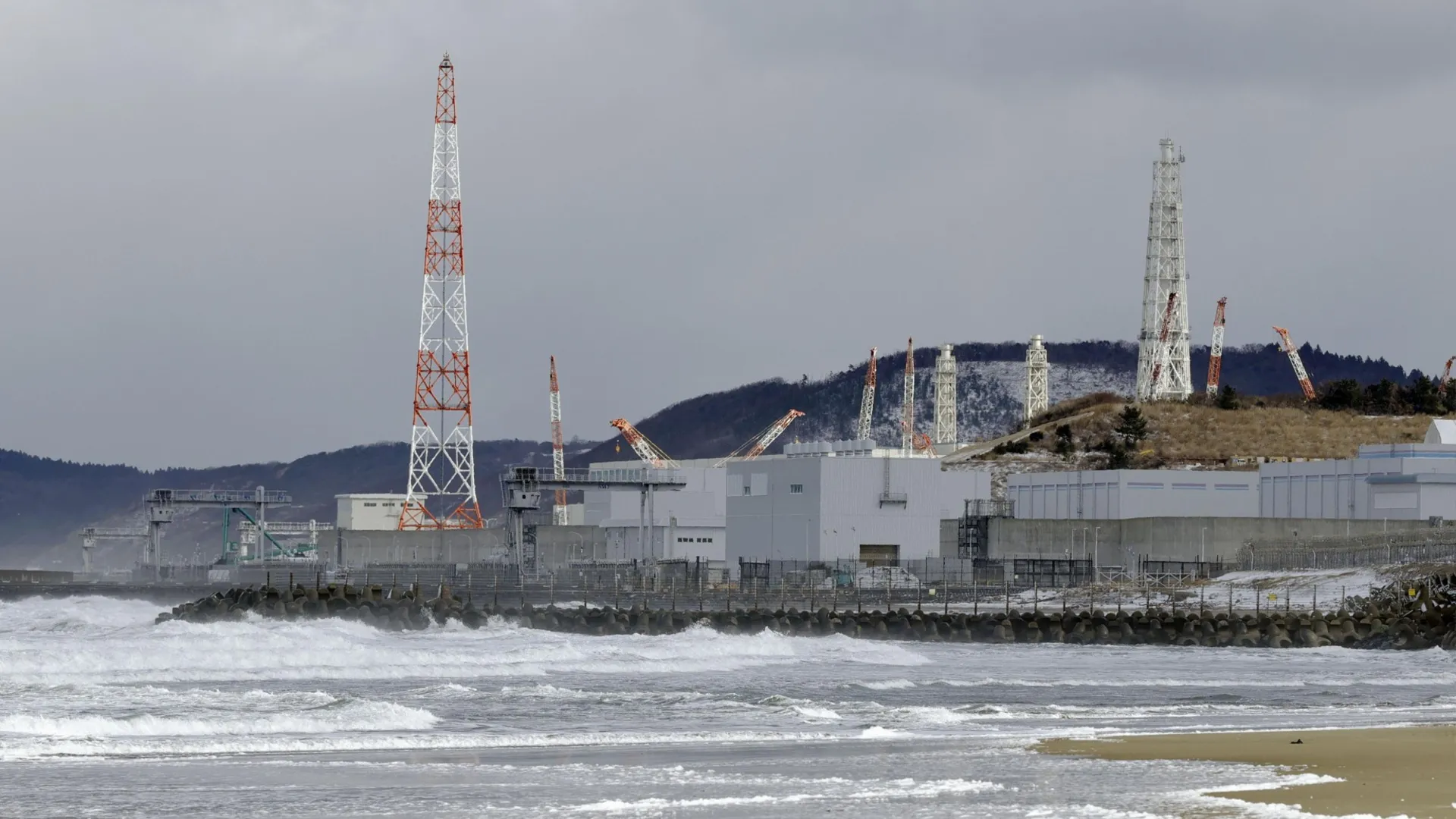
    Is Japan right to restart Fukushima’s reactors?

    The 2011 Fukushima meltdown was a nightmare that all but shut down Japan’s nuclear power industry. But things change, and the country has now restarted the world’s largest nuclear power plant over the objections of neighbors who fear another calamity.

    Restarting reactor No. 6 at Kashiwazaki-Kariwa nuclear power plant northwest of Tokyo is a “milestone in Japan’s slow return to nuclear energy,” said The Guardian. Japan’s government wants to reduce the country’s carbon emissions and increase its energy security without relying on fossil fuels. 

    But many of the 420,000 people living near the plant say the restart is “fraught with danger,” said the outlet. Authorities refused calls to hold a referendum on the plant’s future, but polls show “clear opposition to putting the reactor back online."

    What did the commentators say?
    Japan shut down all 54 of the country’s reactors following the Fukushima incident and has since restarted 14 of the 33 that remain operable, said CNN. The Kashiwazaki-Kariwa restart, though, is seen as a “watershed moment in the country’s return to nuclear energy,” said Reuters. Tokyo Electric Power Co., which operated the Fukushima plant, reports it has a host of new safety measures. 

    Japan’s big nuclear restart is an "economic inevitability,” said Yuriy Humber at Nikkei Asia. Restarting reactors can “help lower electricity bills” in a country still experiencing high inflation. A dormant nuclear plant, meanwhile, “still costs tens of millions of dollars a year to maintain.” All of this has long been true, but the trauma of Fukushima forced officials to take a path that is “slow, deliberate and shaped as much by psychology as by policy.”

    The nuclear power industry in Japan “cannot simply be switched on again,” said Tadahiro Katsuta at Bulletin of Atomic Scientists. Reactors once supplied 29% of the country’s electricity, but that number has dipped to 5%. Renewable energy has started to fill the gap and is expected to fulfill 40% or more of Japan’s energy needs by 2040. The bottom line, though, is that the Fukushima incident demonstrated that the “claimed inherent safety of nuclear power is a myth.”

    What next?
    The return of Kashiwazaki-Kariwa’s reactor was scheduled for yesterday but was delayed  “following an issue with an alarm,” said Bloomberg. The issue was not serious, a company spokesperson said to The Japan Times, and the reactor went online this morning.


    Good day 🐩

    … for German shepherds and poodles. These two breeds have the happiest-looking faces among dogs, according to a study from the University of Pisa. Researchers produced a table of facial expressions across different breeds when in a playful mood to determine how selectively breeding and domesticating wolves have “affected these animals’ facial expressions,” said The Times.


    Bad day 🐧

    … for Antarctic penguins. Three species have drastically shifted the timing of their breeding season due to climate change, according to a study in the Journal of Animal Ecology. Gentoo penguins showed the greatest change with an advance of up to 13 days over 10 years. This threatens to “disrupt penguins’ access to food, increasing concerns for their survival,” said The Guardian.


    Picture of the day

    Cold comfort

    Children play inside a colorful igloo built by locals in Lviv. The city in western Ukraine continues to face bombardment from Russia, including drone strikes that hit a playground last week.
    Yuriy Dyachyshyn / AFP / Getty Images


    Puzzles

    Daily sudoku

    Challenge yourself with The Week’s daily sudoku, part of our puzzles section, which also includes guess the number

    Play here


    The Week recommends

    Travel games that go beyond Uno

    These games serve dual purposes: They can help you beat boredom during long flights and give you something fun to do with friends and family when you finally arrive at your destination. Bonus alert: Each game also comes in a compact container, so it tucks away easily in your carry-on.

    The Chameleon travel pack
    Bluff your way to a win. This social word game is all about determining who’s the chameleon, unless you are the chameleon, and then the goal is to escape without getting caught. Participants will enjoy the fast pace and having to stay on their toes, coming up with clue words that help them blend in and stay under the radar. ($14, Amazon)

    Jaipur
    Designed for two players, Jaipur puts competitors in the “shoes of rival traders” vying to “earn the favor of the Maharaja,” said GamesRadar+. It’s an “easy-breezy” game where the aim is to take and sell goods for points. While “straightforward,” Jaipur is also “absolutely riveting” and comes with beautifully illustrated cards. ($28, Amazon)

    Smug Owls
    Show off your verbal prowess during a game of Smug Owls. Players use a card deck to create a riddle, then try to come up with the most creative response. Everyone will take their own approach to the riddle, and there are no right answers. Some might crack jokes, while others make profound statements. Bring it along on a group vacation, as up to 15 people can play. ($22, Amazon)

    Read more


    Poll watch

    Only 6% of Americans are satisfied with the amount of evidence released from the Jeffrey Epstein files, according to a CNN/SSRS survey. Nearly half (49%) of the 1,209 adults polled are dissatisfied with the case’s handling, while over two-thirds (67%) think the government is intentionally withholding information.


    INSTANT OPINION

    Today's best commentary

    ‘South Korea can stand up to China’
    Victor Cha at Foreign Affairs
    South Korean President Lee Jae-myung is “pulling out all the stops to improve ties with Beijing,” says Victor Cha. For Lee, “cozying up to Xi can stabilize the relationship with South Korea’s largest trade partner and open new channels of influence over rival North Korea, which depends on China economically.” Closer ties with Lee can “boost Beijing’s position in its strategic competition with Washington by helping pull South Korea away” from Japan and the U.S.

    ‘The real reason for the drop in fentanyl overdoses’
    Charles Fain Lehman at The Atlantic
    A paper published earlier this month by a “group of drug-policy scholars in the journal Science presents a novel theory” on falling fentanyl overdoses, says Charles Fain Lehman. The paper’s authors “attribute the reversal not to any American or Canadian policy but to a sudden fentanyl ‘drought,’ which they say may have its causes not in North America but in China.” If right, their conclusion “implies a disheartening lesson amid the otherwise-welcome news.” America’s drug problem “might be in China’s hands.”

    ‘Why we are fighting for Ben & Jerry’s to be independent again’
    Ben Cohen at Time
    Last year, Ben & Jerry’s became “part of a new ice cream conglomerate, The Magnum Ice Cream Company,” and it “started limiting the power of Ben & Jerry’s independent board, which was created to protect our company’s social mission,” says co-founder Ben Cohen. The “impact goes to the heart of what Ben & Jerry’s is and what it was built to be.” The brand “cannot be separated from its values.” The “most powerful tool a business has is its voice. When businesses speak, people listen.”


    WORD OF THE DAY

    burgernomics

    An unofficial gauge of purchasing power in different economies that uses a McDonald’s Big Mac as the price benchmark. The cost of a burger is also, of course, a “barometer of something more basic: the price of beef,” said The Telegraph. And this has gone up as consumers turn back to red meat, with demand outpacing supply.


    Evening Review was written and edited by Theara Coleman, Nadia Croes, Catherine Garcia, Scott Hocker, Justin Klawans, Joel Mathis, Summer Meza and Rafi Schwartz, with illustrations by Stephen Kelly and Julia Wytrazek.

    Image credits, from top: Illustration by Stephen Kelly / Shutterstock / Getty Images; Illustration by Stephen Kelly / Getty Images; Kyodo via Reuters Connect; Illustration by Julia Wytrazek / Getty Images
     

    Recent editions

    • Morning Report

      Trump expands Minnesota fight to political leaders

    • Evening Review

      NATO on the edge

    • Morning Report

      Trump’s Greenland and Nobel fixations merge

    VIEW ALL
    TheWeek
    • About Us
    • Contact Future's experts
    • Terms and Conditions
    • Privacy Policy
    • Cookie Policy
    • Advertise With Us
    • FAQ
    Add as a preferred source on Google

    The Week is part of Future US Inc, an international media group and leading digital publisher. Visit our corporate site.

    © Future US, Inc. Full 7th Floor, 130 West 42nd Street, New York, NY 10036.