The Week The Week
flag of US
US
flag of UK
UK
https://cdn.mos.cms.futurecdn.net/flexiimages/jacafc5zvs1692883516.jpg

SUBSCRIBE & SAVE

Less than $3 per week

Sign in
  • View Profile
  • Sign out
  • The Explainer
  • The Week Recommends
  • Newsletters
  • Cartoons
  • From the Magazine
  • The Week Junior
  • Student Offers
  • More
    • Politics
    • World News
    • Business
    • Health
    • Science
    • Food & Drink
    • Travel
    • Culture
    • History
    • Personal Finance
    • Puzzles
    • Photos
    • The Blend
    • All Categories
  • Newsletter sign up Newsletter
  • The Week Evening Review
    Cuba in Trump’s sights, GPS jamming in the Middle East, and renaming PCOS

     
    TODAY’S BIG QUESTION

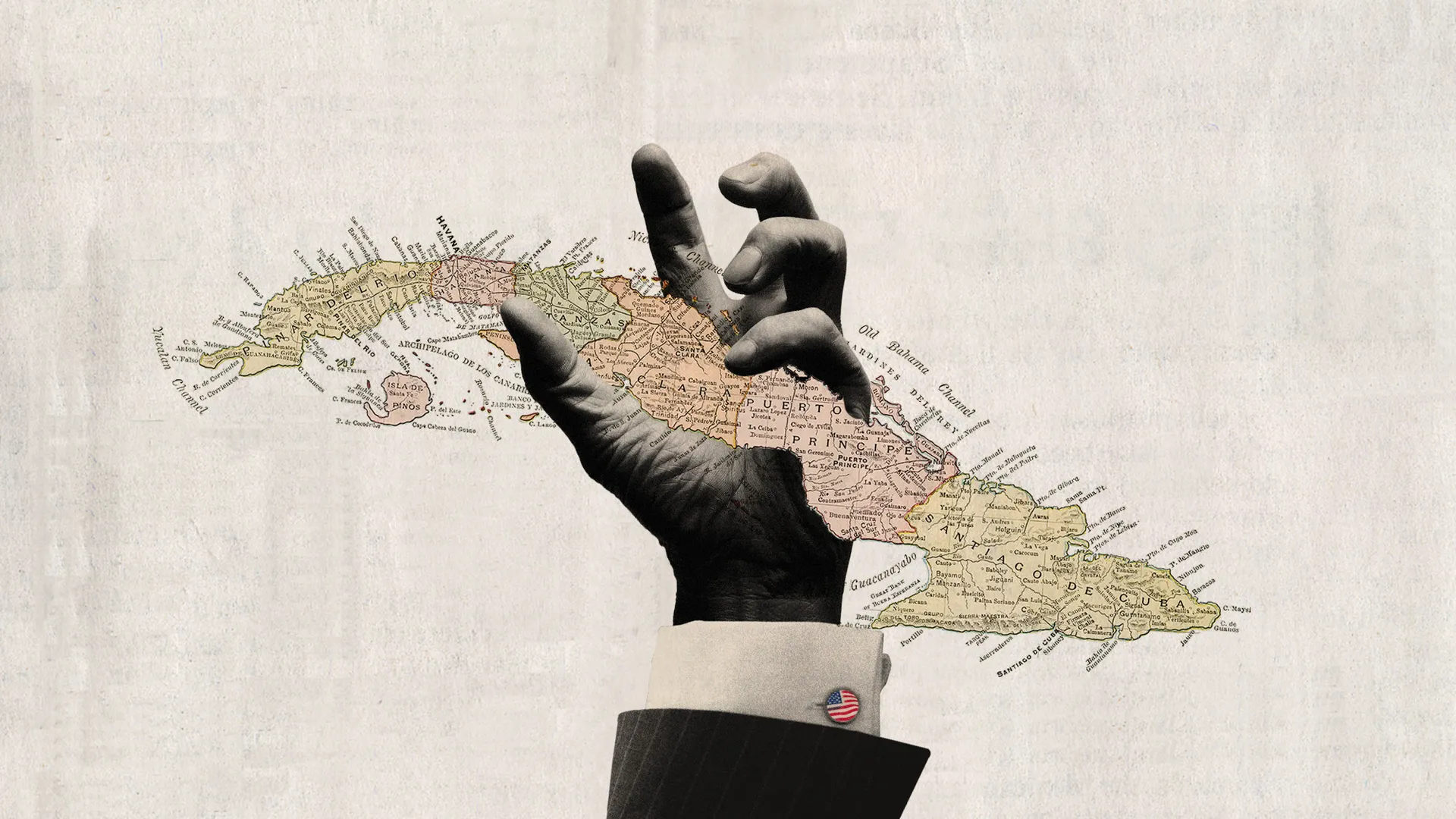
    Is Trump about to launch a war with Cuba?

    The war in Iran is still simmering, but President Donald Trump may already have eyes on his next target: Cuba’s Communist government. An invasion of Cuba “could be imminent,” said Axios. The administration last week “imposed additional sanctions on Havana” amid a “worsening humanitarian crisis” of food shortages and power blackouts exacerbated by a U.S. blockade of oil shipments to the island nation. 

    The U.S. has also surged surveillance flights off of Cuba’s coast, said CNN, and Trump on Friday suggested he might send an aircraft carrier to the region. The president is “growing impatient” that “months of sustained U.S. pressure” have not caused the Communist regime to collapse, said NBC News. Trump speaks about Cuba as if he “wants to make it the 51st state,” said a former U.S. official to the outlet.

    What did the commentators say?
    Trump knows he “can’t bomb his way to victory” in Iran, said Heather Digby Parton at Salon. He instead appears willing to start “yet another military operation” closer to U.S. shores. Invading Cuba seemed “less likely as the quagmire in Iran has developed,” but the president may see pivoting back to the Western Hemisphere as a way to “distract from his failure” in the Middle East. Cuba is in weakened condition right now. A quick victory might be achievable. 

    The Trump administration is unlikely to install a “new democratically disposed government” in Havana, said Renee Pruneau Novakoff at The Cipher Brief. But it’s “realistic” to demand the regime boot Russian and Chinese intelligence operations from its shores. That “important milestone” would allow the U.S. and Cuba to “move forward with the relationship” between the two countries. Beyond that, however, “regime change will have to be a Cuban affair.”

    What next?
    Senate Republicans are “cautioning” Trump against a Cuba attack, said The Hill. The U.S. should remain “focused” on “trying to get the Strait of Hormuz opened up,” said Senate Majority Leader John Thune to reporters. GOP senators last month blocked a resolution forbidding military action, said the outlet, but sentiment in the party is “shifting as a military operation against Cuba appears more likely.”


    QUOTE OF THE DAY

    ‘Alligator Alcatraz is a stain on our nation and a blight on the Everglades, and I look forward to watching this depraved facility bite the dust.’

    Elise Bennett, an attorney at the nonprofit Center for Biological Diversity, to The Guardian on the notorious ICE detention center. Bennett’s group, in partnership with Friends of the Everglades, is fighting an appeals court ruling that overturned an August district court decision ordering the shuttering of Alligator Alcatraz.


    IN THE SPOTLIGHT

    GPS jamming is wreaking havoc in the Middle East 

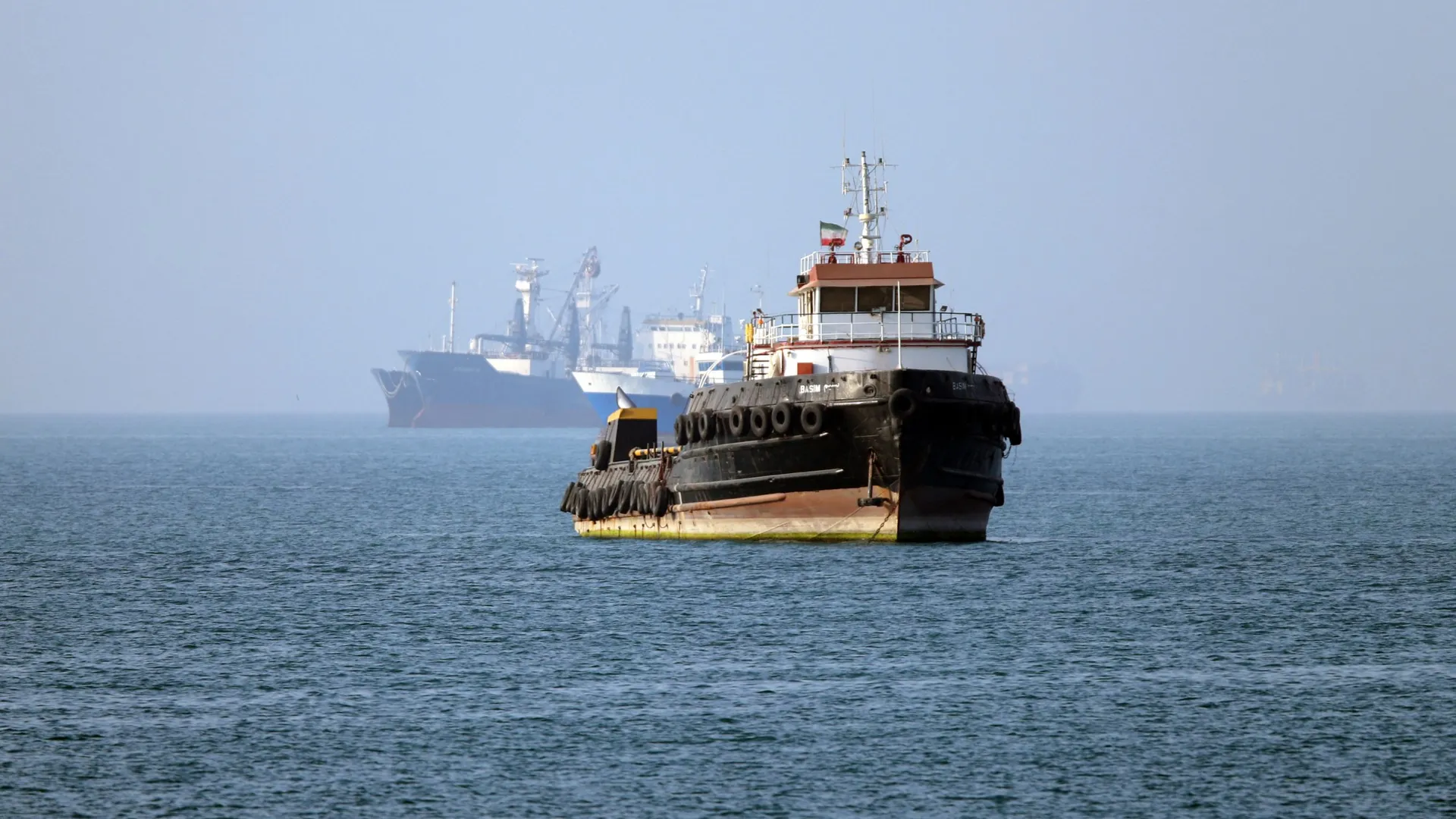
    Across the Middle East, GPS jamming has exploded since the U.S. and Israel began their war against Iran in February, “plunging both sides into an electronic warfare arms race,” said The Independent. “Underlying the dramatic clashes across the region,” forces on all sides are “quietly fighting an invisible war by land, air and sea, distorting tracking information to sow chaos or hide in plain sight.”

    ‘Major issue’
    Jamming is the disruption of signals from global navigation satellite systems with electromagnetic noise. Spoofing is more sophisticated and involves transmitting fake signals to provide a false location. And both are used to distort drone and missile guidance systems. Interference isn’t a “new phenomenon,” said CNN. It has been used in modern warfare since World War II. But it has become a “major issue” for shipping and aircraft since the Russian invasion of Ukraine in 2022.

    While all sides engage in such disruption, Iran is particularly “prolific” in spoofing, said Philip Ingram, an intelligence expert and former British Army colonel, to CNN. Tehran uses it to “add confusion and disrupt any of the allied intelligence gathering.”

    ‘Gone dark’
    The problem with GPS jamming is that it cannot be contained within precise geographic boundaries and does not discriminate between military and commercial systems. On the first day of the war alone, electronic interference disrupted the navigation systems of more than 1,100 commercial ships in Iranian, Omani, Qatari and UAE waters, according to a Windward report, per Inside GNSS.

    The missiles and drones “make for good headlines, but they are a distraction,” said global financier Erik Bethel and maritime trade expert Ami Daniel at Fortune. The “real story” is that the Strait of Hormuz, through which a fifth of the world’s oil and gas passes, has “gone dark.” This is “not in some poetic sense but literally.”

    Various technologies offer protection against GPS jamming, and military-grade GPS is more resistant, but the race is on to find a more secure alternative. Global navigation satellite systems are a “wonder of the modern world,” but the “luxurious era of those signals not being messed about with intentionally is over,” said Ramsey Faragher, the chief executive of the Royal Institute of Navigation in London, to CNN. “We need to rapidly catch up.”


    Statistic of the day

    32.3 million: The record-high number of conflict- or violence-driven internal displacements around the world in 2025, according to a report published by the Internal Displacement Monitoring Center. The figure surpasses the number of natural-disaster-driven internal displacements, which reached 29.9 million last year, for the first time since data collection began in 2008.


    THE EXPLAINER

    The impact of renaming polycystic ovary syndrome 

    After years of combined effort, an international coalition has proposed a new name for a reproductive disorder that affects 5 million to 6 million American women, according to the CDC. The group hopes that renaming polycystic ovary syndrome (PCOS) to polyendocrine metabolic ovarian syndrome (PMOS) will help illuminate a better path forward in treating it.

    Why is it being changed?
    Patients with symptoms like “irregular periods, pelvic pain, excess body hair and acne” have long been diagnosed with PCOS, said The New York Times. Getting a diagnosis can be difficult, and those who do encounter stigma and imperfect treatment options along the way. 

    A consortium of doctors and researchers concluded that the condition’s name was part of the problem. Many PCOS patients “don’t have ovarian cysts at all” but often have “widespread hormonal and metabolic dysfunction.” So the name polyendocrine metabolic ovarian syndrome was introduced in a policy paper published in The Lancet and presented at the European Congress of Endocrinology in Prague.

    Since the previous name didn’t accurately describe the condition, it contributed to “delayed diagnosis, fragmented care and stigma, while curtailing research and policy framing,” said the consortium in the paper. The new name “moves away from the incorrect focus on cysts” to recognizing this as a “much broader condition,” said lead study author Helena Teede, the director of Melbourne’s Monash Center for Health Research and Implementation, to The Guardian. 

    How will the renaming affect treatment?
    It may “transform how patients understand the condition” and “how doctors treat it,” said the Times. When a condition affects one organ, everything from research funding to education to clinical guidelines is “all in that box,” said Teede to the outlet. And in this condition, it was “in the wrong box.”

    The change could have “immediate implications for patients,” prompting doctors to “recommend more screening for metabolic and cardiovascular problems,” said the Times. Renaming it could also “redirect” professionals into “thinking about this as a long-term chronic condition,” said Basma Faris, an assistant professor at the Icahn School of Medicine at Mount Sinai, to the outlet, and “not just a period problem.”


    Good day 🚮

    … for tourists to Germany. Visitors in Berlin could soon exchange “sustainable behavior” for free attraction tickets, said Euronews. The scheme would compensate any holidaymaker who “collects rubbish, helps spruce up their neighborhood or supports social projects.” Rewards could include free or discounted entry to attractions and meal vouchers at participating restaurants, according to Visit Berlin. 


    Bad day 💵

    … for American partygoers. A Mexico City nightclub has gone viral for upping its cover charge to $300 for U.S. citizens, while Latin Americans get in for $14 and everyone else pays $20. This is a “response to a year of insults directed at us, as a country, by the United States,” said Federico Crespo, the owner of the confusingly named Japan nightclub, in an Instagram post.


    Picture of the day

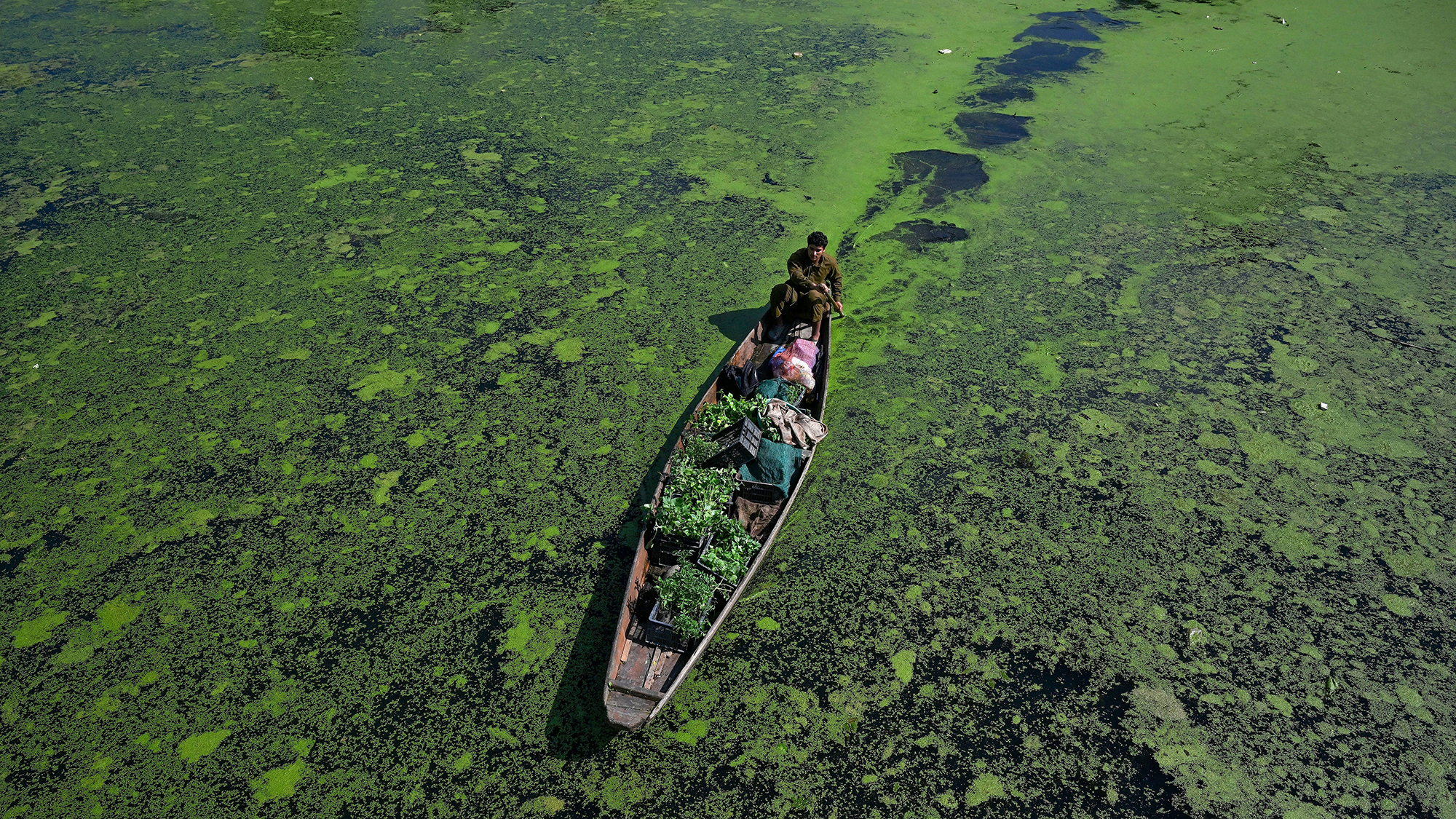
    Turning green

    A vegetable vendor navigates the polluted waters of Dal Lake in Indian-administered Kashmir. Despite being known as the “jewel in the crown of Kashmir,” the urban lake is swamped with toxic algae blooms after decades of contamination with untreated sewage.
    Tauseef Mustafa / AFP / Getty Images


    Puzzles

    Daily sudoku

    Challenge yourself with The Week’s daily sudoku, part of our puzzles section, which also includes guess the number

    Play here


    The Week recommends

    The best disaster TV series of all time

    The seemingly limitless budgets and bottomless demand for content of the streaming television era have allowed studios to dramatize both long-ago and recent disasters. These might never have gotten the Hollywood treatment a generation ago, ushering in a little-noticed golden age of disaster television headlined by these series.

    ‘Tsunami: The Aftermath’ (2006)
    The 2004 Indian Ocean tsunami was by far the deadliest natural disaster of the 21st century, killing more than 227,000 people. Much less well-known than the 2012 film “The Impossible,” HBO Max’s “Tsunami: The Aftermath” is gripping viewing. The series depicts the aftermath of the disaster, showing that in “death, human lives develop very different values to different communities,” said Virginian Heffernan at The New York Times. (HBO Max)

    ‘Five Days at Memorial’ (2022)
    Hurricane Katrina, which killed 1,833 people in August 2005, remains one of the most underdramatized disasters in memory. One exception is the Apple TV+ drama “Five Days at Memorial.” Framed by a post-hurricane investigation into the deaths of 45 patients at the series’ namesake hospital, the eight-part series is a “powerful indictment of government and corporate inaction, and outright neglect,” said Manuel Betancourt at A.V. Club. (Apple TV+)

    ‘High Water’ (2023)
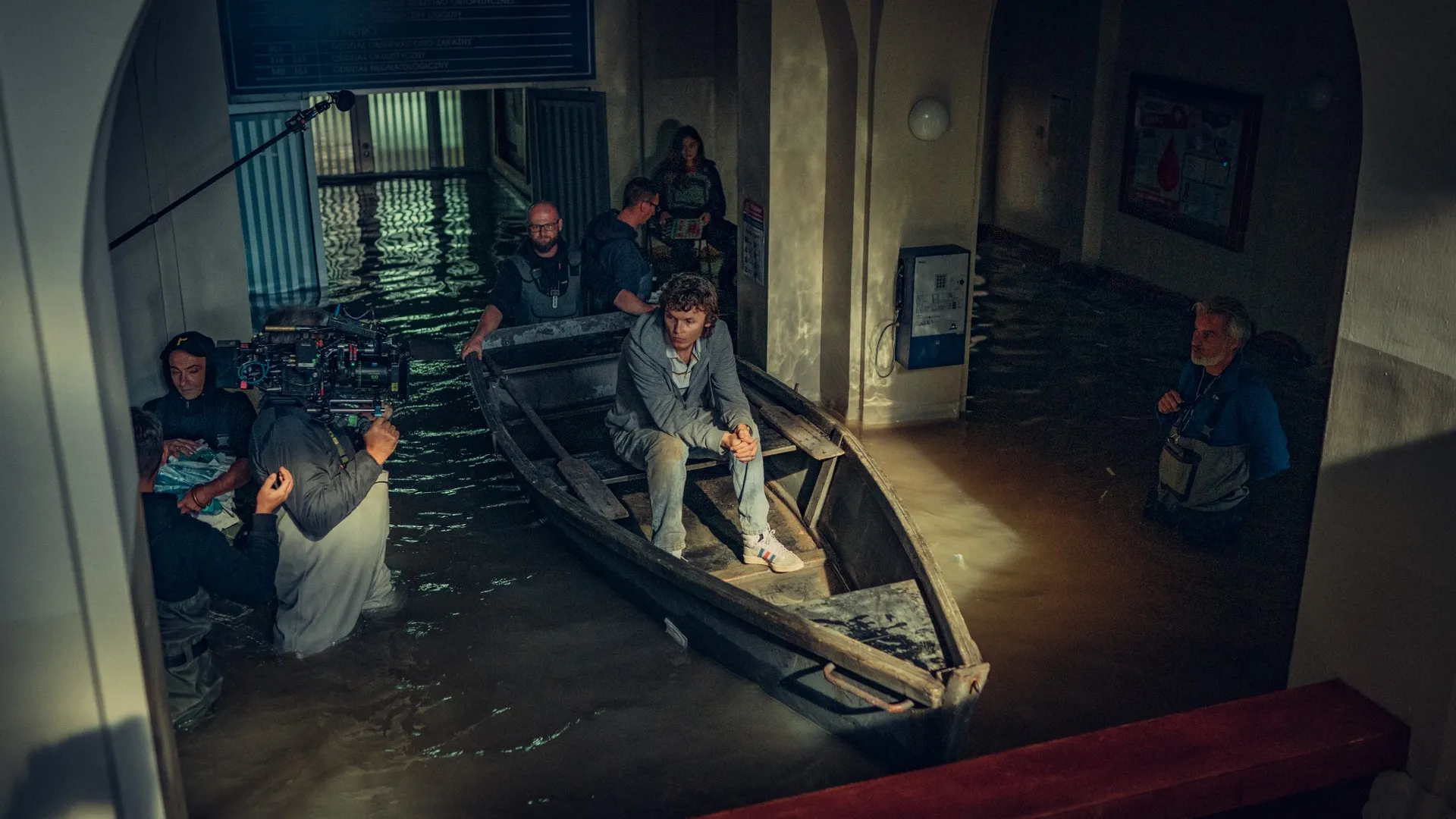
    Disasters happen everywhere. In July 1997, parts of Poland, Germany and the Czech Republic were struck by catastrophic river flooding. “High Water” (pictured above) tells the story of the Polish city of Wrocław, which was completely inundated. A “character-driven ensemble” carries the show, said Greg Wheeler at The Review Geek, one that “doesn’t slip into the realm of soapy drama.” (Netflix)

    Read more


    Poll watch

    About 80% of companies deploying AI agents, intelligent automation or autonomous business technologies are cutting staff, according to a recent survey from business and technology insights company Gartner of 350 people in mid- and high-level positions. However, those reductions “do not appear to translate into return on investment,” said Gartner.


    INSTANT OPINION

    Today’s best commentary

    ‘Why Spain is standing up to Trump’
    Ishaan Tharoor at The New Yorker
    Spain has “denied the U.S. access to its military bases for operations linked to Iran,” and Prime Minister Pedro Sánchez “seemed to revel in the clash,” says Ishaan Tharoor. Sánchez’s “criticism of the war has set him up as a conspicuous foil” to Trump, and Spain’s “stand is a matter of principle, consistency and adherence to the importance of international law.” The nation has a “distinctly different relationship with the United States than countries such as Britain, France and Germany do.”

    ‘Trump’s “weird war” on wind power will jeopardize our energy future and cost Americans billions’
    Michael Hiltzik at the Los Angeles Times
    Trump’s “war against wind is full-blown,” and on “some level, this crusade resembles Trump’s misguided effort to revive the American coal industry,” says Michael Hiltzik. He’s  “waging an explicitly partisan and ideological battle,” and the president’s “anti-wind program is part of his campaign to dismantle U.S. renewables policy because of its roots in the Biden administration.” What’s “especially wasteful about Trump’s crusade against wind power is that it’s almost certain to be time-limited.”

    ‘Remote work made life easier. It also made us rusty.’
    Renée Loth at The Boston Globe
    Supporters of a “return to office — mostly business interests, of course — cite improved productivity,” but “another argument for dragging ourselves back to the office gets far less attention: the need to reboot the workplace social skills that have atrophied,” says Renée Loth. The office is a “petri dish of human interaction,” and the “grit, wisdom and compassion it takes to thrive in an office environment are virtues that protect and enrich experiences throughout a whole lifetime.”


    WORD OF THE DAY

    鲁

    A Mandarin Chinese character, pronounced “Lu,” used to represent Marco Rubio’s surname. Chinese state media previously used 卢, which has a similar pronunciation, for the secretary of state. The change is a diplomatic workaround to allow him to join this week’s summit in China despite sanctions and an entry ban imposed under his “old” name, according to analysts.


    Evening Review was written and edited by Theara Coleman, Nadia Croes, David Faris, Scott Hocker, Anya Jaremko-Greenwold, Justin Klawans and Joel Mathis, with illustrations by Julia Wytrazek.

    Image credits, from top: Illustration by Julia Wytrazek / Getty Images; Amirhossein Khorghooei / ISNA / AFP via Getty Images; Carol Yepes / Getty Images; Robert Palka / Netflix
     

    Recent editions

    • Morning Report

      The Fed’s Warsh era begins with soaring inflation

    • Evening Review

      Young Americans’ pessimism about the job market

    • Morning Report

      FDA chief runs out of allies and time

    VIEW ALL
    TheWeek
    • About Us
    • Contact Future's experts
    • Terms and Conditions
    • Privacy Policy
    • Cookie Policy
    • Advertise With Us
    • FAQ
    Add as a preferred source on Google Add as a preferred source on Google

    The Week is part of Future US Inc, an international media group and leading digital publisher. Visit our corporate site.

    © Future US, Inc. Full 7th Floor, 130 West 42nd Street, New York, NY 10036.