The Week The Week
flag of US
US
flag of UK
UK
https://cdn.mos.cms.futurecdn.net/flexiimages/jacafc5zvs1692883516.jpg

SUBSCRIBE & SAVE

Less than $3 per week

Sign in
  • View Profile
  • Sign out
  • The Explainer
  • The Week Recommends
  • Newsletters
  • Cartoons
  • From the Magazine
  • The Week Junior
  • Student Offers
  • More
    • Politics
    • World News
    • Business
    • Health
    • Science
    • Food & Drink
    • Travel
    • Culture
    • History
    • Personal Finance
    • Puzzles
    • Photos
    • The Blend
    • All Categories
  • Newsletter sign up Newsletter
  • Brand Logo
    Iran strikes, Venezuela oil grab and Roman Space Telescope

     
    TODAY’S IRAN WAR story

    US strikes Iran as generals warn of prolonging war

    What happened
    The U.S. yesterday struck two missile launchers on Iran’s Larak Island in the Strait of Hormuz, its first confirmed airstrikes on Iran since July 29. U.S. Central Command said Iran was preparing to fire sea mines into the strait, days after President Donald Trump declared the international shipping lanes clear of mines.

    Iran’s Islamic Revolutionary Guard Corps said the U.S. strikes killed “several” military personnel and civilians, and warned of “severe repercussions.” Jordan said it successfully intercepted eight missiles that entered its airspace this morning, headed for U.S. airbases.

    Who said what
    The resumption of airstrikes heightened the “risk of a return to all-out conflict,” The Wall Street Journal said, something Trump “has been working to avoid.” The administration recently pivoted to sanctions as it “weighs diminished munitions stockpiles” after six months of war, The Associated Press said. 

    The “heads of the Army, Navy and Air Force” and other “four-star commanders” warned Defense Secretary Pete Hegseth this month that “prolonging large-scale operations against Iran is unsustainable and risks weakening their ability to confront threats elsewhere, including the U.S. homeland,” The Washington Post reported yesterday. The U.S. military is “experiencing a ‘beyond critical’ shortage of advanced missile interceptors in Europe,” the AP said last week, citing a U.S. defense official.

    What next?
    As the war “grinds on, Trump’s talk of finding a quick end” appears to be “fading,” the AP said. He has “repeatedly declared that the ‘Strait of Hormuz is open,’” but Iran continues to strike cargo ships. Brent crude oil jumped 2.8% to $90.57 a barrel after yesterday’s attacks.


    TODAY’S ENERGY story

    Questions mount on Trump’s Venezuela oil deal

    What happened
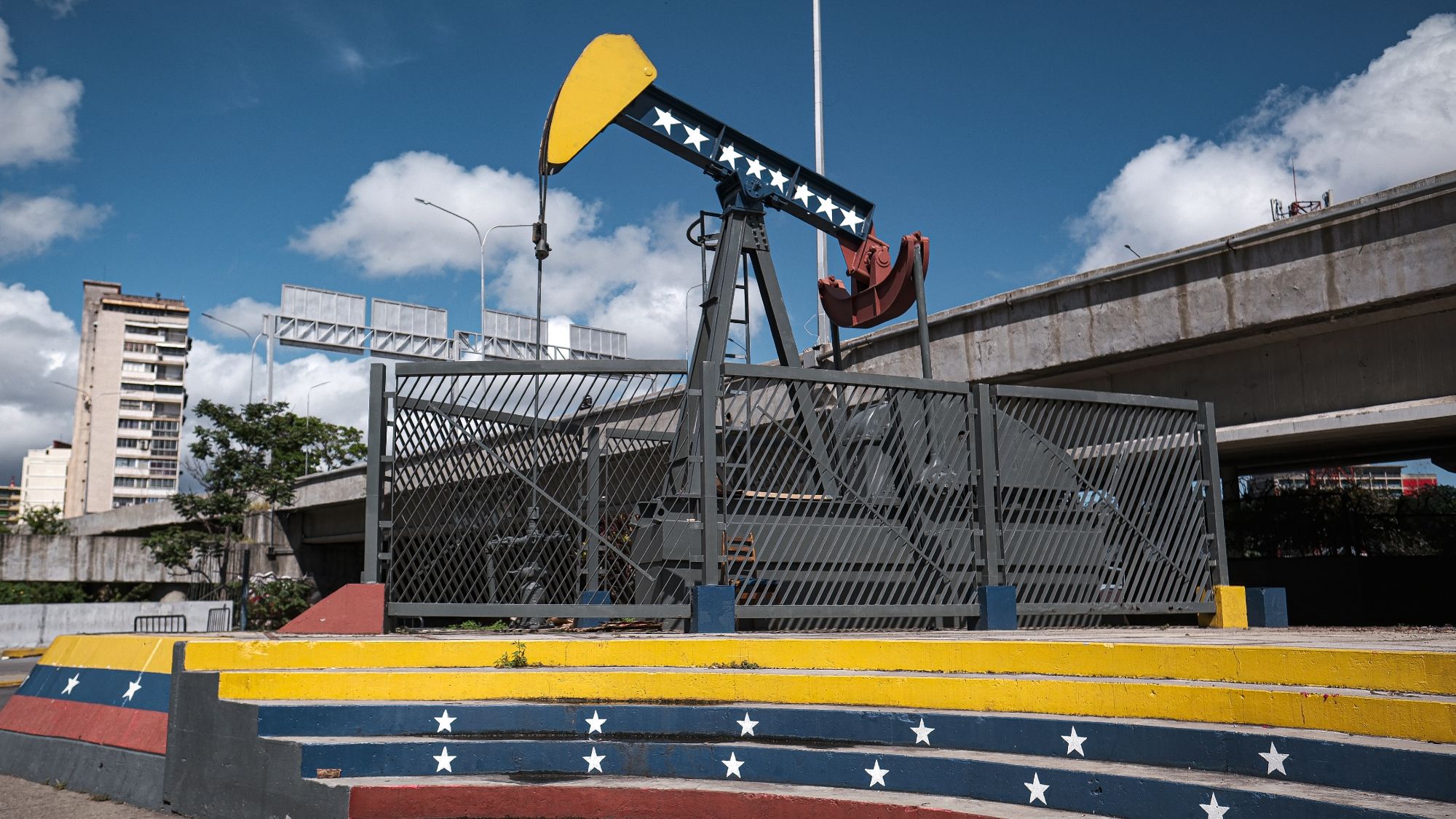
    President Donald Trump late Friday said his administration had reached the “BIGGEST OIL DEAL IN WORLD HISTORY” with Venezuela. The agreement, later confirmed by acting Venezuelan President Delcy Rodríguez, gives the U.S. rights to 65 billion barrels of the country’s oil reserves. Trump yesterday described the oil as a “Gift from Venezuela,” and said it would start refilling the U.S. Strategic Petroleum Reserve “very shortly.” But “no text of any agreement has been released,” The Associated Press said, and “many questions” remain unanswered. 

    Who said what
    Trump has been withdrawing oil “for months to keep prices from rising even higher” during the Iran war, and the strategic reserve “now sits at its lowest level since 1982,” The New York Times said. But refilling it with this Venezuelan oil is “something of a pipe dream.” Experts have “repeatedly warned that Venezuela’s dilapidated oil infrastructure will take years and billions of dollars to repair,” the AP said, and it’s unclear “who would pay for infrastructure investments.” 

    The details we know “aren’t cause for enthusiasm,” The Wall Street Journal said in an editorial. The Trump administration, through the Pentagon, is “essentially getting in bed with a foreign dictator and her favored capitalist,” Alejandro Betancourt.

    What next?
    Oil companies “will remain cautious even if the terms of the deal, once released, pass legal muster,” Bob McNally, a former energy adviser to President George W. Bush, told the AP. “A future president could withdraw, and Caracas has twice thrown foreign investors out.” 


    TODAY’S SPACE Story

    NASA launches Roman telescope to capture cosmos

    What happened
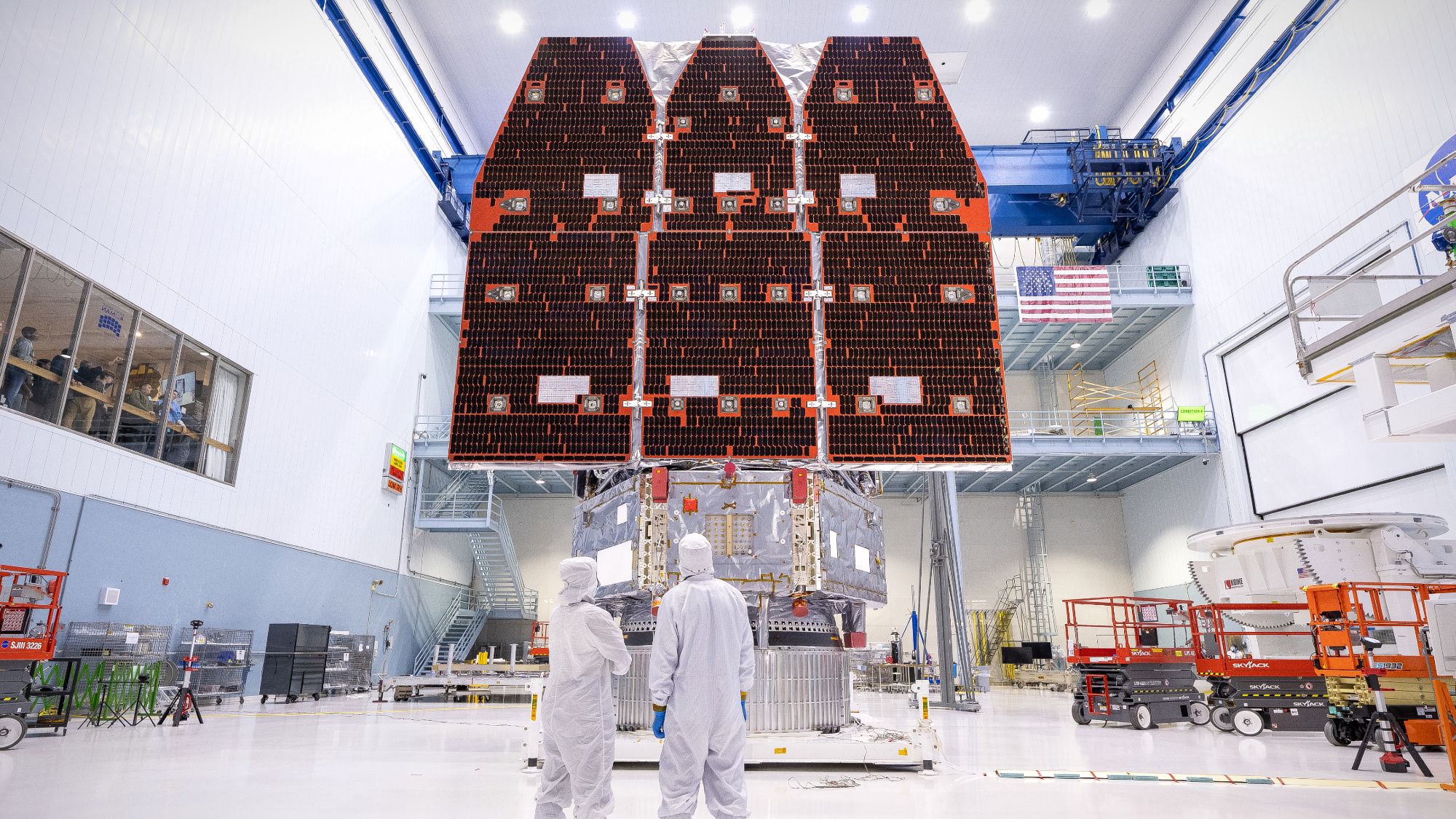
    NASA yesterday launched the Nancy Grace Roman Space Telescope, a $4.3 billion repurposed spy satellite designed to capture panoramic views of the cosmos, cataloguing Earth-like exoplanets and helping solve some of the biggest mysteries of astrophysics: dark matter and dark energy. The bus-sized telescope, named after NASA’s first chief astronomer, blasted off from Florida’s Cape Canaveral aboard a Space X Falcon Heavy rocket en route to an observation point a million miles away.

    Who said what
    Roman is “NASA’s latest and greatest cosmic cartographer,” The New York Times said. Set to send back a “whopping one terabyte of data each day,” the telescope “promises a panorama so wide and so crisp that it would take more than half a million high-definition TVs to display in full.” The Webb Space Telescope, like a zoom lens, is designed to “probe very deeply and with exquisite sensitivity ​into the universe,” senior project scientist Julie McEnery said Saturday. “Roman’s vast reach will allow us to find the weird, the rare and the unusual.” 

    The new telescope’s real “superpower is speed,” The Associated Press said. The Hubble Space Telescope, “still churning out celestial glamour shots after 36 years,” could scan the entire Milky Way in a century; Roman can do it in a month.

    What next?
    Roman is scheduled to arrive at its L2 orbit point in about 100 days. “Its mission is planned for five years,” Reuters said, “though NASA said the telescope may have enough fuel for five additional years.”


    It’s not all bad

    People from around the world are donating to a Michigan pizzeria to provide a hot meal for those who need one. Shanna Crice, manager of Rosco’s Pizza in Union, posted online about receiving a call from someone asking if leftover food was ever thrown away. A follower suggested starting a meal wall, where people could pay for the dinner of someone experiencing hunger. The idea took off, and dozens of $10 meal tickets are now available at Rosco’s for those in need.


    Under the radar

    Barrels of radioactive waste are leaking into the Atlantic

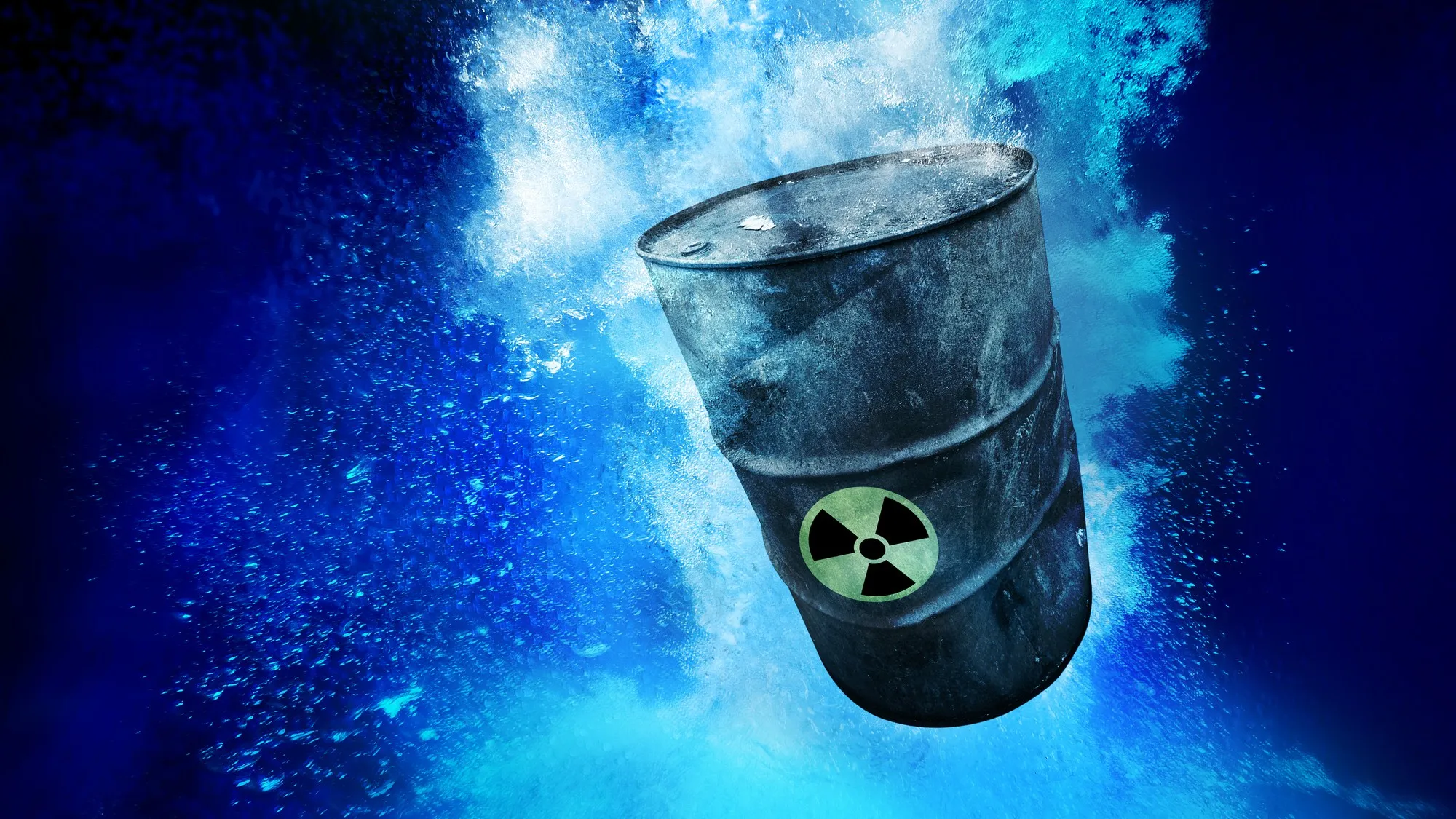
    Old radioactive waste from discarded barrels may be slowly seeping into the Atlantic Ocean and affecting the marine ecosystem. Between 1950 and 1990, “more than 200,000 barrels filled with radioactive waste were dumped in the depths of the North-East Atlantic,” said France’s National Center for Scientific Research (CNRS) in a news release. Scientists first mapped the area on a mission in summer 2025, and they recently completed a second observation mission where they carried out dives using a manned submersible.

    The barrels, which sit “between 10,000 and 16,000 feet down,” contain “low- and intermediate-level radioactive material” including “process sludge, contaminated metal and laboratory equipment,” said Futura. Researchers were able to “document the advanced state of deterioration of several barrels” and “observe that some of them had leaked their contents,” CNRS said.

    Images “alone cannot determine if radionuclides have entered the marine food web,” said Futura. So the researchers collected “precise water, fauna and sediment samples,” allowing them to “measure exactly how far any escaping radioactive materials have migrated into the deep sea ecosystem.”

    There were “significant signals of radionuclides specifically linked to this waste,” said researchers Javier Escartin and Patrick Chardon at The Conversation. The difficulty now is in “separating any potential leakage from historical background radiation,” said Futura. 

    It also remains unclear “whether deep-sea life is absorbing” the radioactive material and “whether it’s moving through sediment and water in meaningful amounts,” said The Cool Down. Studying the collected samples will provide more information on the effect underwater communities have on the transfer of radionuclides.


    On this day

    August 31, 1992

    The Ruby Ridge standoff ended in rural Idaho when white separatist Randy Weaver surrendered to authorities. The 11-day siege had started when federal agents attempted to arrest Weaver on firearms charges; his wife, son and a deputy U.S. marshal were killed. Ruby Ridge helped fuel the modern anti-government militia movement.


    TODAY’S newspaperS

    ‘Shackles and agony’

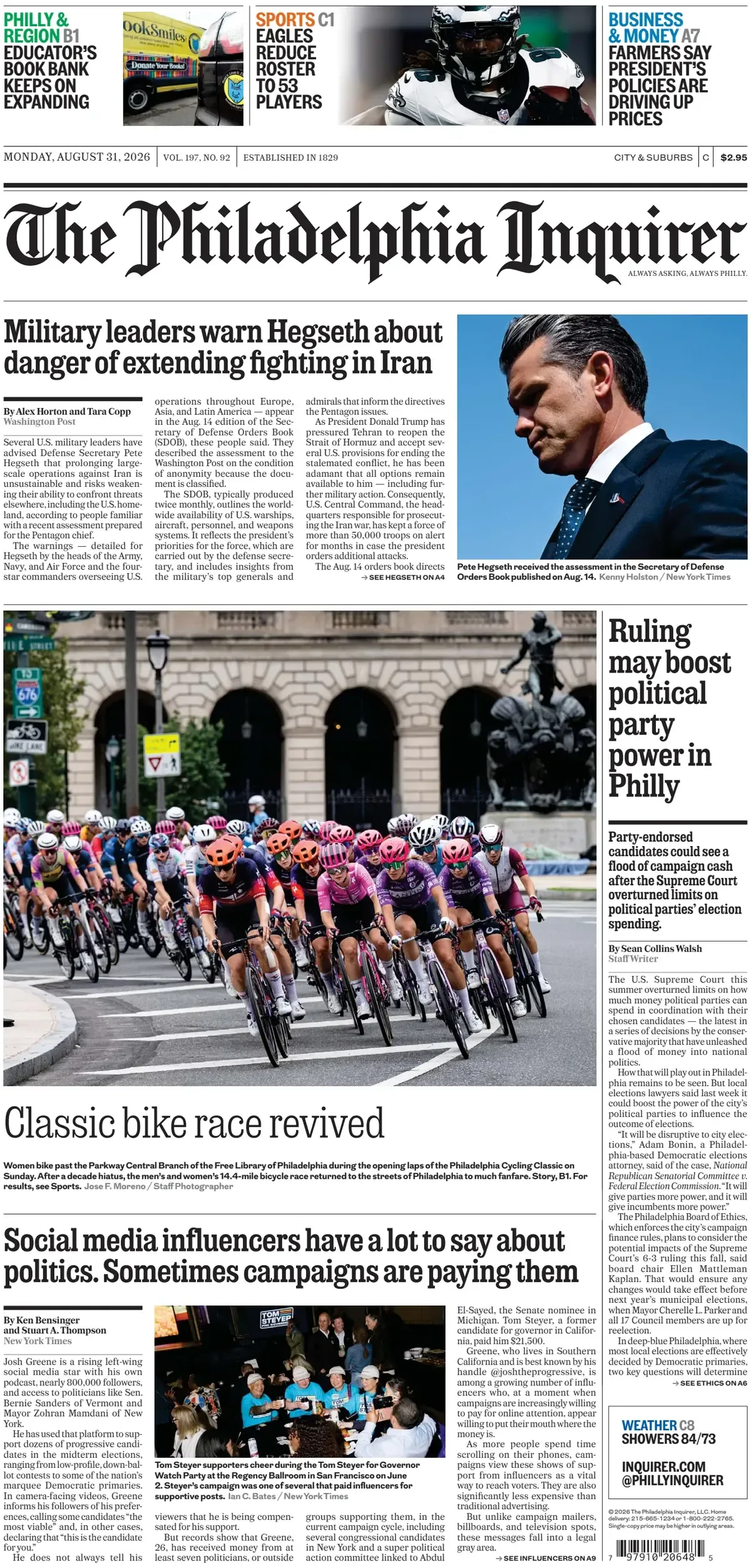
    “Social media influencers have a lot to say about politics,” sometimes for pay, The Philadelphia Inquirer says on Monday’s front page. “Secret hires in civilian roles promote Hegseth’s culture-war fights,” The Washington Post says. “Iran war exacts uneven six-month toll,” as “investors are prospering, consumers paying,” The Minnesota Star Tribune says. “Booming corporate earnings fuel lofty outlooks,” as “AI investment, tariff refunds drive gains,” The Wall Street Journal says. “Americans unite in fight vs. Big Tech,” says USA Today. Arizona attorney general “to investigate use of Flock cams in state,” the Arizona Republic says. ICE “detainees flown to Africa tell of shackles and agony,” The New York Times says. “Grand Canyon floods,” with “1 dead, 15 unaccounted for,” the Las Vegas Review-Journal says. “Nepal warns of further flooding,” says the Austin American-Statesman. 

    ► See the newspaper front pages


    Tall tale

    Good clean fun

    A sheep in Germany went on a wild ride after escaping from its farm, including riding a bus through an oversized car wash. The unlikely passenger walked onto the unlocked bus in Ludinghausen. When the driver returned, he spotted the stowaway, and the name of its owner on a plastic ear tag. While waiting to get picked up, the sheep was “calm and cooperative,” and enjoyed accompanying the driver through the bus car wash, said UPI.


    Morning Report was written and edited by Nadia Croes, Catherine Garcia, Scott Hocker, Anya Jaremko-Greenwold, Justin Klawans, Rafi Schwartz and Peter Weber, with illustrations by Stephen Kelly and Julia Wytrazek.

    Image credits, from top: Vahid Salemi / AP Photo; Diko Betancourt / Anadolu via Getty Images; Jolearra Tshiteya / NASA via AP; Sean Gladwell / Getty Images
     

    Recent editions

    • Sunday Shortlist

      Wile E. Coyote takes Acme to court

    • Saturday Wrap

      Natalie Harp’s outsized influence

    • Evening Review

      The failing far-right firewall in Germany

    VIEW ALL
    TheWeek
    • About Us
    • Contact Future's experts
    • Terms and Conditions
    • Privacy Policy
    • Cookie Policy
    • Advertise With Us
    • FAQ
    Add as a preferred source on Google Add as a preferred source on Google

    The Week is part of Future US Inc, an international media group and leading digital publisher. Visit our corporate site.

    © Future US, Inc. Full 7th Floor, 130 West 42nd Street, New York, NY 10036.