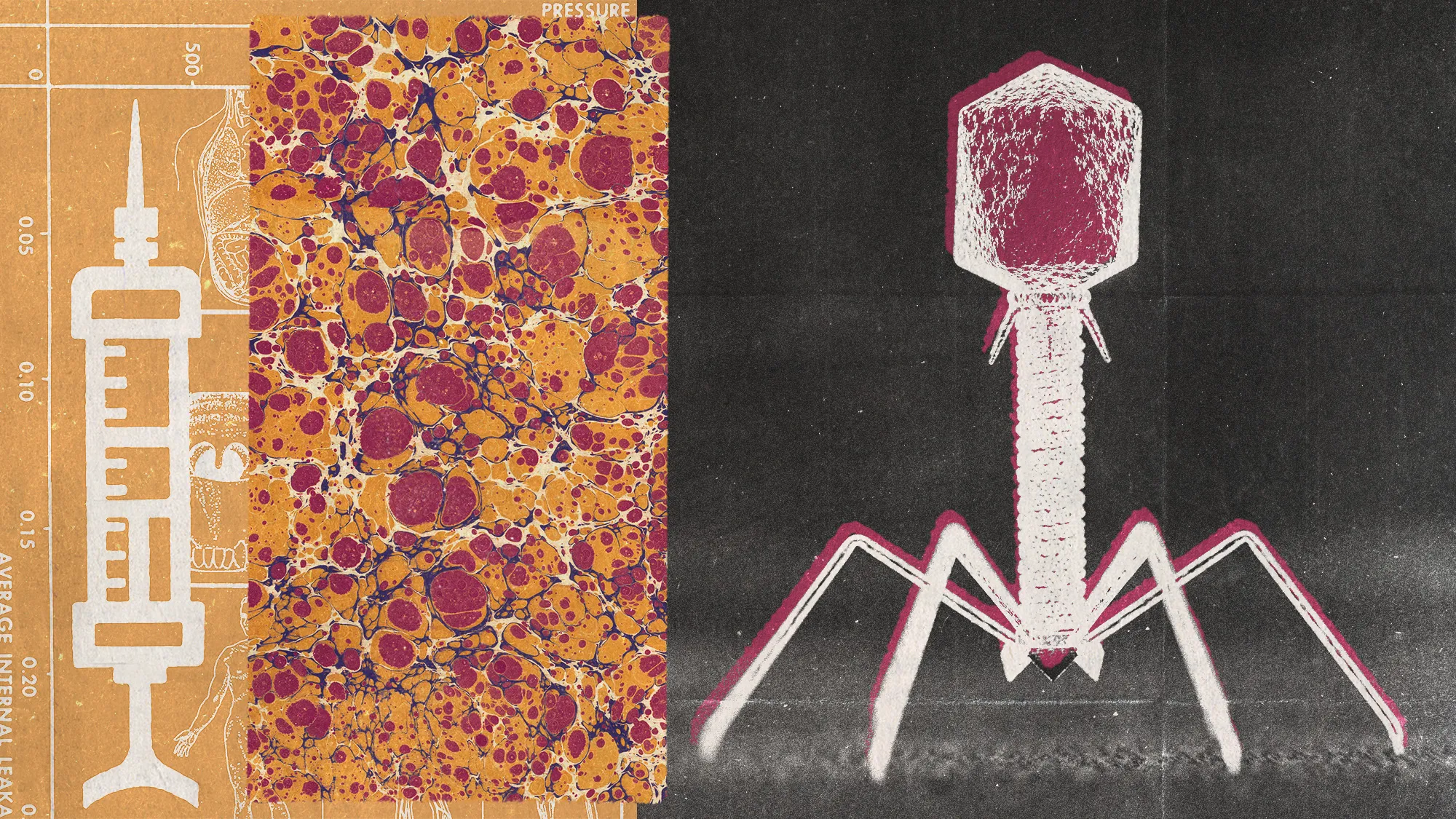
A California startup has used AI to create and test a tailor-made virus it hopes can fight off a bacterial infection. It has the potential to help people fight disease without worsening antibiotic resistance.
Researchers at Radical Numerics administered an AI-designed bacteriophage, or bacteria-killing virus, to a patient “suffering from a deadly bacterial infection,” said The New York Times. If the phage successfully kills the antibiotic-resistant microbes, the FDA-approved experiment could “point to a new way to use AI in medicine.”
Phage therapy existed long before AI. Phages can “target particular bacteria with remarkable specificity, sparing beneficial bacteria such as those in the gut that support digestion,” Radical Numerics said in a technical paper. But the process can be time-consuming, screening “existing phage collections for effective candidates” to fight specific bacterial samples, then searching for new phages if none work.
Using AI instead can “lead to rapid on-demand generation of phages that meet patient requirements,” said The Independent. This speeds up the “timeline for treatment.”
“If it works, that’s incredible,” said Michael Baym, a microbiologist at Harvard University, to the Times. “My impulse is to be skeptical.”
It may take days or weeks to know if the Radical Numerics phages, designed with its Omnii AI model, succeed. “We intend to publish our scientific findings through peer-reviewed research,” company CEO Eric Nguyen told the Times, “with any future disclosure of clinical details subject to appropriate consent.” |