The Week US
flag of US
US
flag of UK
UK
https://cdn.mos.cms.futurecdn.net/flexiimages/jacafc5zvs1692883516.jpg

SUBSCRIBE & SAVE

Less than $3 per week

Sign in
  • View Profile
  • Sign out
  • The Explainer
  • The Week Recommends
  • Newsletters
  • Cartoons
  • From the Magazine
  • The Week Junior
  • More
    • Politics
    • World News
    • Business
    • Health
    • Science
    • Food & Drink
    • Travel
    • Culture
    • History
    • Personal Finance
    • Puzzles
    • Photos
    • The Blend
    • All Categories
  • Newsletter sign up Newsletter
  • Brand Logo
    SCOTUS rejection, Chicago legal heat and the end of odyssey

     
    TODAY’S ELECTIONS story

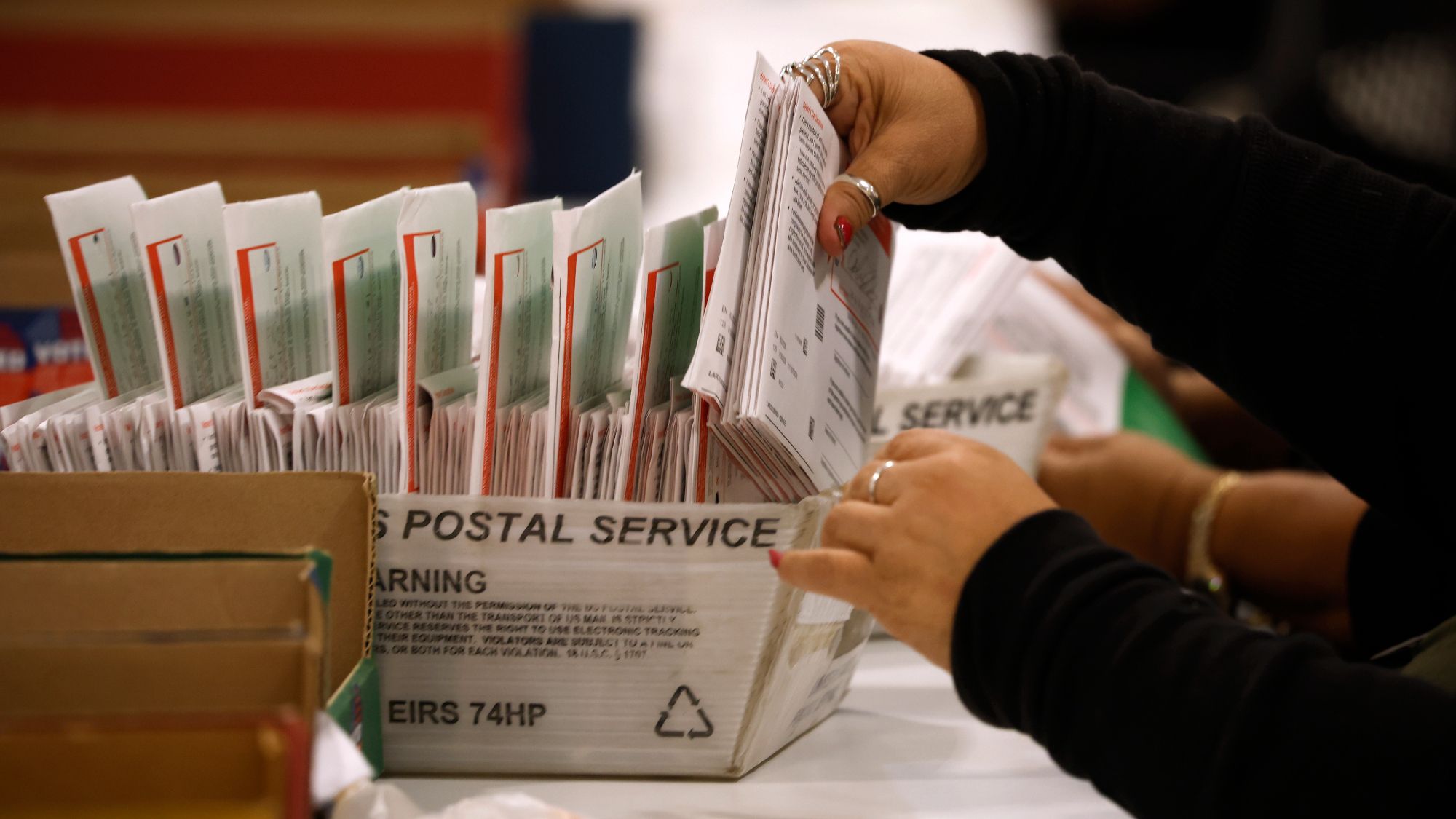
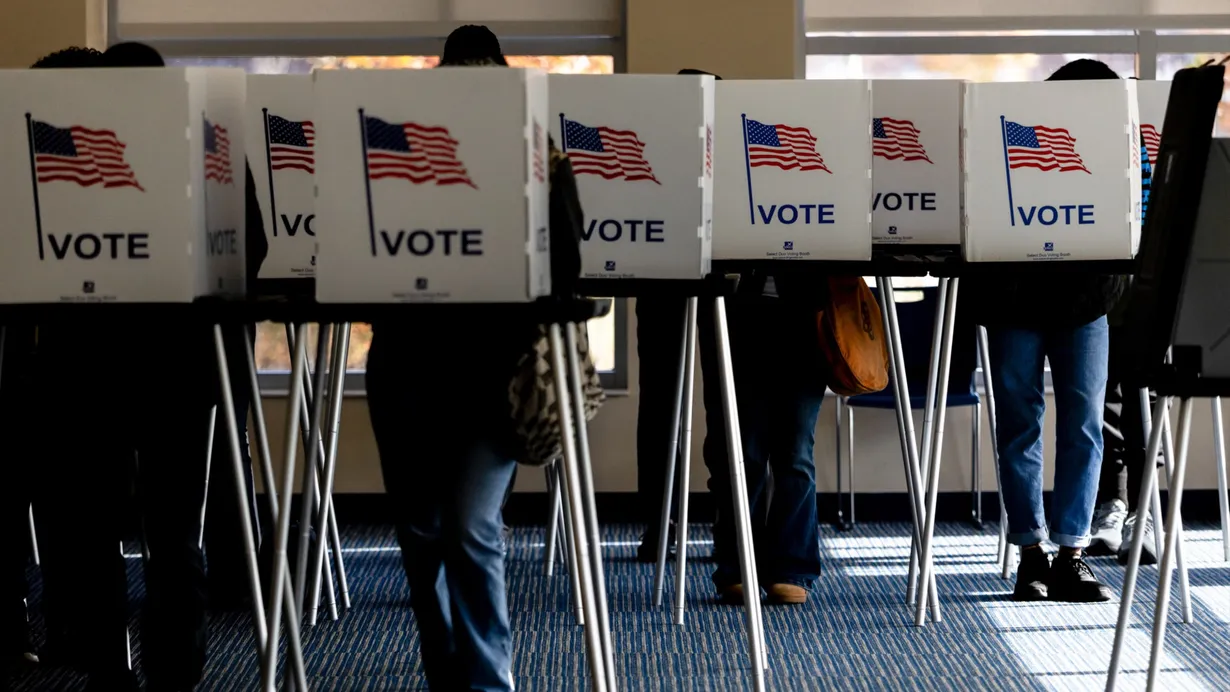
    Supreme Court rejects Trump bid to block 20k votes

    What happened
    The Supreme Court yesterday dismissed the Trump administration’s emergency petition to force California to set aside about 20,000 ballots of “likely noncitizen” voters. The high court “moved with unusual haste,” Politico said, rejecting the appeal “just hours after it was filed without taking the typical step of seeking a response from California officials.” There was no explanation and no noted dissents. 

    Who said what
    The Supreme Court’s “highly unusual ruling” appears to be an “extraordinary rebuke” of President Donald Trump and his efforts to sway election administration, The New York Times said. U.S. Solicitor General D. John Sauer had told the court the administration’s request was a “modest remedy” that would not “cancel any vote.” Lower courts that rejected the ballot sequestration had characterized it as an “attempt to usurp the power the Constitution explicitly gives states to control election practices” using “flawed data” that “could disenfranchise U.S. citizens,” Politico said. 

    “Every time the administration’s claims regarding noncitizen voters have been subjected to any sort of scrutiny, they have immediately fallen apart,” said David Becker, of the Center for Election Innovation and Research, to The Washington Post. In a separate hearing yesterday, Assistant U.S. Attorney Kenneth Kao told a lower court it would be “fair” to characterize the DOJ’s list of 20,000 “likely noncitizen” voters as having a high error rate.

    What next?
    The Supreme Court’s summary dismissal “effectively ends the administration’s effort” to force California to “alter its election procedures,” Politico said. Trump’s Justice Department is expected to challenge unfavorable results after today’s elections.


    TODAY’S IMMIGRATION story

    ‘Broadway Six’ prosecutors ordered to testify under oath

    What happened
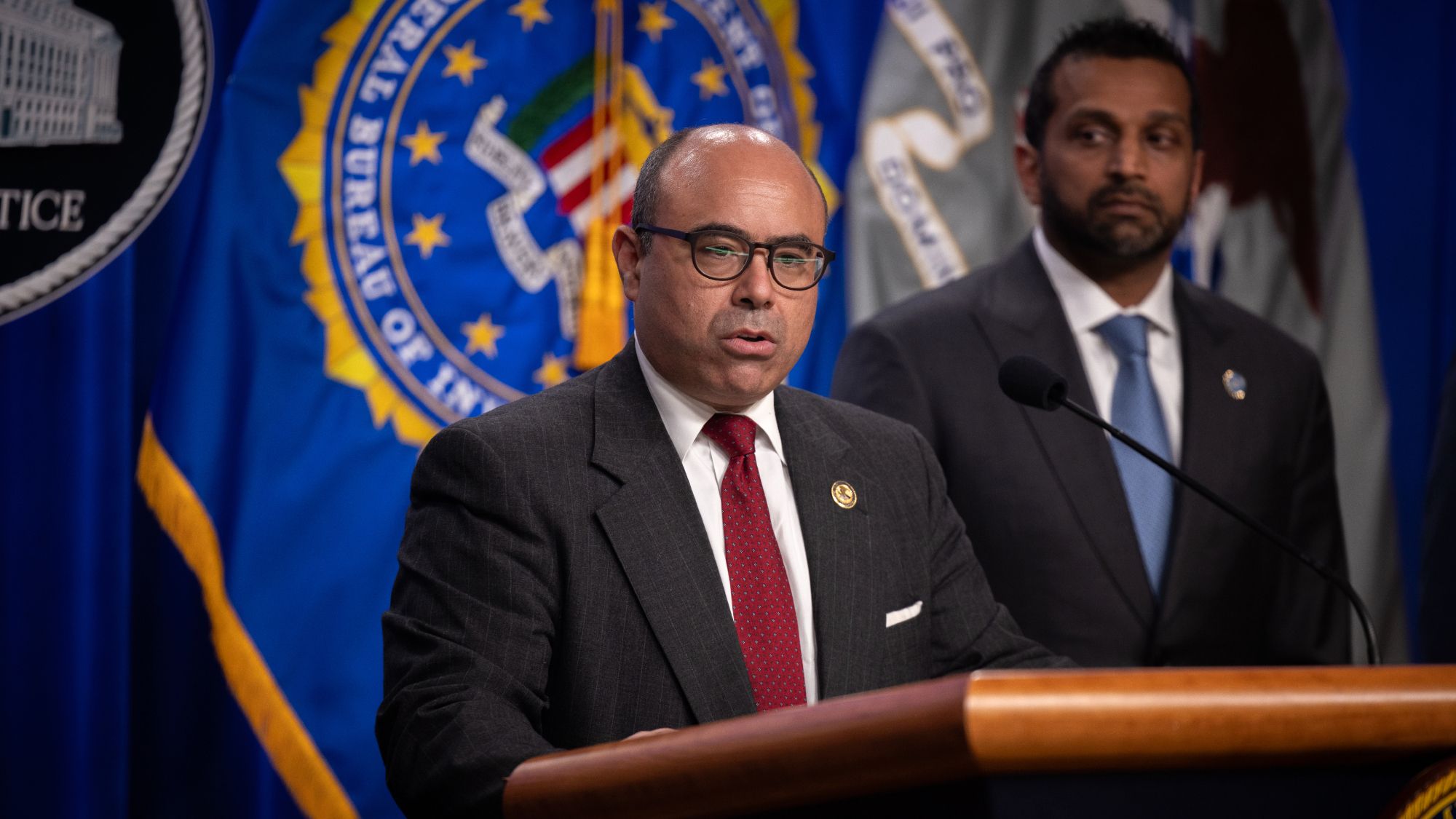
    U.S. District Judge April Perry yesterday ordered Chicago U.S. Attorney Andrew Boutros and three prosecutors in his office to testify under oath later this month over their handling of the failed prosecution of the “Broadview Six” anti-ICE protesters. There’s “more than an adequate factual basis” to investigate whether Boutros (pictured above) and his team made “willful false statements” in court, she wrote. 

    Perry issued her order hours after former Chicago FBI boss Douglas DePodesta, who abruptly quit in July, alleged in a federal lawsuit that he was forced to resign after a campaign by Boutros to scapegoat him for the “unprecedented disaster” of the Broadview Six case and related “politically motivated prosecutions.” His suit also contained “crucial revelations” about alleged pressure from top Justice Department officials to charge specific Trump administration critics, the Chicago Sun-Times said.

    Who said what
    The Broadview Six case has become an “enduring scandal” for Boutros, The Washington Post said, and Perry’s inquiry “could lead to sanctions or criminal contempt charges.” Yesterday’s order “marks a rapid escalation of the long-simmering case,” the Chicago Tribune said, “and sets the stage for a virtually unprecedented hearing,” with the top federal prosecutor in Illinois “being questioned under penalty of perjury.”

    What next?
    Perry scheduled the sworn testimony for Nov. 16 and ordered the Justice Department to hand over by Thursday any records that could illuminate whether federal officials lied to her. 


    TODAY’S CULTURE Story

    British man’s 31k, 28-year walk ends at mom’s house

    What happened
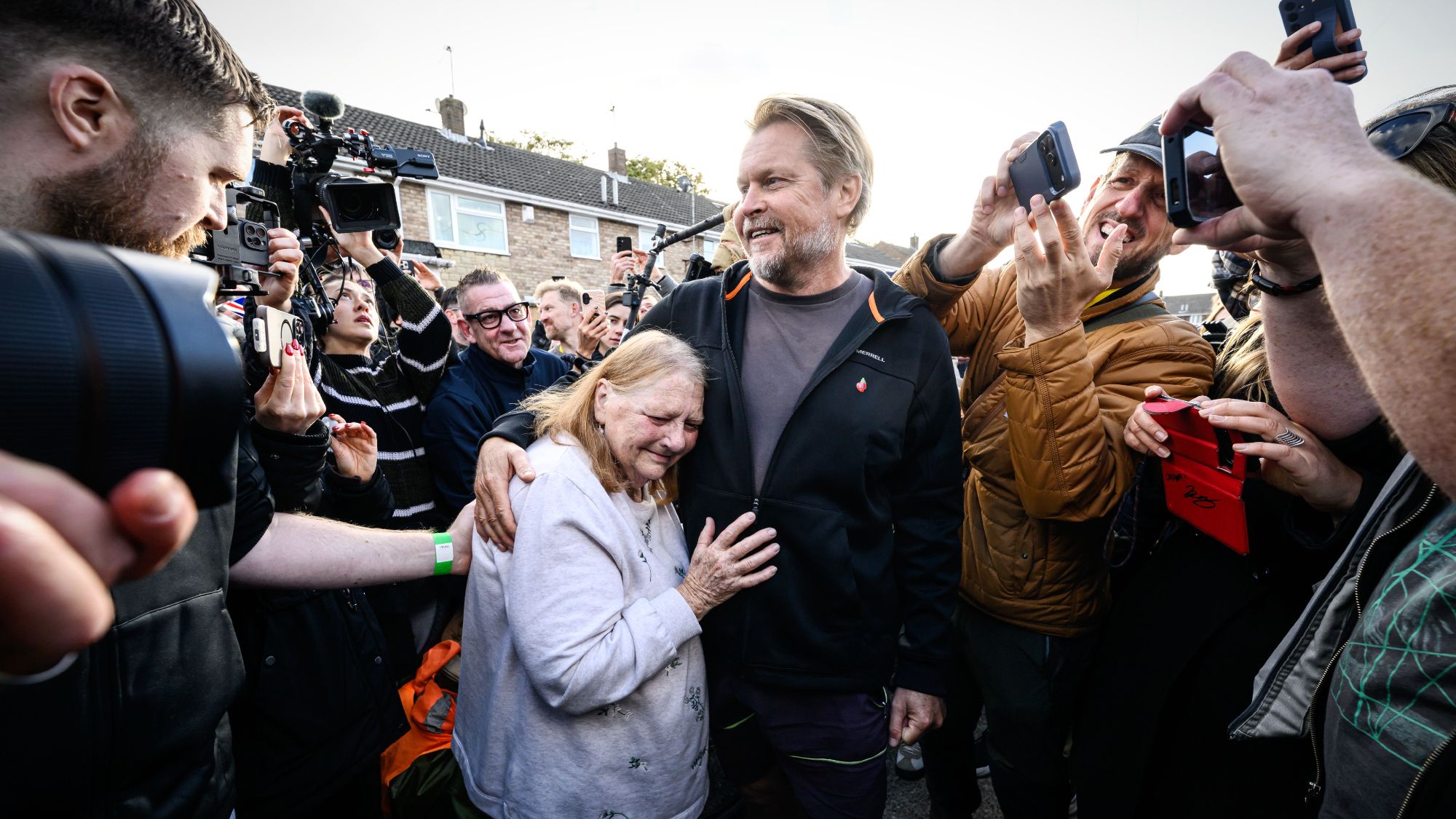
    Karl Bushby, a British man who spent 28 years walking 31,000 miles through 30 countries on four continents, yesterday ended his odyssey at his mother’s house in Hull, England. Bushby (pictured above), now 57, began his journey in Chile in 1998 for what he estimated would be a five- to 12-year trek. His “self-imposed rules” included not using any “mode of transport, like a car, a boat or a plane, to travel,” The New York Times said. He walked across the Bering Strait and “traversed some of the world’s harshest landscapes” before swimming home across the English Channel last month. 

    Who said what
    A former paratrooper, Bushby “drew a line on a world map and set ​off” after “breakdown of his marriage,” Reuters said, “inspired by his father who had wondered if it was possible to walk from London to New ​York.” It turned out to be an “eye-opening adventure full of danger and drudgery that was interrupted for years at a time by the unexpected,” The Associated Press said. It took Bushby “almost 10 years to make his way through Russia” due to visa troubles and weather. 

    What next?
    Bushby has six speaking engagements lined up and is working with German filmmaker Werner Herzog on a documentary about his adventure. But as he neared home, the AP said, he “spoke of his anxiety over the trip ending” and “having to live in his mom’s basement.”


    It’s not all bad

    Ultrasound waves could be used to treat glioblastoma, one of the most malignant forms of brain tumor, according to a study published in The Journal of Clinical Investigation. Researchers identified microRNA molecules that can “interfere with several genes responsible for the development and growth of glioblastoma,” then deposited them in the brain using ultrasound and brain-penetrating nanoparticles and microbubbles, the University of Virginia said in a new release. The method could be used to target cancers “for which no drugs exist,” said study author Dr. Roger Abounader.


    Under the radar

    Is Bougainville about to be the world’s newest nation?

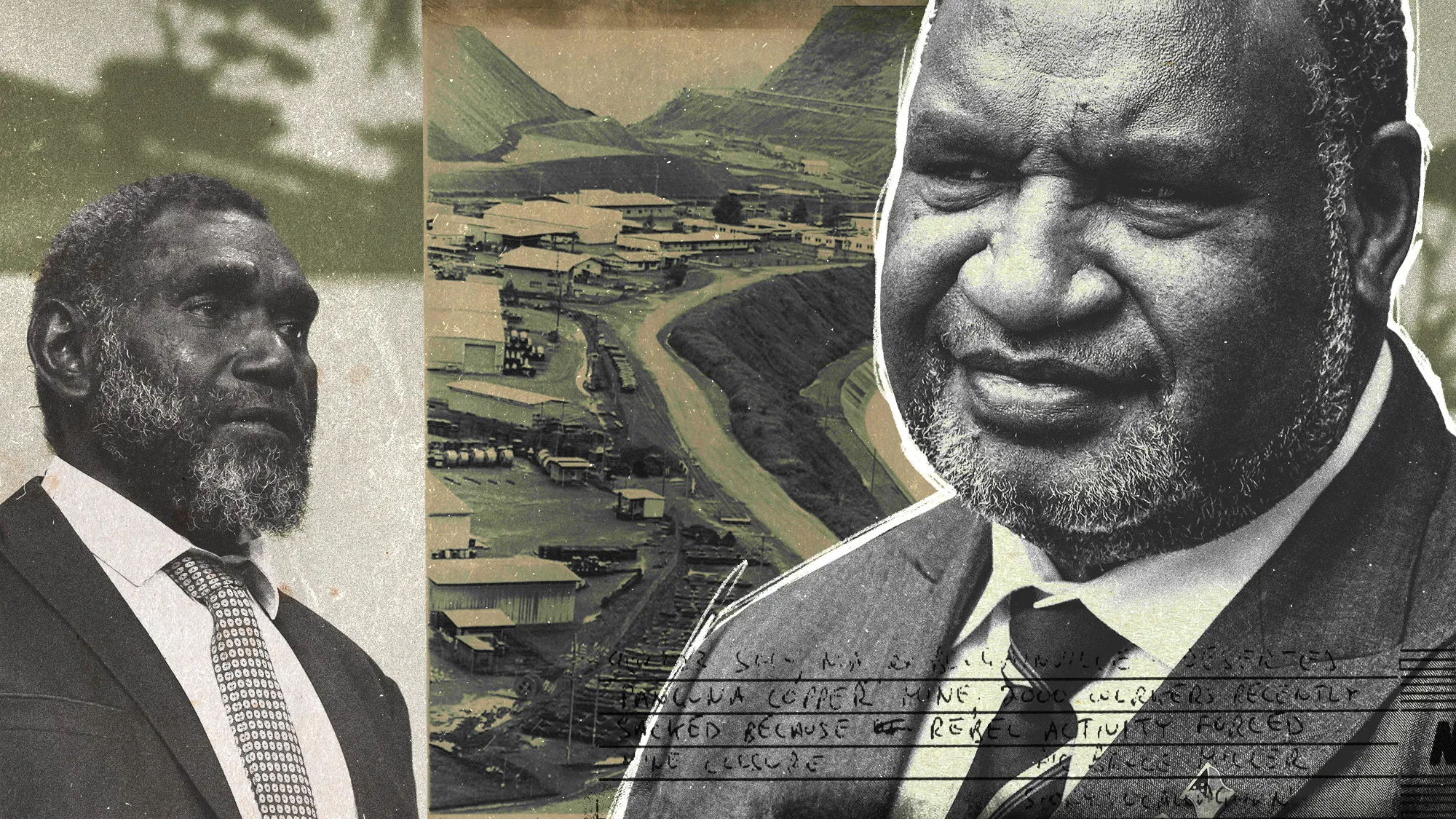
    Bougainville could soon gain its independence from Papua New Guinea, seven years after the resource-rich islands overwhelmingly voted to secede. Parliamentarians in Papua New Guinea will vote later this month on whether to grant full self-determination to the autonomous and ethnically distinct islands and their roughly 350,000 inhabitants.

    After years of control by colonizing nations including Australia, Britain, Germany and Japan, Bougainville first declared its independence as the Republic of the North Solomons in 1975. But within weeks, it was incorporated into the newly independent nation of Papua New Guinea.

    In the following decades, Bougainville’s politics and push for greater autonomy became inextricably linked to its vast Panguna copper and gold mine. Anger that less than 2% of the wealth generated by the mine went to the local community “spiraled into a decade-long civil war in the main island’s jungles as a ragtag separatist militia held Papua New Guinea’s military at bay,” said The New York Times.

    A 2001 peace agreement formally ended the fighting. It established a measure of autonomy for Bougainville and, crucially, a commitment from Papua New Guinea to allow an independence referendum. In 2019, 97.7% of Bougainvilleans voted for self-government.

    Many Bougainvilleans now think the ultimate route to economic self-reliance lies in “rehabilitating” the Panguna mine, which was closed by multiple acts of sabotage in 1989, said Radio New Zealand. Bougainville’s President Ishmael Toroama is already pursuing redevelopment and has signaled his intent to “separate” from Papua New Guinea in 2030, whether Port Moresby ratifies Bougainville’s independence or not.


    On this day

    November 3, 1957

    Laika, a stray mongrel from Moscow, was launched into space aboard the Sputnik 2 spacecraft, becoming the first animal to orbit Earth. The Soviets knew Laika (Russian for “barker”) would die in space, but long claimed she survived for several days. A scientist from the mission admitted in 2002 that Laika died hours after launch.


    TODAY’S newspaperS

    ‘Trump referendum’

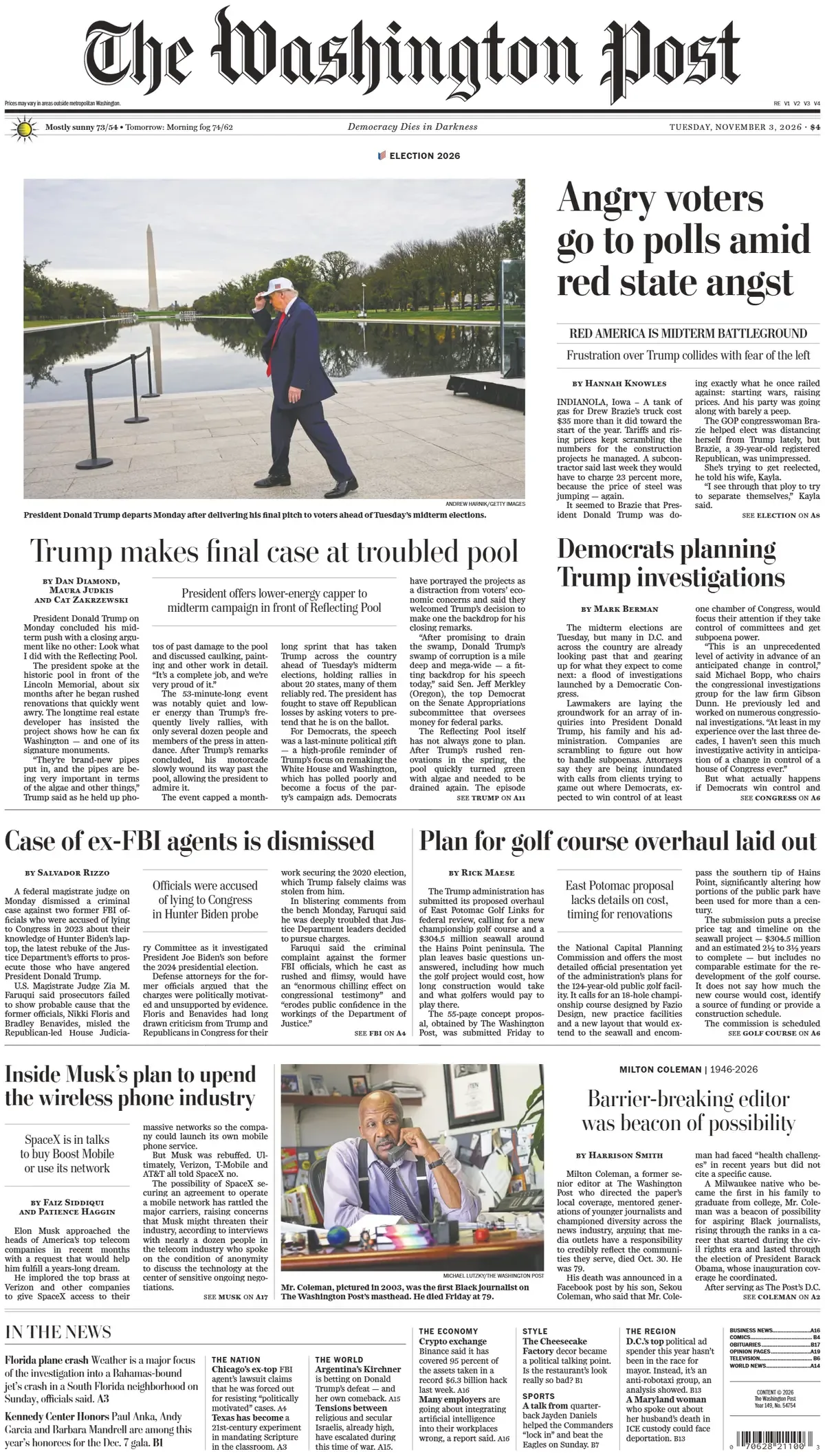
    “Economic worries sharpen as midterm campaign ends,” The New York Times says on Tuesday’s front page. “Time for voters to decide,” The Philadelphia Inquirer says. “Midterms become Trump referendum,” says USA Today. “Trump makes final case at troubled pool” as “angry voters go to polls,” The Washington Post says. “Trump’s aura of invincibility faces next test,” says the Los Angeles Times. “‘Blue tsunami’ likely,” the San Francisco Chronicle says. “Midterms lay bare parties’ fractures,” The Wall Street Journal says. “ICE agent makes 1st court appearance” for allegedly “assaulting immigrant by running him over,” the Houston Chronicle says. “Iran: Mediation with U.S. ends without deal,” says the Arizona Republic.

    ► See the newspaper front pages


    Tall tale

    Potty humor

    After President Donald Trump called Norway a “shithouse country” because he didn’t win the Nobel Peace Prize, Norway’s tourism board responded by showcasing some of the country’s most stunning public toilets. “Norway makes shithouses great again!” Visit Norway said in the campaign. The restrooms overlook fjords, waterfalls and mountains, and many of them have won international architecture awards. They’re “worth a visit,” the tourism board said, “both when you really have to go and when you don’t.”


    Morning Report was written and edited by Nadia Croes, Scott Hocker, Anya Jaremko-Greenwold, Justin Klawans, Devika Rao, Rafi Schwartz, Peter Weber and Kari Wilkin, with illustrations by Stephen Kelly and Julia Wytrazek.

    Image credits, from top: Justin Sullivan / Getty Images; Nathan Posner / Anadolu via Getty Images; Leon Neal / Getty Images; Illustration by Julia Wytrazek / Getty Images
     

    Recent editions

    • Evening Review

      Who will win the midterms?

    • Morning Report

      Trump’s Alaska vote challenge put on ice

    • Sunday Shortlist

      Romancing the basket

    VIEW ALL
    TheWeek
    • About Us
    • Contact Future's experts
    • Terms and Conditions
    • Privacy Policy
    • Cookie Policy
    • Advertise With Us
    • FAQ
    Add as a preferred source on Google Add as a preferred source on Google

    The Week US is part of Future US Inc, an international media group and leading digital publisher. Visit our corporate site.

    © Future US, Inc. Full 7th Floor, 130 West 42nd Street, New York, NY 10036.