The Week The Week
flag of US
US
flag of UK
UK
https://cdn.mos.cms.futurecdn.net/flexiimages/jacafc5zvs1692883516.jpg

SUBSCRIBE & SAVE

Less than $3 per week

Sign in
  • View Profile
  • Sign out
  • The Explainer
  • The Week Recommends
  • Newsletters
  • Cartoons
  • From the Magazine
  • The Week Junior
  • Student Offers
  • More
    • Politics
    • World News
    • Business
    • Health
    • Science
    • Food & Drink
    • Travel
    • Culture
    • History
    • Personal Finance
    • Puzzles
    • Photos
    • The Blend
    • All Categories
  • Newsletter sign up Newsletter
  • The Week's Saturday Wrap
    The AI regulation fight, America’s love of holiday decor, and the president’s plan for CNN

     
    controversy of the week

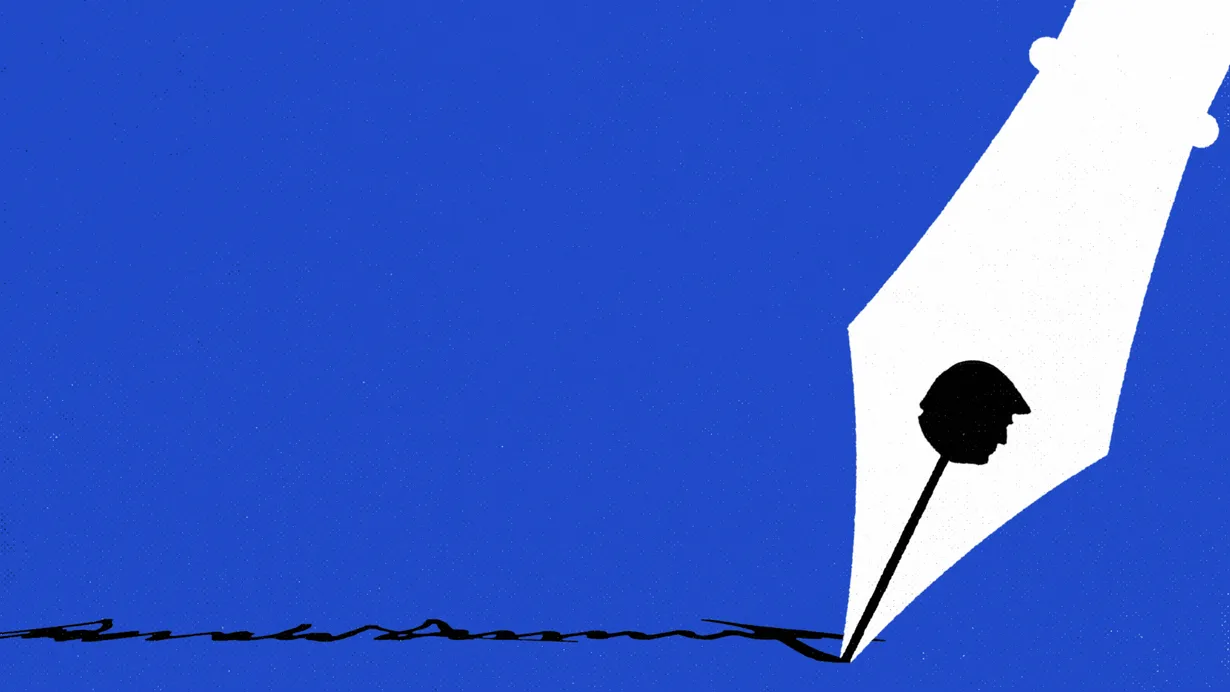
    Trump vs. states: Who gets to regulate AI?

    Should technology that’s going to determine America’s future be left “in the hands of 50 state legislatures?” asked Michael Solon in the New York Post. President Trump doesn’t think so. Last week, he signed an executive order setting up an “AI Litigation Task Force” to challenge state laws on artificial intelligence that the administration considers overly burdensome. The order also threatens to restrict those states’ access to federal broadband funding. In an online post, Trump explained correctly that America’s global leadership in AI “won’t last long” if every state imposes its own regulations, forcing AI companies “to get 50 Approvals every time they want to do something.” Consider California’s innovation-crippling “woke” regulations, which require all AI models to comply with Sacramento’s requirements for “safe, ethical, equitable, and sustainable” systems—or else face a $1 million fine. But make no mistake: Trump’s order is a “jerry-rigged solution at best.” The Constitution charges Congress, not the president, with regulating industries involved in “interstate commerce,” and Trump’s order could be nixed by legal challenges. Still, in this age of congressional dysfunction, and given the stakes of our AI race with China— where there are no restrictions at all impeding development—can we really blame the president for “taking action?” 

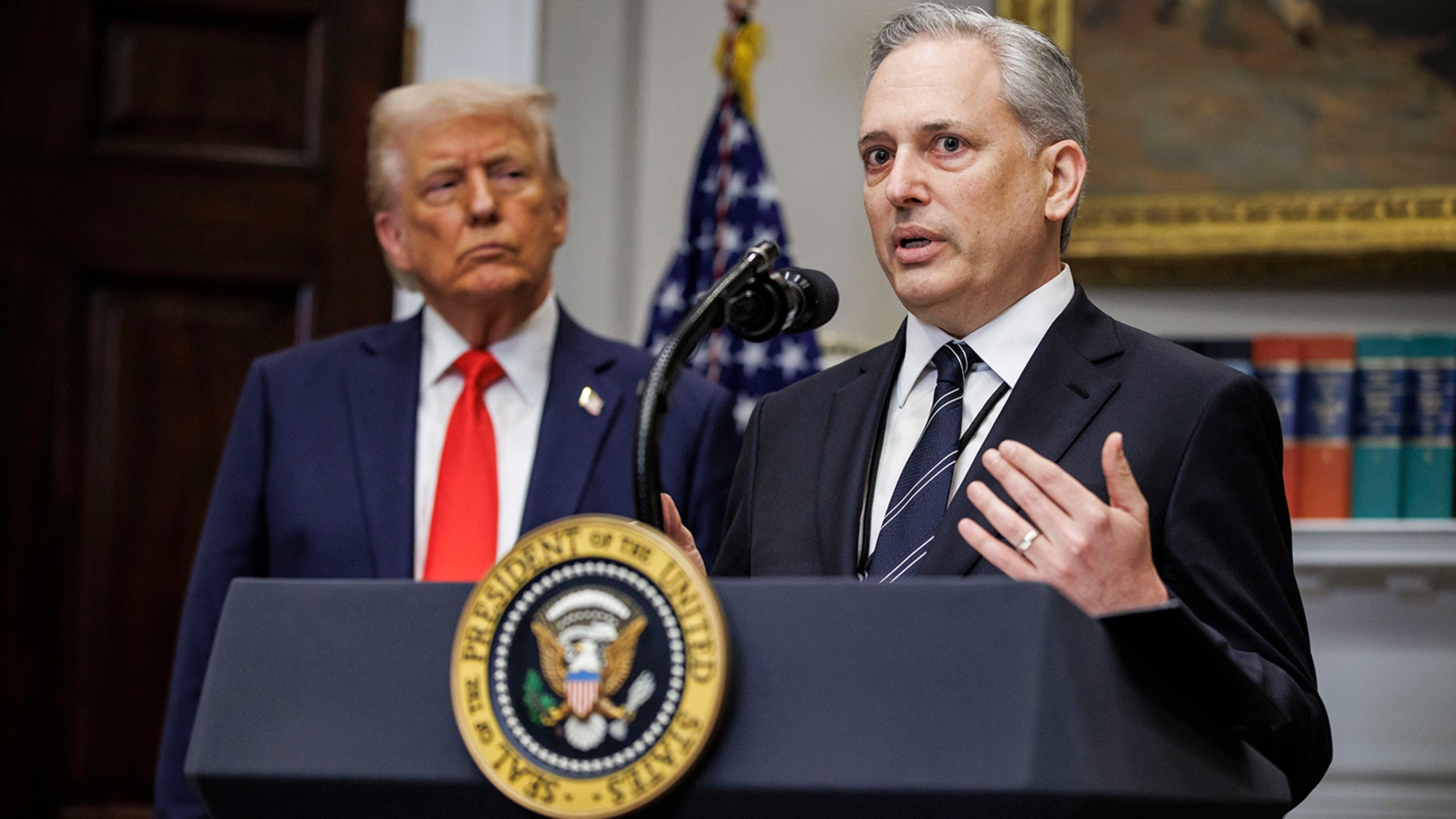
    Trump ran on “America First,” said Dave Lee in Bloomberg. But on AI, he’s “Silicon Valley First.” Looming over Trump as he signed the order was a beaming David Sacks, the venture capitalist and White House “AI czar” who has been lobbying for a “moratorium” on state laws since last year. Why do Sacks and his fellow billionaires care if AI is regulated by states or Washington? Because they don’t want any regulation that might crimp profits— including safeguards to protect minors from suicide-encouraging chatbots—and they’re betting on “paralysis at the federal level” to ensure they don’t get any. 

    We need to take the AI threat from China seriously, said former defense secretary Chuck Hagel in The Atlantic, but state regulation is actually our best defense. The kinds of laws states are passing—to tackle “deepfake impersonation of public officials,” for example, or AI-driven phishing scams—are routinely minimized as “social issues” by Sacks and Co. But to China and other bad actors, weak regulations in these areas create precisely the kind of “soft targets” that could let them “distort elections, fracture alliances, and erode civic trust” within America. To preempt these laws in favor of federal oversight that doesn’t yet exist “would be a disaster.” 

    The outrageousness of Trump’s order is “one of the few things Republicans and Democrats can agree on right now,” said Tina Nguyen in The Verge. The Left is aghast at the naked profiteering, and the possibility that AI could wipe out jobs and further empower billionaires. And on the Right, MAGA icon Steve Bannon this week accused Sacks of having “completely misled” Trump by persuading him to back an “AI amnesty,” while Florida Gov. Ron DeSantis denounced “federal government overreach” that lets tech companies “run wild.” Bannon and DeSantis are channeling the real fears of red-state voters, said Valerie Hudson in the Deseret News. We saw what unregulated social media did to our children and our families. We’re not going to surrender and let Trump, or anyone, once again put the “pecuniary interests” of tech whiz kids and billionaires above “the lives and well-being of the American people.” 


    VIEWPOINT

    Bad billionaires

    “Billionaires control the cable channels, social media platforms, newspapers, movie studios, and essentially everything else that we consume. The sheer scale of this wealth, which beggars even the riches of the Gilded Age, has induced a kind of class sociopathy. Why can’t they see how badly they’re coming off? For the first time, [polls find that] a majority of Americans believe billionaires are a threat to democracy. A remarkable 71% believe there should be a wealth tax. A realignment may be underway. A revolt against self-dealing elites may be the only cause compelling enough to bring us together.” 

    Michael Hirschorn in The New York Times


    briefing

    Decking the halls

    Americans’ love of holiday decorations has turned Christmas from a humble affair to a sparkly spectacle.

    How much do we spend on decorations? 
    Americans splash some $6 billion a year on festive decor. We buy 30 million real Christmas trees and 20 million artificial ones, 150 million sets of Christmas lights, 70 million pots of poinsettia, and millions more ornaments, yard decorations, and window decals. Some “extreme” decorators pay big to transform their homes into elaborate Christmas villages with brilliant light displays and animatronic characters. Mike Bagwell of Springfield, Mo., estimates he’s spent more than $130,000 on holiday decorations over the years, including on the 270,000 LED lights that adorn his home. “When you see the [community’s] laughter and the joy, it just makes it all worthwhile,” he said. All that sparkle adds to utility bills: Americans’ holiday lights collectively use 3.5 billion kilowatt hours of electricity each December—enough to power more than 350,000 homes for a year—at a cost of about $645 million. Then there are the seasonal medical bills, because 18,400 of us end up in the ER with decorating injuries having, for instance, fallen from a ladder while hanging lights. Still, the emotional dividends of decorating can be profound. “If you haven’t had a great year,” says psychologist Pauline Wallin, “it can put you back in touch with pleasant memories.” 

    What’s the history of decorating? 
    Some Yuletide adornments go back to pagan times: Pliny the Elder wrote of Celtic druids’ reverence for mistletoe. But modern holiday decor really took shape in the 19th century. Joel Roberts Poinsett, the first U.S. ambassador to Mexico, came home in 1828 with a shrub that bloomed red in winter. Called flor de Nochebuena (flower of Christmas Eve) in Mexico, it’s now known across much of the world as poinsettia. In 1856, following a craze sparked in the English-speaking world by Queen Victoria, President Franklin Pierce unveiled the first Christmas tree at the White House. Around the same time, a craftsman in the German town of Lauscha began blowing glass tree ornaments in the shape of spheres and fruit and nuts, then silvering them inside and painting the outside. In 1880, retailer F.W. Woolworth reluctantly agreed to buy a box of the ornaments from a German salesman. Woolworth thought the “useless” decorations wouldn’t sell, but customers at his Great Five Cent Store in Lancaster, Pa., snapped up all 144 in a matter of hours. Woolworth quickly placed a new order; over the next 60 years, his retail empire would sell 500 million baubles. 

    What about Christmas lights? 
    They were a homegrown invention. After Thomas Edison patented the first practical incandescent light bulb, he strung a few together outside his Menlo Park, N.J., laboratory for the 1880 Christmas season. Two years later, Edward Hibberd Johnson— Edison’s business partner—wrapped a string of 80 red, white, and blue bulbs around his Christmas tree. Placed on a rotating platform in the parlor of his Manhattan home,  the tree mesmerized passersby. “One can hardly imagine anything prettier,” said one reporter. Those early illuminations were pricey: It cost the equivalent of $10,000 today to have electricians install tree lights and be on call if a bulb burned out. But in 1903, Edison’s General Electric debuted the first mass-market string of Christmas lights, which cost $12 (more than $400 today) and was marketed as a safe alternative to the candles traditionally placed in trees. In the 1960s, plastic “blow mold” lawn ornaments shaped like reindeer and Santa Claus exploded in popularity, but sales sank in the 2000s as inflatable decorations took over yards. 

    Where did they come from? 
    They were dreamed up by same firm behind Big Mouth Billy Bass, the animatronic singing fish. Texas-based Gemmy Industries was looking for a follow-up hit when co-owner Dan Flaherty wondered if he could make a consumer version of the inflatable animals often seen outside car dealerships. Early prototypes used hair dryers, which overheated and burned out, but Gemmy eventually devised a fan that could blow for months on end. In 2001, it launched its first inflatable—an 8-foot Santa—and now sells scores of seasonal specials, including a 7-foot shotgun-wielding Santa in a deer stand. In 2014, American entrepreneur Lou Lentine introduced another holiday innovation: a laser projector that speckles homes with festive lights. He devised the Star Shower as a safe, ladder-free way to illuminate a home, but the Federal Aviation Administration has warned that the lasers can pose “a serious safety risk to pilots” when misaimed. Americans who shopped for such gizmos and other holiday decorations this year likely noticed many prices were up from 2024. 

    Why is that? 
    Because of President Trump’s tariffs on China, the source of 87% of all Christmas decorations. Import duties on Chinese goods skyrocketed to 145% this spring, before dropping to about 40%. Despite that fall, industry leaders warned that Americans would have to pay 18% more for decorations. Small businesses that import holiday decor have so far spent over $400 million on tariff fees, up 1,438% from last year. “We went from working toward a profit to working for tariffs,” said Jared Hendricks, who runs Village Lighting in West Valley City, Utah. 

    Are Americans cutting back? 
    They say they are. In an October poll, only 39% of respondents said they’d buy new decorations this year, down from 56% in 2024. Still, the National Retail Foundation reports a record 202.9 million Americans shopped for Christmas items during Thanksgiving Week, and it expects overall holiday spending to top $1 trillion for the first time this year. Matthew Shay, the trade group’s CEO, suspects Americans won’t let economic gloom ruin the holiday. “Somehow,” he said, “Santa Claus always comes.”



    It wasn't all bad

    Kentucky STEAM teacher Scott Johnson was named the state’s Teacher of the Year after he secretly designed a more functional prosthetic hand for one of his students. Johnson worked on the project on his own for a year, using corn-based bioplastic, screws, fishing line, and a 3D printer to make a prototype for Jackson Farmer, a fourth-grader at Red Cross Elementary School who was born without a right hand. Johnson chose not to tell the Farmer family in case he couldn’t get the job done. The machine, which is powered by the bending of Farmer’s wrist, has turned out to be far better than the rigid rubber hand he wore before. “It feels great,” Farmer said. “My favorite thing is trying to write. I’m not that good, but I try.”


    Saturday Wrap was written and edited by Theunis Bates, Chris Erikson, Bill Falk, Allan Kew, Bruno Maddox, Tim O'Donnell, Zach Schonbrun, and Hallie Stiller.

    Image credits, from top: Getty; Getty; Getty
     

    Recent editions

    • Evening Review

      What reclassifying marijuana means

    • Morning Report

      Brown, MIT murder cases end with dead suspect

    • Evening Review

      Trump takes a ‘sledgehammer’ to climate research

    VIEW ALL
    TheWeek
    • About Us
    • Contact Future's experts
    • Terms and Conditions
    • Privacy Policy
    • Cookie Policy
    • Advertise With Us
    • FAQ
    Add as a preferred source on Google

    The Week is part of Future US Inc, an international media group and leading digital publisher. Visit our corporate site.

    © Future US, Inc. Full 7th Floor, 130 West 42nd Street, New York, NY 10036.