The Week The Week
flag of US
US
flag of UK
UK
https://cdn.mos.cms.futurecdn.net/flexiimages/jacafc5zvs1692883516.jpg

SUBSCRIBE & SAVE

Less than $3 per week

Sign in
  • View Profile
  • Sign out
  • The Explainer
  • The Week Recommends
  • Newsletters
  • Cartoons
  • From the Magazine
  • The Week Junior
  • Student Offers
  • More
    • Politics
    • World News
    • Business
    • Health
    • Science
    • Food & Drink
    • Travel
    • Culture
    • History
    • Personal Finance
    • Puzzles
    • Photos
    • The Blend
    • All Categories
  • Newsletter sign up Newsletter
  • The Week's Saturday Wrap
    A flawed plan for Venezuela, the shooting of Renee Good, and a neo-fascist’s rise to fame

     
    controversy of the week

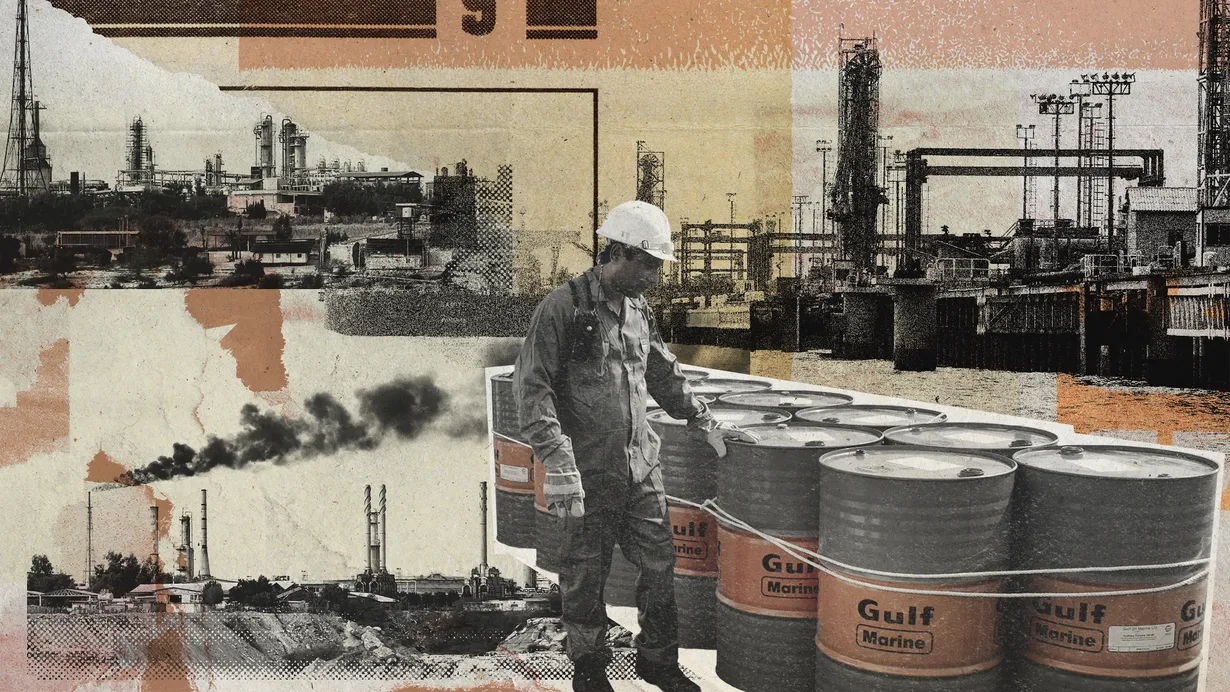
    Venezuela: Does Trump have a plan?

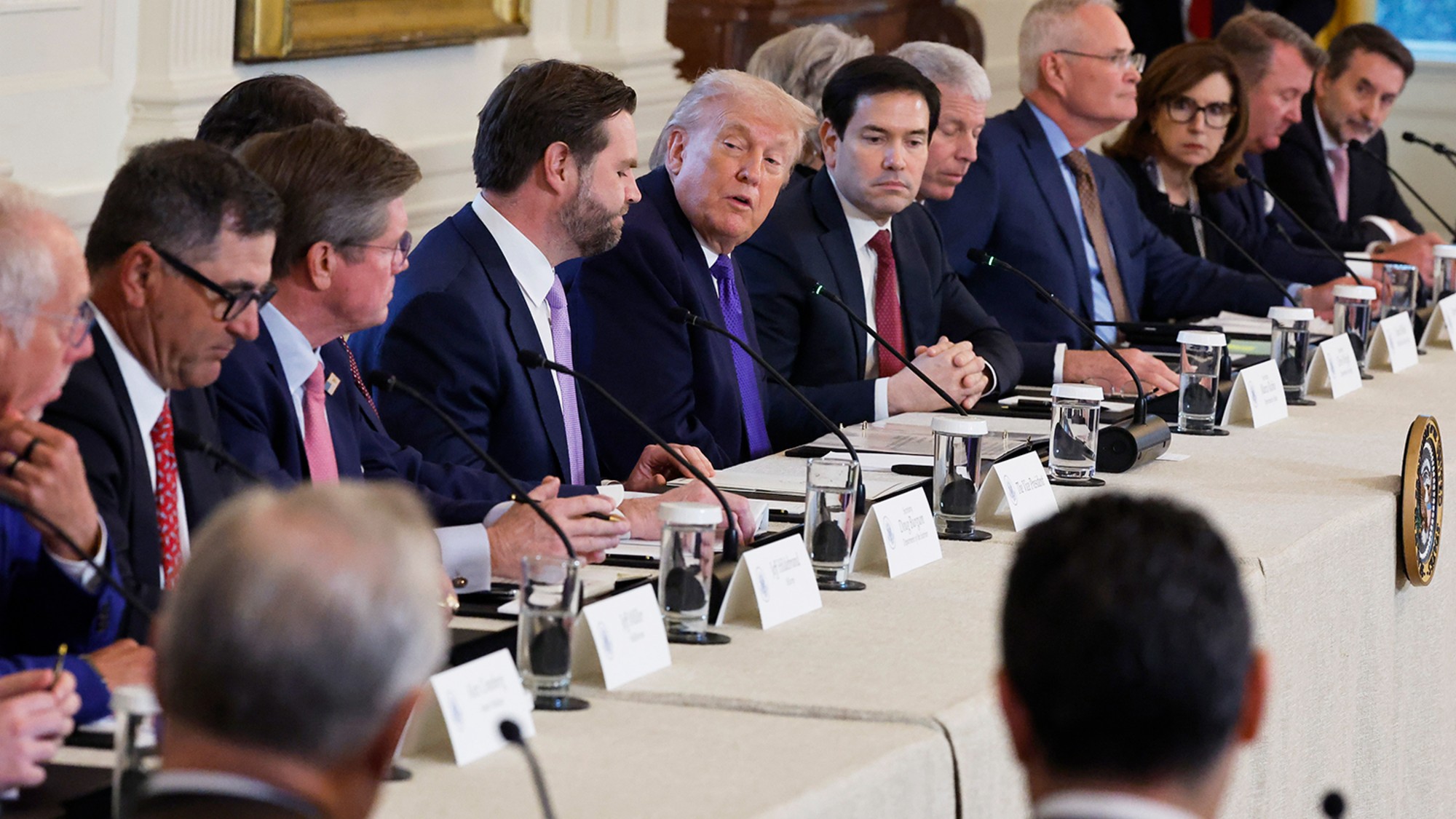
    “So, about all that Venezuelan oil,” said Rogé Karma in The Atlantic. In recent days, President Trump has settled on a new rationale for ousting Nicolás Maduro, that his primary goal is not to liberate Venezuela’s people from tyranny but to liberate the estimated 300 billion barrels of crude oil sitting beneath their country. Trump promised that American oil firms will soon “go in” to Venezuela—which he will “run” for the foreseeable future—and start generating great gobs of money. Setting aside the morality of using military force to plunder a weaker nation, Trump’s plan is “delusional” on its own terms. Venezuela’s oil sector lies in ruin after two decades of kleptocratic rule. As top oil executives gently explained in a White House meeting this week, rebuilding it would cost perhaps $200 billion over 15 years, and most of Venezuela’s oil is “thick, low-quality petroleum” that costs about $80 a barrel to extract and refine. That’s a problem with oil now selling for about $60 a barrel. Perhaps those hurdles could somehow be cleared, but “unlocking a trove of foreign oil” would drive prices even lower, shrinking U.S. producers’ profits and pushing some into bankruptcy. Let’s hope someone in the administration has a clearer vision of what we’re doing in Venezuela, because Trump’s own “obsession” with grabbing its oil “makes little sense.” 

    If Trump wants Venezuela’s crude, said Thomas L. Friedman in The New York Times, then he has to “revive Venezuela’s democracy.” As Exxon CEO Darren Woods put it this week, Venezuela is simply “uninvestable” in its current state of political instability. Trump, predictably, threatened to “keep Exxon out” of Venezuela as punishment for Woods’ impertinence, but why would any company invest in a nation where the people who stole the last election—and who nationalized Exxon’s assets in 2007—“are being kept in power?” Seventy percent of Venezuela’s 30 million citizens supported the opposition in the last election, said Heather Williams in The Hill, and they share Americans’ fondness for guns. If U.S. oil companies were to swoop in, with the acquiescence of Maduro henchwoman turned interim president Delcy Rodríguez, they’d meet “resistance, sabotage, and violence.” 

    Trump is wise to take a “go-slow approach,” said Jason Willick in The Washington Post. For now, yes, Rodríguez is Venezuela’s head of state. But Trump will soon meet with opposition leader María Corina Machado, and Rodríguez is already releasing political prisoners—likely because Trump warned that she’ll pay “a very big price, probably bigger than Maduro,” if she defies U.S. wishes. It’s “too early to say” if our “new leverage” can by itself fulfill the plan Secretary of State Marco Rubio outlined last week: first stability, then recovery, and finally a transition to democracy. But it’s a “sober and judicious” approach, given that the alternate would likely be a full-scale, Iraq-style military occupation. 

    It’s “delusional” to think the regime’s thugs will “meekly” cooperate, knowing Rubio’s plan ends with their destruction, said John Bolton in The New York Times. Indeed, pro-regime militias were setting up roadblocks this week to hunt for Americans and dissident Venezuelans. Unless Trump wants these abuses to continue, all with his implicit backing, he needs to “reverse course” and push for full “regime change.” Would this destabilize the country, requiring further U.S. military involvement? Probably. But “some level of turmoil” is inevitable, and Trump needs to realize that his “grand design” of seizing Venezuela’s oil while shirking the work of rebuilding Venezuela’s society was “simply fantasy” from the start.


    VIEWPOINT

    No accountability 

    “ICE agents now regularly operate masked, heavily militarized, and without any visible identification. ICE officials argue that masks are necessary to prevent doxxing or harassment. But in democratic societies, the use of lawful force depends on legitimacy. Legitimacy depends on accountability. And accountability begins with identification. Anyone empowered to detain, arrest, or use force must be identifiable to the citizens in whose name they act. When officers purposely conceal their faces and perform their duties without name tapes or badge numbers, they turn authority into anonymity. And anonymous power is precisely what democratic systems are designed to prevent.” 

    Retired Army Lt. Gen. Mark Hertling in The Bulwark


    briefing

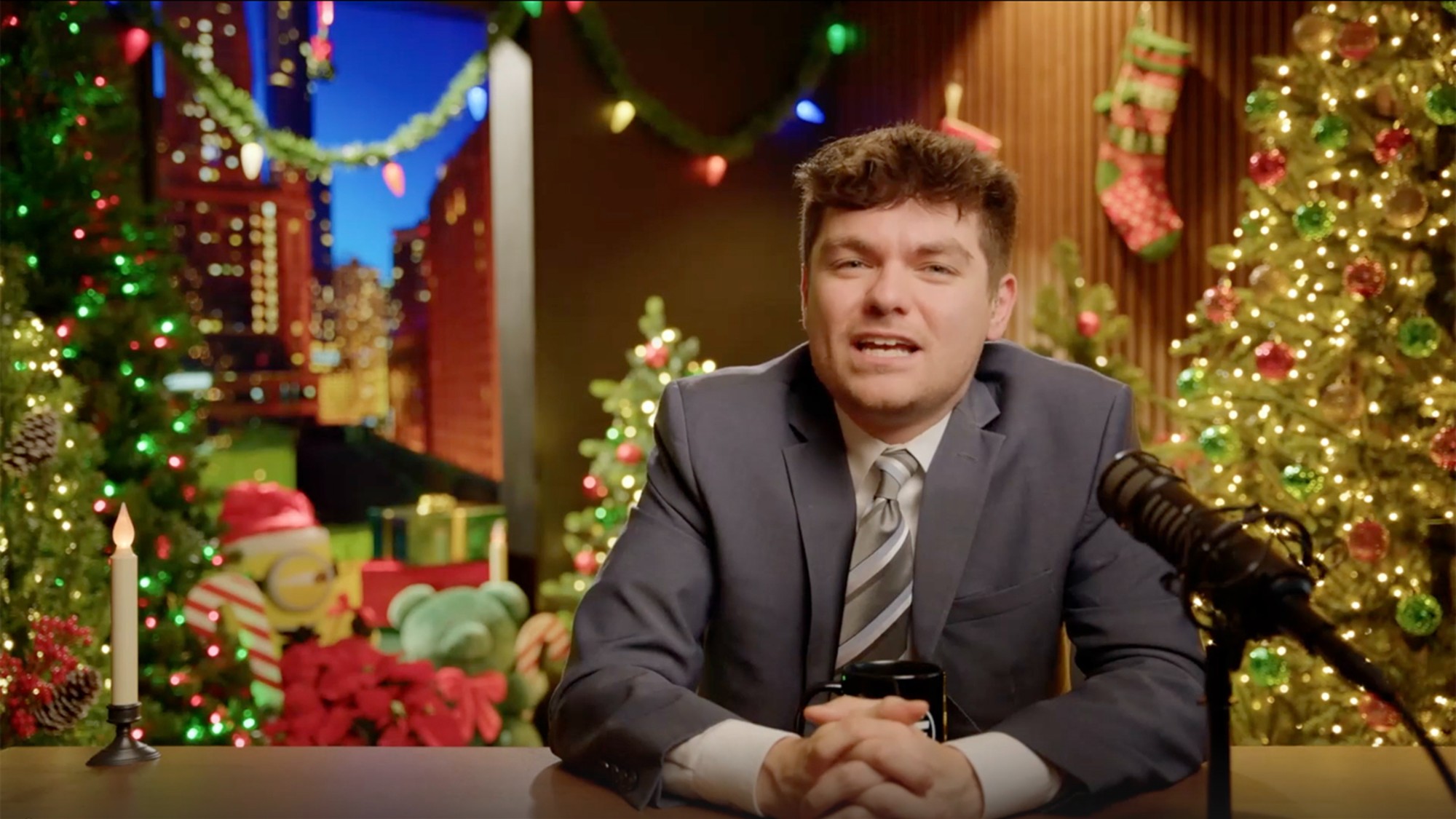
    Rise of the ‘Groypers’

    White supremacism has a new face: Nick Fuentes, a clean-cut 27-year-old with an online legion of fans.

    Who is Nick Fuentes?
    A far-right activist and influencer best known for his racist, antisemitic, and misogynistic rhetoric. He first attracted attention at 18 as one of the most vocal marchers at the 2017 Unite the Right rally in Charlottesville, Va. Less than an hour after a neo-Nazi plowed a car into a crowd of counter-protesters, killing one person, the then– Boston University student posted on Facebook that a “tidal wave of white identity is coming.” Since then, Fuentes has built a large online audience of mostly young men. His X account, which Elon Musk reinstated in 2024, has 1.2 million followers, and his America First livestream show attracts about 1 million views an episode. In one March show, he summarized his worldview as “Jews are running society. Women need to shut the f--- up. Blacks need to be imprisoned for the most part, and we would live in paradise.” In October, podcaster Tucker Carlson—an ally of Vice President JD Vance— hosted Fuentes for a sympathetic two-hour chat in which the selfdeclared fan of Hitler and Stalin blamed “organized Jewry” for undermining a unified America; nearly 7 million people watched the episode on YouTube and 18 million on X. The interview caused a schism on the Right and led conservative commentator Rod Dreher to warn that the GOP has a neo-Nazi problem: between 30% and 40% of Republican staffers in Washington under the age of 30, Dreher said, are “Groypers.” 

    What is a Groyper? 
    That’s the name used by Fuentes supporters, the “Groyper Army.” The origins of the moniker are unclear, but Fuentes fans have adopted a crudely drawn cartoon toad named Groyper—a variant on the far-right Pepe the Frog meme—as their logo. More a loosely knit network of internet trolls than an organized movement, they mock moderate Republicans and rail against pornography, the supposed feminization of America, and the passivity or “cucked” nature of mainstream Christianity. (Fuentes is a Catholic.) But the Groypers are so steeped in social media in-jokes and memes that it’s hard to know what they really believe. “Fuentes is among the best examples of ‘politics as fandom’ that exists,” said Katherine Dee, who writes about internet culture. Beyond their fealty to Fuentes, she said, Groypers are “a fairly loose group without clear ideological borders.” 

    What does Fuentes actually believe? 
    Some conservative critics claim he is just a modern-day carnival barker, spouting hate to get clicks in an attention economy that rewards extremism. Fuentes says there’s some validity to that: His comment about women’s rights after President Trump’s 2024 election win—“Your body, my choice”—“was cheap rage bait.” But there’s no reason to think he isn’t sincere about his positions: support for an ethnic and religious hierarchy with white Christian men at the top; opposition to legal as well as illegal immigration; vehement antifeminism; and disdain for democracy. A former fan of Trump—and, in 2022, a Mar-a-Lago dinner guest—Fuentes now says that “Trump 2.0 has been a disappointment in literally every way” and that Trump is “incompetent, corrupt, and compromised.” He sees Vice President JD Vance as a corporate stooge and “a fat, gay race traitor”; Vance’s wife, Usha, is of Indian descent. Much of his anger toward the administration appears driven by its support of Israel. 

    What are his views on Israel? 
    He opposes U.S. backing and funding for the country, claiming the alliance serves the interests of “Zionist Jews” rather than of the U.S. Fuentes endorses the antisemitic “great replacement theory,” arguing that “Jewish oligarchs” have enabled mass migration to the U.S. to destroy the country’s Christian heritage and the livelihoods of white men. He has also said “the Holocaust didn’t happen.” Although he later claimed that this was a mere provocation, Fuentes said in the Carlson interview the Holocaust is used to “browbeat” white Americans to keep them from being “too white and too proud and too Christian.” 

    How has the GOP reacted? 
    Mainstream Republicans such as Sens. Mitch McConnell and Ted Cruz have denounced Fuentes, and Carlson for giving him a platform. Sen. Lindsey Graham made clear his position: “I’m in the ‘Hitler sucks’ wing of the Republican Party.” Not all are so opposed. After Carlson’s interview, Kevin Roberts, president of the influential conservative Heritage Foundation, put out a video describing Carlson’s critics as a “venomous coalition” of “the globalist class.” (“Globalist” is often used as code for “Jewish.”) This led to mass resignations at Heritage. But Trump has not condemned Fuentes, and Vance has only criticized him for attacking his wife, saying for that, Fuentes “can eat shit.” But Vance also appears keen to avoid alienating young Fuentes supporters, who could help him secure the GOP presidential nomination in 2028. He recently posted online that there’s a difference between antisemitism and “not liking Israel,” and has said the Right must avoid “self-defeating purity tests.” Vance, an ally told The Washington Post, “is walking a tightrope.” 

    What is Fuentes’ goal? 
    Apart from attention and money—on his livestreams, Fuentes hawks merchandise and is paid by viewers to answer questions—he wants Groypers to infiltrate the U.S. establishment and GOP, and to displace traditional conservatism with far-right white nationalism. “Your job is to get into the Ivy League,” he told his followers. “Your job is to get into these offices and do what you need to do.” He advises them to hide their views: “Hold it close to the chest.” Groypers must play a long game, he said, noting that Pat Buchanan, whom many see as the intellectual godfather of Trumpism, first ran for the GOP presidential nomination in 1992. “He didn’t see his vision realized until 2016—24 years later,” Fuentes said. “Are you ready to go until 2040, until 2050?”


    Only in America

    The man who was photographed laughing and waving as he stole the House speaker’s lectern during the Jan. 6, 2021, Capitol riot is running for office in Florida. Adam Johnson, pardoned by President Trump after serving 75 days in prison, filed for a seat on the Manatee County Commission on the riot’s fifth anniversary and is using an outline of the photo of him with the lectern as his campaign logo. His notoriety, Johnson said, is “good for getting the buzz out there.”


    talking points

    Renee Good: A victim of ICE’s dangerous tactics?

    “Renee Good’s final moments were spent in her maroon Honda Pilot, her son’s stuffed animals peeking out from the glove compartment,” said Ray Sanchez in CNN.com. Good, 37, had just dropped her 6-year-old at school last week when she and her wife, Becca Good, stopped their SUV in the middle of a tree-lined street in Minneapolis, partially blocking traffic. Becca said they “stopped to support our neighbors,” who were protesting as federal immigration agents conducted an operation nearby. One of those agents was Jonathan Ross, an Iraq War veteran and 10-year ICE officer. In an encounter captured on cellphone video by Ross and bystanders, Ross circles around Good’s SUV as another ICE agent orders the mother of three to “get out of the f---ing car” and grabs for the door handle. Good reverses briefly, then accelerates forward while turning sharply to the right; standing by the driver’s side headlight, Ross fires three times, killing Good. “F---ing bitch,” a male voice can be heard saying. The shooting instantly became “the center of a furious debate” over whether Ross was a rogue officer who executed an innocent citizen or whether Good—whom Homeland Security Secretary Kristi Noem labeled a “domestic terrorist”— posed a mortal threat. Sorry, but “this is not something that can be both-sided,” said Jennifer Rubin in The Contrarian. Footage clearly shows Good, whose last words to Ross were “That’s fine, dude. I’m not mad at you,” turning her wheel hard to avoid him. This was a cold-blooded killing by an agent of a “lawless regime.” 

    Good’s death was a “tragedy,” said National Review in an editorial, but it was of her own doing. No ICE agent is obligated “to let himself potentially get run over.” Good probably was trying to drive off rather than hit Ross. But the agent—who last year was dragged 100 yards by an escaping car—didn’t know that as the SUV “jumped toward him,” and he opened fire believing he was in “mortal peril.” Good had defied a “lawful order” to exit the car and drove off “with reckless disregard” for the agents’ safety. If not for that, “this never would have happened.” Yet rather than accept the “conclusion that anti-ICE agitation is hazardous for everyone involved,” local Democrats are whipping up rage, with Minneapolis Mayor Jacob Frey accusing Ross of “recklessly using power” and demanding that ICE “get the f--- out of Minneapolis.” 

    Whether Ross feared for his life when he fired the first shot is an open question, said Jacob Sullum in Reason. But he fired the second and third through the driver’s side window, when he was clearly out of the car’s path and the threat had passed. And Ross failed to observe training and “basic precautions” when he placed himself in front of the car while also holding a cellphone, “keeping one of his hands occupied during a potentially dangerous encounter.” Instead of engaging with such facts, the Trump administration revved up the “smear machine,” said Adam Serwer in The Atlantic. A Homeland Security spokeswoman called Good part of a gang of “violent rioters,” Vice President JD Vance branded her a “deranged leftist,” and President Trump blatantly lied that she “ran over” Ross. Their “indifference to facts, to due process, to the dignity of the deceased, and to basic human decency” was stunning. 

    By smearing Good and circling their wagons around Ross, the administration “sent a message,” said Michelle Goldberg in The New York Times: Challenge us and this is what you get. In Minneapolis and other cities targeted in Trump’s immigration crackdown, residents have resisted with protests, organized watch patrols, and efforts to document agents’ actions. For MAGA, Good—whom Trump complained was “very disrespectful to law enforcement”—“quickly came to stand in for all the grating Resistance moms they’d like to see crushed,” and her death was seen as “a fair penalty for disobedience.” In branding Good, a progressive lesbian, “a domestic terrorist,” the administration drew their battle lines, said Nick Catoggio in The Dispatch. Whether she actually tried to ram Ross was less important than the fact that she was aligned with the Left. That made her “a lawful combatant in a hot culture war” in which “the good guys are entitled to kill you.” 

    An incident like this was “utterly predictable,” said Jeremiah Johnson, also in The Dispatch. ICE and its partner agencies have been tasked with deporting an unprecedented 1 million migrants a year. “To carry out that mission, they’ve been empowered to act with near total impunity.” In the past year, masked agents have repeatedly attacked protesters merely for filming them, recklessly caused traffic accidents, pointed guns at children, knelt on top of a pregnant woman while arresting her, and detained an unknown number of Americans. There have been at least 13 cases since July of agents firing at or into civilian vehicles, wounding at least eight people and killing two; at least five of those shot were U.S. citizens. And things could soon get worse: Racing to add 10,000 new agents and more than double its workforce, ICE last year lowered fitness and education standards for new recruits, cut training in half, and beckoned prospective far-right hires with an ad campaign filled with appeals to “heritage” and the “homeland.” It’s a “recipe for violence” that will result in “more Renee Goods.”

     
     
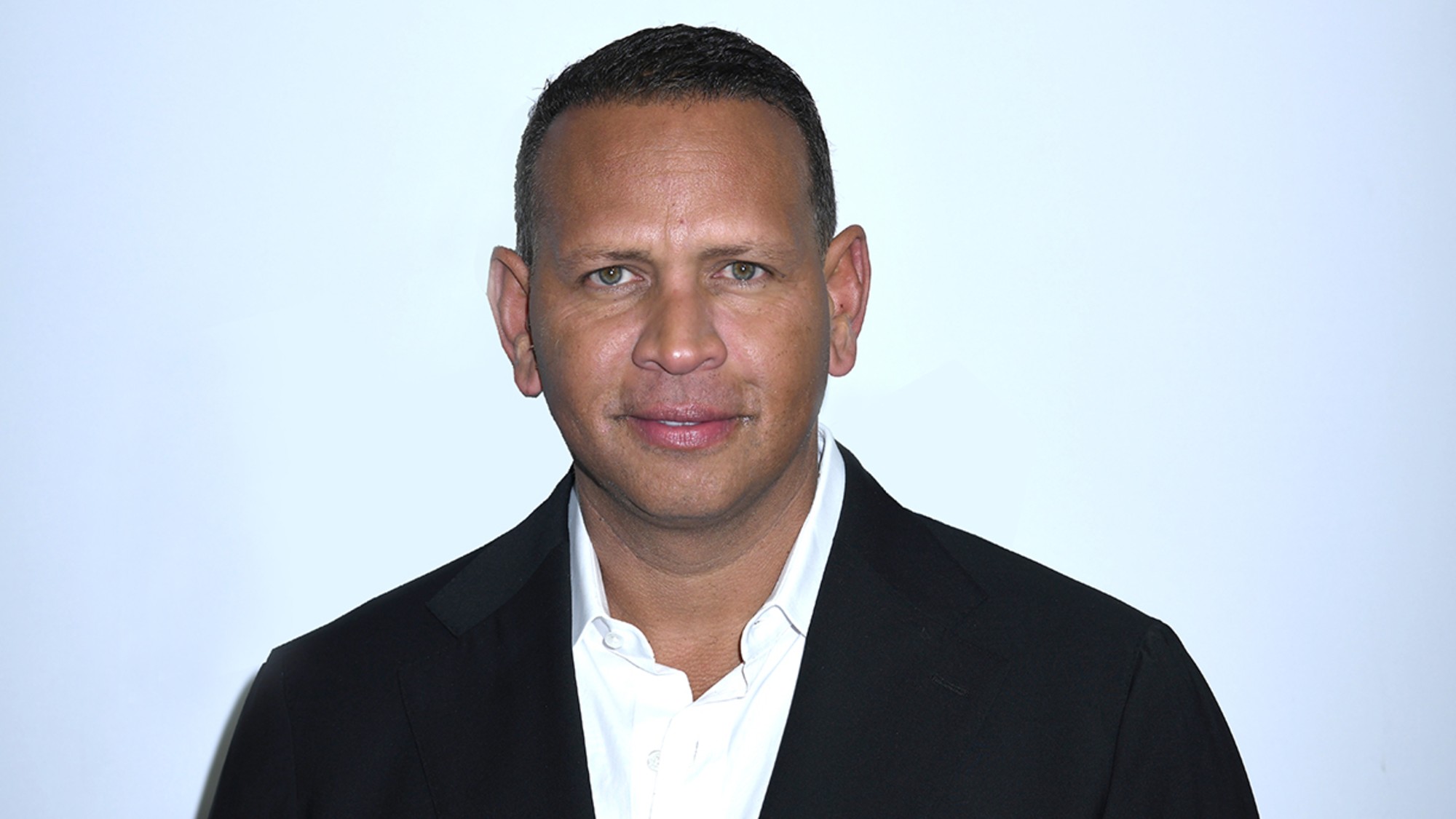
    people

    What A-Rod learned in therapy

    Alex Rodriguez doesn’t have a plaque in Cooperstown, and he’s fine with that, said Jason Jones in The Athletic. “If I went to the Hall of Fame, in a weird way, I would be hollow inside,” says the former MLB superstar, who calls himself a “recovering narcissist.” Rodriguez, 50, is one of baseball’s greatest players: The 696 home runs he slugged over 22 seasons with the Seattle Mariners, Texas Rangers, and New York Yankees ranks fifth all-time. But his on-field feats were often overshadowed by his celebrity romances, accusations that he was a selfish teammate, and rumors of performance-enhancing drug use. After an MLB investigation determined Rodriguez had used PEDs, he admitted to cheating and served a season-long suspension in 2014. That scandal has kept him out of the Hall of Fame, but it was also a turning point. Rodriguez began therapy and initially thought, “‘Whoa, what the hell am I doing here? This doesn’t make any sense.’ But the more I stayed with it, the more it started to really affect me in a positive way.” He said his two daughters have watched his old interviews and found the figure unrecognizable from the person they now know. “Where I am today is 100% connected to the work that I did. So, if the Hall of Fame was a price, then, you know, that’s on me.”


    Saturday Wrap was written and edited by Theunis Bates, Chris Erikson, Bill Falk, Allan Kew, Bruno Maddox, Tim O'Donnell, and Zach Schonbrun.

    Image credits, from top: Getty; Rumble; Alpha News; Getty
     

    Recent editions

    • Evening Review

      The momentum to impeach Noem

    • Morning Report

      Trump escalates Minneapolis threats

    • Evening Review

      Can Democrats win the Senate?

    VIEW ALL
    TheWeek
    • About Us
    • Contact Future's experts
    • Terms and Conditions
    • Privacy Policy
    • Cookie Policy
    • Advertise With Us
    • FAQ
    Add as a preferred source on Google

    The Week is part of Future US Inc, an international media group and leading digital publisher. Visit our corporate site.

    © Future US, Inc. Full 7th Floor, 130 West 42nd Street, New York, NY 10036.