The Week The Week
flag of US
US
flag of UK
UK
https://cdn.mos.cms.futurecdn.net/flexiimages/jacafc5zvs1692883516.jpg

SUBSCRIBE & SAVE

Less than $3 per week

Sign in
  • View Profile
  • Sign out
  • The Explainer
  • The Week Recommends
  • Newsletters
  • Cartoons
  • From the Magazine
  • The Week Junior
  • Student Offers
  • More
    • Politics
    • World News
    • Business
    • Health
    • Science
    • Food & Drink
    • Travel
    • Culture
    • History
    • Personal Finance
    • Puzzles
    • Photos
    • The Blend
    • All Categories
  • Newsletter sign up Newsletter
  • The Week’s Saturday Wrap
    Going to war with Iran, screen stress, and the debate over ‘abundance’

     
    controversy of the week

    Iran: Why is Trump rushing to war?

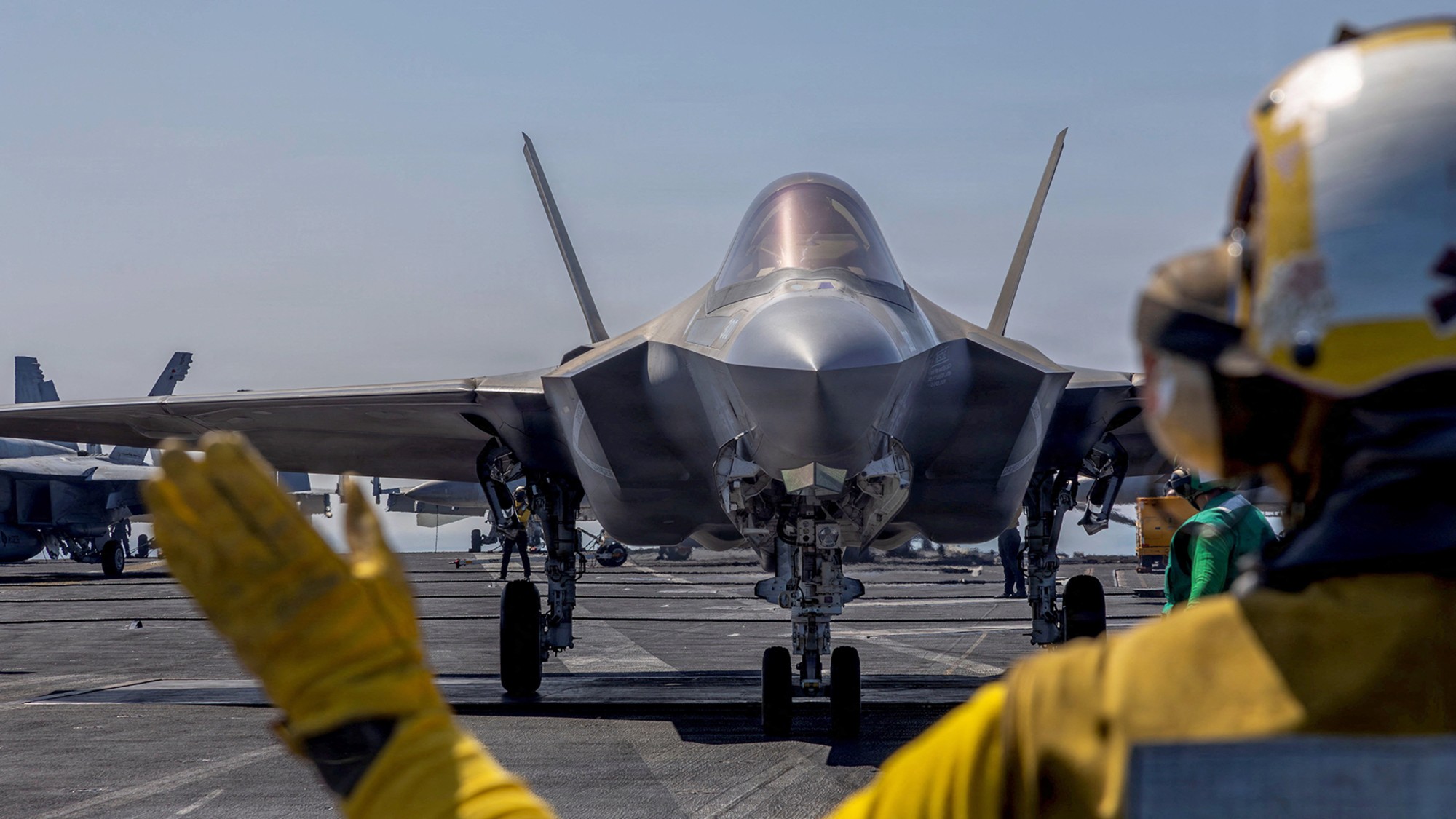
    When President Trump ascended the dais to deliver this week’s State of the Union address, “the world waited on edge to hear his thinking on Iran,” said Anton Troianovski in The New York Times. “It’s still waiting.” The U.S. has built up a vast military presence in the Middle East in recent weeks, including two aircraft-carrier strike groups and the largest deployment of U.S. warplanes in 20 years. Reports from the White House say an attack on Iran—from a limited strike to a full-scale regime change operation—could happen at any moment. But in his 107-minute address to Congress, Trump spent barely three minutes on the topic, largely repeating the same “vague talking points” we’ve heard for months: that he will “never allow” Iran to develop a nuclear bomb, and that war can be avoided if Iran simply utters the “secret words: ‘We will never have a nuclear weapon.’” Those demands sound clear enough, until one remembers that Iranian officials have repeatedly said those very words—credibly or not— and that after last summer’s U.S.-Israeli air strikes Trump himself declared Iran’s nuclear weapons program “completely obliterated.” 

    Trump is “boxed into a corner,” said Marc Champion in Bloomberg. Having ripped up an Obama-era deal in his first term that limited Tehran’s uranium enrichment capabilities and oversold last June’s strikes on Iranian nuclear sites, it’s humiliating for Trump to read intelligence reports detailing how the mullah’s nuclear program remains alive. But despite the threat of a catastrophic conflict, Iranian Supreme Leader Ali Khamenei may not want to give Trump the off-ramp of a new deal. After slaughtering thousands of civilians last month “for protesting against his regime’s incompetence, corruption, and ideological despotism,” Khamenei may see war with America as a way to rally popular support, and as more likely to secure “his regime’s survival than the disarmament” that Trump is demanding. 

    Trump has his own domestic concerns, said Joshua Treviño in National Review. Only 27% of Americans back an attack on Iran, according to an Economist poll, and a vow to avoid new forever wars in the Middle East was perhaps the clearest of Trump’s promises to “the MAGA base.” MAGA will get on board if Trump delivers an easy military win, just as it did after the lightning raid that seized Venezuelan President Nicolás Maduro. But as Joint Chiefs chairman Gen. Dan Caine reportedly explained to Trump last week, a shortage of munitions and allies makes war with Iran a far riskier proposition. The longer a conflict drags on, said Gideon Rachman in the Financial Times, the higher the odds of a “successful Iranian retaliation.” Tehran could launch drones and ballistic missiles against the 30,000 to 40,000 U.S. troops in the region or blast cities in American allies such as Israel and Saudi Arabia. 

    Aren’t we forgetting something? said Charles Cooke in National Review. In the Constitution, “the war-making power lies with the legislature,” not the executive branch. Yes, presidents can legally order military action in a fast-moving crisis. But Iran’s mullahs have been killing Americans, repressing their own people, and chasing a nuclear capability for 40 years. Maybe enough is enough, and it’s time to pursue regime change. But surely “a decision as consequential as this one” should be debated in Congress, not determined by “one man’s mood.” In a democracy, sure, said Michelle Goldberg in The New York Times. But Trump is showing us instead “how an autocracy goes to war,” without debate, or explanation, or “even a pretense that the consent of the governed matters.”


    VIEWPOINT

    Screen stress

    “Stress is on the rise. It all comes back to the screens in our pockets—and our reflexive impulse to pull them out whenever we are bored or stressed, ostensibly to selfsoothe. Have you ever looked around on a train and noticed everyone’s heads bent over their touchscreens? How about in a waiting room? Or a restaurant before a date shows up? We see everyone else
    self-soothing with a scroll, so we assume that’s the only way to manage the trials and tribulations of being alive. But screens make it worse.” 

    Arthur Brooks in The Free Press


    briefing

    The ‘abundance’ agenda

    A movement that wants to rip up red tape and build, build, build is gaining ground in liberal circles.

    What is ‘abundance’ liberalism? 
    Popularized by the 2025 book Abundance by journalists Ezra Klein and Derek Thompson, it’s the idea that Democrats need to increase the supply of everything, from housing to mass transit projects, renewable energy sites to new vaccines. Abundance theorists like Klein and Thompson—along with other centerleft authors and intellectuals such as Yoni Appelbaum, Jerusalem Demsas, and Marc J. Dunkelman—say that in the 1970s and ’80s, progressives began pumping out rules and regulations intended to constrain business and stop development from running roughshod over vulnerable communities and the environment. But these anti-growth policies are now causing active harm, they argue, by slowing private sector investment in housing and energy, limiting the labor force by requiring professional licenses for everyone from hairstylists to auctioneers, and preventing the government from building essential infrastructure. Instead of delivering progress, these rules have made much of the U.S. stagnant and unaffordable and amplified distrust in the kind of government action needed to tackle those same problems. “A government too hamstrung to serve the public good,” writes Dunkelman, “will fuel future waves of conservative populism.” The remedy advocated by Thompson and Klein, and a growing number of Democratic lawmakers, is to rally behind “a liberalism that builds.” 

    How do they propose doing that?
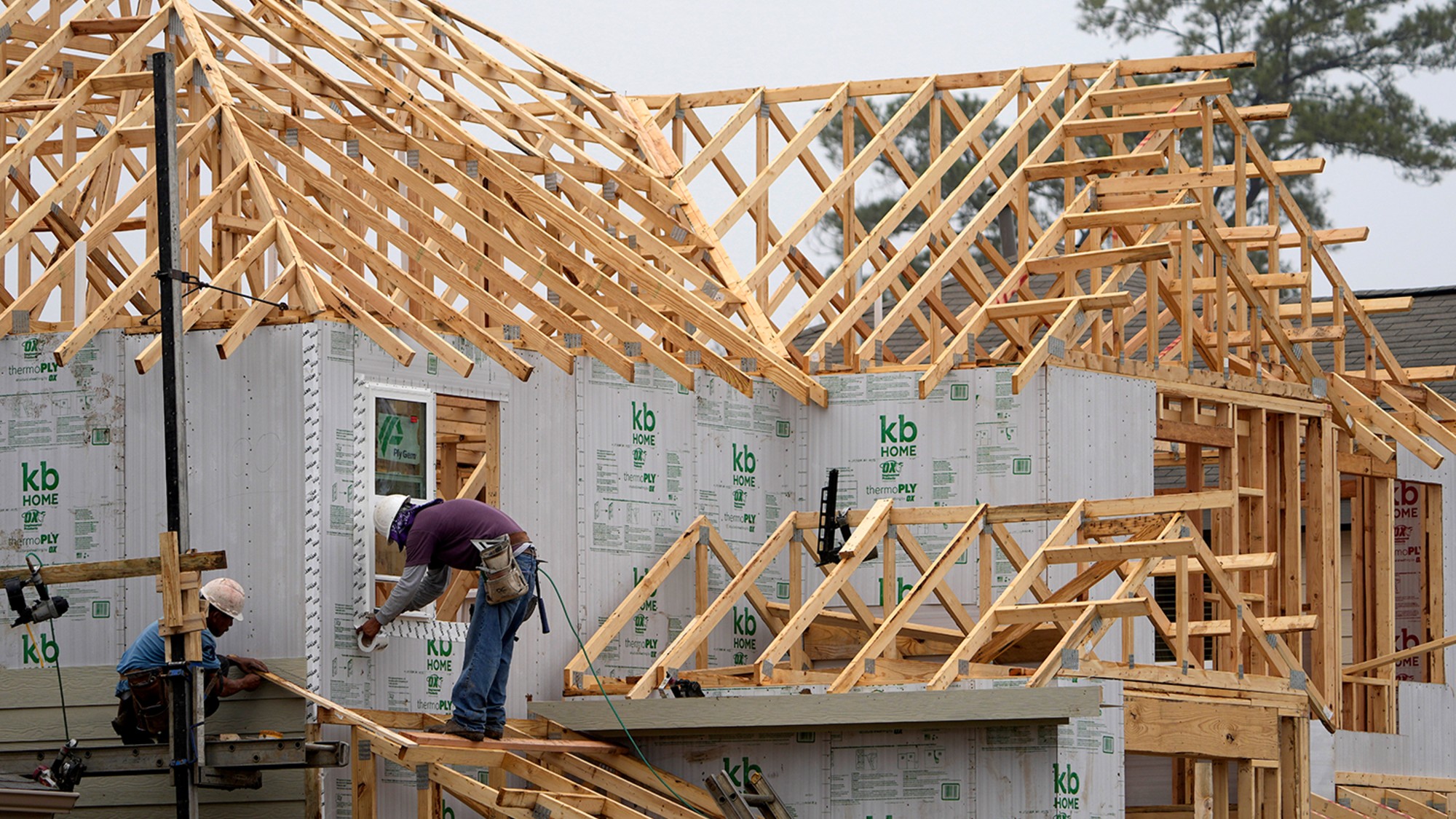
    By slashing red tape, untangling bureaucratic webs, and making it harder to file anti-development lawsuits. The abundance movement says such steps are needed to fix the nation’s housing shortage—the U.S. is short at least 2 million homes—which is adding to the wider affordability crisis. Especially in blue towns and cities, zoning laws, historic preservation ordinances, minimum lot sizes, and complaints from NIMBY (“not in my backyard”) neighbors can make it maddeningly difficult to build apartments, multifamily residences, and even small starter homes. Such restrictions partly explain why blue states like New York and California are losing residents, while regulation-light red states such as Texas and Florida are gaining them—a population shift that could shrink Democrats’ Electoral College apportionment by the 2032 election. In 2023, nearly 67,000 permits for new residential housing units were approved in the Dallas metropolitan area. In metro New York, which has three times the population, only 40,000 permits were signed off. 

    What about infrastructure? 
    Klein and Thompson praise Democrats’ embrace of big government projects, but say the party too often prioritizes process over outcomes, leaving it with nothing to show voters. They point to a 2021 bill signed by then– President Joe Biden that provided $42 billion to expand broadband internet access in rural America. Three years later, the program had not connected a single household, in part because the law required states that accepted funding to make sure providers planned for climate change, hired locally, and reached out to unionized workforces. To show what can be achieved when Democrats focus on output, they highlight Pennsylvania Gov. Josh Shapiro’s 2023 declaration of a state of emergency after a bridge collapse on a critical highway. The declaration allowed the bridge to be rebuilt with union labor but without the normally mandated months of planning, consultation, and safety and corruption reviews. The highway reopened in just 12 days. “The process Shapiro used would typically be illegal,” write Klein and Thompson. “What does that say about the typical process?” Still, many on the left argue it would be a mistake for Democrats to adopt the abundance ideology. 

    Why do they oppose the movement? 
    Sen. Bernie Sanders (I-Vt.) says abundance is a distraction from “the major crisis facing American society”: the economic and political power wielded by billionaires. Meanwhile, Sen. Elizabeth Warren (D-Mass.) argues that abundance is being used by “wealthy donors and other corporate-aligned Democrats” to make the party “more favorable to big businesses.” Union leaders have also pushed back, fearing that an abundance agenda would upend hard-fought wage and training standards, while other critics say an “abundant” future would be one in which local communities have no voice. “A liberalism that builds,” said Marshall Steinbaum, an economist at the University of Utah, “boils down to the idea that people can’t be trusted.” But former president Barack Obama—who put Abundance on his 2025 reading list—warns that a Democratic Party that doesn’t build will be one consigned to irrelevance. If progressives “want to deliver for people and make their lives better,” they have “to figure out how to do it,” he said.“I don’t want to know your ideology, because you can’t build anything. It does not matter.” 

    Has abundance produced any results? 
    So far, the debate is mostly academic. But there are signs that abundance is beginning to influence policy. A group of center-left and center-right lawmakers in the House last year formed the Build America Caucus, which is aimed at reforming the permitting process and reducing regulatory slowdowns. And New York City Mayor Zohran Mamdani, a Democratic Socialist and close ally of Sanders, has given a nod to the abundance agenda. We have to “actually deliver on the very ideas that we are so passionate about,” Mamdani said in an interview with Thompson. The movement’s biggest wins have been achieved in California, where Gov. Gavin Newsom—who gave copies of Abundance to the heads of his state’s legislature—last year signed two bills that reined in the California Environmental Quality Act, a 1970 law that was routinely used to stymie development, especially of affordable housing. “We eliminated one of the three or four major barriers to sustainable housing progress in the state of California,” said Matt Lewis, the communications director for California YIMBY. “It’s a really big deal.” 


    Only in America

    The Los Angeles Department of Transportation is restricting who can watch a new video asking passengers not to defecate on buses. The “No Pooping” PSA is part of the “If You See Something, Do Something About It” series, which plays continuously on city buses. But after media inquiries about the prevalence of “pooping” on buses, LADOT pulled the video from its website and social media sites, explaining that the PSA is only “intended for onboard viewing.”


    It wasn’t all bad

    Plane puppy 

    A Las Vegas police officer adopted a goldendoodle puppy he helped rescue after it was abandoned at the airport. The owner claimed she discarded the 2-year-old pup because she couldn’t fly with him. Officers charged her with abandoning an animal, among other counts. After animal protection services took the fluffy fido in—and named him JetBlue—more than 2,700 people applied to adopt him. But the winning applicant was Skeeter Black, one of the responding officers at the airport. “We’re going to enjoy him,” Black said. “He’s going to be very much loved.” 


    talking points

    Board of Peace: Trump’s new private club

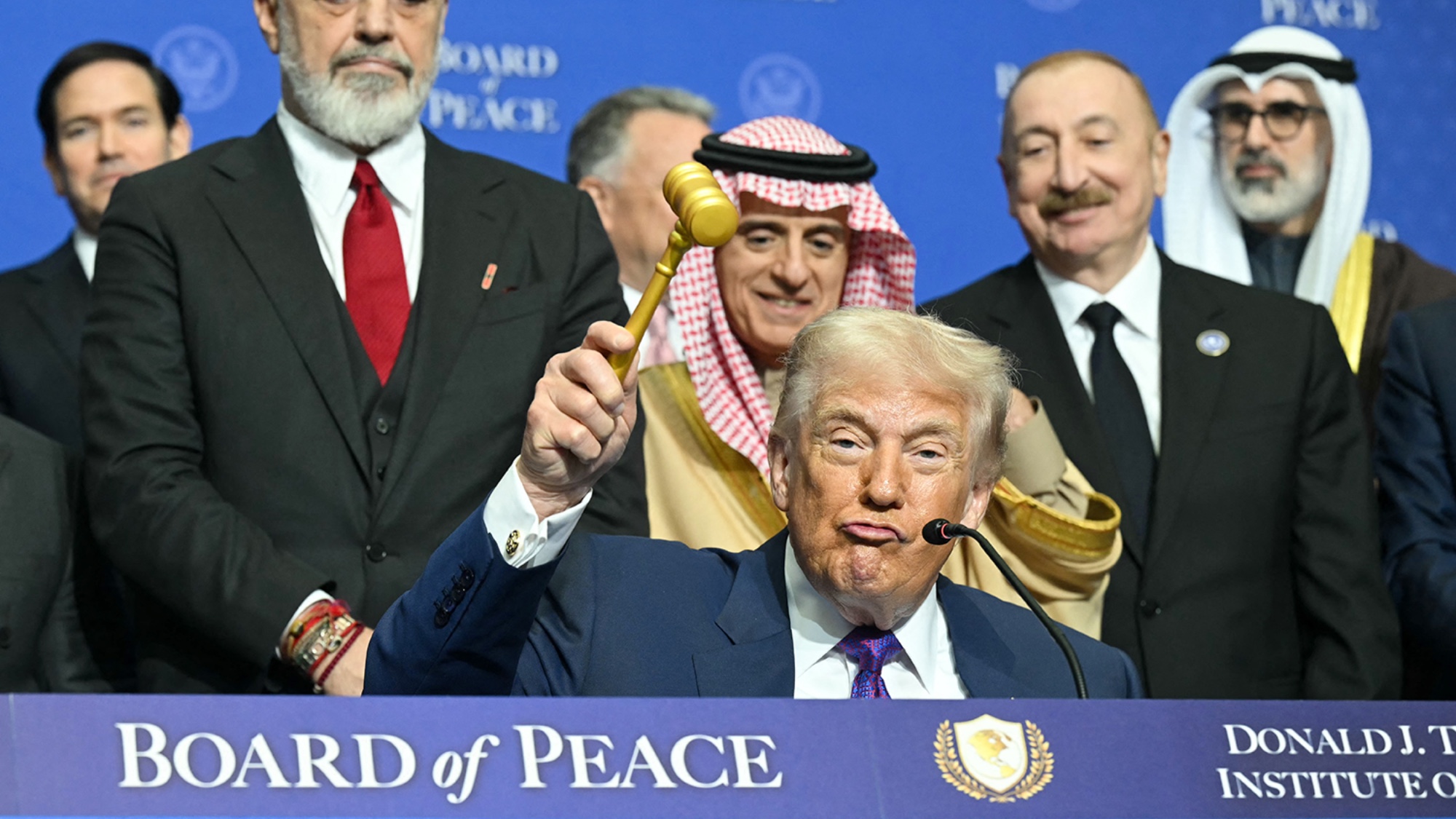
    Welcome to the surreal “Trump world order,” said Shawn McCreesh in The New York Times. Washington last week hosted the inaugural meeting of the Board of Peace, the international organization created by President Trump ostensibly to rebuild Gaza. But the wartorn Palestinian territory was not front of mind during his 47-minute opening speech, in which he griped about how Norway “screwed” him on the Nobel Peace Prize; lauded his “movie star” wife’s new film; and assessed the merits of attendees such as Qatar’s prime minister (“You’re not evil”), Argentina’s president (“I endorsed him”), and Bahrain’s king (“He’s so rich”). He even “used his peace summit to threaten all-out war” on Iran unless it cut a deal with him. Trump did announce that the U.S. would transfer $10 billion to the board “to effectuate peace in the Middle East...or something,” said Nikki McCann Ramirez in Rolling Stone. But this was primarily a forum for the board’s 27 member states, most of them authoritarian regimes, to praise Trump. Not that he paid much attention: As dignitaries addressed him, Trump “repeatedly seemed to doze off in his seat.” 

    “Most of America’s traditional allies” in Europe stayed home, said Andreas Kluth in Bloomberg, and Trump specifically disinvited Canadian Prime Minister Mark Carney. They didn’t miss much, because the Board of Peace is a pure “ego trip.” Its charter endows Trump, the board’s “chair in perpetuity,” with veto power and the sole authority to invite new members, who must cough up $1 billion to secure a permanent seat. The charter “doesn’t even mention Gaza.” It’s a “grim joke” for the devastated enclave’s 2.2 million residents, said Hussein Ibish in MS.now, “who are huddling in tents waiting for the next box of food aid”—and the next Israeli air strike. 

    The Board of Peace may achieve one thing, said Glenn C. Altschuler and David Wippman in The Hill: making us appreciate the United Nations. Yes, the U.N. is deeply flawed: It’s overly bureaucratic, often slow to act, and struggles with corruption. But unlike Trump’s board, which he clearly envisions as a U.N. replacement, it has universal buy-in among nations and a proven track record of delivering humanitarian aid and ending conflicts. That’s why the U.N.’s imminent financial collapse is so ominous. The U.S. owes 95% of the organization’s “$2.2. billion in unpaid annual dues.” Without it, “the U.N. will start to run out of money in July.” If only Trump’s Board of Peace is left standing, the world will be a far more dangerous place.


    people

    Tomlinson’s secular awakening

    Taylor Tomlinson learned her trade on the church comedy circuit, said Alex Morris in Rolling Stone. Raised in a conservative Christian family in Temecula, Calif., the comedian was 16 when a woman at her church persuaded Tomlinson and her father to take a stand-up class. “I don’t think I initially wanted to,” says Tomlinson, 32. “I was like, ‘I have homework. I don’t have time for that. You guys said I had to get straight A’s.’” But she impressed her teacher, a church comedian who asked her to open for him on the Christian circuit. She found it easy to deliver the “clean entertainment” her audience wanted. “I was a kid. I hadn’t had sex. I couldn’t swear.” But when she turned 18, Tomlinson started doing gigs at stand-up clubs and encountered a very different world. “I had been taught that everybody has that voice in their head saying, ‘I’m God. Here’s what you’re supposed to do.’ It blew my mind that there were people who’d never thought that hard about whether there was a god. They were just trying to be good people. And I was like, ‘Oh, that’s an option?’” Tomlinson, a self-professed agnostic, soon stopped taking religious gigs. “When you perform in church, you’re essentially telling them, ‘I’m also a Christian. I’m not doing my church set and then going to do my dirty club set.’ And I just was like, ‘I [don’t] want to feel like I’m lying.’” 


    Saturday Wrap was written and edited by Theunis Bates, Chris Erikson, Bill Falk, Allan Kew, Bruno Maddox, Tim O’Donnell, Zach Schonbrun, and Hallie Stiller.

    Image credits, from top: Reuters; AP; Getty; Getty
     

    Recent editions

    • Evening Review

      A breaking point for Pakistan and Afghanistan

    • Morning Report

      ICE and Columbia tangle over student arrest

    • Evening Review

      Trump’s Epstein allegations

    VIEW ALL
    TheWeek
    • About Us
    • Contact Future's experts
    • Terms and Conditions
    • Privacy Policy
    • Cookie Policy
    • Advertise With Us
    • FAQ
    Add as a preferred source on Google

    The Week is part of Future US Inc, an international media group and leading digital publisher. Visit our corporate site.

    © Future US, Inc. Full 7th Floor, 130 West 42nd Street, New York, NY 10036.