The Week The Week
flag of US
US
flag of UK
UK
https://cdn.mos.cms.futurecdn.net/flexiimages/jacafc5zvs1692883516.jpg

SUBSCRIBE & SAVE

Less than $3 per week

Sign in
  • View Profile
  • Sign out
  • The Explainer
  • The Week Recommends
  • Newsletters
  • Cartoons
  • From the Magazine
  • The Week Junior
  • Student Offers
  • More
    • Politics
    • World News
    • Business
    • Health
    • Science
    • Food & Drink
    • Travel
    • Culture
    • History
    • Personal Finance
    • Puzzles
    • Photos
    • The Blend
    • All Categories
  • Newsletter sign up Newsletter
  • The Week’s Saturday Wrap
    The pope strikes back, Cuba's energy crisis, and Trump’s mental fitness

     
    controversy of the week

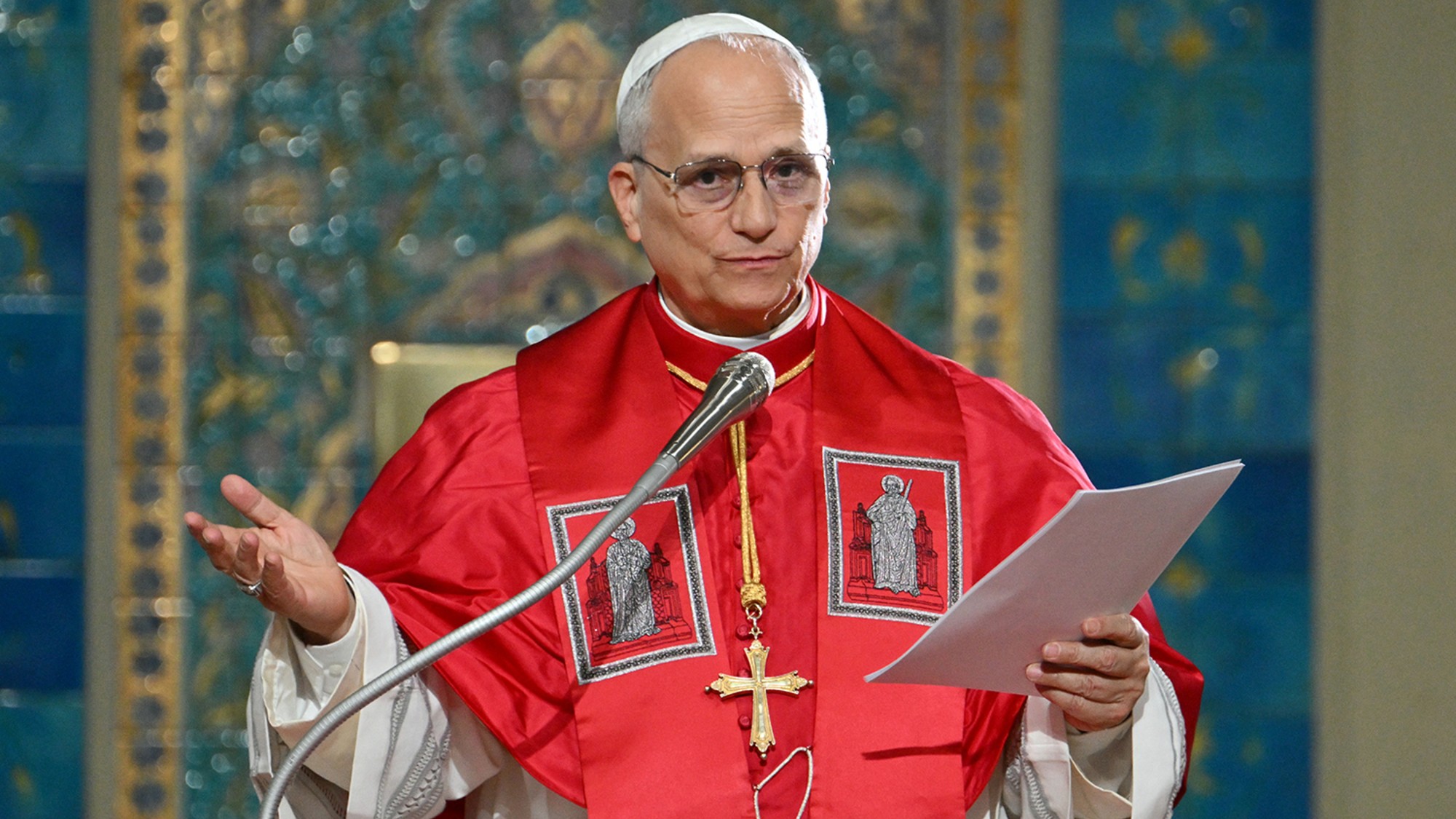
    Trump vs. Leo: Why the president took on the pope

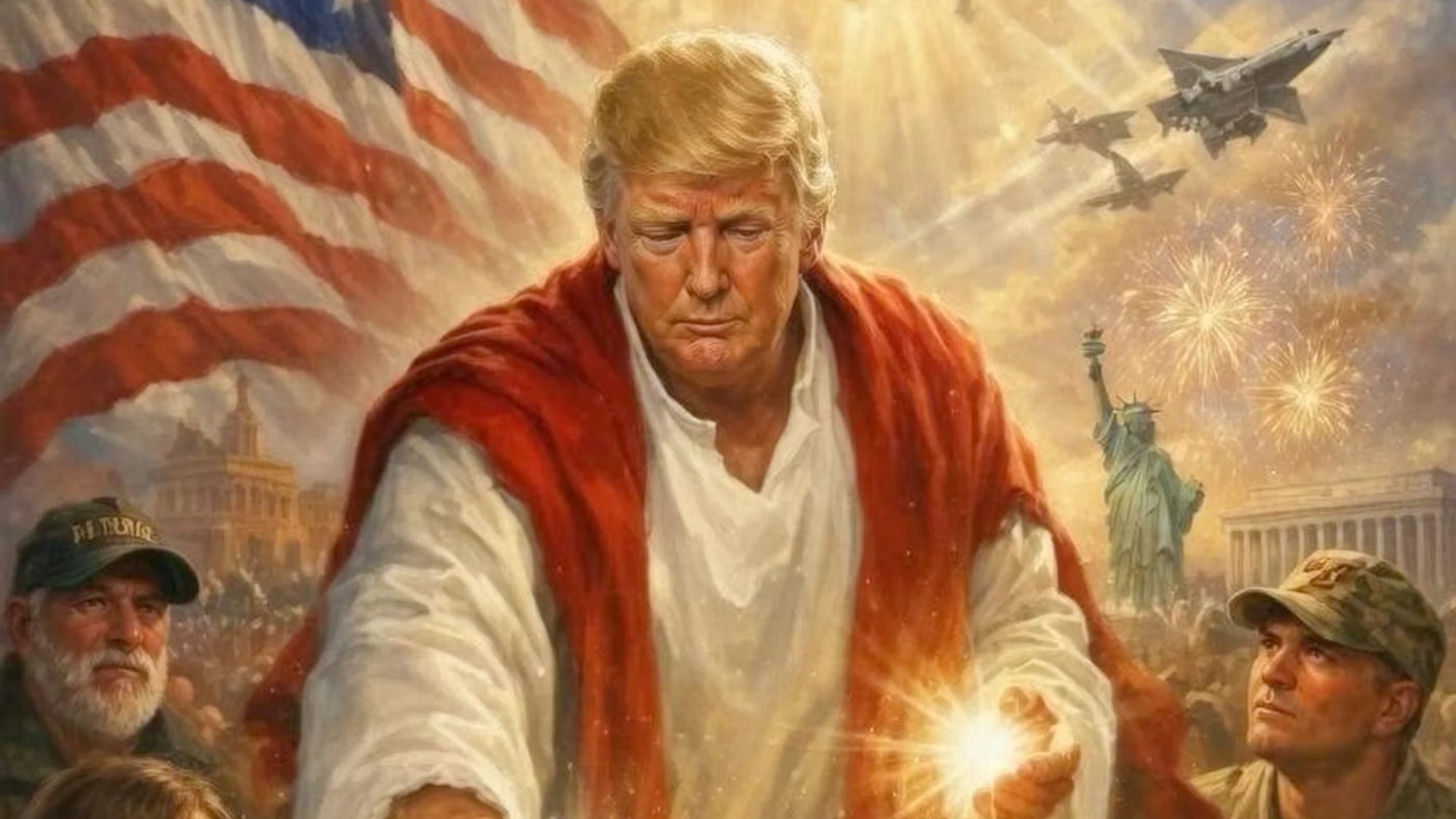
    A countdown began as soon as the Chicagoborn Robert Prevost was elected pope last year, said Nick Catoggio in The Dispatch. President Trump was never going to let another American challenge his “moral leadership,” so it was only a matter of when, not if, he’d “pick a fight” with the new pontiff. That moment arrived last week, after Pope Leo XIV denounced Trump’s genocidal threat to end Iran’s “whole civilization” as “truly unacceptable.” Trump shot back with a post accusing Leo of being “WEAK on crime,” “terrible for Foreign Policy,” and “catering to the Radical Left.” Forty-six minutes later, for good pope-baiting measure, Trump posted an AI-generated image of himself as a robed Jesus, bathed in golden holy light, miraculously healing a bedbound man. Even for many MAGA diehards, this “blasphemous image” was too much, said Jeffrey Blehar in National Review. Trump later deleted it, claiming he’d thought it depicted him as “a doctor.” But he “doubled down” on his criticism of Leo, and was joined by Vice President JD Vance—a Catholic convert—who advised the pope to “be careful” when talking about theology. For an unpopular administration “embroiled in several other global messes,” this seems like an odd moment to “declare a MAGA fatwa” on the leader of the planet’s 1.4 billion Catholics, among them 20% of U.S. citizens.

    Did Trump pick this fight or did Leo? asked Paul Elie in The New Yorker. “Vatican convention holds that the pope should be neutral in international conflicts.” But on Palm Sunday, he said God rejects the prayers of those with “hands full of blood”—a clear shot at the “Crusader-ish rhetoric” of Defense Secretary Pete Hegseth, an evangelical Protestant who recently called on “Almighty God” to grant U.S. forces “overwhelming violence of action against those who deserve no mercy.” And last week, Leo referenced Trump by name for the first time, calling on the president to find an “off-ramp” in Iran. 

    This spat didn’t start with Iran, said Kiera Butler in Mother Jones. Leo also criticized Trump’s immigration crackdown and his January raid on Venezuela, and channeled the mounting anger of many Catholics over Israel’s brutal campaign in Gaza. With the U.S.- Israeli attack on Iran, that frustration turned to opposition, and the war is now “tearing apart” the Catholic-evangelical coalition that elected Trump. He had hoped to forge a “special bond” with an American pontiff, said Mattia Ferraresi in The Free Press. After all, the president gave the Supreme Court a Catholic supermajority, and his administration has “a striking number” of Catholic top officials. But relations with the Vatican have instead deteriorated so severely that during an unusual January meeting at the Pentagon with the Holy See’s U.S. ambassador, one U.S. official reportedly invoked the “Avignon papacy”—a period in the 1300s when the French crown used its military might to dominate the papal authority.

    Leo’s “not looking for a fight” with Trump, said David Gibson in The New York Times; “he’s looking past him.” A “fit 70-year-old” with a lifetime appointment, Leo sees it as his mission to shape the “post-Trump global order,” and help Catholics rediscover the virtues of peace, compassion, and “common decency over jingoist bullying.” Leo’s “quiet, confident witness” is already resonating with American Catholics, said Gustavo Arellano in the Los Angeles Times, giving them the courage to reject Trump’s cruelty and selfishness. Pope Leo declared this week that he has “no fear” of the Trump administration. And “we shouldn’t either.”


    VIEWPOINT

    AI is here. Now what?

    “The narrative that AI is destabilizing middle-class work is both very real and hype. For white-collar workers across the country, the upheaval is psychological and existential as much as technological. They are grappling with what we call apocalyptic insecurity: the realization that something massive is underway but there’s no clear timeline or playbook. Everything moves at incomprehensible speed. Tech leaders issue Magic 8 Ball musings: white-collar jobs gone in months; half of entry-level jobs wiped out in five years; or jobs will simply ‘transform.’ But how? When? What, if anything, is the plan?”

    Lynn Parramore and Alissa Quart in The New Republic


    briefing

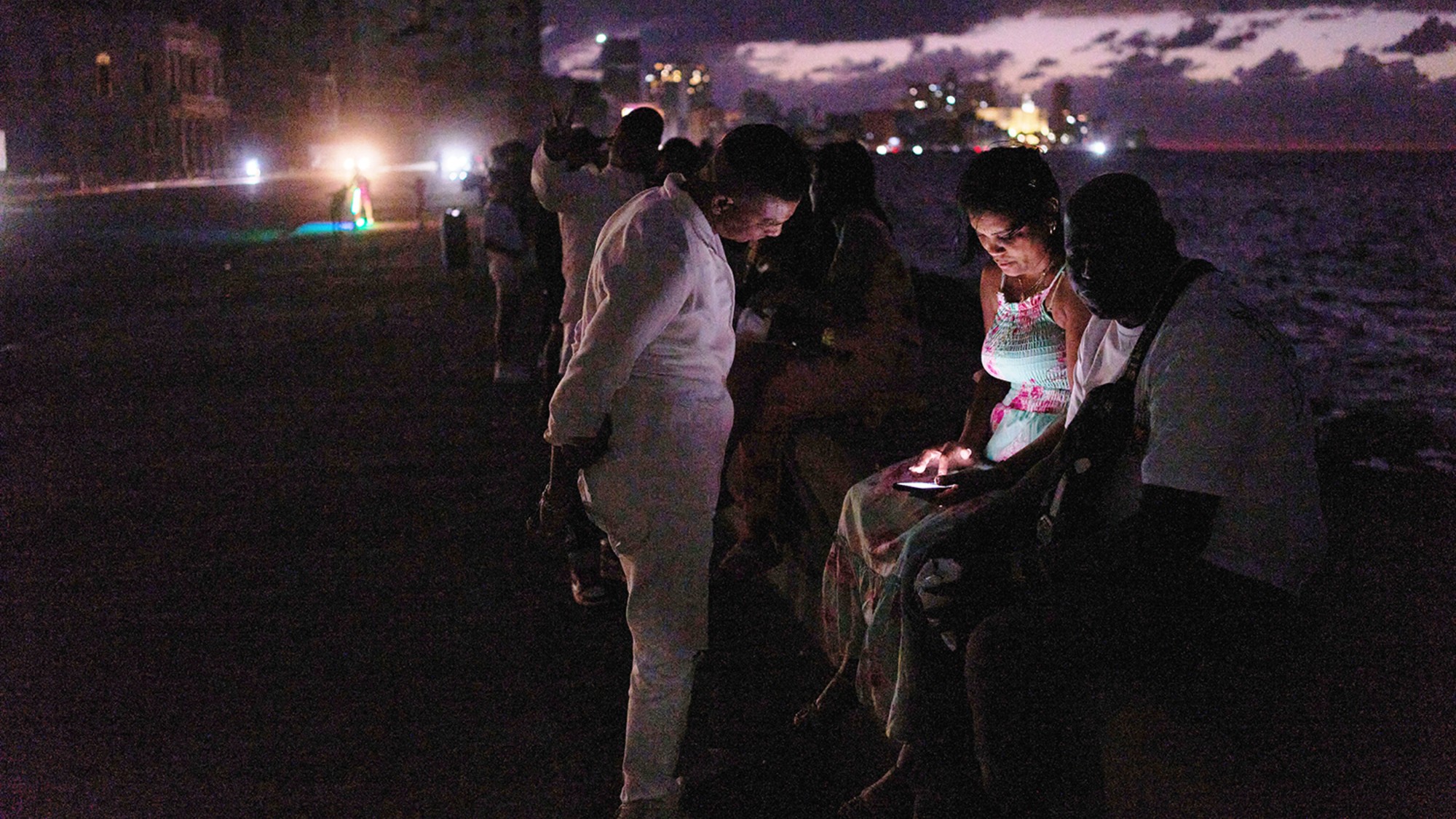
    Cuba goes dark

    The U.S. oil blockade is pushing the island and its communist regime to the brink of collapse.

    What’s the situation in Cuba? 
    The country is running out of fuel—and fast. Oil shipments from Venezuela, Cuba’s main fuel supplier for the past three decades, ended in January after the U.S. attacked the South American country and captured its president, Nicolás Maduro. President Trump then declared a full oil blockade, threatening severe tariffs on any country that sent Cuba fuel. The blockade has exacerbated a long-simmering economic and humanitarian crisis for Cuba’s 11 million people. Blackouts of up to 20 hours are routine, and their consequences are severe: Running water has been cut off in many urban areas because the systems rely on electric pumps; trash has piled up for lack of gas to run garbage trucks; and doctors say preventable deaths are rising as equipment fails. In late March, the U.S. Coast Guard allowed a single Russian oil tanker carrying about 730,000 barrels of oil to pass through the blockade, providing Cuba with at best a few weeks of fuel. “It’s not going to have an impact—Cuba is finished,” Trump said. “And whether or not they get a boat of oil, it’s not going to matter.”

    How did Cuba get here? 
    The island has been under U.S. sanctions for nearly seven decades. What began with an arms embargo during the Cuban Revolution in 1958 was broadened into a full trade and travel embargo after Fidel Castro established his communist government. While Castro’s rule saw an expansion of access to education and health care, alongside those gains came political repression and the confiscation and nationalization of private land, businesses, and homes, prompting millions of Cubans to flee. The U.S. trade embargo— the longest in modern history—intensified Cuba’s chronic economic woes, which deepened after the collapse in 1991 of its main foreign backer, the Soviet Union. The Cold War–era embargo continued until the second term of President Barack Obama, who sought to ease what he called “a rigid policy that is rooted in events that took place before most of us were born.”

    What did Obama do?
    Believing a rapprochement could reduce repression on the island and provide economic opportunities for ordinary Cubans, he opened discussions in 2014 with Raúl Castro, Fidel’s brother and successor. The Obama administration restored diplomatic relations and struck Cuba from its list of state sponsors of terrorism. In March 2016, Obama became the first U.S. president to set foot in Cuba since Calvin Coolidge in 1928. Americans were allowed to travel to Cuba for “educational” purposes for the first time in decades, and direct commercial flights resumed and embassies opened. Cuba’s tourism revenue jumped 15% in the first half of 2016, and a record 4 million foreigners visited that year. But few Cubans reaped benefits, as increased demand for food and poor planning caused shortages and price hikes. “It’s a disaster,” said Lisset Felipe, a government-employed air conditioner seller, in 2016. “We never lived luxuriously, but the comfort we once had doesn’t exist anymore.”

    Why didn’t the thaw last? 
    On the campaign trail in 2016, Trump pledged to undo Obama’s policies—promises that helped him win the votes of a majority of Cuban Americans in Florida. In office, he imposed a “maximum pressure” campaign against Cuba and put the country back on the list of state sponsors of terrorism. Though President Joe Biden reversed that move in his last week in office in January 2025, Trump quickly reimposed it after returning to the White House last year with a newfound interest in Latin America, heavily influenced by Secretary of State Marco Rubio, a foreign policy hawk and the son of Cuban immigrants. Trump’s first target was Venezuelan autocrat Maduro, a close ally of Cuba, and many Cuban Americans saw that intervention as a step toward realizing Rubio’s desire to topple the island’s communist government. “If I lived in Havana, and I was in the government, I’d be concerned—at least a little bit,” Rubio warned hours after the January raid that captured Maduro.

    What does the White House want? 
    The end of Cuba’s communist government. The Trump administration has been negotiating with President Miguel Díaz-Canel’s regime and seems inclined to avoid using military force, hoping the blockade will inspire Cubans to rise up against their government. Protests are spreading, with furious residents banging pots and chanting, “We’ve had enough,” “Freedom,” and “Put the lights back on.” In the central city of Morón last month, protesters set the Communist Party’s local headquarters on fire—the biggest show of dissent in years. But the blockade is also inflicting pain on ordinary Cubans. “The U.S. is trying to punish the Cuban government,” said one Havana resident. “But it’s the people who are suffering.”

    How do Cubans feel about the blockade? 
    They’re desperate. In a country where the official average monthly wage is about $15, gas is now nearly $40 a gallon—if you can find it. There were three major blackouts in March, and the United Nations has warned the blockade will result in a “severe humanitarian crisis,” with fuel shortages hitting every aspect of the island’s food system, from irrigation and harvesting to refrigeration and distribution. Health experts predict diseases such as dengue and chikungunya will return. Cuba’s once-vaunted health system is collapsing. There’s little fuel for ambulances, doctors and nurses are unable to commute to work, and pharmacy shelves are bare. Many refrigerated medicines spoil when the power goes out. Doctors say premature births are increasing as an antibiotic shortage leads to rising infections. It’s also getting harder to administer chemotherapy amid blackouts, and patients on ventilators now rely on backup batteries or hand pumps. “I don’t know how long we can keep going,” said Xenia Álvarez, whose 21-year-old son’s lungs can’t pump air on their own. “His life depends on electricity.”


    Only in America

    New York University will not allow live speakers at many of its graduation ceremonies, after a speaker last year veered off script and accused Israel of “genocide.” NYU’s main commencement ceremony will still feature live speeches, but addresses for smaller, “school-based” graduations must be preapproved and delivered via prerecorded video. “They want us to sit on the stage as our video plays next to us,” said senior Maddy van der Linden, “which I think is so dumb.”


    It wasn’t all bad

    A quick-thinking manager at an Applebee’s in Michigan hustled patrons to safety when a tornado struck the restaurant. A sunny Friday in early March took a drastic turn when alarms began to sound that an EF-2 tornado was approaching. Manager Aubrey McKenzie ushered the diners and staff into the prep kitchen, which had no windows, and even ran outside to direct more people to shelter. The storm shattered windows and nearly destroyed the bar— but no one was injured. “I did what I felt I had to do,” McKenzie said.


    talking points

    Trump: Why even old allies are questioning his sanity

    Every day and every week, it becomes more alarmingly evident that in the White House “a mad king reigns, virtually unchecked,” said Jackie Calmes in the Los Angeles Times. Since he launched the frustrating war in Iran, President Trump has “reversed and contradicted himself repeatedly” about its goals while descending into enraged, profanity-flecked threats of genocide. On Easter Sunday, with Iran defying his demands to open the Strait of Hormuz to oil tankers, our commander in chief posted on Truth Social: “Open the Fuckin’ Strait, you crazy bastards, or you’ll be living in Hell.” He threatened to completely destroy Iran’s power plants, bridges, and infrastructure—leaving 93 million Iranians without electricity, running water, or functioning hospitals—and followed two days later with this genocidal vow: “A whole civilization will die tonight.” In everything the nearly 80-year-old Trump does, he shows the world “he is mentally unstable, unfit for the office.” When Pope Leo XIV criticized the war in Iran and Trump’s brutal immigration roundups, Trump posted that the pontiff was “WEAK on Crime, and terrible for Foreign Policy” before following up with an AI-generated image of himself as a robed Jesus Christ healing a sick man—later claiming it depicted him “as a doctor.” That was too much even for onetime acolytes, said Makena Kelly and David Gilbert in Wired. Former Rep. Marjorie Taylor Greene and podcasters Tucker Carlson and Alex Jones, among others, denounced Trump’s depiction of himself as the Messiah, and called for him to be removed from office, with Greene suggesting that Trump may actually be the Antichrist. Greene told former MAGA allies: “I know all of you and him and he has gone insane, and all of you are complicit.”

    It’s no longer just Democrats and late-night comics questioning Trump’s sanity, said Peter Baker in The New York Times. Retired generals, former Republican officials, and foreign leaders are expressing deep concern about the “state of mind” of “the oldest president ever inaugurated.” In his second term, Trump “seems even less restrained and more incoherent,” publicly using profanity, wandering off at official meetings “into odd tangents” about poisonous snakes, Sharpie pens, and his White House ballroom, and repeatedly calling Greenland “Iceland” while insisting it should belong to him. He appalled allies when he gloated that liberal Hollywood director Rob Reiner had been allegedly stabbed to death by his son, and when, after the death of former FBI director and special counsel Robert Mueller, he said, “Good. I’m glad he’s dead.” After Trump’s genocidal threats against Iran, Democrats have called on the Cabinet to invoke the 25th Amendment to remove Trump for mental unfitness, but he has surrounded himself with fawning loyalists, “rendering that idea moot.” Trump’s “chest-thumping and semi-coherent bluster” are nothing new, said Becket Adams in National Review, but now that he’s started a war of choice in the Middle East, he’s provided “the added bonus of a ticking body count”—including more than 3,600 Iranians and at least 13 Americans. It’s “fully reasonable” to question why our president keeps “teetering frantically between talk of peace and threats, promising terrible outcomes that no American has had time to consider, let alone endorse.”

    Trump haters may “clutch at their pearls,” said Hugo Gurdon in the Washington Examiner, but he has a long, successful track record of issuing “bellicose threats” and making “outlandish” demands to get the other side to the negotiating table. Hasn’t anyone learned “he should be taken seriously, not literally?” Sorry, said Janan Ganesh in the Financial Times, but it smacks of “desperation” to claim Trump is cleverly using Richard Nixon’s “madman theory” to intimidate Iran into concessions. Trump’s wild, irresponsible threats “achieved next to nothing.” Iran did not reopen the strait or surrender to his other demands. 

    All this “is utterly exhausting for Americans and the world,” said Sohrab Ahmari in Unherd. Trump owes his presidency to voters who grew tired of technocrats such as Hillary Clinton and Barack Obama overriding the public will to make trade, economic, and immigration policy, “often to the benefit of themselves and other elites.” But Trump “went into mad-king mode,” and the results make liberal technocrats “look better by comparison.” This is life “under a personalist regime,” said Lisa Needham in Public Notice, where all power is held by a cultlike leader “not accountable to the military or to a political party.” Trump “reverses decisions based on nothing but whims.” He demands that aides and followers show loyalty by “agreeing to believe the same lies he does.” When “Congress and the Supreme Court simply step aside and abdicate their power, then it’s all Trump, all the time.” Personalist government has brought us nonstop chaos, corruption, bitter division, and foreign conflict, and “it’s wrecking us.”
     
     
    people

    Lane’s unwanted outing

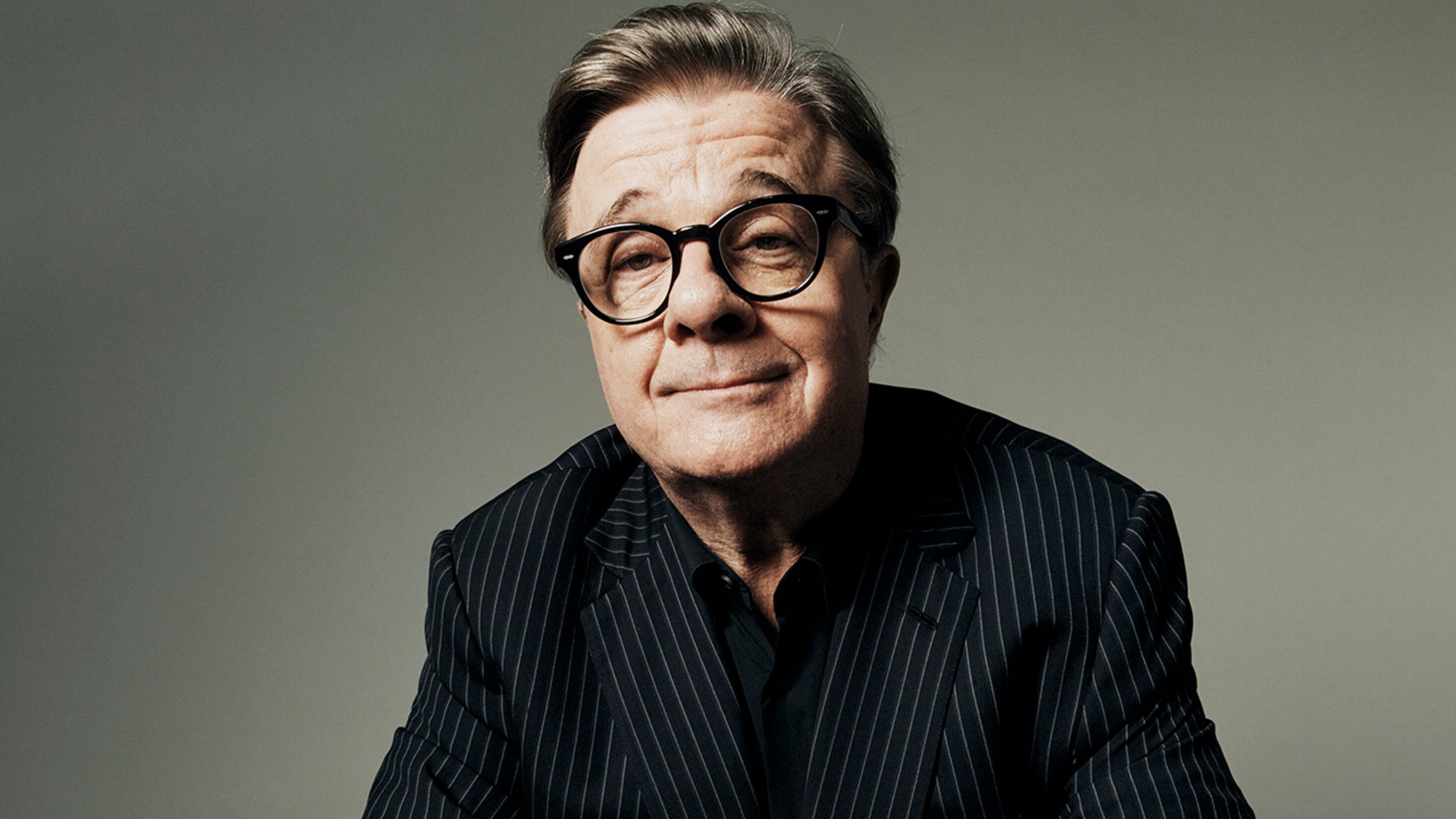
    Nathan Lane was utterly unprepared for a spotlight to be shone on his sexuality, said Juan A. Ramírez in The Guardian (U.K.). A Broadway stalwart since the early 1980s, Lane rocketed to Hollywood fame after being cast as a drag queen in 1996’s The Birdcage. While promoting the movie, he and Robin Williams—who played his on-screen partner—sat for an interview with Oprah Winfrey, who asked Lane if he feared being typecast as gay and “people forever saying: Are you? Are you not?” Lane had come out to friends and family decades earlier, but the idea of announcing he was gay on national TV left him lost for words and visibly uncomfortable. “In those days,” he says, “you might as well say: ‘And by the way, I love cock.’ I wasn’t ready. I wasn’t brave enough.” Williams stepped in to redirect the line of questioning, a move Lane, 70, attributes to the late actor’s “incredibly kind, generous soul.” He holds no grudges against Winfrey, who he thinks was just being playful. But he recalls how, a few weeks after the interview, he was stuck in Manhattan traffic when another driver spotted him and shouted, “‘Hey, faggot! Hey, faggot!’ It was humiliating, I went: ‘Well, this is the other side of fame.’” Lane came out publicly in a magazine profile a few years later, but by that point “it was like: ‘Yeah, big deal, we already knew.’ So there was no winning that one.”


    Saturday Wrap was written and edited by Theunis Bates, Bill Falk, Bruno Maddox, Rebecca Nathanson, Tim O’Donnell, and Hallie Stiller.

    Image credits, from top: Getty, AP, Truth Social, Getty
     

    Recent editions

    • Evening Review

      JD Vance’s fall from grace

    • Morning Report

      Israel and Lebanon begin ceasefire

    • Evening Review

      China’s ‘electrostate’ power grows

    VIEW ALL
    TheWeek
    • About Us
    • Contact Future's experts
    • Terms and Conditions
    • Privacy Policy
    • Cookie Policy
    • Advertise With Us
    • FAQ
    Add as a preferred source on Google Add as a preferred source on Google

    The Week is part of Future US Inc, an international media group and leading digital publisher. Visit our corporate site.

    © Future US, Inc. Full 7th Floor, 130 West 42nd Street, New York, NY 10036.