The Week The Week
flag of US
US
flag of UK
UK
https://cdn.mos.cms.futurecdn.net/flexiimages/jacafc5zvs1692883516.jpg

SUBSCRIBE & SAVE

Less than $3 per week

Sign in
  • View Profile
  • Sign out
  • The Explainer
  • The Week Recommends
  • Newsletters
  • Cartoons
  • From the Magazine
  • The Week Junior
  • Student Offers
  • More
    • Politics
    • World News
    • Business
    • Health
    • Science
    • Food & Drink
    • Travel
    • Culture
    • History
    • Personal Finance
    • Puzzles
    • Photos
    • The Blend
    • All Categories
  • Newsletter sign up Newsletter
  • The Week’s Sunday Shortlist
    A love letter to camp horror, a Green Lantern reboot, and the art of ‘Dr. Death’

     
    FILM REVIEW

    Teenage Sex and Death at Camp Miasma

    Directed by Jane Schoenbrun
    ★★★★ (out of four)
    “There is absolutely no one else, alive or dead, who could have made a feature that looks and feels like this one,” said Ryan Lattanzio in IndieWire. Jane Schoenbrun, the nonbinary trans director of I Saw the TV Glow, has followed up that acclaimed 2024 release with an “often spellbinding” film that’s part slasher send-up, part “future cult lesbian classic.” Hacks’ Hannah Einbinder plays Kris, a queer indie filmmaker who’s been handed a chance to direct a reboot of a 1980s slasher series whose mass killer was gender-fluid. But when Kris decides she’d like the final girl from the original film to appear in the reboot, the “entrancingly sexy” pas de deux that ensues steers the tale in a surprising direction. Once Einbinder and co-star Gillian Anderson are brought together, said Richard Brody in The New Yorker, the heart of this movie becomes a “sharply written” two-hander, “with plenty of scope for the two leads to shine.” Anderson’s Billy lives like a recluse, but she’s funny and insightful, and she helps Kris discard her sexual inhibitions while Schoenbrun is simultaneously weaving in “gleefully gory” scenes from the fictional earlier Camp Miasma movies. Anderson, incidentally, “appears to be enjoying her foray into sapphic high-camp tremendously,” said Jessica Kiang in Variety. But then every actor here seems to be having fun, even as the movie’s second half “uses the silliness of slasher convention to get to some fairly profound places,” particularly about culturally constructed obstacles to women’s experience of pleasure. The result is Schoenbrun’s “most accomplished, most persuasive, and most playful movie yet.” 


    tv review

    Lanterns

    DC Comics adaptations have a spotty track record, but this grounded, gritty take on the Green Lantern franchise, from the tag team of Chris Mundy (True Detective) and Damon Lindelof (Watchmen, The Leftovers), should win lots of fans. Kyle Chandler is Hal Jordan, the ring-bearing intergalactic supercop of the comics, who begins training an understudy, played by Aaron Pierre. As the two investigate a murder in rural Nebraska, signs point to an emerging extraterrestrial threat. Expect Nathan Fillion’s Guy Gardner, the Lantern in James Gunn’s Superman, to also drop in.
    Sunday, Aug. 16, at 9 p.m., HBO and HBO Max 


    FOOD & DRINK

    Wine: The celebrity aisle

    “Side hustles have infiltrated the bottle shop,” said Emily Saladino in The Washington Post. Countless celebrities are now profiting from wines sold under their names, and some offerings, unsurprisingly, are “borderline undrinkable.” Still, I’ve found several I can recommend. Hat tips, then, to Kyle MacLachlan, C.J. McCollum, and the three boldface names behind these bottles.

    2021 Three by Wade California Chenin Blanc ($23)
    This entry-level chenin blanc from basketball great Dwayne Wade pairs “juicy melon flavors” with “vibrant lemon on the long finish.”

    2024 Sun Goddess Pinot Grigio Ramato ($23)
    This copper-colored wine from R&B legend Mary J. Blige and Italy’s Friuli region tastes of stone fruit, citrus, and white tea, and its finish is “long and zesty.”

    2022 Bledsoe Family Winery Cabernet Sauvignon ($55)
    “Pricey but well made,” this Columbia Valley cab from former NFL quarterback Drew Bledsoe offers blackberry, herb, cedar, and mineral notes, all “elegantly layered.”


    BOOK OF THE WEEK

    The Frenchmen: Or, My Life in Theory

    by Emily Eakin

    “It’s tempting to read The Frenchmen as atonement,” said Dayna Tortorici in The New Yorker. Some 22 years ago, author Emily Eakin betrayed one of the passions of her youth when she was working at The New York Times and she signed off on an obit for Jacques Derrida that ran under a headline dismissing the French philosopher as “abstruse.” Just a decade earlier, Eakin had been a devotee of the post-structuralists, the cohort of mostly French, mostly male thinkers who ignited a 1980s fad that had literature students at many of America’s top universities parroting the ideas that all meaning is contingent and words can’t be trusted. Eakin, who caught the “theory” bug as a Harvard undergrad, was pursuing a Ph.D. when she finally shook it. But was the entire movement nonsense? In her engaging new book, “Eakin argues persuasively that it wasn’t.”

    Not that Eakin is blind to her subjects’ many flaws, said Laura Miller in Slate. “Much of the entertainment offered by The Frenchmen comes from the tea Eakin spills on men who were once presented as disembodied monuments.” Jacques Lacan, Michel Foucault, and Louis Althusser were all “narcissistic, imperious, and histrionic—that is, they were very French.” In Eakin’s colorful character sketches, “only Roland Barthes comes off as remotely appealing.” Theory’s long downfall began around the time Eakin bought in, when it was revealed in 1987 that one of its stars, the Belgian-born Yale professor Paul de Man, had expressed antisemitic views while writing for a Nazi-affiliated newspaper during World War II. But while Eakin tired of theory, don’t expect her to join the critics on the Left and Right who remain eager to label post-structuralism absurd. “It taught us a new way to think,” she says. “Be skeptical. Be alert. Pay very close attention. Beware political claims posing as timeless truths.”

    As Eakin details, the battles over theory weren’t confined to academia, said Jonathan Derbyshire in the Financial Times. Philosopher Allan Bloom seemed to have the post-structuralists in mind when he railed against the influence of despairing European thinkers in The Closing of the American Mind, a 1987 best seller that remains a cornerstone of the Right’s case against American universities. Eakin isn’t afraid to admit that theory’s allure was its countercultural energy, said Geoff Shullenberger in Compact. She writes about her youthful indoctrination “with self-satirizing flair.” But when she defends theory’s luminaries, I can’t agree that their insistence that we vigorously question every story we’re told can help us recapture a sense of the common good in this moment. “Their imperative—to deconstruct—has been followed all too faithfully, for too long.” 


    OBITUARY

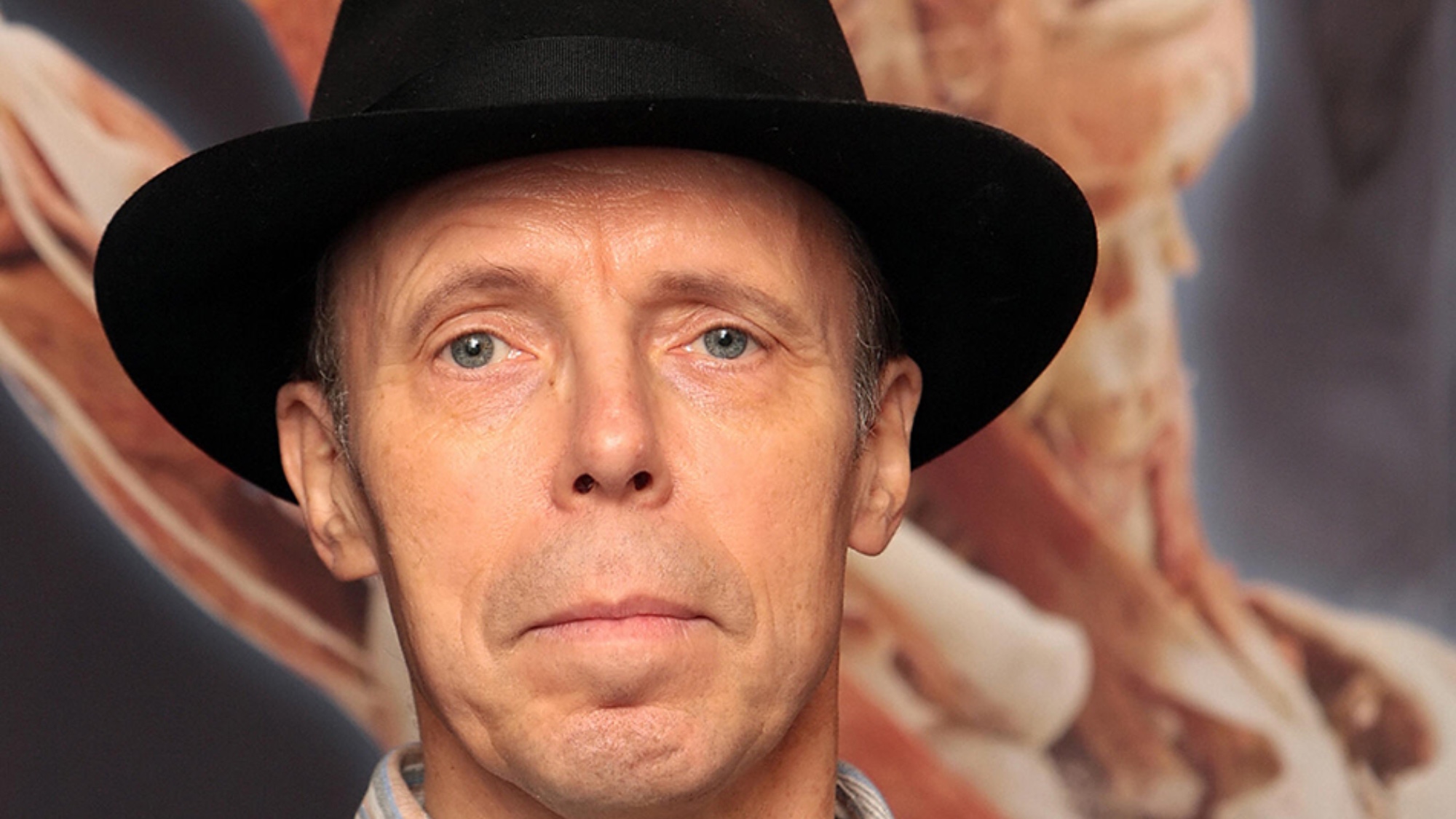
    Gunther von Hagens

    The anatomist who made art out of corpses

    Gunther von Hagens peeled away the mysteries of the human body. The German anatomist developed a way to preserve a human corpse by replacing the fluids and fats with plastic, so a skinned body could be posed and shaped, revealing the skeleton and organs. While the preserved bodies were first intended for teaching medical students, von Hagens soon used them in public touring exhibitions that were a mix of science and art. “Body Worlds”—which featured macabre figures positioned in life poses such as running, playing chess, or copulating— was immensely popular, attracting some 58 million visitors worldwide. But many people, both religious and secular, found them morally repugnant. One Berlin rabbi compared the commodification of human corpses to the Nazis’ transformation of Holocaust victims into soap and lampshades. But von Hagens brushed off labels such as Frankenstein and “Dr. Death,” saying he was in the business of education. The models let you “recognize yourself as a member of the human species,” he said in 1998. “Your humanity becomes clear.”

    Von Hagens was born Gunther Gerhard Liebchen—a name he gave up after marrying his first wife, Cornelia von Hagens—in what is now Skalmierzyce, Poland. His father was in the SS, and days after his birth “his parents placed him in a laundry basket while fleeing the approaching Russian army,” said The Washington Post. Growing up in communist East Germany, he became interested in medicine at age 6, during a hospital stay for his hemophilia. While he was in medical school, he began protesting the 1968 Soviet invasion of Czechoslovakia, and he spent time in prison for trying to flee across the Iron Curtain before West Germany allowed him in. There he developed the preservation technique he would call “plastination,” and in 1995 he opened his first “Body Worlds” show in Tokyo. “Not everyone agreed” that it was a public service, said The New York Times. Some shows were picketed, even vandalized, and in 2004, a German magazine alleged that his plastination plant in China used the bodies of executed prisoners. Von Hagens said he hadn’t known.

    “The controversies gradually subsided,” though, said the Financial Times, and by 2024, more than 20,000 people had agreed to undergo plastination after their deaths. Von Hagens, diagnosed with Parkinson’s in 2008, decided he would be among them. “It gives me great satisfaction,” he said, “to know that I will continue to teach after my death.”


    Sunday Shortlist was written and edited by Susan Caskie, Ryan Devlin, Chris Erikson, Chris Mitchell, Matt Prigge, and Hallie Stiller.

    Image credits, from top: tktktktk
     

    Recent editions

    • Saturday Wrap

      Learning to love the Left?

    • Evening Review

      The GOP’s Miller dilemma

    • Morning Report

      Another Trump-backed incumbent loses his seat

    VIEW ALL
    TheWeek
    • About Us
    • Contact Future's experts
    • Terms and Conditions
    • Privacy Policy
    • Cookie Policy
    • Advertise With Us
    • FAQ
    Add as a preferred source on Google Add as a preferred source on Google

    The Week is part of Future US Inc, an international media group and leading digital publisher. Visit our corporate site.

    © Future US, Inc. Full 7th Floor, 130 West 42nd Street, New York, NY 10036.