The Week The Week
flag of US
US
flag of UK
UK
https://cdn.mos.cms.futurecdn.net/flexiimages/jacafc5zvs1692883516.jpg

SUBSCRIBE & SAVE

Less than $3 per week

Sign in
  • View Profile
  • Sign out
  • The Explainer
  • The Week Recommends
  • Newsletters
  • Cartoons
  • From the Magazine
  • The Week Junior
  • Student Offers
  • More
    • Politics
    • World News
    • Business
    • Health
    • Science
    • Food & Drink
    • Travel
    • Culture
    • History
    • Personal Finance
    • Puzzles
    • Photos
    • The Blend
    • All Categories
  • Newsletter sign up Newsletter
  • The Week’s Saturday Wrap
    What Dems should do with the DSA, Trump’s get-richer initiatives, and how Sean Astin avoided the pitfalls of fame

     
    controversy of the week

    The Left: Should Democrats embrace ‘democratic socialists’?

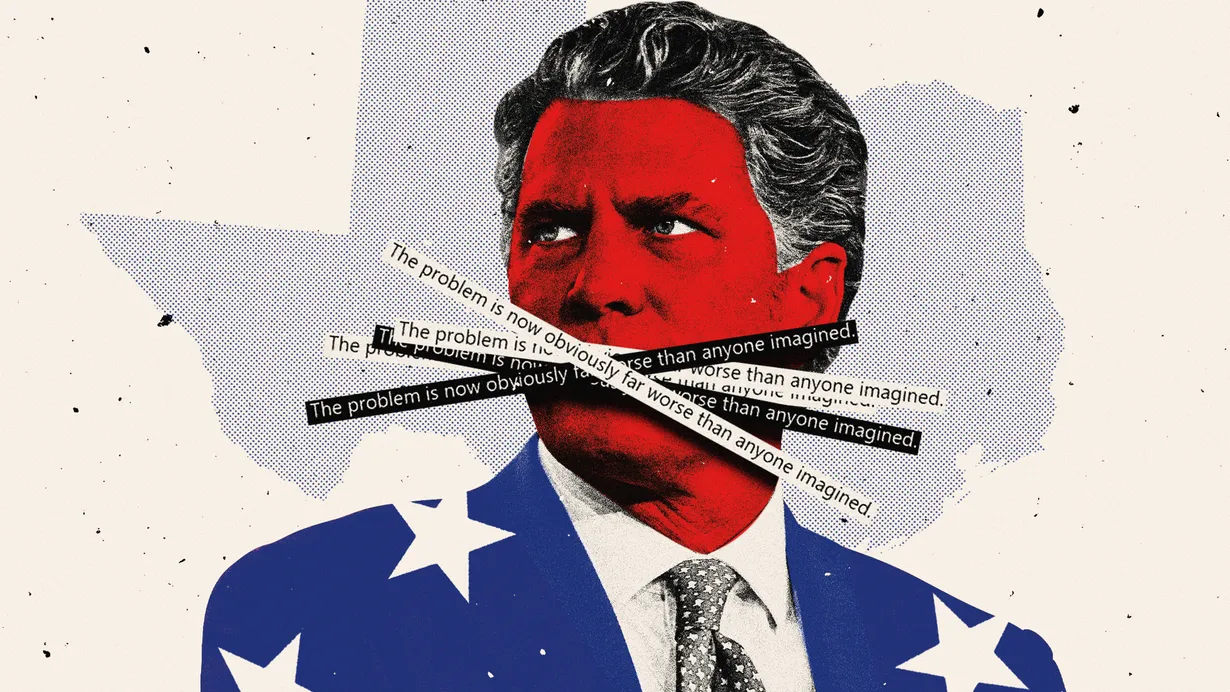
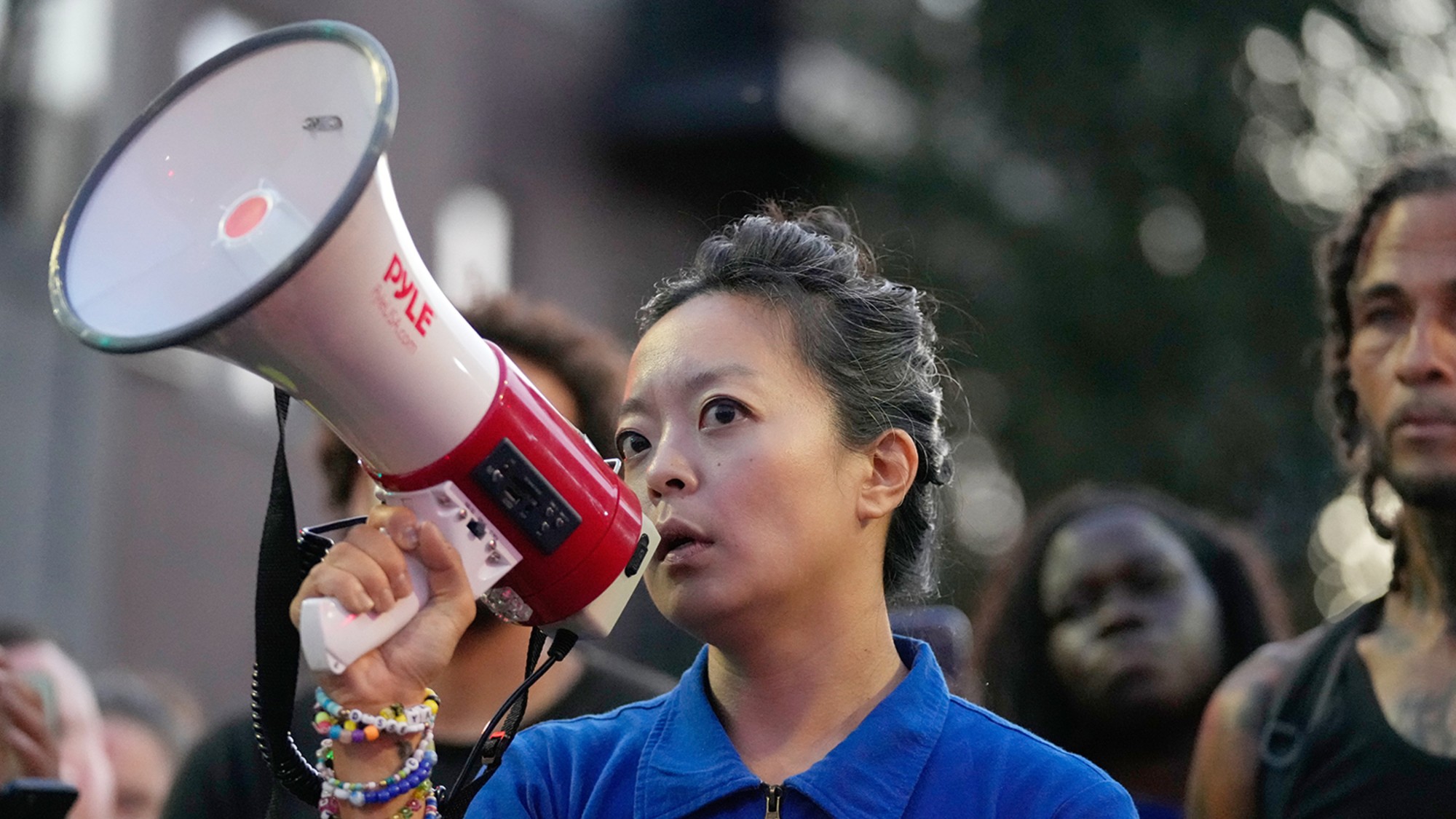
    After notching a string of Democratic primary wins in New York City and Colorado, the far-left Democratic Socialists of America will face its “biggest test” next week, said Caroline Vakil in The Hill. If the polls are right, the likely winner of the Democratic gubernatorial primary in Wisconsin will be state Rep. Francesca Hong, 37, a tattooed former restaurant worker and “proud” DSA member who a few years ago called for the abolition of Thanksgiving. Hong has sought to distance herself from that statement and from the DSA’s radical platform, which includes such proposals as abolishing the police, prisons, borders, and the U.S. Senate, as well as ending U.S. support for Israel. Because of that baggage, mainstream Democrats like current Wisconsin Gov. Tony Evers doubt Hong can beat the GOP’s presumptive nominee, Rep. Tom Tiffany, in November, and worry she’ll hurt down-ballot candidates. But Hong’s supporters see no need to stress. They note the rising anti-establishment mood among Democrats and voters in general, and say the narrow win by progressive Abdul El-Sayed in Michigan’s Senate Democratic primary shows there’s a possible path to victory in purple states. 

    The “Democratic machine is fighting back” as best it can, said Noah Rothman in National Review. The Democratic National Committee last week tweaked its presidential primary schedule to favor centrist-leaning states like Nevada and South Carolina, which should help ward off “the insurgent socialists in their ranks.” But with 1 in 3 Democratic voters now identifying as a democratic socialist it may be too little, too late. This is “a story of establishment collapse rather than left-wing ascension,” said Astead Herndon in Vox. Candidates like Hong are winning over normie Democrats not with the DSA’s extreme ideas but by pushing popular measures: new taxes on the superrich, Medicare for all, restraining the artificial intelligence industry. The “rudderless” Democratic establishment, by contrast, is offering nothing except ineffective opposition to President Trump. 

    We need better labeling, said Jonathan V. Last in The Bulwark. The truth is that a likely majority of DSA members, and the overwhelming majority of those who tell pollsters they’re “democratic socialists,” aren’t “socialists” at all. “They’re social democrats, in the European tradition.” Like the DSA-endorsed Rep. Alexandria Ocasio-Cortez (D-N.Y.), their main objectives are an expanded welfare state, including universal health-care coverage, funded by a more progressive tax code. Social democrats also want to win elections, meaning they could be a great asset within the Democratic coalition. Not so the DSA’s “Das Kapital–loving, Mao-admiring” genuine socialists who need to be rejected before they “do to the Democratic Party what MAGA did to Republicans.”

    Democrats should stop “whining,” said Paul Waldman in Public Notice. With the primaries largely over, it’s electoral self-harm to keep screaming “half our candidates are crazy!” The party’s centrists need to understand that, with control of Congress in the balance, “they have an interest in seeing all Democrats succeed—even those who are too progressive for their taste.” Whatever happens in November “will inform 2028,” said Nia-Malika Henderson in Bloomberg. If DSA-backed candidates can “pull off victories in purple states,” then a new template will emerge on how to win. But if those candidates lose, the Democratic Party will have less power than ever to “rein in Trump’s many excesses,” and will sail toward 2028 still “wrestling with itself” over what it actually believes.


    VIEWPOINT

    The passing fancy of Democratic socialism

    “Typically, a fad would take years to spread. Today, the cycle is enormously accelerated by social media, which is the primary source of information and news for millions of young people. Democratic socialism, as we see it today, is a fad. Although it might wreak some havoc in the near future, it will collapse, to be remembered merely as a passing political fancy. Both the socialism and the rightist populism we see today are temporary crazes that consume our attention, energy, and (in my profession) column inches, but distract us from the reality of a slow national decline. Politically, we fiddle while Rome burns.” 
    Arthur Brooks in The Free Press


    briefing

    Defunding America’s ‘best idea’

    Trump administration policies have left many national parks short on staff and money.

    How popular is the parks system? 
    The National Park Service recorded some 323 million visits to its 433 parks, properties, battlefields, and monuments last year. That’s a slight drop from 2024’s all-time high of 332 million, but more than the combined attendance of professional football, baseball, basketball, NASCAR, soccer, and Disney theme parks. Established in 1916, the NPS is today one of America’s most beloved institutions. A 2024 Pew Research Center survey found that 76% of Americans, including overwhelming majorities of both Republicans and Democrats, view it favorably, a higher share than for any other federal agency. But the NPS, which manages more than 85 million acres across the U.S., now faces an uncertain future because of staffing cuts and the reallocation of critical funds by the Trump administration. Author and conservationist Wallace Stegner once declared national parks America’s “best idea,” but the administration “is treating our treasures like anything but,” said John Garder of the nonprofit National Parks Conservation Association (NPCA).

    How many national parks workers have been laid off?
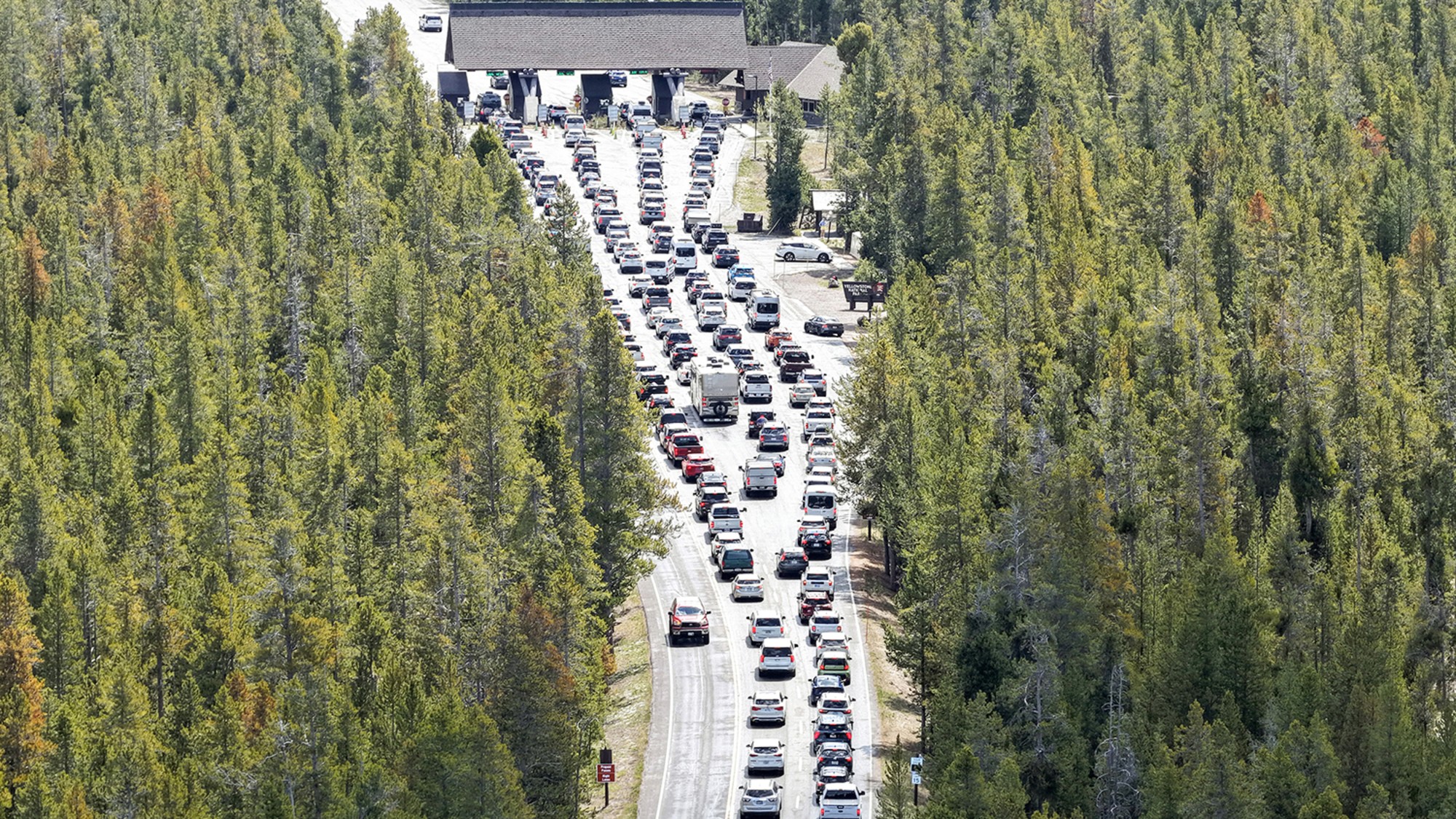
    The agency has lost nearly 25% of its permanent workforce—over 4,000 positions—since the start of the second Trump administration, according to the NPCA. About 1,000 parks employees with probationary status were fired in early 2025, while senior staffers have been let go through deferred-resignation and early-retirement programs. Interior Secretary Doug Burgum, who oversees the NPS, said the agency can keep up standards with a reduced workforce by getting staff to focus on hands-on jobs, such as clearing trails. “I want more of that,” he said. “I want less overhead.” Staffers who traditionally work behind the scenes have been pushed into more frontline roles; at Yosemite National Park, a shortage of custodial workers in spring 2025 meant the park’s scientists, IT specialists, and senior management had to take shifts cleaning toilets. Personnel cuts and delays in hiring seasonal workers have caused backups at entry gates, which at some big parks have been exacerbated by the scrapping of timed entry reservation systems. “The traffic reminded me of L.A. at rush hour,” said Sacramento resident Walter Meyer, who visited Yosemite in April.

    Are these cuts affecting park safety?
    Dive team operations were quietly suspended at southern Nevada’s Lake Mead National Recreation Area in May because of staffing shortages and the need for more training and equipment. The lake has consistently ranked as one of the deadliest sites managed by the NPS, with an average of 20 people dying in the park annually, mostly by drowning; one of the dive team’s responsibilities is recovering the bodies of drowning victims. An NPS employee at Yosemite told The Guardian that a lack of workers last year meant visitors could “wreck the park with no consequence” and get away with doing potentially dangerous things, such as not properly storing their food. “We don’t want bears eating people food because they can get aggressive,” the staffer said. “I worry the park will degrade to the point where safety is a problem.” And the problems faced by national parks have only grown this year, as President Trump redirected funding toward his preferred projects. 

    How is Trump spending that money? 
    At least $90 million from visitor entry fees to parks such as Big Bend and Yellowstone has been diverted to Washington, D.C., The Washington Post reported in early June. Much of that cash went toward Trump-requested beautification projects ahead of the country’s 250th birthday celebrations, including $76 million for fountain repairs and for the botched relining of the Lincoln Memorial Reflecting Pool. Entry fees were used to fund a Fourth of July firework display in the capital; it cost $1.6 million, more than five times the bill in past years. NPS also spent $689,232 this spring to rip up the walkway connecting the Oval Office to the White House residence, a 45-second commute. Trump didn’t like the historic beige Tennessee flagstone and has replaced it with polished black African granite carved in Italy. Park advocates say all that cash would have been better spent tackling the NPS’s $24 billion backlog of needed infrastructure repairs and improvements. “That is not how it was designed to work,” said the NPCA’s Ed Stierli. “It shouldn’t just be all at one park at the expense of the entire national park system.”

    Are many parks missing out on funding?
    More than 900 NPS projects that were slated to be funded this year have yet to receive money. They include a $1.5 million roof replacement at the Yellowstone Center for Resources, which is dealing with water leaks and pest invasions. Guardrails won’t be replaced along a cliff edge deemed a “significant safety hazard for visitors” at Colorado’s Black Canyon of the Gunnison National Park, and crumbling walls along a scenic drive won’t be fixed at Virginia’s Shenandoah National Park. At Crater Lake in Oregon, potholes riddle the main drive and two housing units for employees have been shuttered because of mold.

    Is anyone trying to protect the NPS?
    Some members of Congress are speaking out, as are NPS staffers. When the Trump administration started shrinking the workforce, a group of off-duty and former employees formed Resistance Rangers to document NPS’s cuts and policy changes, while fired workers flew an upside-down American flag—a distress sign—at Yosemite. Meanwhile, lawmakers in Washington have rejected plans in Trump’s 2027 budget to lay off nearly 3,000 more NPS workers and shrink the agency’s budget from $3.2 billion to $2.2 billion. No lawmaker wants to be responsible for defunding such a beloved agency. Plus, said Sen. Lisa Murkowski (R-Alaska), “I just need to know that I’ve got people out in the park who are keeping the bears at bay.”


    Only in America

    Facing a $1.5 billion bill to replace outdated or inoperable fire alarms at 31 prisons, California’s Department of Corrections is doing without. Instead, it’s paying corrections officers overtime to perform “fire watch”—patrolling prisons in search of smoke and fire—which prison-safety expert Kristen Cowan tells CalMatters is no substitute for mechanical fire alarms. Functioning fire alarms are “baseline disaster preparedness,” says Cowan. Their absence “makes you wonder what else is missing.”


    It wasn’t all bad

    A Thai restaurant owner in Myrtle Beach, S.C., is being hailed as a Good Samaritan for tracking down the owner of a sunglasses case filled with $12,000. Sak Yiengjuntuek came upon the cache of cash in a cabinet left sitting outside his restaurant. He suspected it belonged to the previous owner of the property. Yiengjuntuek tracked him down and learned the man had just been diagnosed with cancer. The recovered money will help pay his bills. “It was the right thing to do,” Yiengjuntuek said.


    talking points

    Corruption: A very profitable presidency

    In the second Trump administration, “the palms couldn’t be greasier,” said Daniel W. Drezner in his Substack newsletter. A Wall Street Journal story last week revealed the epic scale of President Trump’s corruption, detailing how he has extracted more than $800 million from companies and donors since returning to office. Top Trump fundraiser Meredith O’Rourke—whom he’s nicknamed the “princess of darkness”— will call companies on the president’s orders and say, “The boss wants this money.” O’Rourke has gotten results: SoftBank handed over $50 million for Trump’s presidential library, Apple $25 million for his White House ballroom, and Meta $10 million for a Trump-aligned nonprofit. Donors understand that such investments might secure them more favorable treatment. Trump last month renewed a tariff exemption for natural diamonds just weeks after a Belgian diamond group gifted him a watchsize 18-karat gold ring bearing two large diamond Ts. And all this graft is on top of the $2.2 billion Trump made in 2025 alone “from a variety of shakedowns and grifts,” including cryptocurrency schemes and real estate deals with Arab tyrants.

    The Trump family is about to rake in even more, said the Washington Examiner in an editorial. Its media venture last week launched Truth API, which for up to $100,000 a month will give subscribers’ millisecond-faster access to the president’s Truth Social posts. The ability to trade early on market-moving information can generate big profits—a Trump post in April 2025 “announcing a tariff pause sent the S&P 500 soaring 9.5%”— and hedge funds and financial institutions will likely pay for the service, if only to stay competitive with other traders. “The whole concept is so corrupt you almost struggle to get your head around it,” said Jim Swift in The Bulwark. Trump is charging for something, knowledge of government actions, that should belong freely to Americans. “This is pure rent-seeking.”

    Cracking down on Trump’s corruption should be a winning message for Democrats in the midterms, said James Downie in MS.now. A CNN/SSRS poll last week found that nearly two-thirds of Americans think Trump has “gone too far” in “pursuing his personal business interests.” But half of voters, including two-thirds of independents, think neither party is fighting the rot in Washington. After a decade of Trump’s grifting, Democrats might find those numbers “baffling.” But the public’s frustration is understandable: Congress has not passed a major ethics reform in decades, and a congressional stock-trading ban “remained in purgatory under Democratic and GOP-controlled Congresses.” Democrats can make Trump’s graft an election-defining issue—but then they must do something about it.


    people

    How Astin avoided the child-star trap

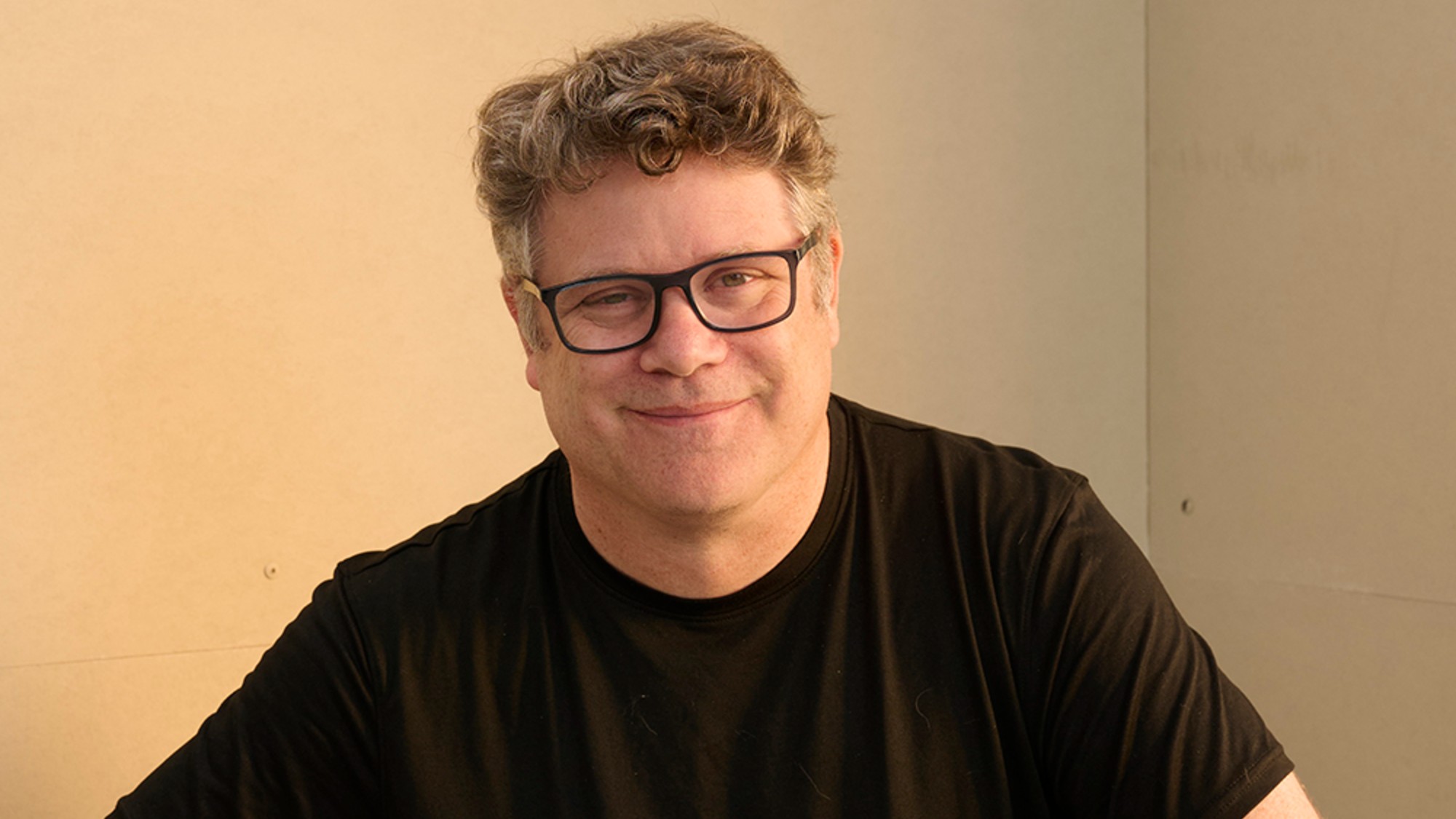
    Sean Astin followed in his mother’s footsteps—but carefully, said Steve Rose in The Guardian (U.K.). Patty Duke, who won an Oscar at age 16 for portraying Helen Keller in The Miracle Worker, was taken into the care of talent agents at 8, given drugs and alcohol, and abused sexually and financially. But she never discouraged her son from pursuing acting; at 13, he took the lead role in The Goonies (1985). “I think she wanted to rectify the pain of her childhood by raising a child who could have a similar experience absent that trauma,” says Astin. Duke was fiercely protective of her son on set—“she was only 4-foot-11 but scared the shit out of people”—and it worked. Astin avoided the psychological damage suffered by many of his fellow child stars, including his Goonies co-star Corey Feldman, who later alleged childhood sexual abuse in Hollywood and struggled with substance abuse. “I was never interested in drugs and alcohol or wild promiscuity. I got married at 21.” Now 55, Astin, best known for playing Samwise Gamgee in The Lord of the Rings trilogy, is the president of SAG-AFTRA, the modern version of the Hollywood union that Duke led in the 1980s. “I don’t expect that anyone would look at me and think he’s unflappably perfect, but I like the idea that people would look at me and go: ‘Wow, he sort of put his shit together.’”


    Saturday Wrap was written and edited by Theunis Bates, Bill Falk, Bruno Maddox, Scott Meslow, Rebecca Nathanson, Tim O’Donnell, and Zach Schonbrun.

    Image credits, from top:  AP, Getty, AP, Getty
     

    Recent editions

    • Evening Review

      The GOP’s Miller dilemma

    • Morning Report

      Another Trump-backed incumbent loses his seat

    • Evening Review

      Saudi Arabia enters the fray

    VIEW ALL
    TheWeek
    • About Us
    • Contact Future's experts
    • Terms and Conditions
    • Privacy Policy
    • Cookie Policy
    • Advertise With Us
    • FAQ
    Add as a preferred source on Google Add as a preferred source on Google

    The Week is part of Future US Inc, an international media group and leading digital publisher. Visit our corporate site.

    © Future US, Inc. Full 7th Floor, 130 West 42nd Street, New York, NY 10036.