The Week US
flag of US
US
flag of UK
UK
https://cdn.mos.cms.futurecdn.net/flexiimages/jacafc5zvs1692883516.jpg

SUBSCRIBE & SAVE

Less than $3 per week

Sign in
  • View Profile
  • Sign out
  • The Explainer
  • The Week Recommends
  • Newsletters
  • Cartoons
  • From the Magazine
  • The Week Junior
  • More
    • Politics
    • World News
    • Business
    • Health
    • Science
    • Food & Drink
    • Travel
    • Culture
    • History
    • Personal Finance
    • Puzzles
    • Photos
    • The Blend
    • All Categories
  • Newsletter sign up Newsletter
  • The Week Evening Review
    Democrats vs. Musk, the Black Bloc in France, and doubling dementia cases

     
    TODAY’S BIG QUESTION

    What happens if Democrats go to war with Musk?

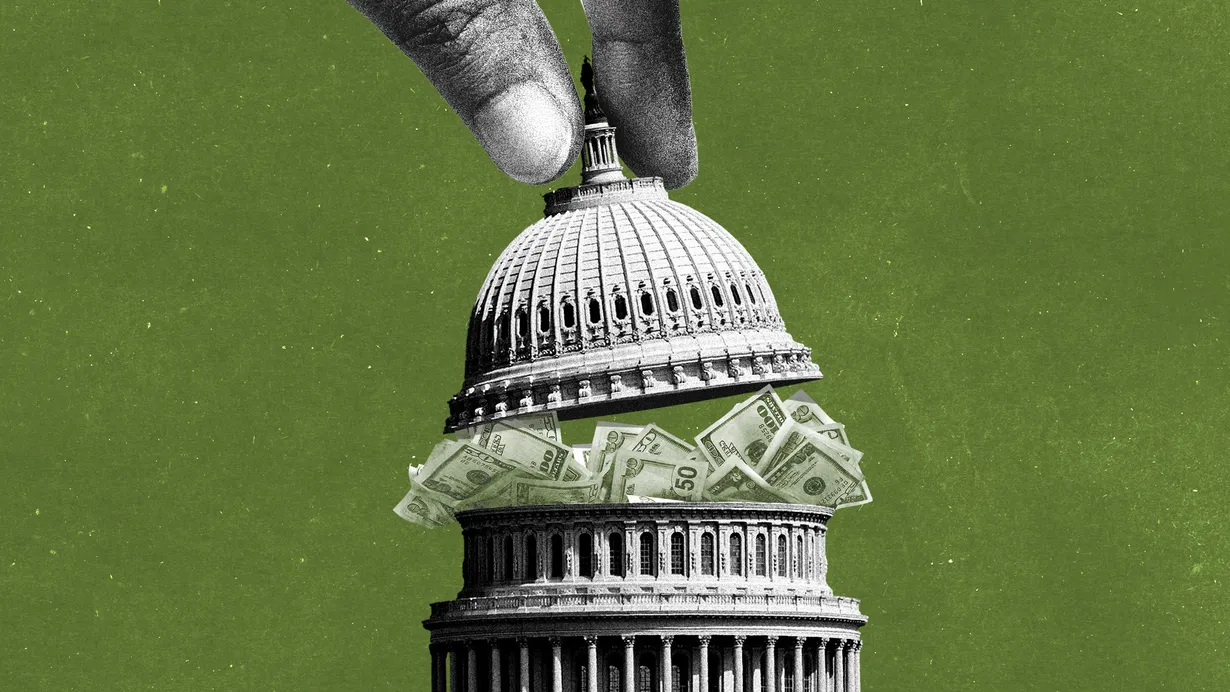
    Buoyed by polls showing historic winds at their backs ahead of Tuesday’s midterms, Democrats are wasting little time preparing for the day after capturing one, if not both, chambers of Congress. For all the speculation about how the party might use a congressional majority to rein in the Trump administration, however, Democrats have also set their sights beyond the beltway on tech billionaire Elon Musk.

    The party is threatening investigations during the new legislative term into the GOP megafunder’s businesses and previous government work. Musk, unsurprisingly, has threatened Democrats back, setting up a potential clash that could reverberate through Washington.

    What did the commentators say?
    Having “long eyed investigating the world’s richest man,” senior Democrats are “mulling how a range of panels could target Musk and a huge swath of his businesses,” said Politico. Even Democrats on committees with “less obvious ties to the tech mogul” are “eyeing targets.” 

    Musk’s recent interference in Ukrainian military operations is one of a “glut” of alleged conflicts of interest that the Democrats see as “ripe for oversight,” said Politico. But “above all else,” Democrats appear eager to “delve into the disaster” of his DOGE project, said Talking Points Memo.

    Democrats should be wary of targeting a man whose three private companies are “almost single-handedly driving American power and influence and our military edge in the next century,” said Fox News host Jesse Watters on “The Five.” “You are gonna destroy that edge.”

    In response to increased Democratic interest, Musk threatened to “find out who’s really pulling the strings and come for them, not just their puppets,” he said on X. “Live by the sword, die by the sword.” 

    Musk’s “wartime posture” shows he’s “bracing for a fight,” said The Washington Post. And with days to go before polls close, he “continues to signal he’s readying a counteroffensive.”

    What next?
    Some Democrats are “not waiting for election results to get started” investigating Musk, said Politico. Members of the House’s Committee on Homeland Security demanded last month that Musk testify on reports that his DOGE project “overstated its savings,” while the Ways and Means Committee in January called for probes into “alleged DOGE-related data theft” from programs like Social Security.


    QUOTE OF THE DAY

    ‘[For] somebody who understands that the cost of beef is too high, the answer isn’t to pick another protein. It’s to pick another senator.’

    Former Transportation Secretary Pete Buttigieg, at a rally in Biloxi supporting Democratic Mississippi Senate candidate Scott Colom, referencing an ad against Colom’s opponent, Sen. Cindy Hyde-Smith (R). She urged Mississippians to eat something besides beef to save money. 


    IN THE SPOTLIGHT

    The Black Bloc group at the center of France’s riots

    Masked protesters clad in black have been a feature of protests around the world for decades. And the so-called Black Bloc has been back in the news, accused by the French government of turning peaceful protests into violent riots.

    ‘Do not need a conductor’
    Originating among anarchist and radical left activists in West Germany in the 1980s, a Black Bloc is an “anti-establishment protest tactic” used by “temporary groups formed for a specific cause” and operating “without hierarchy,” said Francis Dupuis-Déri, a political science professor at the Université du Québec à Montréal, at The Conversation in 2017.

    The strategy spread through activist networks in North America in the 1990s, culminating in the infamous Battle of Seattle during the 1999 World Trade Organization summit. It has since figured in the anti-austerity movements of the 2010s and recent youth-led protests across Asia and South America.

    Ideologically identified with “anarchist, anti-capitalist and anti-fascist movements,” participants “eschew political parties,” said the Financial Times. They “pose a big problem” for the police and trade unions, who “do not want chaos to mar” traditional anti-government demonstrations.

    These people are “very well coordinated but in a horizontal way,” said Guillaume Farde, a security and defense specialist at the Paris Institute of Political Studies, to the Times. Tactics are disseminated via social media or encrypted messaging apps, and gatherings are often impromptu. They are like members of an “orchestra who know the music so well that they do not need a conductor.”

    ‘Deploys propaganda’
    The “founding fathers” of the Black Bloc were “autonomist and anarchist activists,” said Le Monde, but the “spectrum has broadened” to include more people who “define themselves as free spirits.” For this reason, the movement is difficult to pin down, and police sources cited by the French paper fear that, behind the scenes, “real ideologists are developing a doctrine and structure that unifies and deploys propaganda.”

    Others see this as an attempt by the authorities to make the Black Bloc something it’s not. The Black Bloc “doesn’t mean anything,” said Henri, a 40-year-old who doesn’t define himself as an anarchist or extreme leftist, to Le Monde. It’s “just because it’s not distinctive. It’s the best way not to be identified. We are all in the same boat.”


    Statistic of the day

    60,000: The number of Microsoft employees, about 25% of the tech conglomerate’s global workforce, who are being offered voluntary buyouts to reduce costs and pivot toward AI development. Microsoft cut 4,800 jobs earlier this year and forecasts a $175 billion expenditure for the calendar year.


    THE EXPLAINER

    Dementia cases to double by 2050 amid aging populations

    The global incidence of dementia is increasing at a much faster rate than previously known, according to new research. Cases could double by the middle of the century, with millions of people potentially at risk as the world’s population ages. 

    What did the study find?
    An estimated 11.3 million people were diagnosed with dementia in 2023, and that figure is expected to jump to 24.7 million diagnoses in 2050, according to research published in the journal JAMA Neurology. This estimate, a 118.5% increase, is based on data from “38,418 people across 22 population-based studies spanning 18 countries and territories on six continents,” said the researchers at Australia’s University of New South Wales (UNSW). Overall, the rate of dementia diagnosis is 9.7 new cases per 1,000 people.

    Dementia incidence is “higher among women than men and substantially higher in low- and middle-income countries than in high-income countries,” said UNSW. This marks a change from prior research, as a large part of what’s known about dementia has “historically come from high-income countries, despite some of the greatest future increases being expected in lower-resource settings.”

    What can be done?
    The results of the study “highlight the growing need for dementia prevention, diagnosis and care as populations age,” said USA Today, especially as dementia “already affects more than 57 million people worldwide.” Dementia is “not a future problem.” It’s an “accelerating epidemic crisis that demands immediate attention,” said Dr. Liron Sinvani, the director of research and innovation at the Northwell Institute for Healthy Aging, to HealthDay.

    There’s some good news on the research front. For the “first time, we can compare dementia incidence across a geographically diverse group of populations using the same statistical approach, giving us a clearer picture of where and among whom new cases are occurring,” said lead study author Dr. Ashleigh Vella. Understanding risk factors among different groups will be “critical” in developing a prevention and care response to “populations facing the greatest future risk.”


    Good day ⚖️

    … for a Jan. 6 witness. A grand jury has declined to indict Cassidy Hutchinson, a former Trump staffer who provided key testimony about the Jan. 6, 2021, attack on the U.S. Capitol. The Justice Department attempted to charge Hutchinson over portions of her testimony that the president disputed.


    Bad day 🚢

    … for cruise passengers. The MV Odyssey, an American cruise ship on a three-year globetrotting voyage, has suspended its trip in Cambodia because of rising fuel costs, forcing its 203 passengers to disembark. Monthly fuel expenses per cabin rose from $1,800 to $8,000 this year, according to ship operator Villa Vie Residences. 


    Picture of the day

    Deadly derailment

    Emergency services work at the site of a train collision south of Madrid. At least 68 people have died and more than 50 were injured. This is Spain’s “second major crash” this year on the “same high-speed train line” with the “same trains,” said ABC News.
    Javier Soriano / AFP / Getty Images


    Puzzles

    Daily sudoku

    Challenge yourself with The Week’s daily sudoku, part of our puzzles section, which also includes guess the number

    Play here


    The Week recommends

    The most entertaining audiobooks recorded

    Audiobooks combine compelling storytelling with expressive narration that can transport listeners to another world. From classic literature to contemporary favorites, these are the most memorable audiobooks ever recorded.

    ‘A Game of Thrones: A Song of Ice and Fire’ (2003)
    George R.R. Martin’s epic fantasy series now has an HBO television adaptation, but fans first heard the story come alive when the audio version was released. Many audiobooks win awards, but this one has also “broken records,” said Good Housekeeping. It earned a place in the Guinness World Records for the most character voices in an audiobook, delivered in style by Roy Dotrice. (Audible, Everand, Libro.fm, Spotify)

    ‘I Know Why the Caged Bird Sings’ (2011)
    Maya Angelou’s poetic autobiography is considered an American classic, and there are “few better ways to encounter the work” than through a “narration by Maya Angelou herself,” said Esquire. The seven-volume series chronicles her life from her childhood in Arkansas through motherhood. (Audible, Everand, Libro.fm, Spotify)

    ‘To Kill a Mockingbird’ (2014)
    The audiobook of “Harper Lee’s magnum opus” is a “must-listen,” said Esquire. With actor Sissy Spacek “serving as your gateway” to such iconic literary figures as Scout and Atticus Finch, you are immersed in the “powerful tale of justice, hatred and America.” (Audible, Everand, Libro.fm)

    ‘The Dutch House: A Novel’ (2019)
    Ann Patchett’s Pulitzer-nominated novel spawned a Grammy- and Audie-nominated audiobook narrated by Tom Hanks. The actor brings his “customary warmth and sensitivity” to a “multigenerational tale” with “shades of ‘Hansel and Gretel,’ plus a dash of ‘Cinderella,’” said The Guardian. (Audible, Everand, Libro.fm, Spotify)


    Poll watch

    Almost three-quarters of Americans (72%) think their town or city is worth investing in, while 60% feel hopeful about its future, according to a Gallup survey of 6,732 adults. Fewer respondents (40%) believe their town or city is prepared to handle future challenges. 


    INSTANT OPINION

    Today’s best commentary

    ‘Israel’s election reveals a democracy of contradictions’
    Gil Troy at The Jerusalem Post
    Yet another Israeli election has “pivoted around” Benjamin Netanyahu, Israel’s “indefatigable political sorcerer,” says Gil Troy. His endurance, “even without a coalition victory,” reflects Israel’s “political tribalism.” Party membership is often a “social, ethnic and political” statement, which Netanyahu “exploits with virtuosity.” Israel remains “one part kaleidoscope,” projecting “different ever-changing and sometimes contradictory images.” Now that the votes have been cast, “we Israelis need a quality that’s often in short supply these days: patience.” 

    ‘What Trump misunderstands about Machado and Venezuela’s future’
    James Story at MS NOW
    For the Trump administration, María Corina Machado’s return is “more than an inconvenience,” says James Story, a former U.S. ambassador to Venezuela. She’s a “walking, talking reminder” that the question of legitimacy “looms over every transaction” the administration makes with the “remnants of Maduro’s regime.” The “simple truth” the Trump administration should acknowledge is that a “stable, democratic” Venezuela that “represents the aspirations of all its people” will make a “much better economic partner” than one “acting through coercion.”

    ‘We are seeing the rise of psychopatriarchy everywhere’ 
    V (formerly Eve Ensler) at The Guardian
    Psychopatriarchy, “found in the 120 people who own more money than half the population on Earth,” is a “backlash against the progress we have made,” says playwright and author V. It has “birthed an authoritarian fascist reality,” poisoning our “social and psychological environment” with “violence” and “cruelty.” It’s “jet fuel to all the other -isms: racism, colonialism, imperialism, capitalism.” Not “just a political notion,” it’s also a “blight on the condition of humanity” that locks people into a “manufactured sense of powerlessness.”


    WORD OF THE DAY

    bloomscrolling

    A social media trend in which you fill your feed with positive, inspirational content — the opposite of doomscrolling. Bloomscrolling through “moments of awe, gratitude and connection can help calm the nervous system and widen one’s perspective,” said Sreela Roy-Greene, a mental health counselor at BetterHelp, to USA Today. 


    Evening Review was written and edited by Theara Coleman, Nadia Croes, Scott Hocker, Anya Jaremko-Greenwold, Justin Klawans and Rafi Schwartz, with illustrations by Julia Wytrazek.

    Image credits, from top: Illustration by Julia Wytrazek / Getty Images; Remon Haazen / Getty Images; Véronique Tournier / Hans Lucas / AFP / Getty Images; Viktoriia Kuznetsova / Getty Images
     

    Recent editions

    • Morning Report

      Israel votes, heads toward gridlock

    • Evening Review

      A corporate reckoning

    • Morning Report

      Trump’s topsy-turvy Comey retribution campaign

    VIEW ALL
    TheWeek
    • About Us
    • Contact Future's experts
    • Terms and Conditions
    • Privacy Policy
    • Cookie Policy
    • Advertise With Us
    • FAQ
    Add as a preferred source on Google Add as a preferred source on Google

    The Week US is part of Future US Inc, an international media group and leading digital publisher. Visit our corporate site.

    © Future US, Inc. Full 7th Floor, 130 West 42nd Street, New York, NY 10036.