The Week US
flag of US
US
flag of UK
UK
https://cdn.mos.cms.futurecdn.net/flexiimages/jacafc5zvs1692883516.jpg

SUBSCRIBE & SAVE

Less than $3 per week

Sign in
  • View Profile
  • Sign out
  • The Explainer
  • The Week Recommends
  • Newsletters
  • Cartoons
  • From the Magazine
  • The Week Junior
  • More
    • Politics
    • World News
    • Business
    • Health
    • Science
    • Food & Drink
    • Travel
    • Culture
    • History
    • Personal Finance
    • Puzzles
    • Photos
    • The Blend
    • All Categories
  • Newsletter sign up Newsletter
  • The Week’s Sunday Shortlist
    Fathering for ravers, a comedy excavation, and how mental illness got chic

     
    FILM REVIEW

    Club Kid

    An aging party guy learns he has a kid.

    “Plenty of movies have the same plot as Club Kid,” said Alissa Wilkinson in The New York Times. But Jordan Firstman’s feature debut as writer, director, and star injects “buoyant new life” into the familiar story of a man-child who finally grows up when challenged to look after a child. Firstman’s Peter is an aging, bottoming-out gay party promoter who one day is suddenly informed he must take over raising a 10-year-old son he didn’t know he had. At that point, the movie “shifts gears, going from swirling and whirling party film to a lively character study.” Firstman and his young co-star prove to be “a well-matched duo,” said Nick Schager in The Daily Beast. Their characters grow in tandem as they bond over shared musical tastes and as Peter introduces young Arlo to his hedonistic yet welcoming fellow New York City club acolytes. “The film’s comedy sometimes takes a back seat to sentimentality,” and when calamity strikes long after hints of it dropped, “it comes across as more preordained than shocking.” Still, Club Kid remains “charmingly amusing and moving.” When Firstman’s Peter and Reggie Absolom’s Arlo trade their first “I love you’s,” said Clint Worthington in RogerEbert.com, the moment “feels earned.” Firstman initially made his name lampooning vapid gay guys in comic videos he made for Instagram. Making the leap to feature directing, “he is ready to grow up a little, and it’s a shock that this tonal shift works as well for both character and man.”


    tv review

    Dig

    Comedy and archaeology don’t often mix. But Amy Poehler and sitcom maestro Michael Schur (The Good Place, Parks and Recreation) have found a way to make the combination work in this new series featuring Poehler as a seasoned archaeologist leading a team of naive college students on a big dig in Greece. When Poehler’s Elise unearths a valuable artifact, she schemes to keep it in the ground until her credit-stealing boss, played by Hugh Laurie, retires. But archaeology is no game, and soon she and her younger coconspirators hilariously stumble into an international conspiracy.
    Monday, Nov. 23, Peacock 


    FOOD & DRINK

    Wine: American chenin blanc

    “American chenin blanc is back and better than ever,” said Eric Asimov in The New York Times. The versatile grape, almost unique “in its ability to make profound wines that range from bone-dry to lusciously sweet,” isn’t being grown at high volumes, but many more producers are creating superb examples in small quantities. At good wine shops, you might find California standouts such as these. 

    2023 Dashe ‘Les Enfants Terribles’ ($26)
    “Modest in the best possible way,” this Clarksburg, Calif., chenin blanc is “quietly enticing, with subtly complex floral aromas and flavors.”

    2025 Lieu Dit ($30)
    This Santa Ynez Valleywine delivers the paradoxes you wish for in a chenin blanc. “It’s lean yet rich, dry with the impression of honeyed sweetness, floral yet saline—altogether lovely.”

    2024 The Terraces ($31)
    Another Clarksburg wine, this chenin blanc tastes “lean yet sun-kissed, full of floral, honeyed flavors that leave a lasting impression.” 


    BOOK OF THE WEEK

    All in Your Head: Illness as Identity, Trauma as Fashion, and the Desire to Be Disordered

    by Fredrik deBoer

    Frederik deBoer, with his online essays and two previous books, “has attracted notice for being a leftist who criticizes the Left,” said Clare McHugh in the New York Post. With All in Your Head, he’s challenged conventional thinking again, revealing details about his own struggles with bipolar disorder to bolster his argument that the loose way we talk about mental illness today is hurting the people, himself included, who most need better care. His candor about his own condition, its cost in lost years, and how assiduously he must manage it, gives his book “authority and urgency.” But he builds his case against today’s thinking by turning to history, explaining how the abusive and barbarous treatment of the mentally ill in the early 20th century led to reforms that have overreached. We’re now so determined to erase all stigma attached to mental illness that, especially among the young, “it’s become cool to claim certain mental impairments.” 

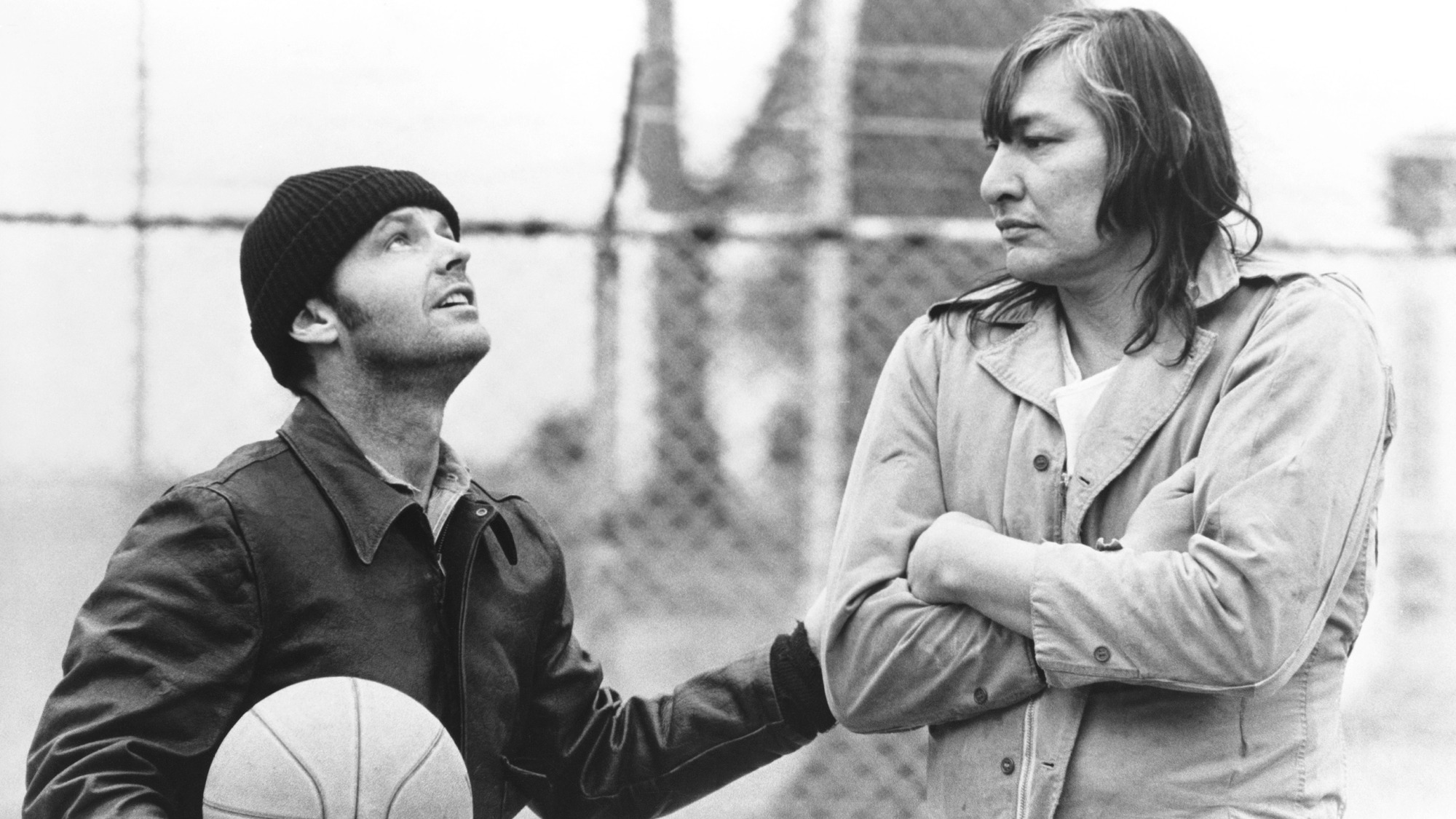
    DeBoer’s grievances “seem well-justified,” said Sally Satel in The Wall Street Journal. He reminds us that the closing of mental hospitals that began in the 1950s was never followed by sufficient federal funding for community-based care. He also calls out activists, scientists, and artists, including One Flew Over the Cuckoo’s Nest author Ken Kesey, for either minimizing the effects of serious mental illness or glamorizing them. And he explains the damage being done by the many high-functioning young people who diagnose themselves with modest or serious disorders and gather online under their questionable new collective identity. That trend “siphons resources away from the sickest, encourages overmedication, and medicalizes normal variants of human distress.” DeBoer’s “impassioned yet cleareyed” assessment of an enduring societal challenge “arrives as a welcome antidote to faddishness,” said Daphne Merkin in The New York Times. “I read All in Your Head with admiration that here was a writer willing to go up against some of the bromides that doubtless make mental illness more palatable but ultimately ensure that those who suffer from it will not be attended to in a way that brings relief.” 

    DeBoer’s “jarring rhetoric” is mostly effective, said Myles Werntz in Christianity Today. But his disregard for milder forms of mental illness is too sweeping. “The question of how best to care for the mentally ill should not be a zero-sum game, pitting milder and severer sufferers against one another.” Both groups have real needs, and our society is capable of caring for both. “This book is strong medicine. Accordingly, it is best taken in small doses.” Its readers will have to sort out for themselves where the expansion of the definition of mental illness has been beneficial and, alternatively, “where the new mental health discourse has run aground.”


    OBITUARY

    Jay Rockefeller

    The wealthy heir who fought for the poor

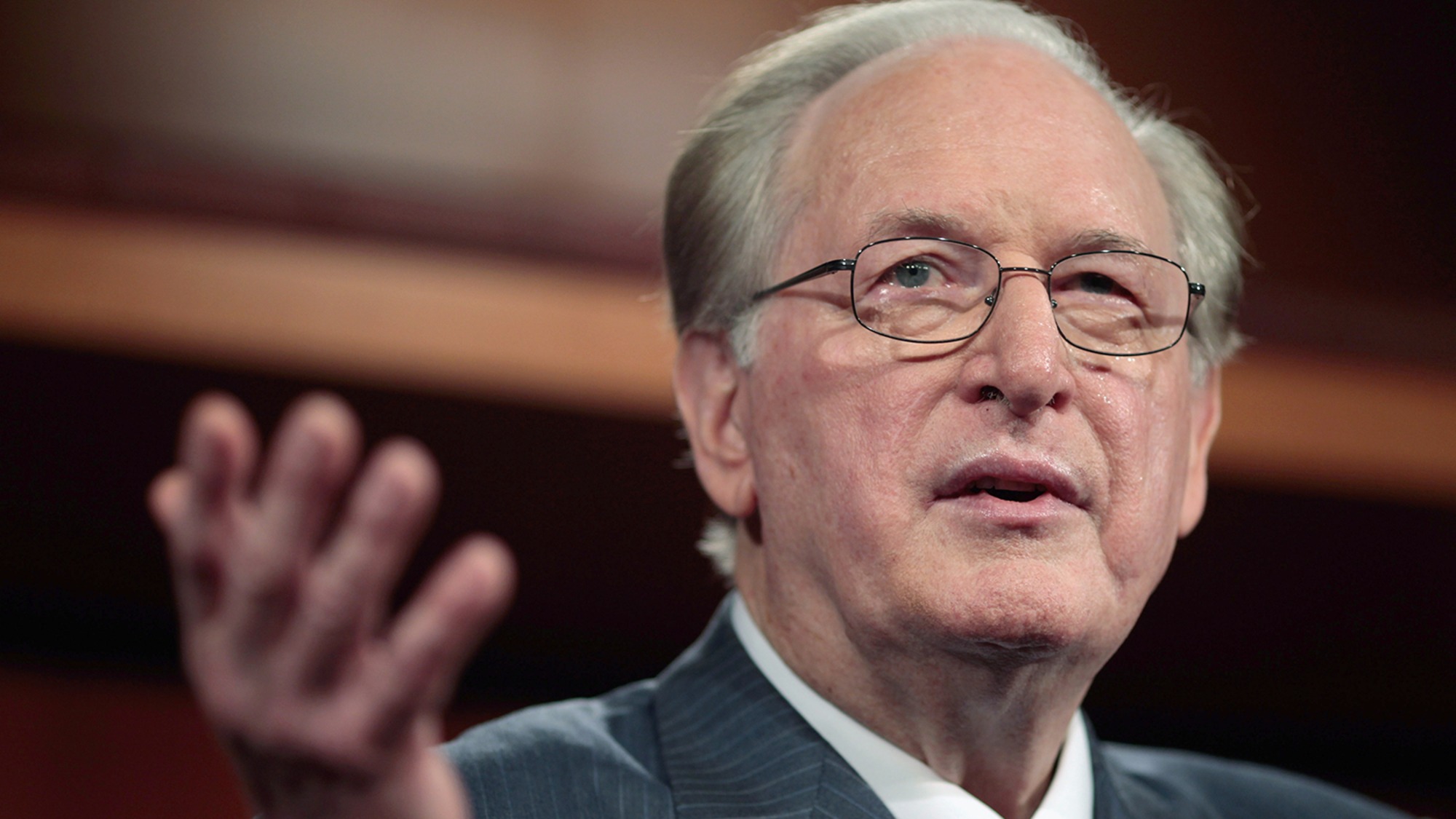
    Jay Rockefeller had a famous last name and a family fortune, and he spent his life putting both to good use. Born just weeks after the death of his great-grandfather John Davison Rockefeller Sr.—the Standard Oil magnate and philanthropist who became a symbol of American wealth—he was named for his forebear but inherited more of the urge toward charity than business. The only Democrat in a family of prominent Republican politicians, he served two terms as West Virginia’s governor and 30 years as a U.S. senator. In Congress, he fought for mine workers and their families, authoring the 1992 Coal Act to give miners health and retirement benefits and championing the 1997 Children’s Health Insurance Program, which provided affordable health coverage to children from poor families. Being a Rockefeller, he said in 1966, “stands for public service, a sense of responsibility, and a high standard of demand on oneself.” 

    “Born to privilege” in Manhattan and educated at Harvard, John D. Rockefeller IV was an unlikely figure to spend his life “serving the chronically poor Mountain State,” said the Charleston Gazette-Mail. Yet after a brief stint at the Peace Corps alongside Sargent Shriver, he came to Appalachia as one of the Volunteers in Service to America. In Emmons, a dying coal-mining town where most of the residents were illiterate, he helped establish a library, school bus service, and a Little League team. From then on, he was a local. Having chosen to remain in West Virginia, Rockefeller “began to climb the local political ladder,” said The Washington Post. He was elected secretary of state in 1968; governor in 1976; and U.S. senator in 1984, retiring in 2015. The state was “beset by troubles,” with little industry but low-paying coal mining, and Rockefeller focused his efforts on helping the poor. One of his “final legislative efforts” was sponsoring the 2014 Cybersecurity Enhancement Act, which brought broadband to rural areas. 

    Throughout his career, Rockefeller “acknowledged that he was one of the Senate’s richest members” but “made no apologies for his campaign spending,” said The New York Times. He believed it was his prerogative to spend his money on his public service. “When I came to West Virginia 50 years ago, I was searching for a clear purpose for my life’s work,” he said in his farewell Senate address. “What I got was the opportunity to work incredibly hard, along with a real and utterly spiritual sense of mission.”


    Sunday Shortlist was written and edited by Susan Caskie, Ryan Devlin, Chris Erikson, Scott Meslow, Chris Mitchell, and Matt Prigge.

    Image credits, from top: A24; Peacock; Everett; Getty
     

    Recent editions

    • Saturday Wrap

      What Democrats should do next

    • Evening Review

      Trump threatens to investigate his investigators

    • Morning Report

      Huang downfall fallout

    VIEW ALL
    TheWeek
    • About Us
    • Contact Future's experts
    • Terms and Conditions
    • Privacy Policy
    • Cookie Policy
    • Advertise With Us
    • FAQ
    Add as a preferred source on Google Add as a preferred source on Google

    The Week US is part of Future US Inc, an international media group and leading digital publisher. Visit our corporate site.

    © Future US, Inc. Full 7th Floor, 130 West 42nd Street, New York, NY 10036.