Why is Mexico City running out of water?
Climate change and bad planning bring on 'Day Zero'
A free daily email with the biggest news stories of the day – and the best features from TheWeek.com
You are now subscribed
Your newsletter sign-up was successful
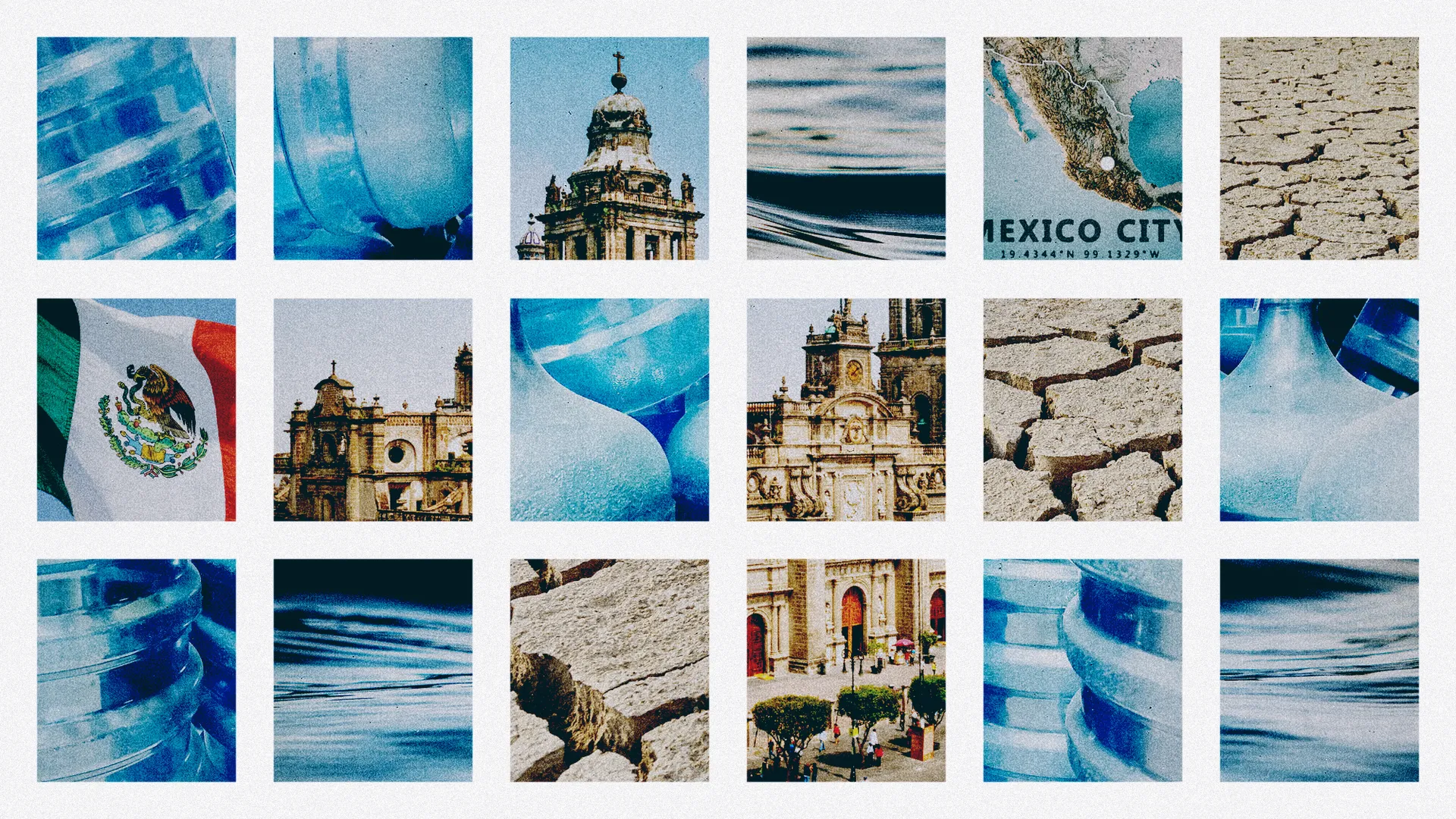
Mexico City is on "the brink of a profound water crisis," said The New York Times. North America's most populous city is facing the possibility of a so-called "Day Zero" this summer — perhaps as soon as June 26 — when many taps connected to the main water system will simply run dry. The looming disaster is the product of "years of poor water management compounded by scarce rains" brought on by extended drought. Some neighborhoods are already rationing water, while others are relying on water trucks to fill local cisterns. "It's scary," said one resident, "that we're running out of resources."
"The region's complicated relationship with water is as old as the city itself," NBC News said. Mexico City was built on top of a former lake bed drained by the Spanish after they conquered the region in the 16th century. In recent decades, the city's water infrastructure hasn't kept pace with its population growth — while warmer temperatures and infrequent rains have offered fewer opportunities to replenish the aquifers and reservoirs that supply the city. "We are not ready to respond as quickly as the drought is producing problems," said one expert.
What did the commentators say?
"This isn't going away," Caroline Houck said at Vox. And it's not just Mexico City. One study of 15 cities in Africa, Asia and Latin America found that many residents already live with a sort of "Day Zero" — the water supply simply isn't available around the clock. Climate change and continuing urbanization mean we'll see more of these kinds of problems. "Higher temperatures drive higher water use" after all. The challenge? "We need to stop taking water for granted and manage it better." That's a tall order: Any solutions will "require political will and money."
The Week
Escape your echo chamber. Get the facts behind the news, plus analysis from multiple perspectives.
Sign up for The Week's Free Newsletters
From our morning news briefing to a weekly Good News Newsletter, get the best of The Week delivered directly to your inbox.
"Mexico should be spending billions on water, not oil," Juan Pablo Spinetto said at Bloomberg. Under President Andrés Manuel López Obrador, the federal office in charge of improving water availability "suffers budget cuts despite growing shortages." Meanwhile, reports show that his government gave oil company Penmex $80.5 billion in subsidies and tax breaks between 2019 and 2023. Investing in Mexico City's water infrastructure, including replacing leaking pipes, would cost a fraction of that. This means shifting the government's bad priorities is "critical for the country's public health and economic viability."
What next?
A "water war" is brewing between the U.S. and Mexico, The Washington Post said. A longstanding treaty between the two countries requires Mexico to send water — about enough for 1 million households — from Rio Grande reservoirs to the north. Mexico has fallen behind, creating problems for Texas border communities that rely on the water. Some U.S. politicians are demanding an end to aid for Mexico until the water starts flowing. "It's an example of how climate change can complicate international cooperation."
Meanwhile, Mexico City faces the pressing problem of what to do when "Day Zero" arrives. (Some experts are skeptical it will, even as they acknowledge increasing shortages.) Wealthy Mexicans can buy from private water suppliers, the Los Angeles Times said, but "that's not an option for most residents." Many already rely mostly on bottled water for drinking, washing and even flushing toilets. "What we are going through now," said a hydraulic engineer, "is as bad as we have seen."
A free daily email with the biggest news stories of the day – and the best features from TheWeek.com
Joel Mathis is a writer with 30 years of newspaper and online journalism experience. His work also regularly appears in National Geographic and The Kansas City Star. His awards include best online commentary at the Online News Association and (twice) at the City and Regional Magazine Association.
-
The Olympic timekeepers keeping the Games on trackUnder the Radar Swiss watchmaking giant Omega has been at the finish line of every Olympic Games for nearly 100 years
-
Will increasing tensions with Iran boil over into war?Today’s Big Question President Donald Trump has recently been threatening the country
-
Corruption: The spy sheikh and the presidentFeature Trump is at the center of another scandal
-
Why broken water companies are failing England and WalesThe Explainer With rising bills, deteriorating river health and a lack of investment, regulators face an uphill battle to stabilise the industry
-
The plan to wall off the ‘Doomsday’ glacierUnder the Radar Massive barrier could ‘slow the rate of ice loss’ from Thwaites Glacier, whose total collapse would have devastating consequences
-
Can the UK take any more rain?Today’s Big Question An Atlantic jet stream is ‘stuck’ over British skies, leading to ‘biblical’ downpours and more than 40 consecutive days of rain in some areas
-
As temperatures rise, US incomes fallUnder the radar Elevated temperatures are capable of affecting the entire economy
-
The world is entering an ‘era of water bankruptcy’The explainer Water might soon be more valuable than gold
-
Fifteen years after Fukushima, is Japan right to restart its reactors?Today’s Big Question Balancing safety fears against energy needs
-
Climate change could lead to a reptile ‘sexpocalypse’Under the radar The gender gap has hit the animal kingdom
-
The former largest iceberg is turning blue. It’s a bad sign.Under the radar It is quickly melting away