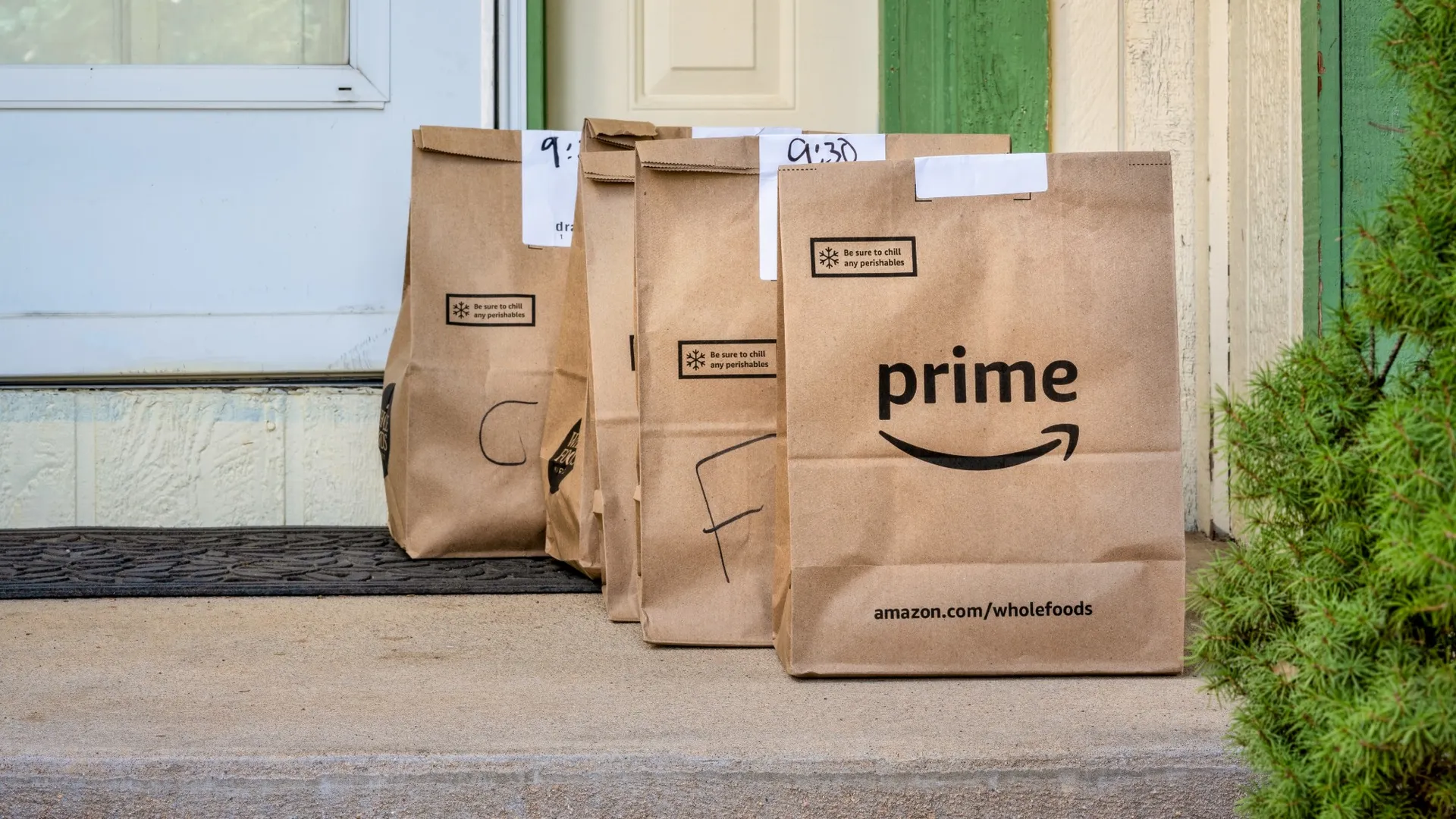
The days of the corner grocer are long gone. Walmart, Kroger and Target turned the produce aisle into just another offering at big box stores. Now they face an even bigger threat: Amazon is expanding its same-day grocery business.
Prime members in 1,000 cities and towns will be able to order perishables like "blueberries and milk" and "get them within hours," said The Associated Press. That number will expand to 2,300 municipalities by the end of the year. That is "one of the most significant grocery expansions" that Amazon has undertaken, the company said in a statement, one that puts "pressure on grocery delivery services" offered by existing grocery giants.
Amazon is "all but fist-fighting your local grocer," said Morning Brew. The company already accounts for 20% of the grocery market, while Walmart leads with 30%. The new expansion is "bad news for delivery apps and retailers," said MarketWatch. Despite years of effort, Amazon "has yet to displace incumbents in the grocery category," said analysts at Wedbush Securities. Now the company seems to have "finally figured out how to store and fulfill" perishables in a way that allows same-day deliveries.
The Week
Escape your echo chamber. Get the facts behind the news, plus analysis from multiple perspectives.
SUBSCRIBE & SAVE
Sign up for The Week's Free Newsletters
From our morning news briefing to a weekly Good News Newsletter, get the best of The Week delivered directly to your inbox.
From our morning news briefing to a weekly Good News Newsletter, get the best of The Week delivered directly to your inbox.
Latest Videos From
Amazon has taken a "long and sometimes bumpy" road to grocery dominance, said Jason Del Rey at Fortune. The company has made a series of "grocery-related launches, failures and pivots" to establish itself in the sector, beginning and then canceling a two-hour Prime Now service in major cities, and buying Whole Foods in 2017. Adding perishables to the lineup could make a huge difference to the business: "Selling a book or a TV is great and super helpful," said Doug Herrington, the CEO of Amazon Worldwide Stores. But those are occasional purchases. Groceries are a "high-frequency purchase category" that will increase each customer's "lifetime value," said Evercore ISI's Mark Mahaney. If Amazon succeeds, "customers will likely shop even more frequently at the internet giant," said Del Rey.
Americans will now be able to "shop for apples and AirPods in the same transaction," said Jack O'Leary at NIQ. That is a huge challenge to traditional grocers, who will be under pressure to maintain in-store sales while also "rapidly scaling digital capabilities." Consumers will "expect flexibility and speed" and grocers who cannot deliver "risk irrelevance." We could be witnessing a shift in the grocery industry from "brick-and-mortar to online-first platforms." Amazon's push is a "bold statement about the future of grocery retail."
What next?
Free same-day delivery on orders of $25 or more will be available to Prime members, said Yahoo Finance. Non-members will be able to get deliveries for a $12.99 service fee.
But Amazon's "aggressive move" does not change the fact that it has a "relatively small brick-and-mortar presence" in an industry where traditional stores "play an essential role in connecting with customers," said Grocery Dive. Without bricks and mortar, "it's hard to win, as most shoppers still buy in person," said Arun Sundaram at CFRA Research. Convenience is important, but so are "price, quality, experience and value," said AlixPartners' John Clear, a former buyer for Lidl US.