Sign up to get Today’s Best Articles in your inbox
Join 350,000+ subscribers and keep yourself informed with a selection of
The Week’s most interesting, enlightening and entertaining stories - plus daily puzzles.
You are now subscribed
Your newsletter sign-up was successful
Want to add more newsletters?
An account already exists for this email address, please log in.
A war by any other name: Republicans recast Iran to fit a shifting agenda
When is a war not really a war? It depends on who’s asking and why.
It has been more than six months since the first barrage of American missiles struck Iranian targets in what has become the defining foreign policy crisis of the second Trump administration. Less defining, however, is the language the White House has used to describe what is taking place between the United States and Islamic Republic.
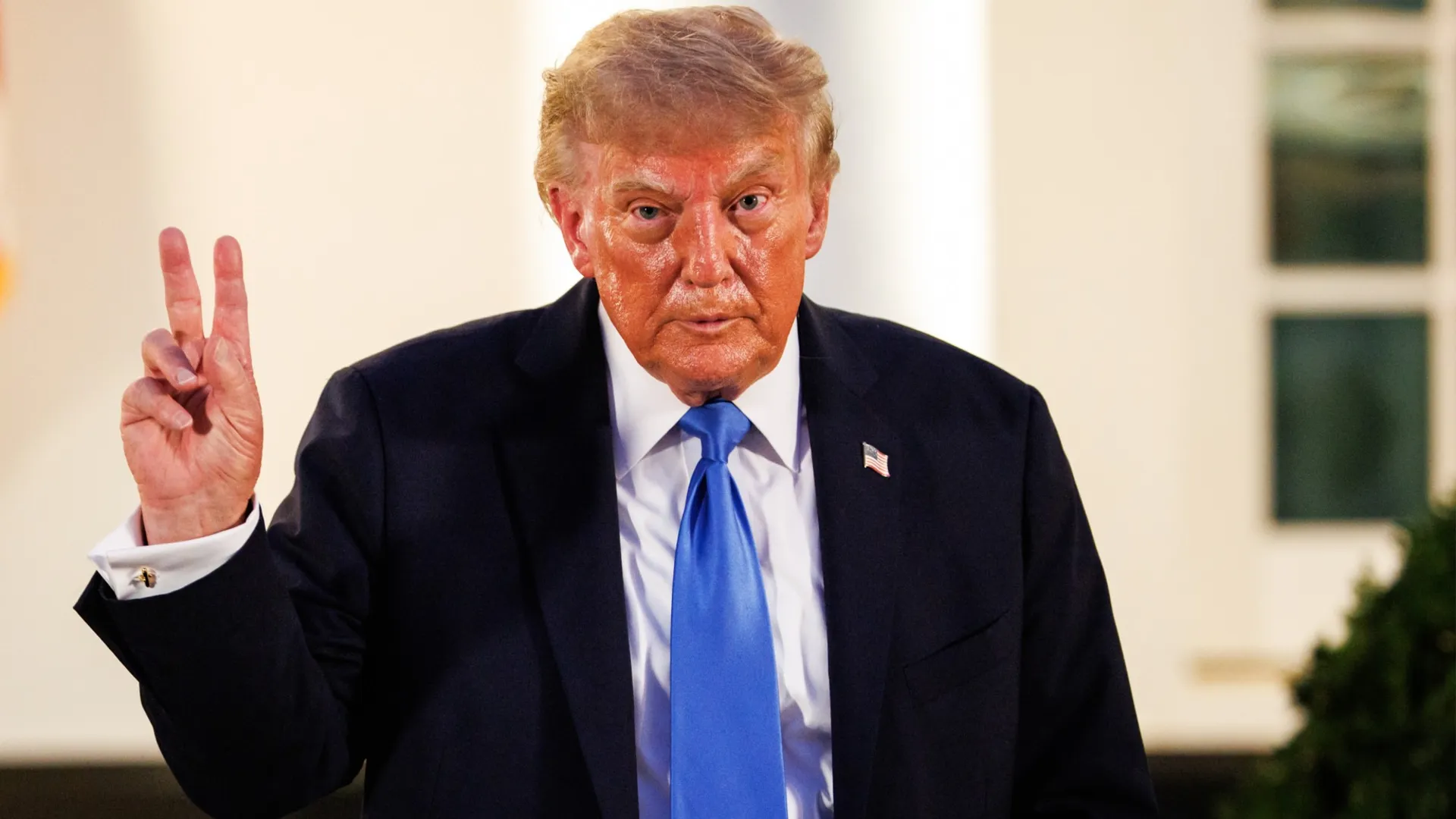
While President Donald Trump himself often refers to the violence in bombastic terms, other members of his administration have conspicuously avoided calling the ongoing exchanges of missiles part of a larger “war.” Instead, they opt to downplay the conflict’s duration and severity for domestic audiences.
‘It’s small potatoes for us’
Vice President JD Vance argued this month that the “current hostilities shouldn’t even be called a ‘war’” since “‘active combat operations’ ended months ago,” said CNN. Vance’s claim came “despite three consecutive days” in which the U.S. and Iran exchanged fire. “I can understand what he’s saying,” said Trump during an Oval Office press scrum following Vance’s comments. “I call it a military conflict because it’s small potatoes for us. It’s not a big thing.”
The Week
Escape your echo chamber. Get the facts behind the news, plus analysis from multiple perspectives.
Join more than 350,000 subscribers and keep yourself informed with a selection of The Week’s most interesting, enlightening and entertaining stories - plus daily puzzles.
Join more than 350,000 subscribers and keep yourself informed with a selection of The Week’s most interesting, enlightening and entertaining stories - plus daily puzzles.
From the start of the war, Americans have been “getting conflicting messages from the Trump administration and congressional leaders” about what to call the violence, said FactCheck in March. Given that Congress hasn’t officially declared it as such, “if political leaders were to say that this is a war, they would also be acknowledging that the administration’s actions were unconstitutional,” said Stephanie Savell, the director of Brown University’s Costs of War project, to the outlet.
“Because we haven’t officially declared war, my kids and I aren’t eligible for some benefits,” said Air Force widow Libby Klinner in a recent social media post highlighting the paradox of a nonwar war, per the Military Times. Air Force officials have since launched an “audit on our benefits to ensure that we receive all we are entitled to,” said Klinner in a subsequent message.
White House officials have “downplayed the scale of the conflict” in the “apparent hope that it will recede from the headlines” since hostilities have “already lasted far longer than the president’s initial predictions of victory within a few weeks,” said The Atlantic. Still, with “no end to the hostilities in sight,” the Navy is “staying on a war footing indefinitely.”
‘Just playing to his base’
Trump has “contradicted himself and his own Cabinet in the same week — and sometimes, the same day” in his assessments of the conflict, said the Los Angeles Times. The evolving language is part of an effort to “control the narrative of the Iran war.”
Sign up to get Today’s Best Articles in your inbox
A free daily email with the day’s biggest news and analysis – and the best features from TheWeek.com
Trump’s more bellicose rhetoric, like when he personally and repeatedly refers to the Iran “war,” is being used in part to “save face for the quagmire he has put himself and Republicans in” ahead of the midterms, said Khaled Elgindy, a senior research fellow at the Quincy Institute for Responsible Statecraft, to The New York Times. The president’s wartime language is “just playing to his base, whether it’s true or not.” It lacks “much of a strategy beyond trying to wish things into existence by sheer force of words.”
Rafi Schwartz has worked as a politics writer at The Week since 2022, where he covers elections, Congress and the White House. He was previously a contributing writer with Mic focusing largely on politics, a senior writer with Splinter News, a staff writer for Fusion's news lab, and the managing editor of Heeb Magazine, a Jewish life and culture publication. Rafi's work has appeared in Rolling Stone, GOOD and The Forward, among others.