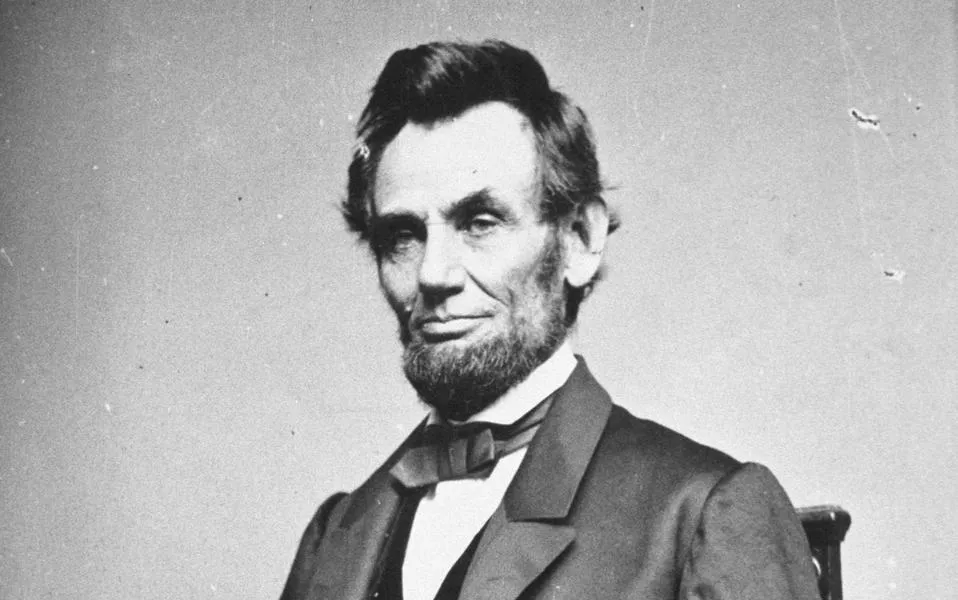
The time Abraham Lincoln almost fought a broadsword duel for making up lies about a political opponent
The time Abraham Lincoln almost fought a duel of broadswords
This amazing anecdote comes from the New York Review of Books, in a piece about how political media was quite different back in Lincoln's day. Back then, newspapers wouldn't hesitate to print (or fabricate) damaging gossip about politicians, who in turn would often respond with violence:
On one occasion, in 1841, that happened — and it involved not only Lincoln but his fiancée Mary Todd. The two had collaborated on a series of scurrilous letters from a fictitious "Rebecca" that vilified James Shields, a rising candidate in the Democratic Party (he would later be elected a senator three times from three different states). The fake Rebecca, who claimed Shields was a former beau, mocked his Irish origin and declared him "a fool as well as a liar.... With him truth is out of the question."
Shields stormed into the office of the Sangamo Journal, demanding that the editor, Simeon Francis, tell him who was behind the Rebecca letters. When Francis asked Lincoln what he should do, Lincoln, in order to shield his Mary, took sole responsibility (without admitting he wrote anything). Shields challenged him to a duel, and they actually met on the dueling ground — but Lincoln, as the one receiving the challenge, had the right to choice of weapons. When he called for broadswords, this gave him, with his long and strong right arm, a ludicrous advantage, and the fight was called off. [New York Review of Books]
The lesson here: don't mess with a rail-splitter when he has blade in hand.
A free daily email with the biggest news stories of the day – and the best features from TheWeek.com
The Week
Escape your echo chamber. Get the facts behind the news, plus analysis from multiple perspectives.
Sign up for The Week's Free Newsletters
From our morning news briefing to a weekly Good News Newsletter, get the best of The Week delivered directly to your inbox.
Ryan Cooper is a national correspondent at TheWeek.com. His work has appeared in the Washington Monthly, The New Republic, and the Washington Post.
-
Do you have to pay taxes on student loan forgiveness?The Explainer As of 2026, some loan borrowers may face a sizable tax bill
-
Planning a move? Here are the steps to take next.the explainer Stay organized and on budget
-
What should you look out for when buying a house?The Explainer Avoid a case of buyer’s remorse
-
The billionaires’ wealth tax: a catastrophe for California?Talking Point Peter Thiel and Larry Page preparing to change state residency
-
Hegseth moves to demote Sen. Kelly over videospeed read Retired Navy fighter pilot Mark Kelly appeared in a video reminding military service members that they can ‘refuse illegal orders’
-
Trump says US ‘in charge’ of Venezuela after Maduro grabSpeed Read The American president claims the US will ‘run’ Venezuela for an unspecified amount of time, contradicting a statement from Secretary of State Marco Rubio
-
Bari Weiss’ ‘60 Minutes’ scandal is about more than one reportIN THE SPOTLIGHT By blocking an approved segment on a controversial prison holding US deportees in El Salvador, the editor-in-chief of CBS News has become the main story
-
CBS pulls ‘60 Minutes’ report on Trump deporteesSpeed Read An investigation into the deportations of Venezuelan migrants to El Salvador’s notorious prison was scrapped
-
Trump administration posts sliver of Epstein filesSpeed Read Many of the Justice Department documents were heavily redacted, though new photos of both Donald Trump and Bill Clinton emerged
-
Trump HHS moves to end care for trans youthSpeed Read The administration is making sweeping proposals that would eliminate gender-affirming care for Americans under age 18
-
Jack Smith tells House of ‘proof’ of Trump’s crimesSpeed Read President Donald Trump ‘engaged in a criminal scheme to overturn the results of the 2020 presidential election,’ hoarded classified documents and ‘repeatedly tried to obstruct justice’