Anthropologists confirm discovery of Alexander the Great's father's remains

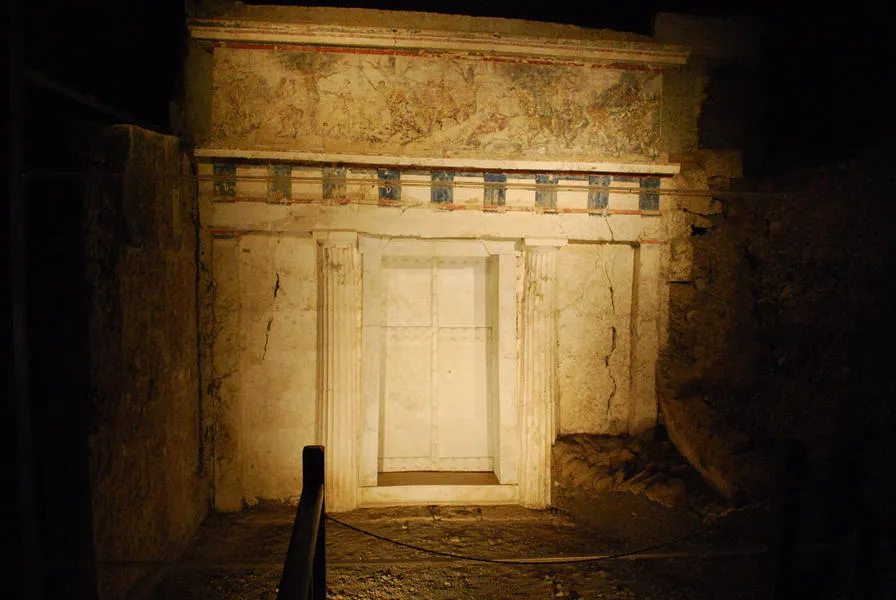
The remains of Macedonian King Philip II, who fathered Alexander the Great, have been confirmed as those found in a tomb in Vergina, Greece, Discovery News reports.
Greek archeologist Manolis Andronikos first discovered the tomb in 1977, one of three that were under a large mound known as the Great Tumulus. One of the tombs had been looted, but the second tomb contained a main chamber that held the remains of a male skeleton, while an antechamber housed the remains of a female skeleton. Since then, researchers have been trying to determine whether Tomb II's male occupant was Philip II or Philip III Arrhidaeus (Alexander the Great's half-brother).
The Week
Escape your echo chamber. Get the facts behind the news, plus analysis from multiple perspectives.

Sign up for The Week's Free Newsletters
Join more than 350,000 subscribers and keep yourself informed with a selection of The Week’s most interesting, enlightening and entertaining stories - plus daily puzzles.
Join more than 350,000 subscribers and keep yourself informed with a selection of The Week’s most interesting, enlightening and entertaining stories - plus daily puzzles.