John Oliver colorfully explains why you should avoid payday lenders at all cost

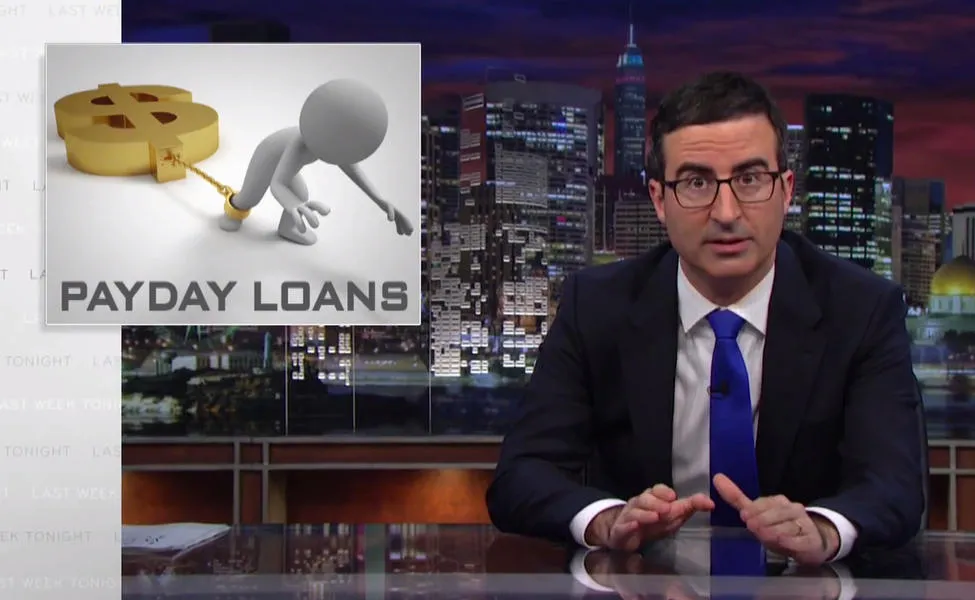
On Sunday night's Last Week Tonight, John Oliver earnestly dove into the world of "predatory lending," focusing specifically on payday loan companies. They offer what are supposed to be short-term loans, but if you don't pay the money back on time — as many people don't — annual interest rates can be as high as 1,900 percent. "Payday loans are the Lay's potato chips of finance," Oliver explained. "You can't have just one, and they're terrible for you."
After running through some entertainingly awful stories about the payday loan industry in Texas, Illinois, Arizona, and Ohio, Oliver conceded that the reason payday loan companies are so insidious is that sometimes people need money right away — even though a majority of Americans agree that payday lenders take advantage of them. To counteract the flood of payday loan commercials, often starring Montel Williams, Oliver aired a new "ad" by a different celebrity explaining why you would really, really exhaust all other options before turning to a payday lender — and listing some mildly NSFW options. --Peter Weber

The Week
Escape your echo chamber. Get the facts behind the news, plus analysis from multiple perspectives.

Sign up for The Week's Free Newsletters
Join more than 350,000 subscribers and keep yourself informed with a selection of The Week’s most interesting, enlightening and entertaining stories - plus daily puzzles.
Join more than 350,000 subscribers and keep yourself informed with a selection of The Week’s most interesting, enlightening and entertaining stories - plus daily puzzles.


