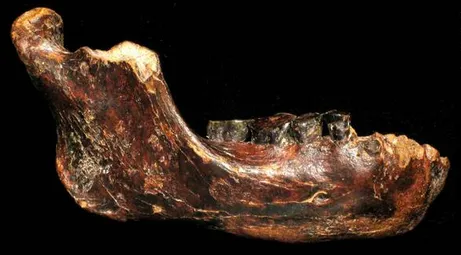
Fishermen may have accidentally discovered new primitive species
A free daily email with the biggest news stories of the day – and the best features from TheWeek.com
You are now subscribed
Your newsletter sign-up was successful
When Taiwanese fishermen sold a fossilized jawbone to an antique shop, they had no idea it would hold enough scientific significance to be acquired by Taiwan's National Museum of Natural Sciences. But it turns out that the fossil may be evidence of a previously undiscovered group of primitive humans.
A new study on the fossil published in the journal Nature Communications describes what may be an ancient type of hominin that lived between 10,000 and 190,000 years ago and was previously unknown to science.
The fossil, labeled Penghu 1, bears resemblance to a 400,000-year-old specimen that was found 600 miles from the jawbone's location in the Penghu Channel. Scientists now wonder if the two fossils may have come from an unclassified human species. The fossils may also provide evidence that multiple human lineages coexisted in Asia before modern humans arrived about 40,000 years ago.
Article continues belowThe Week
Escape your echo chamber. Get the facts behind the news, plus analysis from multiple perspectives.
Sign up for The Week's Free Newsletters
From our morning news briefing to a weekly Good News Newsletter, get the best of The Week delivered directly to your inbox.
The scientists noted that more research is needed, though — the evidence isn't conclusive until they've discovered other skeletal parts related to the two fossils.
A free daily email with the biggest news stories of the day – and the best features from TheWeek.com
Meghan DeMaria is a staff writer at TheWeek.com. She has previously worked for USA Today and Marie Claire.