Sign up to get Today’s Best Articles in your inbox
Join 350,000+ subscribers and keep yourself informed with a selection of
The Week’s most interesting, enlightening and entertaining stories - plus daily puzzles.
You are now subscribed
Your newsletter sign-up was successful
Want to add more newsletters?
An account already exists for this email address, please log in.
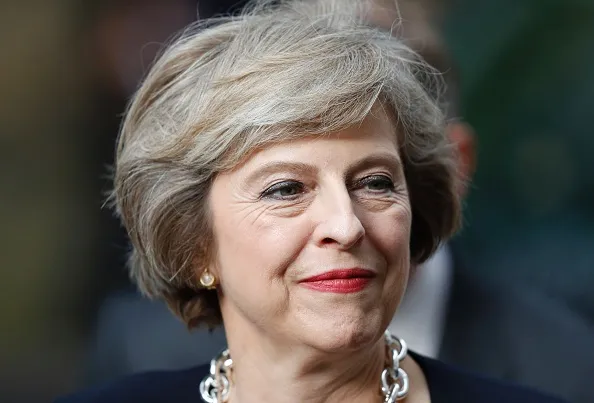
Shortly after officially accepting David Cameron's resignation as U.K. prime minister Wednesday, Queen Elizabeth II appointed Theresa May as Britain's new leader. May, previously the home secretary, won the race for leadership of the Conservative Party after her final rival, Energy Minister Andrea Leadsom, bowed out Monday.
In her first speech as prime minister outside 10 Downing Street, May pledged to lead in the "same spirit" as her predecessor Cameron, to focus on social justice, and to ensure that Britain will "forge a bold, new, positive role" after its departure from the European Union. "We will make Britain a country that works not just for a privileged few but for every one of us," May said. "Together we will build a better Britain."
Cameron wished her well as he departed from 10 Downing Street for the final time Wednesday, where May will take up residence later in the day. "I'm delighted that for the second time in British history, the new prime minister will be a woman," Cameron said. The only other woman to be prime minister of Britain is Margaret Thatcher, who held power from 1979 to 1990.
The Week
Escape your echo chamber. Get the facts behind the news, plus analysis from multiple perspectives.
Join more than 350,000 subscribers and keep yourself informed with a selection of The Week’s most interesting, enlightening and entertaining stories - plus daily puzzles.
Join more than 350,000 subscribers and keep yourself informed with a selection of The Week’s most interesting, enlightening and entertaining stories - plus daily puzzles.